This guide is general education for pet owners. If your pet has urgent symptoms, possible poisoning, injury, breathing trouble, collapse, severe pain, or sudden decline, contact a licensed veterinarian or local emergency service.
Dosages must be calculated by a licensed veterinarian based on species, weight, and bloodwork. Never administer human medications or self-adjust prescription doses for pets.
Editorial standard
How this guide was prepared
Snakebite envenomation is one of the most terrifying, acute environmental emergencies encountered in canine veterinary medicine. In North America and many temperate and tropical regions worldwide, the vast majority of venomous snakebites in dogs are inflicted by pit vipers (subfamily Crotalinae), which include rattlesnakes, copperheads, and cottonmouths (water moccasins). Due to their natural predatory instincts and curious nature, dogs are overwhelmingly bitten on the face, muzzle, head, or front limbs when investigating a coiled snake in brush or tall grass. Pit viper venom is not a single chemical; it is an intensely complex biological weapon composed of enzymatic proteins, metalloproteinases, hyaluronidases, and phospholipase A2. This toxic cocktail destroys cellular membranes, degrades structural collagen, damages vascular endothelium, and triggers massive third-space fluid loss and venom-induced consumptive coagulopathy (VICC). Without rapid veterinary stabilization and antivenom administration, envenomation results in extensive localized tissue sloughing, severe upper airway obstruction, cardiovascular collapse, and death.
Quick Answer: Immediate First Aid for Dog Snakebite
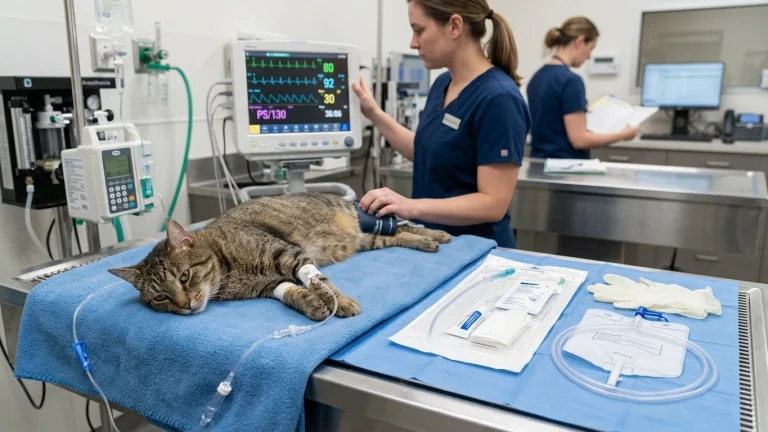
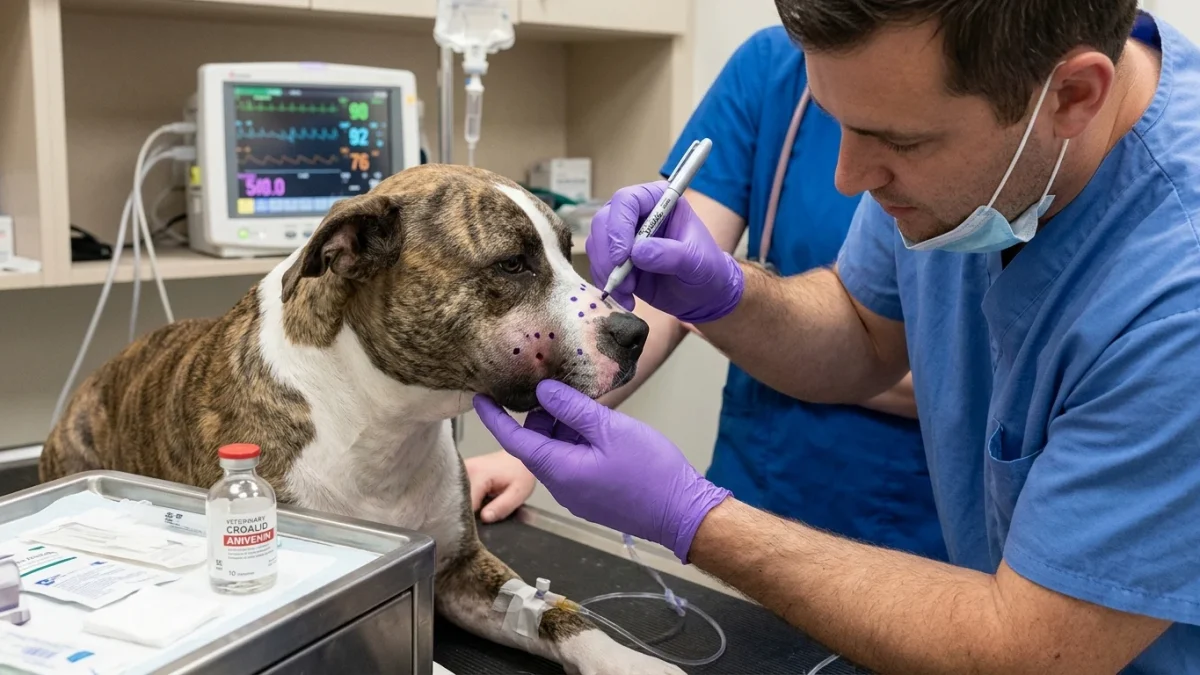
If your dog was bitten by a suspected venomous snake, remain calm and restrict all physical activity immediately; carry your dog to the vehicle to keep heart rate low and slow systemic venom spread. Keep the bite area positioned below the level of the heart if possible. Do not attempt to catch, kill, or handle the snake. Transport your dog directly to a 24-hour veterinary emergency center. Emergency clinicians immediately evaluate the bite, mark the progressive swelling margins with a surgical pen, place large-bore intravenous catheters, perform serial coagulation testing (PT/aPTT and platelet count), and administer veterinary antivenom (antivenin) to neutralize circulating toxins.
Pathophysiology: The Cascade of Pit Viper Envenomation
Pit viper venom exerts both catastrophic localized tissue destruction and severe systemic organ toxicity:
1. Localized Cytolysis and Hemorrhage: Venom metalloproteinases attack the basal lamina of capillaries, causing widespread microvascular hemorrhage, massive edema, and intense ecchymosis (bruising). Hyaluronidase acts as a “spreading factor,” breaking down connective tissue matrices and enabling venom to penetrate rapidly into deep muscle compartments.
2. Third-Space Fluid Loss and Hypovolemic Shock: Massive permeability changes cause immense volumes of plasma and red blood cells to pool inside the swollen bite tissues. This rapid shift of intravascular volume into the interstitial space precipitates severe hypovolemic hypotension, shock, and hemoconcentration.
3. Venom-Induced Consumptive Coagulopathy (VICC): Thrombin-like enzymes in crotalid venom consume fibrinogen and destroy platelets, rendering blood entirely uncoagulable. Affected dogs bleed spontaneously into the thoracic cavity, abdomen, or gastrointestinal tract.
4. Upper Airway Compromise: Bites to the face, muzzle, or tongue represent an immediate respiratory emergency. Dramatic, rapid facial swelling spreads backward to compress the pharynx and larynx, causing life-threatening asphyxiation within hours unless an emergency endotracheal tube or temporary tracheostomy is established.
Clinical Emergency Triage Matrix
| Triage Tier | Clinical Presentation | Required Action |
|---|---|---|
| Tier 1: Facial Bite with Stridor or Systemic Collapse (0-1h) | Bite to muzzle, lips, or neck with progressive facial swelling and labored, noisy breathing (stridor); collapse, weak thready pulses, pale or muddy gums; active bleeding from puncture wounds; known rattlesnake or cottonmouth bite. | Transport immediately to an emergency hospital. Minimize all physical movement (carry the dog). Call the hospital while en route so the ICU team can prepare supplemental oxygen, immediate airway intubation equipment, intravenous shock fluids, and reconstitution of antivenom vials. |
| Tier 2: Extremity Bite with Advancing Edema (1-4h) | Bite on limb or paw with severe progressive swelling, intense pain, and marked lameness; dark bloody fluid weeping from twin puncture wounds; dog is alert but tachycardic; no upper airway stridor. | Proceed directly to an emergency veterinary clinic. Clinicians will mark the advancing edge of swelling with a surgical pen to track progression, initiate balanced IV fluid resuscitation, administer multimodal opioid analgesia, and perform baseline coagulation testing. |
| Tier 3: “Dry Bite” or Non-Venomous Encounter (4-12h) | Witnessed strike by an unidentified snake; no progressive swelling after 2 hours of observation; dog is comfortable, bearing weight, and alert; puncture wounds show minimal redness without bruising. | Maintain close veterinary observation for at least 8 to 12 hours. Up to 20–25% of pit viper bites are “dry bites” (where no venom is injected), but delayed envenomation can occur. Update tetanus coverage and monitor closely. |
Dangerous Home Pitfalls: What NOT to Do (Rule S1)
- NEVER apply a tourniquet or constriction band: Restricting arterial or venous blood flow traps the concentrated proteolytic venom in the limb, triggering rapid gangrenous myonecrosis. In veterinary medicine, tourniquet application is the leading cause of preventable limb amputations following snakebites.
- NEVER incise the bite or attempt venom suction: Cutting across puncture marks lacerates compromised, bleeding blood vessels and tendons. Suction devices remove less than 0.1% of venom while creating mechanical tissue damage and introducing severe anaerobic bacterial infections.
- NEVER apply ice packs or cold water immersion: Cold causes severe local vasoconstriction and cryo-injury, accelerating tissue ischemia and causing massive necrotic sloughing of skin and muscle.
- NEVER administer human aspirin, carprofen, or NSAIDs: Non-steroidal anti-inflammatory drugs inhibit platelet aggregation. Giving an NSAID to an envenomed animal with consumptive coagulopathy destroys remaining hemostatic defenses, accelerating fatal hemorrhage.
Diagnostic Standards: Coagulation Profiles & Echinocytes
Upon hospital intake, emergency veterinarians establish venous access and collect blood for immediate point-of-care laboratory screening:
- Blood Smear Examination (Echinocytosis): Within 30 to 60 minutes of pit viper envenomation, venom phospholipases alter red blood cell membrane lipids, causing erythrocytes to transform into distinctive crenated, spiky cells called echinocytes (burr cells). The presence of numerous echinocytes on a fresh blood smear provides rapid, microscopic confirmation of envenomation.
- Coagulation Screening (PT, aPTT, Fibrinogen): Serial prothrombin time (PT) and activated partial thromboplastin time (aPTT) tests assess for venom-induced consumption of clotting factors. Severely prolonged or non-clotting blood indicates active VICC requiring immediate antivenom therapy.
- Serial Swelling Measurement: Clinicians measure limb or facial circumference and delineate the advancing edge of edema with a surgical marking pen every 15 to 30 minutes to quantify venom activity and evaluate response to antivenom.
Hospital Management: Antivenom and Supportive ICU Care
Definitive treatment of crotalid envenomation focuses on neutralizing active venom molecules and supporting hemodynamic stability:
1. Antivenom (Antivenin) Administration: Antivenom (such as Crotalidae Polyvalent Immune Fab or equine-derived antivenin) is the only definitive antidote for pit viper envenomation. Antivenom binds directly to circulating venom components, halting progressive tissue necrosis, stabilizing blood pressure, and restoring normal blood coagulability. It is administered as an intravenous infusion under close monitoring for allergic reactions.
2. Aggressive Intravenous Crystalloid Resuscitation: Balanced isotonic crystalloid fluids restore effective circulating blood volume, counteract third-space fluid depletion, and protect renal perfusion against myoglobinuric renal damage caused by severe muscle breakdown (rhabdomyolysis).
3. Multimodal Analgesia: Snakebites inflict excruciating pain. Pure opioid agonists (such as hydromorphone, methadone, or fentanyl) provide potent, safe analgesia without compromising platelet function or renal hemodynamics.
4. Airway Maintenance: For severe facial bites, patients are maintained in oxygen cages. If laryngeal edema advances, emergency endotracheal intubation or temporary tracheostomy is performed to maintain a patent airway until facial swelling subsides.
Frequently Asked Questions
Should I try to kill or capture the snake to show the veterinarian?
No, absolutely not. Attempting to catch or kill a venomous snake puts human lives in grave danger, and even a decapitated snake head can reflexively bite and deliver a lethal dose of venom for up to an hour after death. In veterinary clinical practice, antivenom formulations (such as Crotalidae polyvalent) cover all common pit viper species (rattlesnakes, copperheads, cottonmouths), so exact species capture is unnecessary.
What is a “dry bite” and how common is it in dogs?
A dry bite occurs when a venomous snake strikes defensively but injects little or no venom. In canine encounters, approximately 20% to 25% of strikes are dry bites. However, because venom injection can never be determined from external puncture marks alone, every suspected bite must be hospitalized and monitored under close veterinary observation for at least 8 to 12 hours.
Do antibiotics or antihistamines cure a snakebite?
No. Neither antibiotics nor antihistamines neutralize snake venom. While an antihistamine (diphenhydramine) may be used to treat mild allergic reactions or as pre-medication before antivenom, it does not stop venom-induced necrosis, shock, or coagulopathy. Similarly, prophylactic antibiotics are rarely indicated because snake venom is enzymatic, not bacterial; definitive recovery requires antivenom and supportive ICU stabilization.
Scientific Sources and Literature
- Peterson ME. “Snake bite envenomation in dogs and cats: crotaline envenomation.” Veterinary Clinics of North America: Small Animal Practice. PMID: 26031456
- Witsil AJ, et al. “Assessment of snake envenomation severity scoring and antivenom intervention in canine pit viper envenomations: 112 cases.” Journal of Veterinary Emergency and Critical Care. PMID: 32304195
- Armentano RA, Vogel KR. “Mechanisms, diagnosis, and clinical management of crotaline venom-induced consumptive coagulopathy in canines.” Journal of Medical Toxicology. PMID: 29774624
Caregiver Emergency Snakebite Action Checklist
- Stay calm and keep your dog immobilized; carry your dog to the car to prevent elevated heart rate from spreading venom.
- Keep the bite wound positioned below or level with the heart.
- NEVER apply tourniquets, pressure wraps, ice packs, or cold water to the bite.
- NEVER cut the bite punctures or attempt to suck out venom with your mouth or suction devices.
- NEVER administer aspirin, ibuprofen, or human pain relievers.
- Do not attempt to capture or kill the snake; take a mental note of physical features only if safe to do so.
- Transport your pet immediately to a 24-hour veterinary emergency center equipped with antivenom and ICU care.
Source transparency
Reference mix for this guide
Source labels describe the type of organization behind each reference; they are not a claim that any outside organization reviewed this article.
- Dog Bee & Wasp Sting Allergic Reaction Triage Reference source · newspet.net
- Dog Bleeding Wound & Hemorrhage First Aid Reference source · newspet.net
- Dog Sudden Collapse & Pale Gums Triage Reference source · newspet.net
- Toxic Foods & Plants Emergency Ingestion Guide Reference source · newspet.net
- PMID: 26031456 Government or public agency · pubmed.ncbi.nlm.nih.gov
- PMID: 32304195 Government or public agency · pubmed.ncbi.nlm.nih.gov
- PMID: 29774624 Government or public agency · pubmed.ncbi.nlm.nih.gov