This guide is general education for pet owners. If your pet has urgent symptoms, possible poisoning, injury, breathing trouble, collapse, severe pain, or sudden decline, contact a licensed veterinarian or local emergency service.
Dosages must be calculated by a licensed veterinarian based on species, weight, and bloodwork. Never administer human medications or self-adjust prescription doses for pets.
Editorial standard
How this guide was prepared
This clinical guide outlines patient advocacy protocols for newly adopted companion animals under the guidance of veterinary pharmacologists. If an adopted pet ingests human over-the-counter medications or exhibits sudden facial swelling, collapse, or violent tremors, seek immediate emergency veterinary poison intervention.
- The 5 Golden Prescription Inquiries: Confirm exact dosing intervals (q12h vs. twice daily with food), gastrointestinal instructions, common mild side effects vs. red-flag emergencies, missed-dose guidelines, and required therapy duration.
- Never Alter Medication Forms Without Guidance: Do not crush tablets, dissolve contents, or conceal capsules in human foods (like cheese, cold cuts, or commercial peanut butters) without verifying drug coating integrity and confirming zero xylitol.
- Adherence to Complete Prescription Courses: Always complete the entire prescribed antimicrobial or anti-inflammatory regimen, even if your pet appears fully recovered, to prevent disease relapse and microbial resistance.
Receiving prescription medication for a newly adopted companion animal presents significant safety responsibilities for caregivers. Because adopted animals lack long-term physiological baselines in their new environment, observing adverse pharmacological responses requires heightened vigilance. Preparing structured questions before leaving the veterinary clinic prevents dangerous dosing mistakes, eliminates drug-food incompatibilities, and ensures optimal compliance.
The Anatomy of a Veterinary Prescription: Core Verification
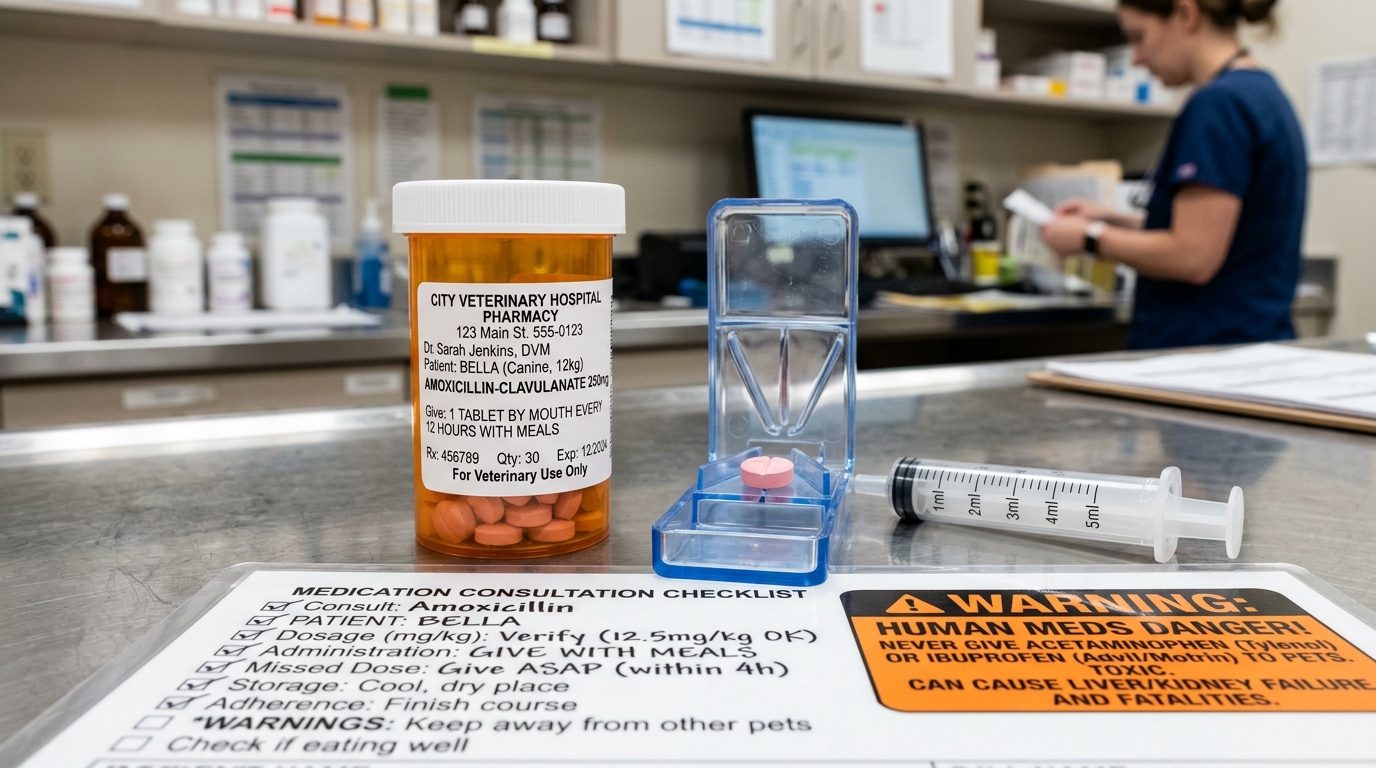
Before departing the pharmacy counter or veterinary discharge bay, review each medication package with a licensed technician or veterinarian. Do not assume liquid suspensions, scored tablets, and topical preparations share identical handling rules:
- Active Ingredient Confirmation: Note the generic chemical name alongside proprietary brand labeling. Many veterinary products share commercial names with disparate concentrations or distinct delivery mechanisms.
- Dosing Frequency & Interval Rigidity: Clarify whether “every twelve hours” permits flexible timing or demands strict 12-hour intervals to maintain minimum inhibitory concentrations in systemic circulation (critical for antimicrobials).
- Food Interaction Boundaries: Some pharmaceuticals demand co-administration with high-fat meals to facilitate enteric absorption, while others must enter an empty stomach to prevent chemical chelation with dietary minerals.
- Course Completion Protocols: Inquire whether the medication must be administered until the container is completely empty (such as antibiotic regimens) or tapered gradually to prevent endocrine rebound crises (such as systemic corticosteroids).
Standardized Pharmacological Checklist for Clinic Consultations
Print or digitalize this structured question framework for every new prescription issued during your adoption follow-up visits:
| Inquiry Category | Target Question for Clinical Team | Caregiver Safety Objective |
|---|---|---|
| Administration Route | What is the safest administration technique if my pet refuses tablets or spits out oral suspensions? | Identifies whether capsules can be opened, mixed with broth, or if compounding into flavored chews is required. |
| Adverse Reaction Profile | What specific gastrointestinal, neurological, or dermatological symptoms indicate an adverse pharmacological reaction? | Differentiates mild expected lethargy from severe drug allergies, hepatotoxicity, or renal intolerance. |
| Missed Dose Contingency | What protocol should I follow if a dose is missed or vomited within thirty minutes of administration? | Prevents accidental doubling of doses or premature re-administration of toxic compounds without veterinary sign-off. |
| Storage & Handling | Does this formulation require continuous light-protected refrigeration, or should it remain at controlled room temperature? | Preserves chemical molecular stability and prevents microbial contamination of liquid suspensions. |
Specialized Formulations: Compounding, Flavoring, and Delivery Options
Administering oral solid dosage forms to a newly adopted animal can create severe handling anxiety and rupture developing trust bonds, especially in felines and fearful rescues. If pill administration triggers defensive biting, scratching, or foam-spewing salivation, consult your veterinary clinician about customized compounding options.
Accredited veterinary compounding pharmacies can reformulate harsh commercial tablets into palatable chicken-flavored soft chews, oil-based suspensions, or transdermal delivery gels. However, transdermal gels (such as transdermal methimazole or amlodipine applied to the feline inner pinna) exhibit altered bioavailabilities compared to oral routes, demanding careful therapeutic drug monitoring and specialized gloved handling by family members to prevent accidental human transdermal absorption.

Human OTC Toxicities: The Zero-Tolerance Boundary
A dangerous error among new pet adopters is attempting to relieve minor discomfort using human over-the-counter medicine. Human pharmaceuticals possess devastating, species-specific toxicities in domestic animals:
- Acetaminophen (Tylenol): Domestic cats completely lack the glucuronyl transferase metabolic pathway necessary to conjugate acetaminophen. Ingestion causes catastrophic methemoglobinemia, severe facial edema, hypothermia, and death within hours. Dogs experience acute, irreversible hepatic necrosis.
- Non-Steroidal Anti-Inflammatories (Ibuprofen, Naproxen): Human NSAIDs induce rapid gastric ulceration, severe intestinal perforation, and acute renal tubular necrosis in companion animals even at tiny fractional dosages.
- Pepto-Bismol & Bismuth Subsalicylate: Salicylates are rapidly absorbed by feline tissues, precipitating severe metabolic acidosis and toxic liver failure.
Red-Flag Triage Matrix: Pharmacological Adverse Events
Use this objective triage matrix to identify when post-medication symptoms demand immediate emergency decontamination or urgent clinical adjustment:
| Triage Tier | Clinical Presentation | Required Action Protocol |
|---|---|---|
| Immediate Emergency (0–2 Hours) | Acute facial angioedema, urticaria, profound collapse within 60 minutes of dosing, tremors, ataxia, projectile vomiting with fresh blood or coffee-ground bile. | Halt medication immediately. Transport pet to the nearest emergency veterinary hospital. Bring the medication container, packaging, and any vomited contents for precise clinical analysis. |
| Urgent Assessment (12–24 Hours) | Progressive inappetence lasting greater than 24 hours, mild diarrhea without blood, marked lethargy, localized cutaneous hair loss or erythema at topical spot-on sites. | Contact your prescribing veterinary clinic. Do not administer subsequent scheduled doses until the clinician confirms whether to alter dosage schedules or switch drug classes. |
| Routine Home Monitoring | Transient mild lip-smacking or drooling immediately after swallowing bitter tablet, brief softening of stool, slight drowsiness following anti-nausea or sedative medications. | Offer a small piece of veterinary-approved treat to wash down residual bitter taste, monitor appetite, and maintain consistent hydration tracking. |
Prescription drugs must be administered strictly according to label instructions provided by a licensed veterinarian. Never alter, crush, divide, or discontinue medications without direct veterinary authorization, and never administer companion animal medications to a different species or household cohabitant.
Frequently Asked Questions
What should pet owners do if a scheduled medication dose is missed or vomited?
Always contact your veterinary clinic before re-administering. If a dose is vomited within 10 to 15 minutes and the intact tablet is visible, a veterinarian may advise re-dosing; if hours have passed, replacing the dose can cause accidental overdose. Never double up on subsequent doses.
Are human over-the-counter pain medications safe for dogs and cats?
No. Human pain relievers like ibuprofen, naproxen, and acetaminophen are highly toxic to companion animals, causing severe stomach ulcers, acute kidney injury, liver necrosis, and fatal blood disorders. Only use analgesics prescribed specifically by your veterinarian.
How should pet medications be stored to maintain their stability and effectiveness?
Store solid tablets in their original child-proof amber containers in a cool, dry area away from bathroom steam. Liquid antibiotic suspensions and biologicals must be kept refrigerated between 2 and 8 degrees Celsius and discarded after the labeled date.
Sources
- Principles of Veterinary Pharmacology. Merck Veterinary Manual.
- Animal Poison Control Critical Database. ASPCA APCC.
- Veterinary Medication Safety Guidelines. US Food and Drug Administration.
Caregiver Safety Checklist
- Never split or crush extended-release medications without explicit veterinary instruction — altering the delivery mechanism can cause toxicity or treatment failure.
- Store all medications at labeled temperatures; many biologics lose potency above 25C (77F) within 48 hours if left in a warm car or sunny windowsill.
- Contact your veterinarian before giving any OTC pain reliever; ibuprofen and acetaminophen are toxic to both dogs and cats at any dose.
Printable tools
Download the matching worksheet
Source transparency
Reference mix for this guide
Source labels describe the type of organization behind each reference; they are not a claim that any outside organization reviewed this article.
- Principles of Veterinary Pharmacology Veterinary organization · merckvetmanual.com
- Animal Poison Control Critical Database Animal welfare nonprofit · aspca.org
- Veterinary Medication Safety Guidelines Government or public agency · fda.gov