Health and Safety Boundary
Jump to Emergency Red Flags ↓
This guide is general education for pet owners. If your pet has urgent symptoms, possible poisoning, injury, breathing trouble, collapse, severe pain, or sudden decline, contact a licensed veterinarian or local emergency service.
Veterinary Medication & Dosage Boundary
Dosages must be calculated by a licensed veterinarian based on species, weight, and bloodwork. Never administer human medications or self-adjust prescription doses for pets.
Editorial standard
How this guide was prepared
Edited for decisions
NewsPet guides are structured around practical owner choices, tradeoffs, and safety boundaries.
Source policy
Sources are listed when a guide relies on outside references.
Veterinary boundary
This article does not diagnose or prescribe; urgent symptoms need veterinary care.
Corrections
Readers can flag unclear, outdated, or inaccurate information through our contact page.
Meloxicam (Metacam) for Dogs & Cats: Feline Black-Box Triage
Clinical Classification & Indications
- Drug Class: Non-Steroidal Anti-Inflammatory Drug (Oxicam Class NSAID)
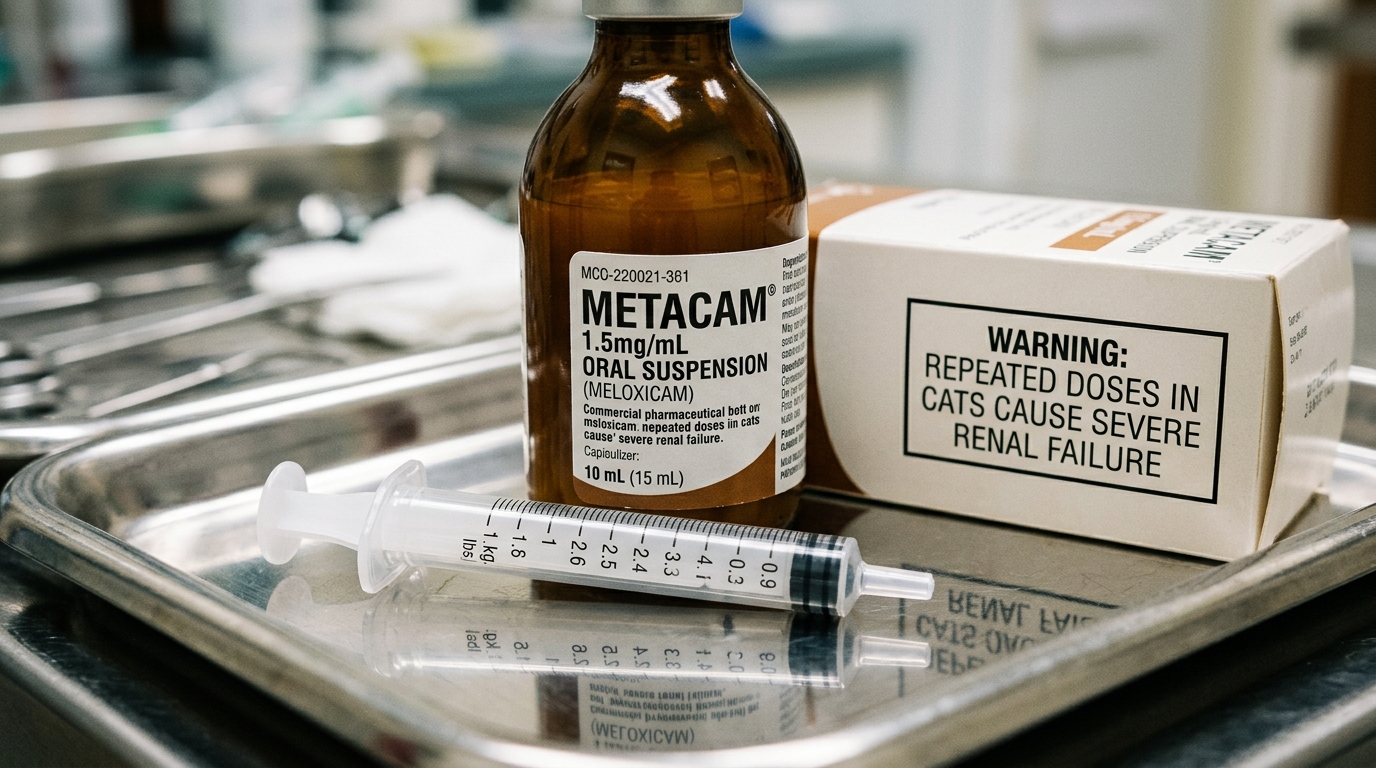
- Approved Uses: Canine osteoarthritis and surgical pain management. In cats: FDA-approved ONLY as a single one-time subcutaneous injection for post-operative surgical pain.
Mechanism of Action (Pharmacodynamics)
Preferentially inhibits the inducible COX-2 enzyme, suppressing peripheral inflammatory cascades and pro-inflammatory prostaglandin synthesis.
Adverse Reactions & Side Effect Profile
Common / Expected Side Effects
Vomiting, diarrhea, anorexia, mild lethargy. Cats are extremely sensitive to toxic nephrosclerosis and papillary necrosis if dosed repeatedly.
Emergency Red Flag Reactions
Complete refusal to eat, repeated bloody vomiting, severe dehydration, dark tarry stools, total lack of urination (anuria) indicating acute renal collapse.
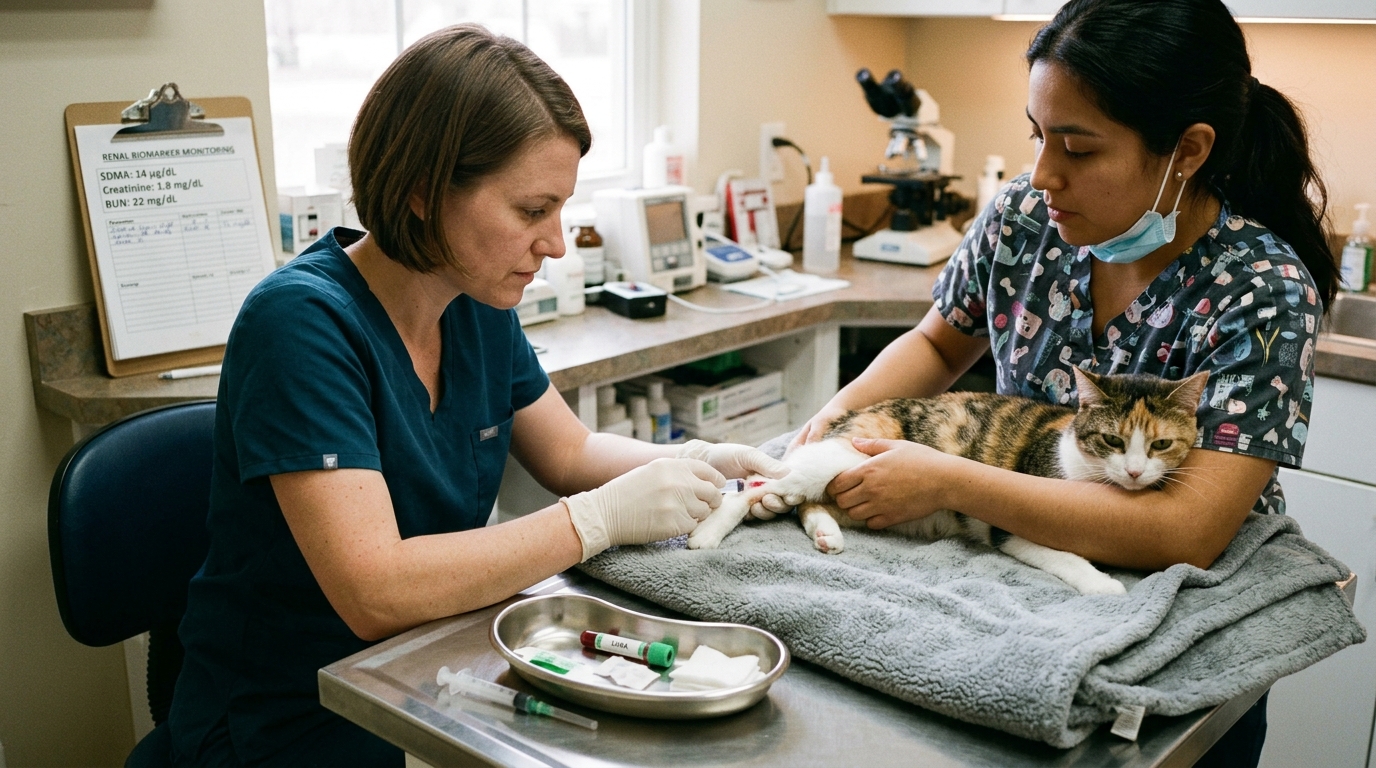
Clinical Contraindications & Interactions
- Do Not Use In: Repeated oral use in cats carries an FDA Black-Box Warning due to high risk of fatal acute renal failure. Contraindicated in dehydrated animals, animals with hypovolemia, or animals taking steroids.
Strict Rule S1 Veterinary Prescription Directive
VETERINARY DIRECTIVE: Cats CANNOT receive dog meloxicam formulations due to vast dosing concentration discrepancies. Never ‘eyeball’ liquid drops; always use the exact graduated manufacturer dosing syringe provided by your DVM. Immediately halt medication if vomiting or inappetence occurs. Never administer human pharmaceutical products or adjust dosages without direct examination and bloodwork by a licensed Doctor of Veterinary Medicine (DVM).
Printable tools