Editorial standard
How this guide was prepared
A cat move succeeds or fails at handoffs: who secures the old room, when the cat enters the carrier, whether the destination room is ready, and what happens if a door is opened unexpectedly. Treat the move as a containment and territory-transfer operation, not as a test of how quickly the cat accepts change.
Clinical Quick Answer & Immediate Actions
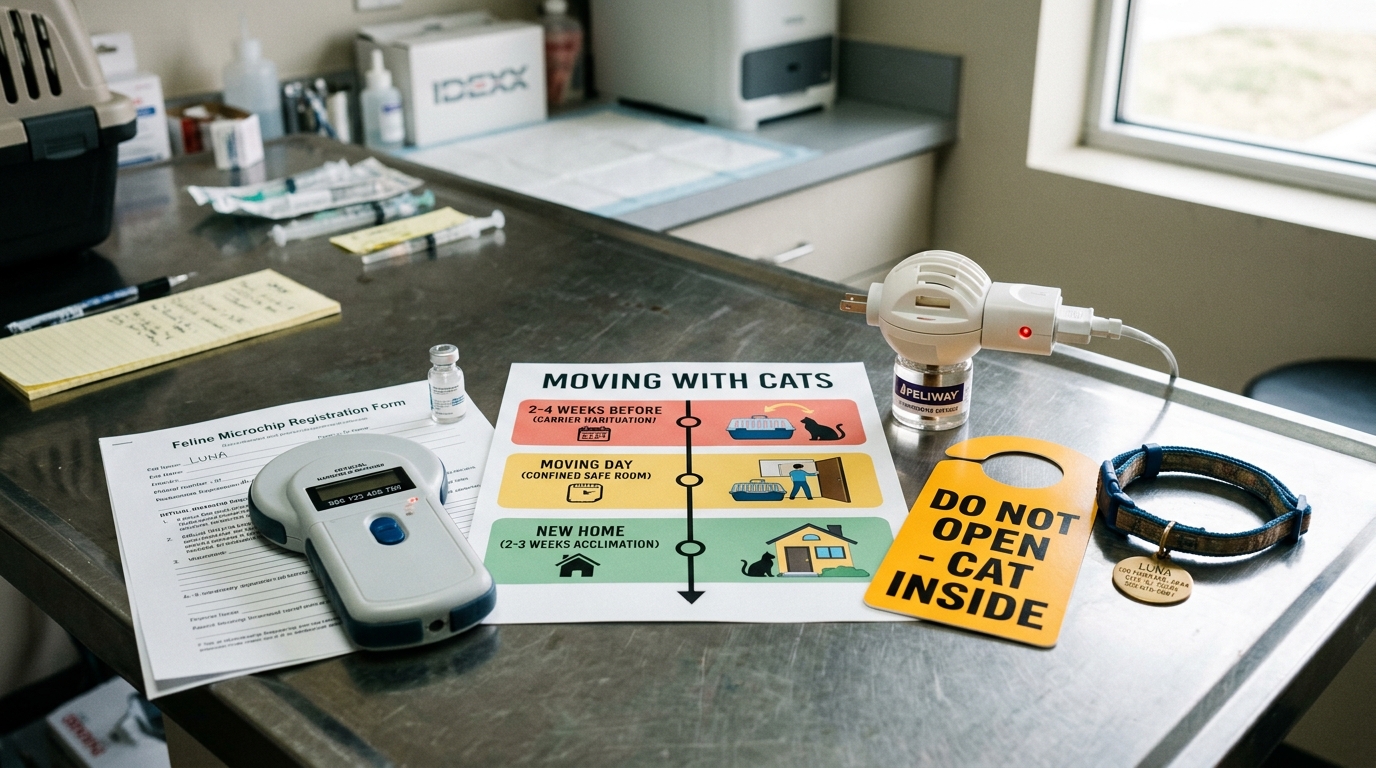
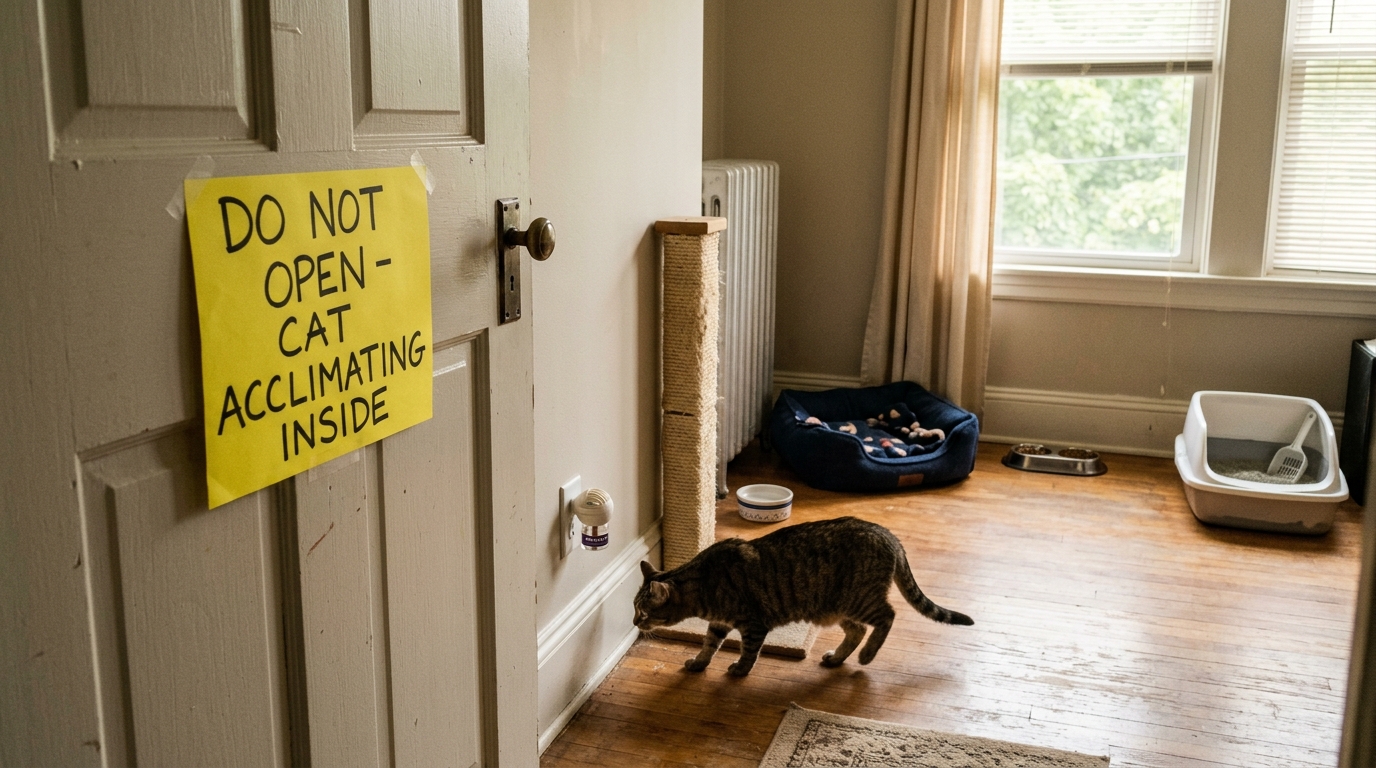
Residential relocation represents one of the most intense neuroendocrine stress events an indoor cat can experience. Cats are strictly territorial creatures that rely heavily on established facial pheromone scent-marks (F3) to navigate their environment safely. The disruption of packing boxes, moving personnel, open exterior doors, and arrival in an unmapped, unfamiliar house triggers acute sympathetic hyper-arousal. A successful, low-stress move requires executing a structured clinical timeline: 2 Weeks Before (gradual packing while leaving familiar cat trees untouched, carrier desensitization); Moving Day (confinement in a locked, emptied bathroom with explicit door signage to eliminate escape risks while movers carry furniture); and Arrival (immediate establishment of an isolated ‘Basecamp’ room containing familiar, unwashed bedding and pheromone diffusers for the first 5 to 7 days before gradual whole-house exploration).
Build the plan around two facts. The cat must remain physically accounted for while people and furniture move, and the new home must offer a small usable territory before the carrier opens. The calendar sets preparation points, but eating, toileting, resting, and voluntary exploration determine when access expands.
Two to four weeks before: make transport ordinary
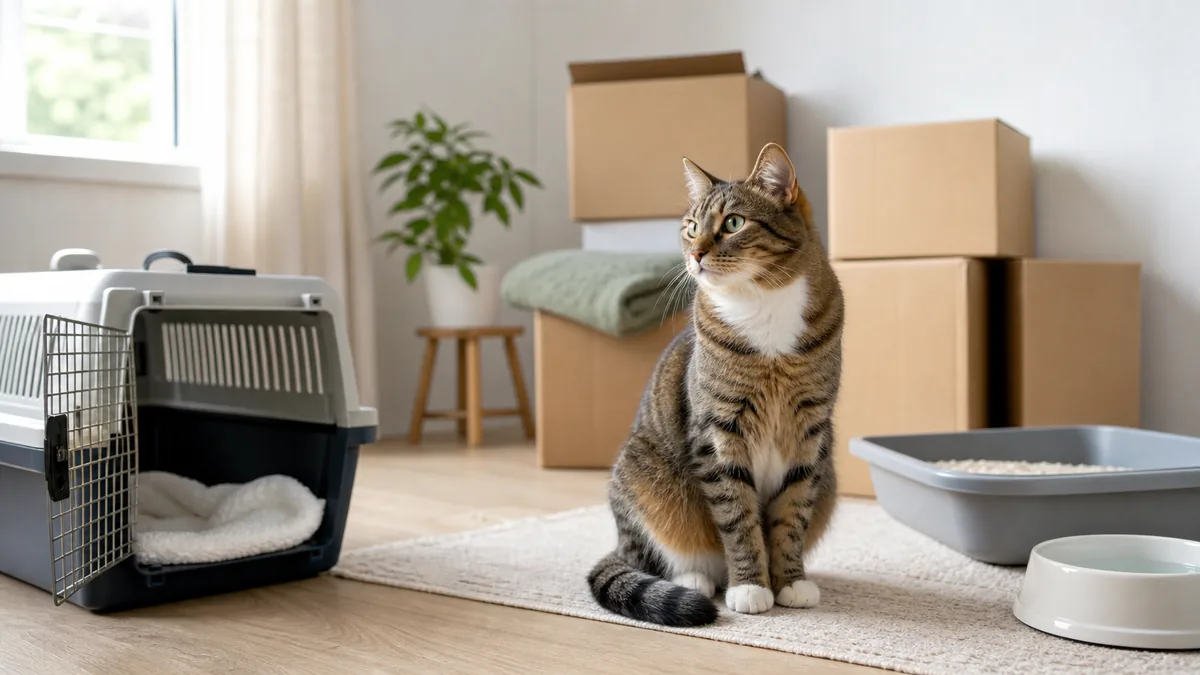
Leave the carrier open in a room the cat already uses. Add familiar bedding, feed treats or part of a meal near the entrance, and let the cat enter and leave without the door closing at first. Later, rehearse a brief door close, a short lift, and a few minutes in the stationary vehicle only if each earlier step remains manageable. A carrier that still causes panic needs smaller repetitions, not a forced full rehearsal.
Inspect fasteners, hinges, zips, ventilation, base stability, and the gap around the door. Confirm that the cat cannot push through a soft panel or back out while it is being closed. The low-stress cat carrier guide explains fit, opening styles, secure lifting, and practice in more detail.
Plan for refusal: Write a carrier-refusal branch before the final packing week. Name the familiar handler, the secure room where another attempt can happen, and the point at which the household contacts the veterinary clinic rather than escalating pursuit. A removable-top or alternate carrier is useful only when it fits securely and the cat can be transferred indoors without an open escape route. Do not chase the cat through packing rooms, improvise restraint, or give an unprescribed calming product because departure is close.
Update the microchip or registration contact details that apply where you live. Put a current phone number on the carrier and keep a recent, clear photograph. If the journey crosses a border, uses commercial transport, or may require travel medication, confirm requirements with the carrier and veterinarian early. Do not trial a sedative on moving day.
The final packing week: preserve anchors and assign people
Pack gradually where possible, but leave core resources in place until late: the usual litter and tray, familiar food, water, bedding, scratcher, and one reliable hiding option. Avoid washing every scent-bearing blanket before departure. Pack a separate cat bag that travels with the cat rather than in the removal vehicle.
| Move job | Named owner | Completion proof |
|---|---|---|
| Old-home room | One person controls the closed door, sign, resources, and final search. | The cat is seen in the room, then physically confirmed in the latched carrier. |
| Cat bag | One person keeps food, litter, medication, records, cleaning supplies, and spare bedding accessible. | The bag is in the cat’s vehicle, not a packed truck. |
| Transport | The driver controls temperature, route, stops, and carrier restraint. | The carrier is level, secured, ventilated, and never opened outdoors or in transit. |
| New-home room | One person inspects and closes the room before the cat arrives. | Windows, vents, cupboards, appliances, gaps, and external doors are checked. |
Choose both containment rooms now. At the old address, use a quiet room movers will not need. At the destination, choose a closable room away from unloading traffic. Tell every household member, mover, cleaner, and contractor which door stays closed. A sign helps, but a named person remains responsible.
Plan for delay: Write a delay branch for an overnight hold or a changed handover. It should identify a secure temporary room, the person who keeps the cat bag and records, the reserve of familiar food, litter, water, and prescribed medication, and the next time the cat is physically confirmed. If keys, transport, or the destination room are not ready, keep the cat at the safer prepared location instead of transferring between vehicles and busy buildings to preserve the original schedule.
Moving day at the old home: contain before doors open
Place the cat in the old-home room before the first external door is propped open. Supply water, litter, a hiding place, familiar bedding, and the carrier. Keep other animals out. Limit checks to the assigned person so reassurance does not create repeated escape opportunities.
When departure is close, close the room door behind the assigned handler, place the cat in the carrier, verify every latch, and only then reopen the room to the move. Search behind furniture, inside cupboards, and any cavity the cat could have entered before declaring the room clear. No one should rely on “I thought someone else had the cat.”
Carry the carrier level with two hands. Secure it so it cannot slide or tip, maintain a safe temperature, and keep the journey quiet. Never open it at a roadside stop, parking area, building entrance, or unsecured hotel room. For a long journey, ask the veterinarian and transport provider about feeding, toileting, and stop planning for this individual cat.
For a multi-day trip, confirm each overnight room before the carrier enters: external doors and windows closed, unsafe gaps blocked, and no staff access expected. Move the carrier from the vehicle directly into that room before opening it. Record intake, elimination, medication, room checks, and departure handoff each day so a delay does not erase the cat’s last known status.
At the new home: build the safe room before release
Inspect the destination room while it is empty. Close windows, test screens, block unsafe wall or cabinet gaps, check reclining furniture and appliances, remove chemicals and strings, and confirm that no contractor needs access. Set out the same litter type, familiar food, water separated from the tray where space permits, bedding, a scratcher, and at least one hiding place the cat can leave voluntarily.
Failed-room recovery: If the destination room fails inspection, pause the release. Keep the carrier closed only while a named person secures an alternate quiet room with litter, water, familiar cover, ventilation, and a shut external boundary; a carrier is not the substitute living space for a prolonged delay. If a hazard is discovered after release, stop traffic, close routes out, and use doors or movable barriers to shrink the usable area without chasing the cat. Arrange veterinary or experienced local help when safe containment or necessary handling cannot be restored.
Bring the closed carrier into this completed room, shut the room door, and then open the carrier. Let the cat emerge without being pulled out. The carrier can remain as another hiding place. Keep unloading activity, visitors, children, and resident animals on the other side of the door.
Record whether the cat drinks, eats, urinates, passes stool, settles, and changes resting place. Hiding can be a coping choice, but an inaccessible void makes health observation and emergency removal harder. Offer cover such as a box or draped chair while keeping dangerous gaps blocked.
After the move: expand territory by evidence
Do not open the whole home because a certain number of days has passed. First look for a working base: regular litter use, some intake, rest rather than continuous pacing, grooming or comfortable posture, and voluntary interest in the door or people. A cautious cat may need the room longer; a confident cat may be ready for a short supervised look outside sooner.
Open one secure area at a quiet time and keep the safe room intact. Let the cat cross the threshold and return by choice. Add territory in sections, placing litter, water, resting, scratching, and hiding resources where routes make sense. If intake drops, toileting changes, exit behavior becomes frantic, or the cat cannot settle after expansion, reduce access and inspect the setup before trying again.
Keep an expansion note that compares the cat before access, during the short trial, and after returning to the base. Record resource use, hiding location, route choice, contact with people or animals, and time needed to rest again. Retain the added area only when the cat can use it and recover without losing the working litter, food, sleep, and containment pattern. Change one boundary at a time so a setback points to a specific route or resource problem.
Resident animals may need barrier-based reintroductions because a changed territory alters routes and competition. Keep separate food, litter, rest, and escape options. This article does not set an outdoor-release date. Traffic, predators, wildlife, disease, housing rules, and local welfare advice differ, so discuss outdoor plans locally and only after identification and containment are reliable.
Identification and escape response at the new address
Before unloading day, save local veterinary, shelter, animal-control, registry, and rescue contacts. Walk the property for garages, sheds, balconies, screens, crawl spaces, chimneys, service doors, and utility gaps. Decide who closes other exits, who searches, and who contacts local services if the cat gets out.
Treat an address update as complete only after the registry confirms it. Check the chip number against the record, save the confirmation, update the telephone and alternate contact, and follow any local identification rules that apply. Put the new address and a recent photograph in the move packet. If the cat escapes, record the exact last-seen place and time before calls begin; update the registry and local services promptly rather than assuming the old-address record will be connected.
If escape occurs, stop noisy movement around the exit and secure other animals. Search close, quiet hiding places first, including under vehicles, vegetation, stairs, decks, and adjacent structures. Use normal feeding sounds and familiar bedding without creating an unattended hazard. Ask neighbors to check garages and sheds, notify the relevant registry and local organizations promptly, and follow local lost-cat guidance. Avoid a group chase that can drive a frightened cat farther away.
Keep the photograph, carrier, towel, and contact list reachable after unpacking. The response must be available immediately rather than after someone searches for account numbers and phone contacts.
When to contact a veterinarian during a move
Moving stress can change appetite and behavior, but it should not explain away physical illness. Get veterinary advice promptly for markedly reduced intake, repeated vomiting or diarrhea, pain, wounds, unusual lethargy, or a sudden urination change. Straining with little or no urine, open-mouth or difficult breathing, collapse, major trauma, seizure activity, or rapid deterioration warrants urgent veterinary assessment.
Tell the clinic that a move is in progress, what the cat has eaten and eliminated, any medication given, the journey length, and possible access to chemicals, strings, plants, or building materials. Keep the cat contained while arranging care; expanding territory is never the remedy for a medical warning sign.
Clinical Practice Tool: Moving With Pets Checklist
Safeguard your feline during household transitions and eliminate escape risks with our practical, printable Moving With Pets Checklist. Download and print your copy of the Moving With Pets Checklist, or explore all practical pet care guides in the NewsPet Resource Center.
Frequently Asked Questions
How can caregivers minimize stress when moving house with a cat?
Confine the cat to a single quiet, secure room with familiar bedding, food, and litter while movers pack, transport the cat in an enclosed carrier directly in a personal vehicle, and set up a similar sanctuary room at the new home.
How long should an indoor cat remain in a sanctuary room after arriving at a new home?
Keep the cat in a single secure room for 3 to 7 days until they display confident body language, normal appetite, and consistent litter box usage before gradually opening access to other household areas.
Why should an indoor-outdoor cat be kept strictly indoors for at least 3 weeks after moving?
Cats possess strong homing instincts and may attempt to manage back to their previous territory, leading to disorientation, highway accidents, and permanent loss if allowed outdoors before establishing their new home base scent.
Frequently Asked Questions
How should I prepare my cat for moving to a new home?
Begin preparations 3 to 4 weeks before the move by leaving carriers open in living areas with cozy bedding and treats. On moving day, confine your cat to a quiet ‘sanctuary room’ (like a bathroom) with food, water, litter, and a ‘Do Not Enter’ sign on the door to prevent escape while movers load furniture.
How long should I keep my cat in one room after moving?
Keep your cat in a single secure sanctuary room in the new home for the first 2 to 5 days with familiar bedding, unwashed blankets, litter box, and feeding dishes. Only open access to the rest of the house gradually once the cat exhibits relaxed exploration and normal eating.
Do calming pheromone diffusers help cats adjust to a new house?
Yes, clinical studies indicate that synthetic feline facial pheromone diffusers (such as Feliway Classic) plugged in 24 hours prior to arrival reduce environmental stress, urine spraying, and hiding behaviors during relocation transitions.
Sources
Sources reviewed July 13, 2026.
- International Cat Care: Moving house with your cat
- Cats Protection: Moving home with your cat
- RSPCA Australia: Moving house with your pet
- AAFP and ISFM Feline Environmental Needs Guidelines
- AVMA: Moving with Pets
Emergency Triage Matrix: Clinical Presentation & Required Response
| Triage Level | Clinical Signs & Presentation | Immediate Action Protocol |
|---|---|---|
| Tier 1: Immediate Emergency (0–2 Hours) | Cat bolts out an open door during moving day into an unfamiliar neighborhood; newly moved male cat is straining painfully with zero urine output (acute stress urethral blockage); or cat refuses 100% of food for >48 hours in the new home. | Immediate emergency response; deploy search teams with familiar scent items and food traps for escaped cats; immediate emergency transport for urethral obstruction or prolonged anorexia to prevent fatal hepatic lipidosis. |
| Tier 2: Urgent Veterinary Care (Same-Day) | Cat exhibiting bloody urine droplets (hematuria), frequent painful litter box straining (stranguria), periuria on moving boxes, persistent vomiting, or profound trembling terror lasting >24 hours after arrival. | Veterinary clinical consultation; rule out urolithiasis, initiate veterinary-prescribed analgesia or mucosal protectants, and prescribe short-term anxiolytic therapeutics. |
| Tier 3: Home Monitoring & Scheduled Care | Cat remains inside the new home’s basecamp room, hiding beneath a bed during the daytime but emerging at night to eat wet food, drink water, and produce normal urine and stool. | Respect natural feline territory mapping: do not force interaction, maintain synthetic feline pheromones, keep routines predictable, and expand access room by room over 1 to 2 weeks. |
Rule S1 Boundaries & Feline Relocation Rules
Relocating companion felines requires strict adherence to safety standards:
- NEVER allow a cat free-roaming access while movers are loading or unloading: Open doors and chaotic noise cause terrified cats to bolt outside into unfamiliar territory or hide inside moving boxes and furniture cavities, leading to permanent loss or crushing trauma.
- NEVER wash your cat’s bedding, blankets, or scratchers right before or during a move: Washing eliminates familiar territorial facial pheromones; preserving existing olfactory scent markers is essential to provide comfort and reduce sympathetic panic in the new environment.
- NEVER grant full, unsupervised access to the entire new house on moving day: Vast unmapped territory overwhelms feline sensory processing, prompting cats to hide in dangerous sub-floor cavities, air ducts, or behind heavy uninstalled kitchen appliances.
- NEVER let an indoor-outdoor cat outside at a new residence for at least 3 to 4 weeks: Cats lack cognitive homing maps in new neighborhoods and will instinctively attempt to navigate back toward their old territory, leading to fatal traffic accidents and permanent disappearance.
Caregiver Step-by-Step Low-Stress Feline Moving Protocol
- Two weeks before moving, set up your cat’s travel carrier as an open, comfortable sleeping cave in the living room with familiar blankets and treats.
- On moving morning, place your cat in an emptied bathroom with a litter box, food, water, and bed; lock the door and tape a prominent sign: ‘DO NOT OPEN – CAT INSIDE’.
- Update your cat’s microchip contact details (new address, active mobile phone number) with the national registry before moving day.
- Set up the new home’s ‘Basecamp’ room first upon arrival: unpack familiar unwashed blankets, litter box, food bowls, and plug in a Feliway pheromone diffuser.
- Transport the cat in their secure carrier inside your personal vehicle (not the moving truck), and place them directly into the prepared new basecamp room.
- Keep the cat confined to the basecamp room for 5 to 7 days until they display confident, relaxed behavior, before expanding access one room at a time.
Related Clinical Guides & Tools
Peer-Reviewed Clinical References & Evidence Grounding
- PMID: 38371372: Catcalls: exotic cats discriminate the voices of familiar caregivers (PeerJ, 2024) (opens in new tab)
- PMID: 36077887: Cat Foster Program Outcomes: Behavior, Stress, and Cat-Human Interaction (Animals (Basel), 2022) (opens in new tab)
- PMID: 27116303: Guardians’ Perceptions of Cats’ Welfare and Behavior Regarding Visiting Veterinary Clinics (J Appl Anim Welf Sci, 2016) (opens in new tab)
- Cornell Feline Health Center — Veterinary Clinical & Diagnostic Resources (opens in new tab)
Printable tools
Download the matching worksheet
Source transparency
Reference mix for this guide
Source labels describe the type of organization behind each reference; they are not a claim that any outside organization reviewed this article.
- International Cat Care: Moving house with your cat Animal welfare nonprofit · icatcare.org
- Cats Protection: Moving home with your cat Reference source · cats.org.uk
- RSPCA Australia: Moving house with your pet Animal welfare nonprofit · rspca.org.au
- AAFP and ISFM Feline Environmental Needs Guidelines Veterinary organization · catvets.com
- AVMA: Moving with Pets Veterinary organization · avma.org
- Indoor Cat Enrichment: Build a Home That Meets Nat Reference source · newspet.net
- Cat Litter Box Problems: Causes & Solutions (V Reference source · newspet.net
- Why Cats Scratch Furniture and How to Redirect It Reference source · newspet.net