Health and Safety Boundary
Jump to Emergency Red Flags ↓
This guide is general education for pet owners. If your pet has urgent symptoms, possible poisoning, injury, breathing trouble, collapse, severe pain, or sudden decline, contact a licensed veterinarian or local emergency service.
Editorial standard
How this guide was prepared
Edited for decisions
NewsPet guides are structured around practical owner choices, tradeoffs, and safety boundaries.
Source policy
Sources are listed when a guide relies on outside references.
Veterinary boundary
This article does not diagnose or prescribe; urgent symptoms need veterinary care.
Corrections
Readers can flag unclear, outdated, or inaccurate information through our contact page.
Methimazole (Felimazole) for Cats: Hyperthyroidism Triage
Clinical Classification & Indications
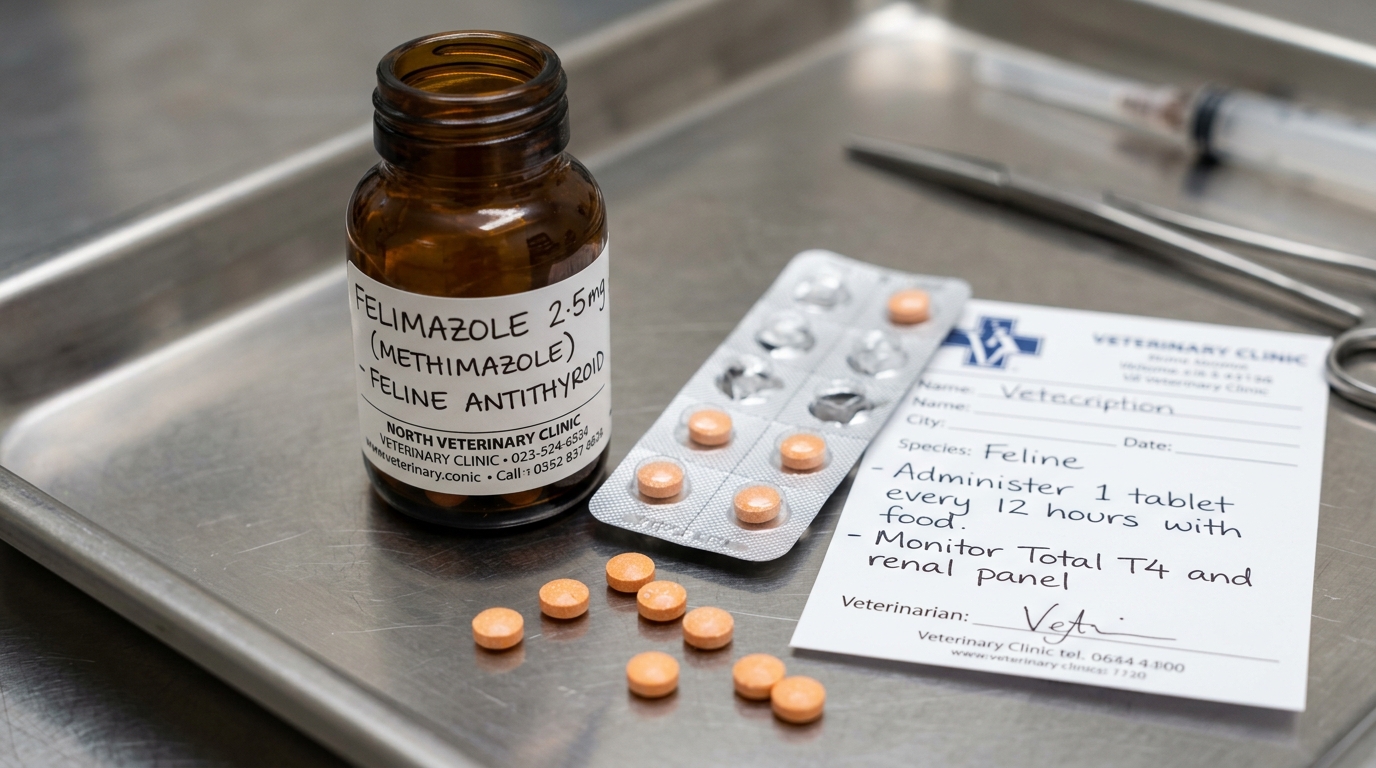
- Drug Class: Thionamide Antithyroid Agent
- Approved Uses: Medical management and long-term control of feline hyperthyroidism (thyrotoxicosis) and pre-operative stabilization prior to radioactive iodine (I-131) therapy or surgical thyroidectomy.
Mechanism of Action (Pharmacodynamics)
Inhibits the enzyme thyroid peroxidase, preventing the iodination of tyrosine residues on thyroglobulin and blocking the coupling of iodotyrosines to synthesize T3 and T4 hormones.
Adverse Reactions & Side Effect Profile
Common / Expected Side Effects
Transient vomiting, inappetence, mild lethargy in the first 4-8 weeks. Idiosyncratic facial pruritus with severe excoriation (bloody self-scratching on the face and neck).
Emergency Red Flag Reactions
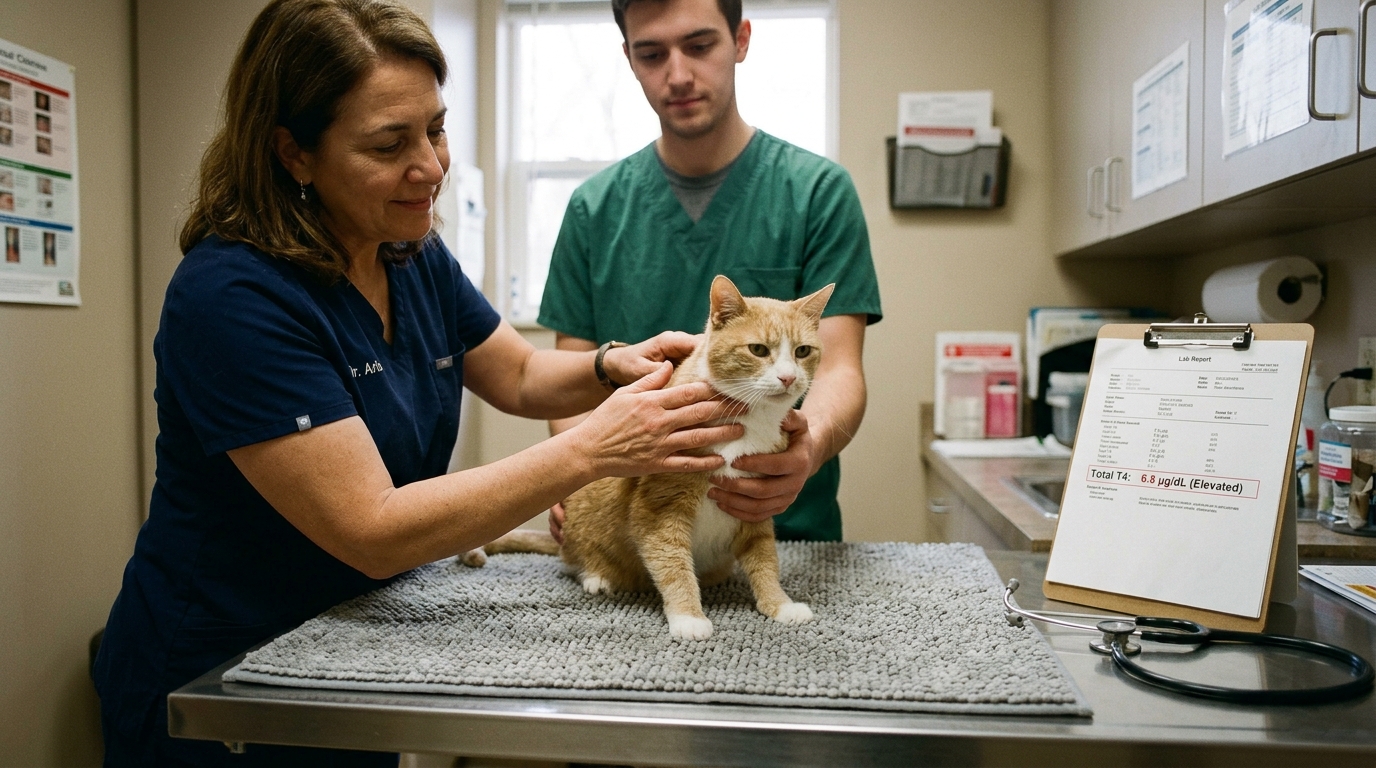
Severe bone marrow suppression (leukopenia, thrombocytopenia, agranulocytosis), hepatopathy, or profound elevation in BUN/creatinine indicating unmasked chronic kidney disease.
Clinical Contraindications & Interactions
- Do Not Use In: Cats with primary liver disease, autoimmune hemolytic anemia, or severe pre-existing renal disease (Stage 4 CKD).
Strict Rule S1 Veterinary Prescription Directive
VETERINARY DIRECTIVE: Treating hyperthyroidism lowers systemic blood pressure, which unmasks underlying feline Chronic Kidney Disease (CKD). Serial blood chemistry and total T4 monitoring are non-negotiable at 2, 4, and 12 weeks after starting or altering doses. Never administer human pharmaceutical products or adjust dosages without direct examination and bloodwork by a licensed Doctor of Veterinary Medicine (DVM).
Printable tools