This guide is general education for pet owners. If your pet has urgent symptoms, possible poisoning, injury, breathing trouble, collapse, severe pain, or sudden decline, contact a licensed veterinarian or local emergency service.
Dosages must be calculated by a licensed veterinarian based on species, weight, and bloodwork. Never administer human medications or self-adjust prescription doses for pets.
Editorial standard
How this guide was prepared
Kitten diarrhea combined with dehydration is a life-threatening medical emergency. Unlike adult cats, pediatric felines possess minimal metabolic reserves and can decompensate rapidly, progressing to fatal hypovolemic shock or fading kitten syndrome within hours. Immediate clinical intervention is required for any kitten under eight weeks presenting with profuse, watery diarrhea, lethargy, or hypothermia.
Quick Clinical Answer
Diarrhea in young kittens is rarely a benign event. It causes rapid fluid loss, leading to severe dehydration and hypoglycemia. If your kitten is under eight weeks old and exhibits watery stools, stops eating, or feels cold to the touch, they are at imminent risk of Fading Kitten Syndrome. Seek immediate veterinary care. Delaying fluid resuscitation by even a few hours can result in irreversible systemic collapse. Do not attempt to manage acute pediatric diarrhea at home without a primary veterinary assessment.
Understanding Pediatric Feline Gastrointestinal Vulnerabilities
The pediatric feline gastrointestinal tract is highly susceptible to pathogenic overgrowth, parasitic loads, and dietary intolerance. More importantly, the physiological makeup of a kitten under sixteen weeks of age limits their ability to withstand the subsequent fluid and electrolyte deficits. The combination of high surface-area-to-volume ratio, immature renal function, and lack of hepatic glycogen stores means that diarrhea rapidly precipitates a cascade of pathological events: dehydration, hypothermia, and hypoglycemia.
Fading Kitten Syndrome (FKS) is an umbrella term for the rapid deterioration and death of neonatal kittens, typically between birth and nine weeks of age. Diarrhea is a frequent early indicator. As fluid is lost through the gastrointestinal tract, the circulatory volume decreases. This hypovolemia leads to poor perfusion of peripheral tissues and essential organs, causing the kitten’s core temperature to plummet and further depressing their ability to absorb nutrients. For related information on adult feline metabolic crises, see our article on hepatic lipidosis timelines.
Etiology of Kitten Diarrhea
The differential diagnosis for kitten diarrhea includes infectious, parasitic, and dietary causes. Identifying the underlying pathogen requires microscopic fecal evaluation, antigen testing, and sometimes PCR panels performed by a veterinary diagnostic laboratory.
Parasitic Infections
Intestinal parasites are the most ubiquitous cause of diarrhea in pediatric patients. Roundworms (Toxocara cati) are frequently transmitted through the mother’s milk (transmammary infection). High worm burdens can cause severe malabsorption, intestinal impaction, and prominent abdominal distension in contrast with an otherwise unthrifty body condition. Coccidia and Giardia are protozoal pathogens that cause persistent, mucosal, and highly malodorous diarrhea. These require specific anti-protozoal medications; empirical deworming with standard anthelmintics will not clear protozoal infections.
Viral Pathogens
Feline Panleukopenia Virus (FPV) is a highly contagious parvovirus that destroys the rapidly dividing cells of the bone marrow and gastrointestinal crypts. It causes profound leukopenia, sloughing of the intestinal lining, and severe, often bloody diarrhea. Mortality rates in young kittens are exceptionally high, and intensive care isolation is mandatory. For context on preventative medicine protocols in young animals, refer to our guide on pediatric vaccine schedules.
Bacterial Overgrowth and Dietary Indiscretion
Abrupt transitions from maternal milk to commercial formula, or from formula to solid foods, can disrupt the immature microbiome. Furthermore, inappropriate feeding of cow’s milk causes osmotic diarrhea due to lactase deficiency. While dietary indiscretion is a common presentation, it is a diagnosis of exclusion only established after infectious agents have been ruled out by a clinician.
Dangerous Home Pitfalls: What NOT to Do (Rule S1)
- NEVER fast a kitten under 8 weeks: Withholding food from neonatal or pediatric kittens rapidly induces fatal hypoglycemia. They lack the hepatic glycogen stores to survive fasting protocols used in adult dogs.
- NEVER give Kaopectate or Pepto-Bismol: These human over-the-counter medications contain salicylate derivatives (bismuth subsalicylate). Felines have a known deficiency in hepatic glucuronyl transferase, making them highly susceptible to fatal salicylate toxicosis.
- NEVER use adult cat dewormer doses on kittens: Anthelmintic medications must be precisely formulated based on an exact pediatric weight. Inappropriate administration can lead to neurological toxicity or intestinal rupture.
- NEVER delay IV fluids for a hypothermic kitten: Trying to orally syringe water into a cold, lethargic kitten presents a massive aspiration risk and will not correct intravascular volume deficits. Intravenous or intraosseous fluid administration by a professional is required.
Clinical Triage Matrix
| Severity Tier | Clinical Presentation | Required Action |
|---|---|---|
| Tier 1: Immediate Emergency (0-2h) | Kitten <8 weeks with watery diarrhea + lethargy (fading kitten syndrome kills in hours), bloody diarrhea in any kitten, diarrhea + not nursing/eating >8h, hypothermic kitten (cold ears/paws). | Immediate transit to an emergency veterinary hospital for IV/IO fluid resuscitation and thermal support. Do not attempt oral fluids. |
| Tier 2: Same-Day (12-24h) | Persistent diarrhea >48h in kitten 8-16 weeks, mucoid stool with visible worms, diarrhea with mild dehydration (tacky gums, reduced skin turgor). | Schedule an urgent appointment with a primary care veterinarian today. Bring a fresh fecal sample. |
| Tier 3: Home Monitoring | Single soft stool after food change, mild loose stool in active, eating kitten >4 months. | Monitor closely for 24 hours. Ensure free access to water. Do not fast. If diarrhea persists, seek veterinary evaluation. |
Veterinary Diagnostics and Therapeutic Interventions
When presenting a kitten for acute diarrhea, the veterinary team will immediately assess cardiovascular stability. Initial diagnostics often include a blood glucose check, packed cell volume (PCV), and total protein assessment to quantify dehydration and hypoglycemia. A thorough fecal floatation and direct smear will be performed to identify ova and parasites.
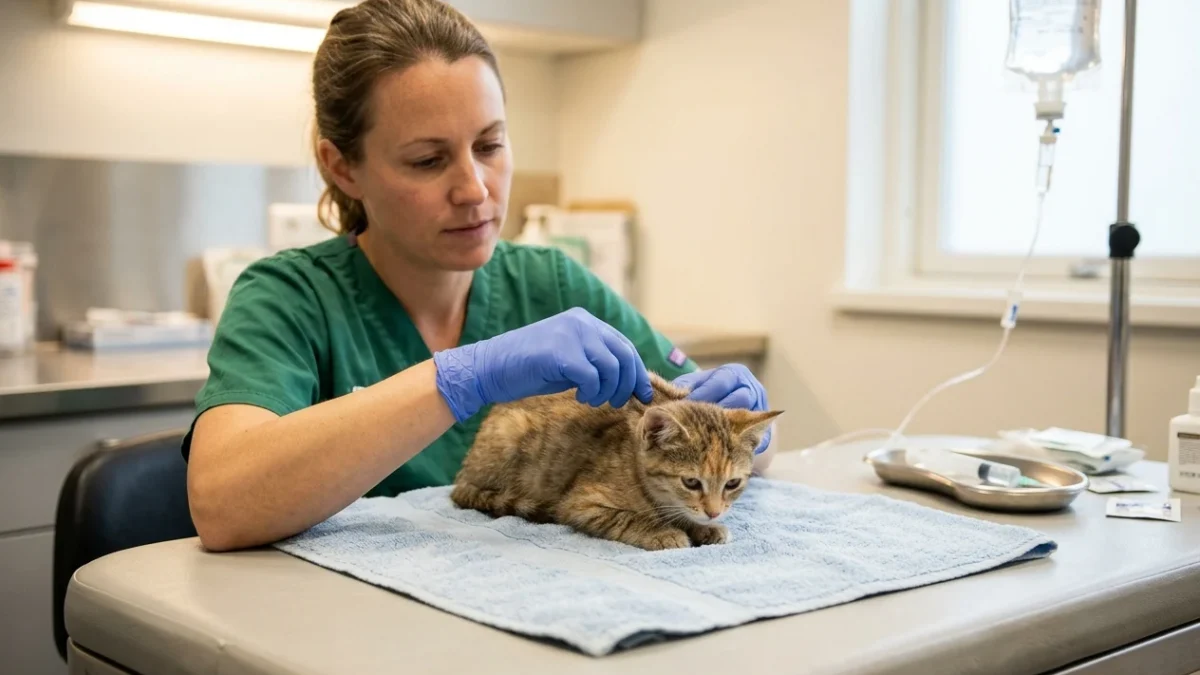
Therapeutics center on fluid resuscitation. Subcutaneous fluids may be sufficient for mildly dehydrated older kittens, but critical neonates typically require intravenous (IV) or intraosseous (IO) catheterization to deliver warmed crystalloid fluids directly into the central circulation. Broad-spectrum antimicrobial therapy, targeted anthelmintics, and precision thermal support via incubators are standard components of the treatment protocol for fading kitten syndrome.
Caregiver Safety Checklist
- Identify the kitten’s exact age in weeks to gauge metabolic vulnerability.
- Palpate the kitten’s extremities (ears, paws); coldness indicates hypothermia and poor perfusion.
- Assess the gums: they should be moist and bubblegum pink. Tacky, pale, or gray gums require emergency response.
- Monitor feeding intervals: failure to nurse or eat for more than 4-6 hours in a neonate is an emergency.
- Collect a fresh fecal sample in a sealed container prior to departing for the veterinary clinic.
Sources and Clinical References
The protocols and clinical parameters described in this document are grounded in peer-reviewed veterinary literature regarding neonatal resuscitation and pediatric gastroenterology.
- Neonatal kitten mortality risk factors and early intervention (PMID: 1561000)
- Fluid therapy and electrolyte management in pediatric veterinary patients (PMID: 2412855)
- Prevalence of intestinal parasites in young kittens and clinical manifestations (PMID: 3325611)
WSAVA 10% Treat Calorie Allowance Calculator
Calculate your pet's daily Resting Energy Requirement (RER) and maximum recommended 10% treat calorie budget based on WSAVA clinical nutrition consensus.
Source transparency
Reference mix for this guide
Source labels describe the type of organization behind each reference; they are not a claim that any outside organization reviewed this article.
- hepatic lipidosis timelines Reference source · newspet.net
- guide on pediatric vaccine schedules Reference source · newspet.net
- Neonatal kitten mortality risk factors and early intervention (PMID: 1561000) Government or public agency · pubmed.ncbi.nlm.nih.gov
- Fluid therapy and electrolyte management in pediatric veterinary patients (PMID: 2412855) Government or public agency · pubmed.ncbi.nlm.nih.gov
- Prevalence of intestinal parasites in young kittens and clinical manifestations (PMID: 3325611) Government or public agency · pubmed.ncbi.nlm.nih.gov