This guide is general education for pet owners. If your pet has urgent symptoms, possible poisoning, injury, breathing trouble, collapse, severe pain, or sudden decline, contact a licensed veterinarian or local emergency service.
Dosages must be calculated by a licensed veterinarian based on species, weight, and bloodwork. Never administer human medications or self-adjust prescription doses for pets.
Editorial standard
How this guide was prepared
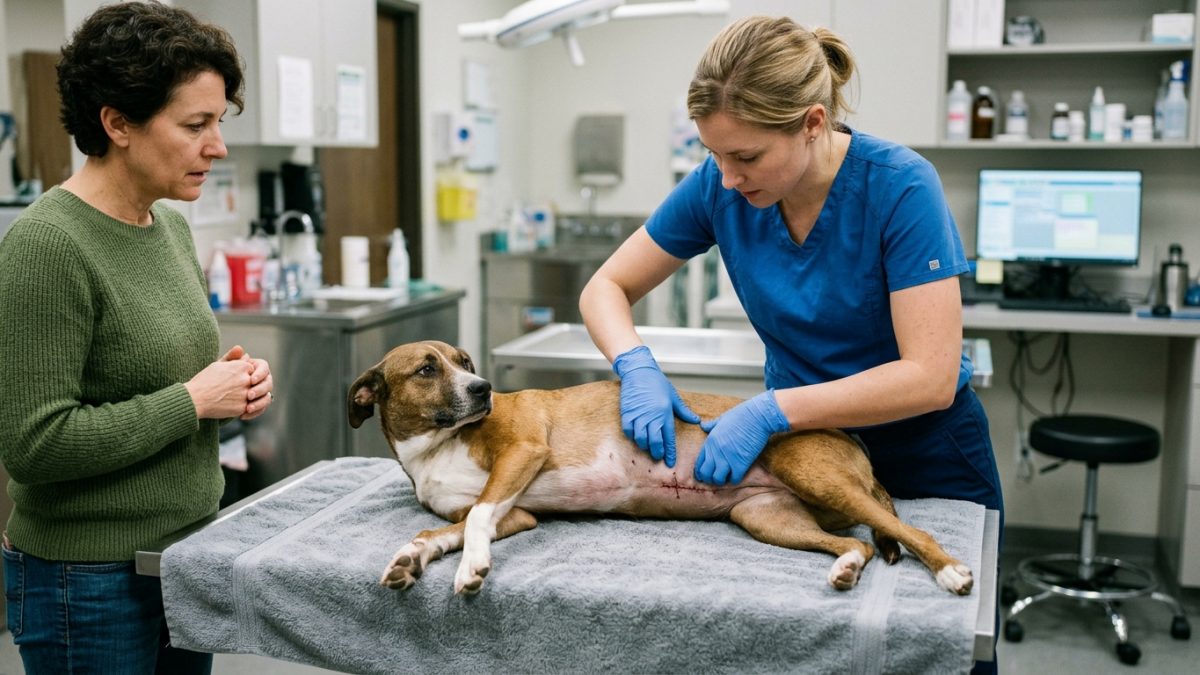
Post-operative recovery requires strict adherence to discharge instructions to prevent surgical failure, dehiscence, or secondary infection. The first 48 to 72 hours demand intensive observation, environmental restriction, and precise pharmacological management.
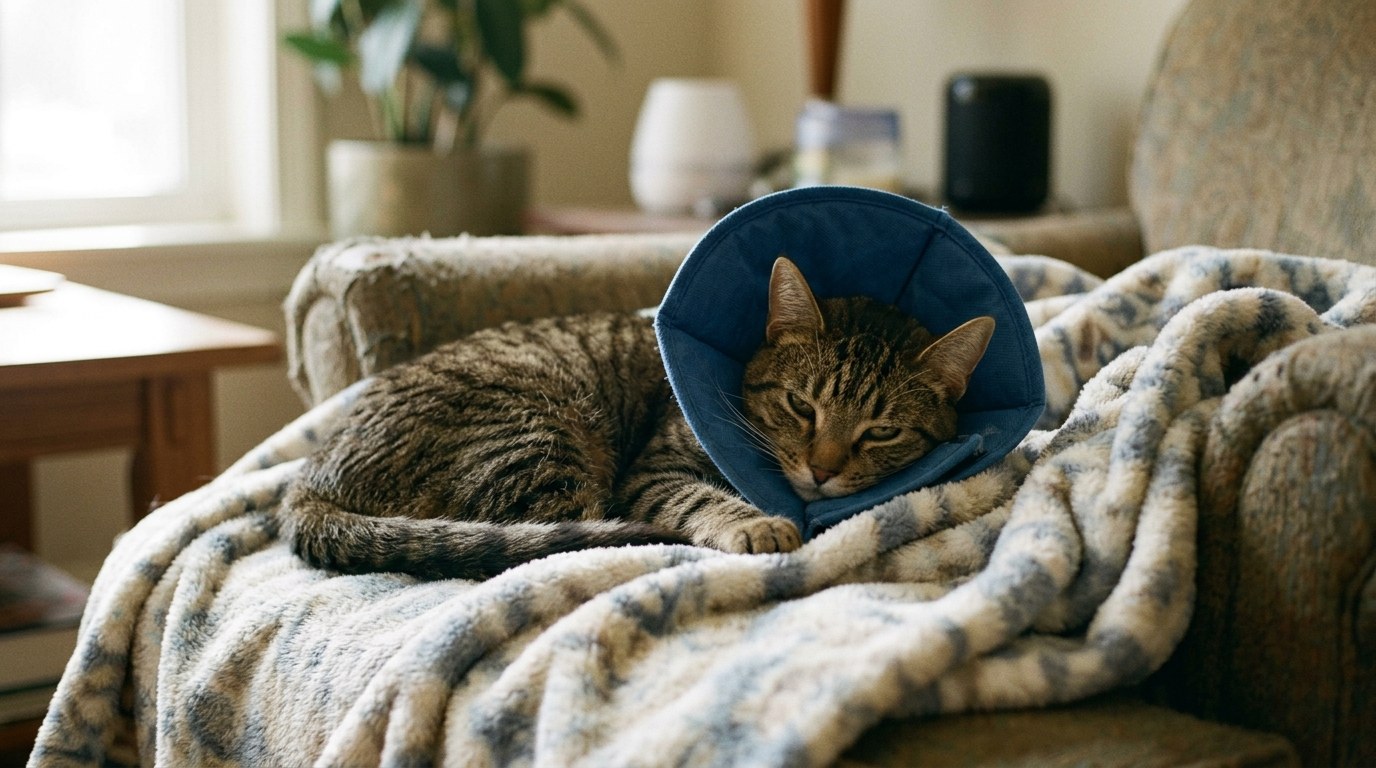
The 10-to-14 Day Incision Protection Window: Feline ovariohysterectomy (spay) and orchiectomy (neuter) represent sterile abdominal and scrotal surgical procedures. Cats possess razor-sharp, backward-facing tongue papillae designed to strip meat from bone; even two minutes of vigorous incision licking will shred delicate intradermal sutures or surgical skin glue, introducing mouth bacteria and triggering fatal peritonitis or evisceration. Keep an Elizabethan collar or snug surgical recovery suit on 24/7 for 10 to 14 days, and maintain strict indoor confinement.
Clinical Quick Answer & Immediate Actions
Surgical success relies on strict postoperative confinement, multimodal analgesia, and vigilant incision monitoring. Unsupervised access to incisions compromises the surgical closure. Caregivers must restrict activity entirely and administer all medications strictly as prescribed.
Incision sites must be inspected twice daily for erythema, purulent discharge, or unexpected swelling. A properly fitted Elizabethan collar (E-collar) or recovery suit is non-negotiable; patients can destroy surgical closures within seconds of unsupervised access.
Pharmacology and Pain Management
Analgesic protocols typically utilize a multimodal approach, combining non-steroidal anti-inflammatory drugs (NSAIDs) with opioids or gabapentinoids. This strategy targets different pain pathways while minimizing adverse dose-dependent effects.
Administer all prescribed antibiotics until the entire course is completed to prevent antimicrobial resistance, even if the surgical site appears fully healed. Never substitute veterinary prescriptions with human over-the-counter pain relievers, which are highly toxic to companion animals.
| Post-Op Day | Clinical Focus | Expected Finding |
|---|---|---|
| Days 1-3 | Pain control & strict rest | Mild bruising, lethargy, decreased appetite |
| Days 4-7 | Tissue granulation | Decreased swelling, returning appetite |
| Days 10-14 | Suture removal / Recheck | Closed margins, resolution of bruising |
Environmental management is equally critical. Isolate the recovering patient from other household animals. Hardwood floors should be covered with non-slip rugs to prevent orthopedic trauma, and access to stairs or furniture must be blocked entirely.
Dietary reintroduction should begin with small, highly digestible meals (e.g., boiled chicken and rice or veterinary gastrointestinal diets) to accommodate anesthesia-induced nausea and gastrointestinal stasis.
When to Seek Emergency Intervention
Immediate veterinary reassessment is required if the patient exhibits active surgical site bleeding, complete anorexia lasting longer than 36 hours, uncontrolled vomiting, or sudden vocalization indicating breakthrough pain.
Orthopedic and neurological patients presenting with sudden loss of motor function, or those unable to urinate within 24 hours of discharge, constitute a critical emergency requiring immediate clinic transport.
Post-Operative Tracker
Maintain a strict medication log to prevent accidental overdoses. Access our Surgical Recovery Tracker to record dosage times, feeding amounts, and incision observations.
Surgical Anatomy & Healing Dynamics: Ovariohysterectomy vs. Castration
Postoperative care protocols differ significantly between female and male gonadectomy procedures due to contrasting surgical approaches:
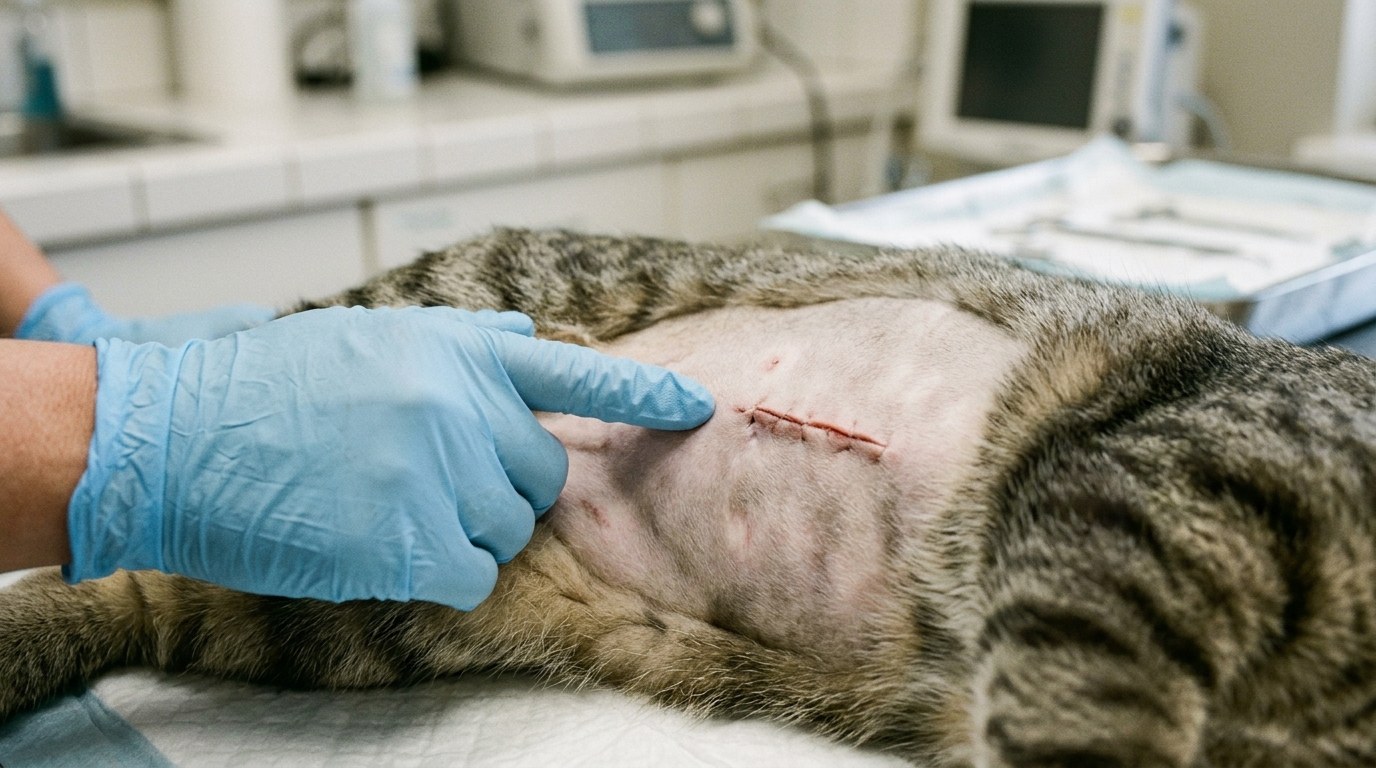
- Female Ovariohysterectomy / Ovariectomy: Spaying requires a ventral midline celiotomy. The surgeon ligates ovarian vascular pedicles and uterine vessels before closing three distinct anatomical layers: the external rectus sheath (linea alba), subcutaneous fascia, and intradermal/cuticular skin. The deepest fascial layer (linea alba) provides 90% of structural holding strength; subcutaneous failure creates a body-wall hernia where abdominal viscera can slip into subcutaneous dead space.
- Male Feline Castration Healing by Second Intention: Feline neutering is performed via two small open scrotal incisions. The spermatic cords are autoligatured or tied with fine suture. Crucially, feline scrotal incisions are intentionally left open to heal by second intention to prevent scrotal hematoma formation. Scrotal skin seals within 48 to 72 hours, provided the cat does not groom the surgical site.
- Normal Healing Ridge vs. Incisional Infection: Between days 3 and 7, caregivers frequently feel a firm, pencil-thick, non-painful subcutaneous ridge beneath a spay incision. This “healing ridge” represents normal fibroblastic proliferation and collagen cross-linking. In contrast, an infected incision manifests as fiery red spreading erythema, localized heat, exquisite pain to gentle touch, purulent yellowish discharge, or systemic pyrexia (> 39.5°C / 103°F).
Home Recovery Nursing & Environmental Modification Protocol
Preventing postoperative surgical failure requires structured indoor environmental controls:
- Sanctuary Room Isolation (Days 1–7): Confine the recovering feline to a warm, quiet room free of high perches, open stairways, or tall cat trees. Running, leaping onto countertops, or rough play with other household pets puts tremendous dynamic shear stress on the abdominal wall closure. Provide a low-entry litter box with non-dust, paper-based pellets to keep clay particles away from scrotal or ventral incisions.
- E-Collar & Recovery Suit Compliance: The majority of post-spay emergencies stem from premature collar removal. If a plastic cone causes severe spatial distress, a soft fabric Elizabethan collar or snug-fitting feline surgical recovery onesie represents an acceptable alternative, provided the incision is completely covered and inaccessible to oral grooming.
- Appetite and Elimination Milestones: Normal voluntary eating should resume within 18 to 24 hours post-anesthesia. Feed small, highly palatable wet meals. Urination should occur within 24 hours of returning home. If the cat demonstrates continuous vomiting, persistent refusal to eat after 24 hours, pale mucous membranes, or abdominal distension, contact your veterinary surgical team immediately.
Frequently Asked Questions
Can I take the E-collar off while I am watching them?
No. Even momentary lapses in supervision can result in the patient accessing the incision. Keep the Elizabethan collar on continuously until the attending veterinarian confirms complete dermal healing (typically 10-14 days).
What is a seroma, and should I be worried?
A seroma is a sterile, fluid-filled pocket that occasionally forms under the incision site due to excess activity. While generally benign, rapid enlargement requires veterinary evaluation to rule out infection or herniation.
My pet hasn’t defecated since surgery. Is this an emergency?
It is common for patients to not defecate for 3 to 5 days post-operatively due to fasting, anesthesia, and opioid analgesics. However, if the patient is straining unproductively, contact the clinic.
Emergency Triage Matrix: Clinical Presentation & Required Response
| Triage Level | Clinical Signs & Presentation | Immediate Action Protocol |
|---|---|---|
| Tier 1: Immediate Emergency (0-2 Hours) | Incision dehiscence (opening), active hemorrhage, pale mucous membranes, extreme lethargy, or respiratory distress. | Wrap the incision site with a clean towel (do not apply tourniquets) and transport immediately to the emergency surgical facility. |
| Tier 2: Urgent Veterinary Care (Same-Day) | Purulent (yellow/green) discharge from incision, localized heat, uncontrolled vomiting, or inability to urinate for >24 hours. | Contact the surgical clinic for a same-day recheck to assess for infection, adjust analgesia, or evaluate renal output. |
| Tier 3: Home Monitoring & Scheduled Care | Mild swelling (seroma), slight redness along the incision margins, or 3-4 days without a bowel movement (if eating normally). | Maintain strict E-collar usage, apply warm compresses only if directed by a veterinarian, and monitor progression at home. |
Surgical Complication Alert
Incision integrity is the most critical factor in postoperative success. Compromises lead to catastrophic failure:
- E-Collar Compliance: Elizabethan collars must remain secured 100% of the time, including during feeding or sleep.
- Activity Restriction: Do not allow running, jumping, or stair climbing until explicitly cleared by the surgical team.
Post-Operative Discharge Checklist
- Verify the exact dosage and frequency of all prescribed analgesics.
- Set up a small, confined recovery area free of elevated surfaces.
- Schedule the 10-to-14-day suture removal or recheck appointment.
Related Clinical Guides & Tools
Peer-Reviewed Clinical References & Evidence Grounding
- Decision-Making on Recommended Age of Spay/Neuter for a Specific Dog: General Principles and Cultural Complexities (opens in new tab) (The Veterinary clinics of North America. Small animal practice (2023) — Peer-reviewed veterinary study indexed on NCBI PubMed (PMID: 37330274).)
- When – and whether – should we spay/neuter companion dogs (opens in new tab) (The Journal of small animal practice (2025) — Peer-reviewed veterinary study indexed on NCBI PubMed (PMID: 40628281).)
- High-quality, high-volume spay-neuter: Access to care and the challenge to private practitioners (opens in new tab) (Journal of feline medicine and surgery (2020) — Peer-reviewed veterinary study indexed on NCBI PubMed (PMID: 32093579).)
- Merck Veterinary Manual: Pain And Pain Management In Pets (opens in new tab) (Verified clinical reference retrieved via Antigravity Ground-Truth Search (merckvetmanual.com).)
Printable tools
Download the matching worksheet
Source transparency
Reference mix for this guide
Source labels describe the type of organization behind each reference; they are not a claim that any outside organization reviewed this article.
- Emergency Triage Protocol Reference source · newspet.net
- Pharmacology Safety Standards Reference source · newspet.net
- Meloxicam (Metacam) for Dogs & Cats: Feline Black-Box Triage Reference source · newspet.net
- Decision-Making on Recommended Age of Spay/Neuter for a Specific Dog: General Principles and Cultural Complexities Government or public agency · pubmed.ncbi.nlm.nih.gov
- When - and whether - should we spay/neuter companion dogs Government or public agency · pubmed.ncbi.nlm.nih.gov
- High-quality, high-volume spay-neuter: Access to care and the challenge to private practitioners Government or public agency · pubmed.ncbi.nlm.nih.gov
- Merck Veterinary Manual: Pain And Pain Management In Pets Veterinary organization · merckvetmanual.com

