
This guide is general education for pet owners. If your pet has urgent symptoms, possible poisoning, injury, breathing trouble, collapse, severe pain, or sudden decline, contact a licensed veterinarian or local emergency service.
Editorial standard
How this guide was prepared
Clinical nutrition serves as a primary therapeutic modality, directly altering disease progression and extending survival times in chronic pathology. Prescription veterinary diets are rigorously formulated to modify specific metabolic pathways, mineral concentrations, or immune responses.
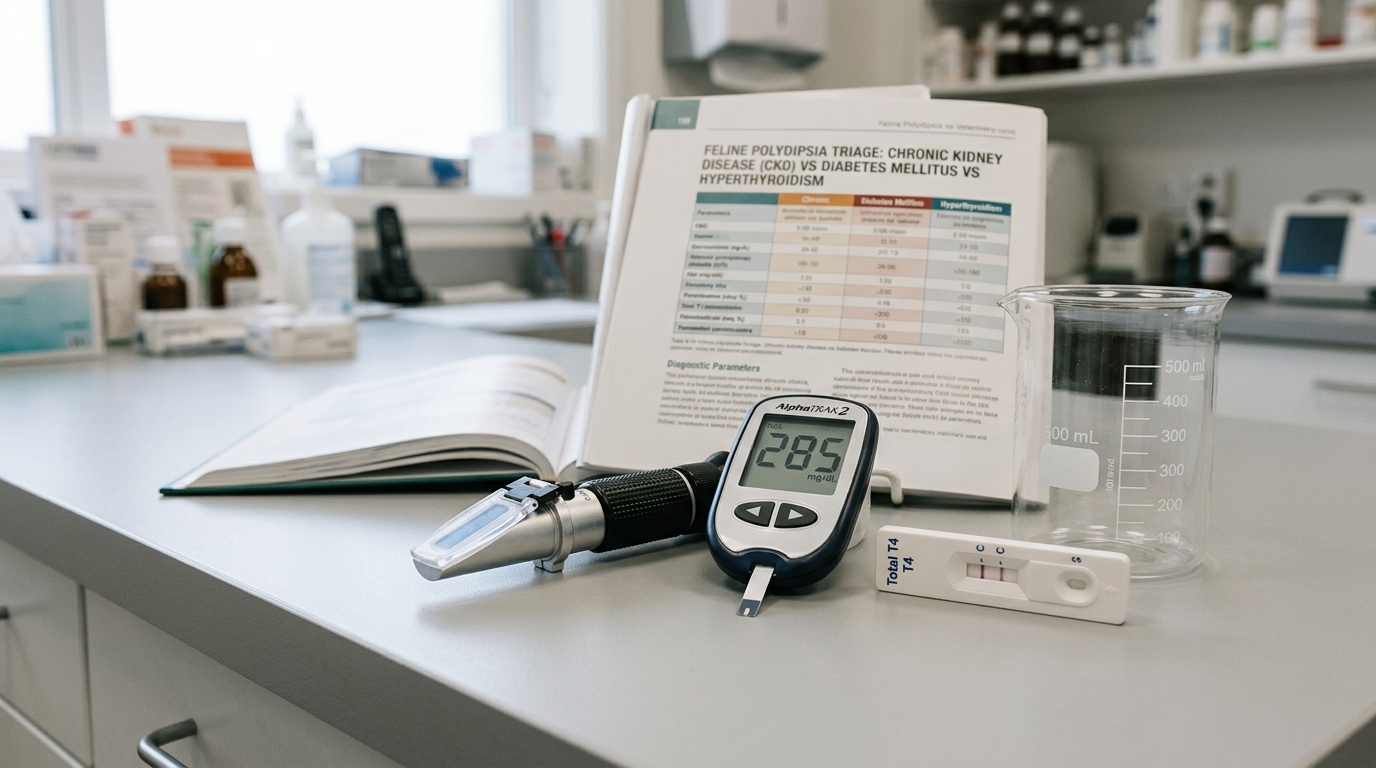
Dietary Transition Changes Insulin Requirements Immediately: Feline diabetes mellitus shares strong pathophysiological similarities with human Type 2 diabetes. Transitioning a diabetic cat from commercial dry kibble (high carbohydrate) to a veterinary low-carbohydrate, high-protein wet diet (< 10% to 12% carbohydrate metabolizable energy) dramatically improves insulin sensitivity and can reduce insulin requirements by 30% to 50% within 48 to 72 hours. NEVER change diets without coordinating immediate insulin dose reductions with your veterinarian; administering full insulin doses on a low-carb diet can trigger fatal hypoglycemic coma.

Clinical Quick Answer & Immediate Actions
Therapeutic diets require strict adherence to achieve clinical endpoints. Avoid mixing unauthorized treats or supplements that disrupt the carefully formulated mineral and macronutrient balances. Transition slowly over 7-10 days to prevent gastrointestinal upset.
Success depends entirely on strict compliance. A therapeutic diet cannot overcome constant influxes of inappropriate treats, table scraps, or competing food sources. Caregivers must view the prescribed diet as a daily medical intervention rather than a basic sustenance choice.
Macronutrient and Micronutrient Modification
Therapeutic formulations manipulate macronutrients to alleviate organ stress. For example, renal diets drastically reduce phosphorus to slow nephron destruction, while gastrointestinal diets utilize highly bioavailable, low-residue proteins to facilitate enterocyte absorption.
Transitioning to a new clinical diet must occur gradually over 7 to 10 days to prevent acute gastrointestinal distress or food aversion. Mix the therapeutic diet with the previous food, incrementally increasing the new diet’s ratio by 10-15% daily.
| Pathology | Key Nutritional Modification | Clinical Objective |
|---|---|---|
| Renal Disease (CKD) | Restricted Phosphorus / Mod Protein | Reduce uremic toxins and slow progression |
| Pancreatitis | Ultra-Low Fat (Canine) | Prevent exocrine pancreatic stimulation |
| Urolithiasis (Crystals) | Targeted RSS / pH Modulation | Dissolve or prevent crystal formation |
Food aversion is a common complication in chronically ill patients. If the animal refuses the therapeutic diet, do not attempt to starve them into compliance, particularly in obese felines prone to hepatic lipidosis. Consult the attending veterinarian for pharmacological appetite stimulants or alternative flavor formulations.
Accurate portion control requires measuring food by weight (grams) rather than volume (cups). Volumetric measuring introduces up to a 20% margin of error, severely compromising weight loss or tightly regulated metabolic plans.
When to Seek Emergency Intervention
Immediate veterinary reassessment is necessary if the patient experiences acute anorexia lasting more than 24 hours, intractable vomiting after dietary transition, or profound lethargy. These signs may indicate disease progression rather than simple food refusal.
Patients on strict elimination diets for suspected food allergies that break protocol by consuming unauthorized proteins must restart the entire 8-week trial from day one. There are no safe “cheat days” in a diagnostic food trial.
Nutritional Compliance Tracker
Consistency is critical for therapeutic success. Access our Daily Nutritional Log to track caloric intake, treat allowances, and transition schedules.
Pathophysiology of Feline Type 2 Diabetes & Pancreatic Beta-Cell Amyloidosis
Domestic cats are obligate carnivores whose metabolic machinery is designed to derive glucose from amino acid gluconeogenesis rather than dietary carbohydrates:
- The Enzymatic Deficiency in Carbohydrate Handling: Felines possess zero salivary amylase and maintain minimal hepatic glucokinase and intestinal disaccharidase activity. When fed commercial dry diets containing 30% to 50% carbohydrates, felines experience chronic postprandial hyperglycemia. Sustained hyperglycemia overstimulates pancreatic beta cells, triggering a toxic cycle called glucose toxicity.
- Islet Amyloid Deposition & Beta-Cell Exhaustion: In response to continuous carbohydrate stimulation, pancreatic beta cells co-secrete insulin and islet amyloid polypeptide (IAPP, or amylin). Over time, insoluble amyloid fibrils precipitate within the islets of Langerhans, mechanically compressing and replacing functional beta-cell architecture. In early stages, relieving glucose toxicity through low-carbohydrate nutrition allows reversibly stunned beta cells to recover and resume endogenous insulin production.
- The High Diabetic Remission Window (70%–80%): When intensive insulin therapy (glargine or PZI) is initiated concurrently with a strict ultra-low-carbohydrate diet within the first 3 to 6 months of diagnosis, between 70% and 80% of diabetic cats achieve complete clinical diabetic remission (the complete independence from exogenous insulin therapy while maintaining euglycemia).
Calculating Carbohydrate Metabolizable Energy (% ME)
Pet food guaranteed analysis lists carbohydrates indirectly through Nitrogen-Free Extract (NFE). Caregivers must evaluate diets on a percent of Metabolizable Energy (% ME) basis:
- The 10% ME Carbohydrate Benchmark: Feline diabetic diets must provide less than 10% to 12% of total calories from carbohydrates, with high protein (> 45% ME) and moderate fat (30% to 45% ME). Most standard commercial canned foods (patés without gravies) fulfill this criterion naturally, whereas almost all dry kibbles exceed 25% to 40% carbohydrate calories due to starch binding requirements.
- Home Glucose Monitoring Protocol: Measuring capillary blood glucose at home using a calibrated veterinary glucometer (AlphaTRAK) via marginal ear vein pricks eliminates the massive glucose spikes induced by in-clinic transport stress (stress hyperglycemia). Record glucose curves before each insulin injection and at the expected nadir (6 to 8 hours post-glargine injection).
- Emergency Hypoglycemia Action Plan: If a diabetic cat demonstrates weakness, glassy unblinking eyes, ataxia (“drunken walk”), facial twitching, or seizures, blood glucose has dropped below critical levels (< 60 mg/dL). Immediately rub Karo syrup, maple syrup, or honey onto the cat's buccal gums to provide mucosal glucose absorption, and transport the pet immediately to an emergency hospital.
Frequently Asked Questions
Can I mix over-the-counter food with the prescription diet?
No. Mixing a maintenance diet with a therapeutic diet dilutes the targeted nutritional profile, rendering the treatment ineffective (e.g., introducing excess phosphorus to a renal patient or allergens to an allergy patient).
How long does an elimination diet take to work?
A strict elimination diet trial for dermatological allergies requires an absolute minimum of 8 to 12 weeks of exclusive feeding before clinical improvement can be accurately assessed.
Are homemade diets safer than commercial prescription diets?
Unless formulated by a Board-Certified Veterinary Nutritionist (DACVN), homemade diets are frequently deficient in essential micronutrients and lack the precise mineral balancing required for chronic disease management.
Emergency Triage Matrix: Clinical Presentation & Required Response
| Triage Level | Clinical Signs & Presentation | Immediate Action Protocol |
|---|---|---|
| Tier 1: Immediate Emergency (0-2 Hours) | Diabetic patient experiencing severe weakness/seizures (hypoglycemia), or a blocked feline straining to urinate unproductively. | Administer Karo syrup to gums (if diabetic/crashing) and transport to emergency care immediately. |
| Tier 2: Urgent Veterinary Care (Same-Day) | Complete anorexia for >24 hours in a chronically ill patient, or intractable vomiting after beginning a new diet. | Contact the attending veterinarian for an anti-emetic prescription or alternative nutritional formulation. |
| Tier 3: Home Monitoring & Scheduled Care | Mild soft stool during the initial 3 days of dietary transition, with normal appetite and hydration. | Slow the transition pace, monitor stool quality, and ensure constant access to fresh water. |
Dietary Compliance Warning
Therapeutic diets function as prescription medication. Deviations from the protocol can trigger severe metabolic relapses:
- Zero Table Scraps: A single high-fat treat can trigger a catastrophic pancreatitis relapse in sensitive dogs.
- Strict Portioning: Weigh all meals using a digital kitchen scale to maintain precise caloric and mineral intake.
Transition & Feeding Checklist
- Transition over a strict 7-10 day period to prevent gastrointestinal shock.
- Remove all competing food sources (including sibling pet bowls).
- Monitor water intake, especially for patients on dry therapeutic diets.
Related Clinical Guides & Tools
Peer-Reviewed Clinical References & Evidence Grounding
- iCatCare 2025 consensus guidelines on the diagnosis and management of diabetes mellitus in cats (opens in new tab) (Journal of feline medicine and surgery (2025) — Peer-reviewed veterinary study indexed on NCBI PubMed (PMID: 41224734).)
- Diabetes Ketoacidosis and Hyperosmolar Hyperglycemic Syndrome in Companion Animals (opens in new tab) (The Veterinary clinics of North America. Small animal practice (2023) — Peer-reviewed veterinary study indexed on NCBI PubMed (PMID: 36898859).)
- 2018 AAHA Diabetes Management Guidelines for Dogs and Cats (opens in new tab) (Journal of the American Animal Hospital Association (2018) — Peer-reviewed veterinary study indexed on NCBI PubMed (PMID: 29314873).)
- dvm360 Veterinary Clinical Reference: Feline Diabetes Mellitus Proceedings (opens in new tab) (Verified clinical reference retrieved via Antigravity Ground-Truth Search (dvm360.com).)
WSAVA 10% Treat Calorie Allowance Calculator
Calculate your pet's daily Resting Energy Requirement (RER) and maximum recommended 10% treat calorie budget based on WSAVA clinical nutrition consensus.
Printable tools
Download the matching worksheet
Source transparency
Reference mix for this guide
Source labels describe the type of organization behind each reference; they are not a claim that any outside organization reviewed this article.
- Emergency Triage Protocol Reference source · newspet.net
- Pharmacology Safety Standards Reference source · newspet.net
- Can Cats Eat Dog Food? Taurine Deficiency & Diet Triage Reference source · newspet.net
- iCatCare 2025 consensus guidelines on the diagnosis and management of diabetes mellitus in cats Government or public agency · pubmed.ncbi.nlm.nih.gov
- Diabetes Ketoacidosis and Hyperosmolar Hyperglycemic Syndrome in Companion Animals Government or public agency · pubmed.ncbi.nlm.nih.gov
- 2018 AAHA Diabetes Management Guidelines for Dogs and Cats Government or public agency · pubmed.ncbi.nlm.nih.gov
- dvm360 Veterinary Clinical Reference: Feline Diabetes Mellitus Proceedings Veterinary organization · dvm360.com

