Health and Safety Boundary
Jump to Emergency Red Flags ↓
This guide is general education for pet owners. If your pet has urgent symptoms, possible poisoning, injury, breathing trouble, collapse, severe pain, or sudden decline, contact a licensed veterinarian or local emergency service.
Veterinary Medication & Dosage Boundary
Dosages must be calculated by a licensed veterinarian based on species, weight, and bloodwork. Never administer human medications or self-adjust prescription doses for pets.
Editorial standard
How this guide was prepared
Edited for decisions
NewsPet guides are structured around practical owner choices, tradeoffs, and safety boundaries.
Source policy
Sources are listed when a guide relies on outside references.
Veterinary boundary
This article does not diagnose or prescribe; urgent symptoms need veterinary care.
Corrections
Readers can flag unclear, outdated, or inaccurate information through our contact page.
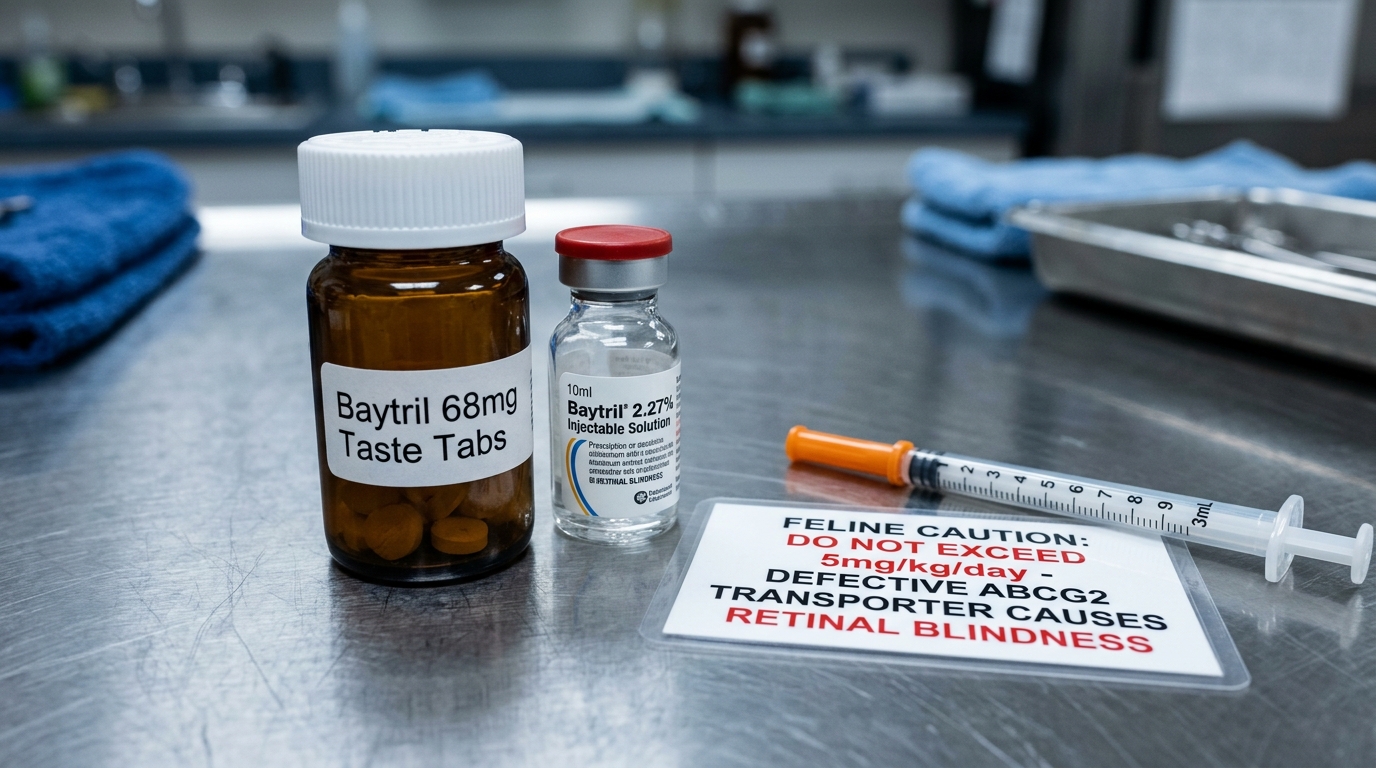
Enrofloxacin (Baytril): Cartilage & Feline Blindness Triage
Clinical Classification & Indications
- Drug Class: Fluoroquinolone Antibacterial
- Approved Uses: Treatment of complex, multi-drug resistant bacterial infections including deep pyodermas, severe pyelonephritis, prostatitis, and Gram-negative sepsis.
Mechanism of Action (Pharmacodynamics)
Inhibits bacterial DNA gyrase (topoisomerase II) and topoisomerase IV, preventing bacterial DNA supercoiling, transcription, and replication, culminating in rapid bactericidal action.
Adverse Reactions & Side Effect Profile
Common / Expected Side Effects
Vomiting, diarrhea, anorexia, mild elevation of hepatic transaminases.
Emergency Red Flag Reactions
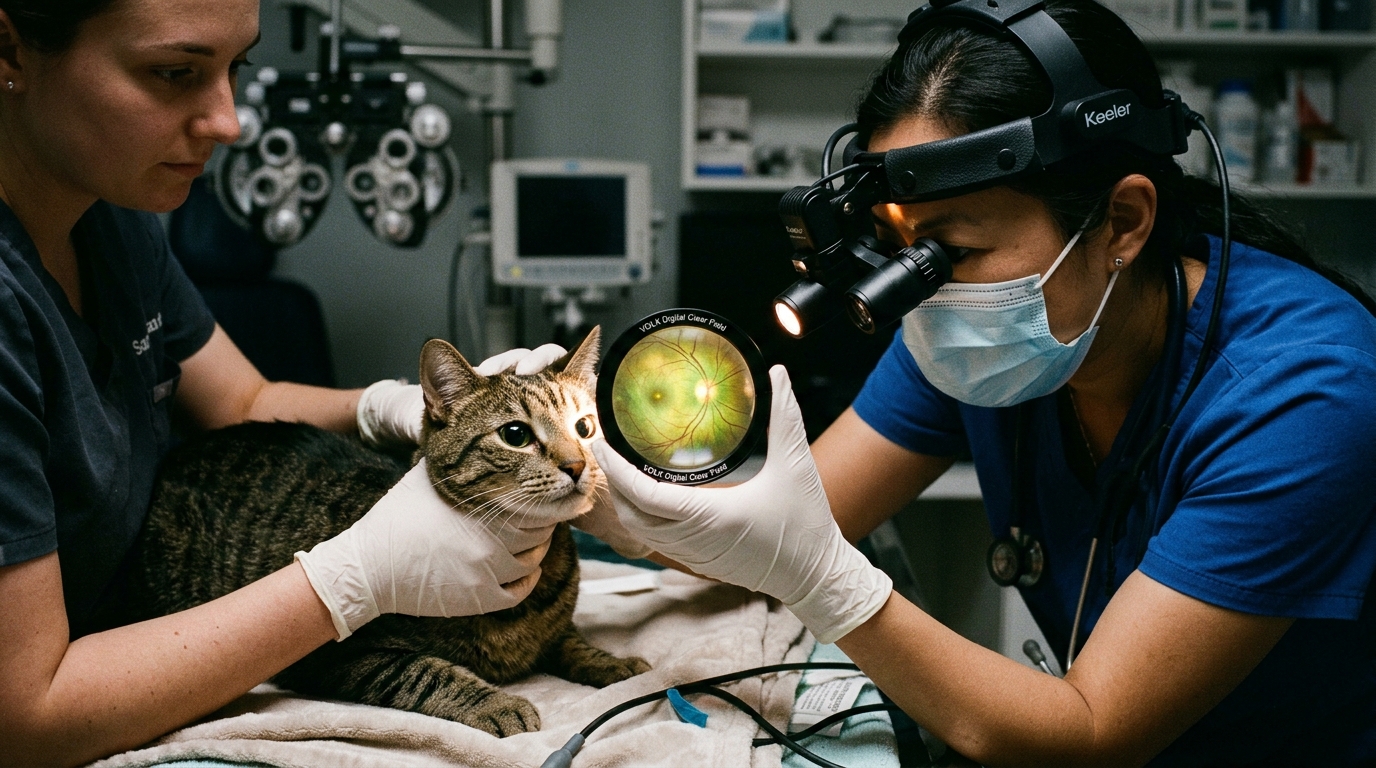
In cats: sudden fixed/dilated pupils, bumping into walls, total acute blindness (photoreceptor retinal degeneration). In growing dogs: acute lameness and joint effusion.
Clinical Contraindications & Interactions
- Do Not Use In: Rapidly growing dogs (causes articular cartilage arthropathy in puppies under 8-12 months, or under 18 months in giant breeds). Extreme caution in cats (strict dose cap of 5 mg/kg/day).
Strict Rule S1 Veterinary Prescription Directive
VETERINARY DIRECTIVE: NEVER exceed recommended manufacturer doses in felines. Felines have a defective retinal ABCG2 transporter that causes enrofloxacin to accumulate in the retina, where light exposure generates catastrophic reactive oxygen species that destroy photoreceptors. Never administer human pharmaceutical products or adjust dosages without direct examination and bloodwork by a licensed Doctor of Veterinary Medicine (DVM).
Printable tools