Health and Safety Boundary
Jump to Emergency Red Flags ↓
This guide is general education for pet owners. If your pet has urgent symptoms, possible poisoning, injury, breathing trouble, collapse, severe pain, or sudden decline, contact a licensed veterinarian or local emergency service.
Veterinary Medication & Dosage Boundary
Dosages must be calculated by a licensed veterinarian based on species, weight, and bloodwork. Never administer human medications or self-adjust prescription doses for pets.
Editorial standard
How this guide was prepared
Edited for decisions
NewsPet guides are structured around practical owner choices, tradeoffs, and safety boundaries.
Source policy
Sources are listed when a guide relies on outside references.
Veterinary boundary
This article does not diagnose or prescribe; urgent symptoms need veterinary care.
Corrections
Readers can flag unclear, outdated, or inaccurate information through our contact page.
Clavamox for Dogs & Cats: Antibiotic Spectrum & GI Triage
Clinical Classification & Indications
- Drug Class: Potentiated Aminopenicillin Antibiotic
- Approved Uses: First-line empirical treatment for skin and soft tissue infections (pyoderma, wounds, abscesses), bacterial cystitis (UTIs), periodontal disease, and upper respiratory tract infections.
Mechanism of Action (Pharmacodynamics)
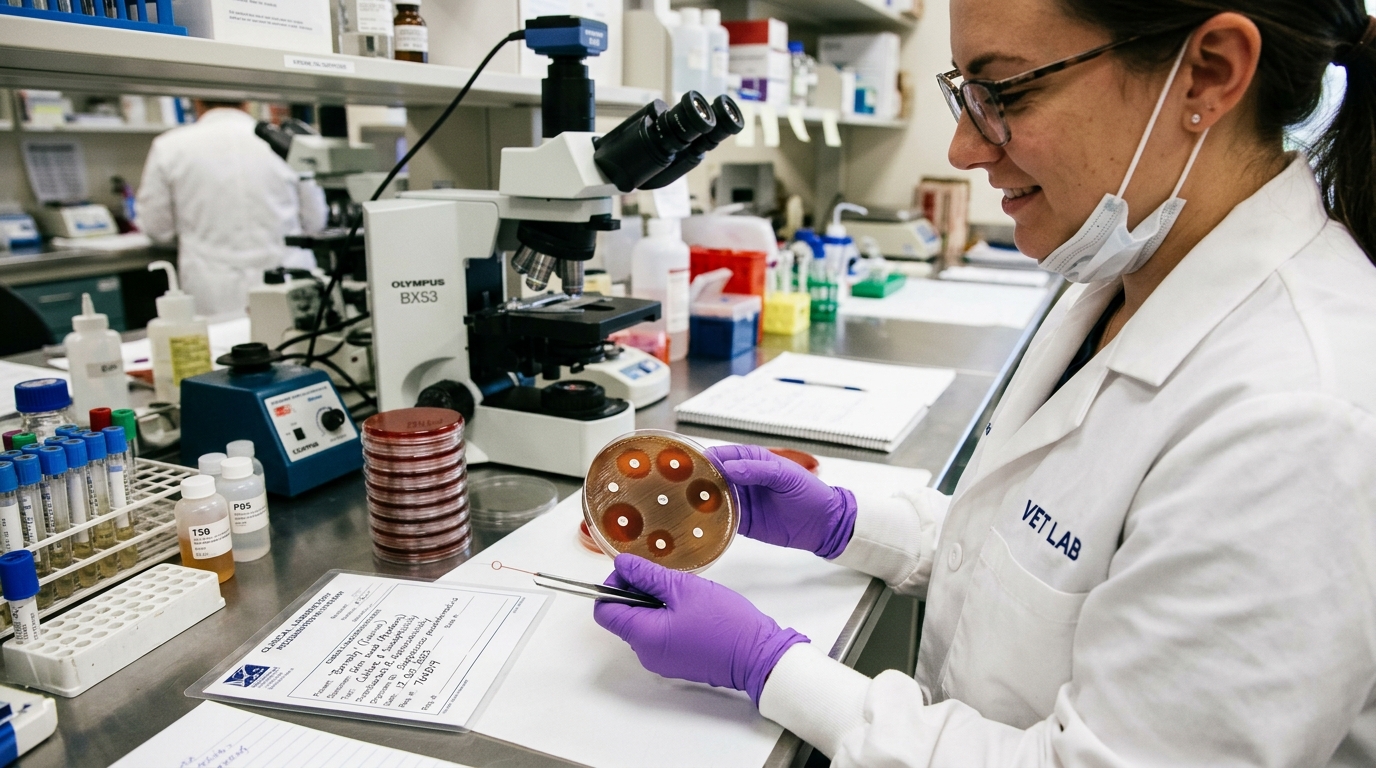
Amoxicillin competitively inhibits bacterial transpeptidase enzymes, preventing bacterial cell wall peptidoglycan synthesis. Clavulanic acid inactivates bacterial beta-lactamase enzymes, restoring susceptibility in resistant strains.
Adverse Reactions & Side Effect Profile
Common / Expected Side Effects
Nausea, vomiting, loose stool, diarrhea, decreased appetite. This is directly related to alterations in native gut microflora and local gastric irritation.
Emergency Red Flag Reactions
Severe immediate anaphylaxis: urticaria, facial angioedema, profuse salivation, vomiting, dyspnea, acute cardiovascular collapse.
Clinical Contraindications & Interactions
- Do Not Use In: Animals with a documented history of penicillin or cephalosporin allergies. Contraindicated in small pocket pets (rabbits, guinea pigs, hamsters) where it causes fatal enterotoxemia.
Strict Rule S1 Veterinary Prescription Directive
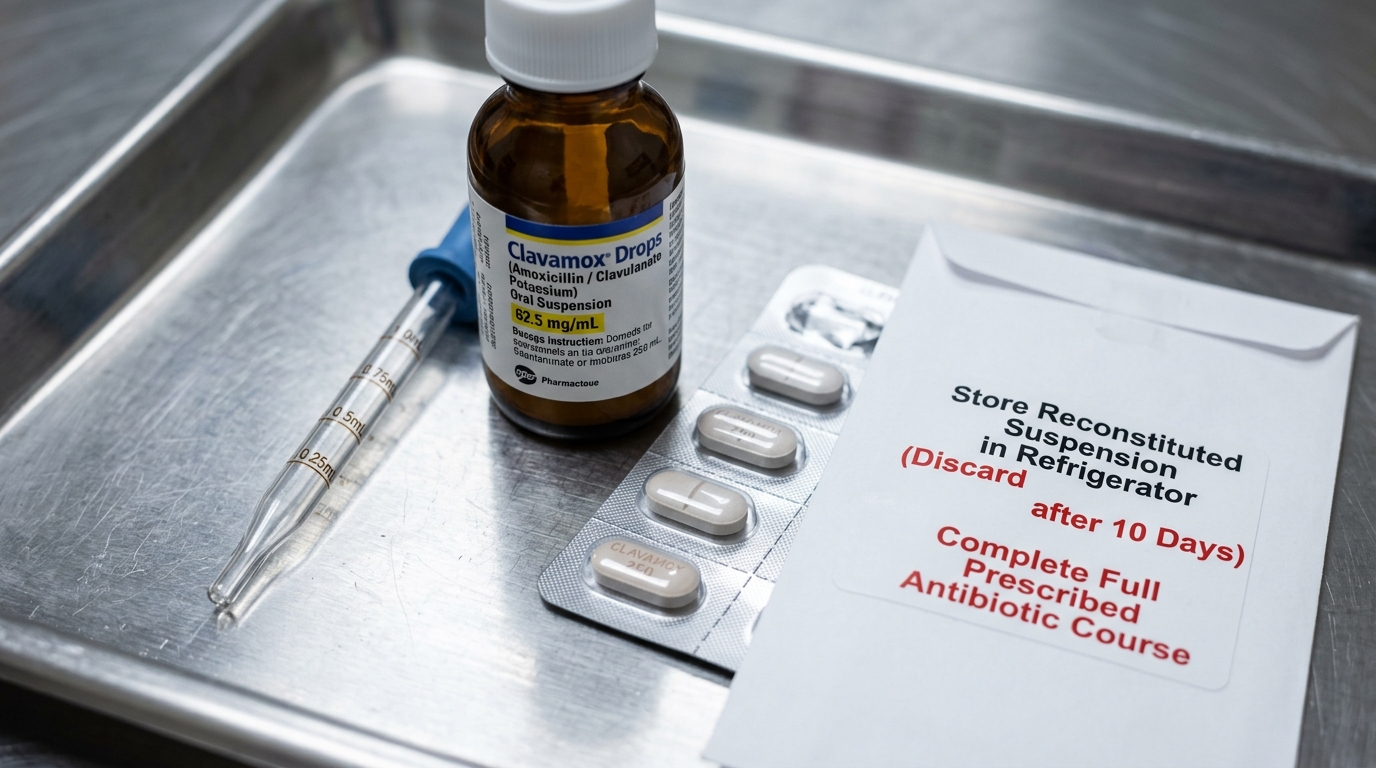
VETERINARY DIRECTIVE: ALWAYS complete the full course of prescribed Clavamox, even if symptoms resolve after 2-3 days, to prevent antibiotic resistance. Administer with food to reduce nausea. Store reconstituted oral suspension in the refrigerator and discard after 10 days. Never administer human pharmaceutical products or adjust dosages without direct examination and bloodwork by a licensed Doctor of Veterinary Medicine (DVM).
Printable tools