Health and Safety Boundary
Jump to Emergency Red Flags ↓
This guide is general education for pet owners. If your pet has urgent symptoms, possible poisoning, injury, breathing trouble, collapse, severe pain, or sudden decline, contact a licensed veterinarian or local emergency service.
Editorial standard
How this guide was prepared
Edited for decisions
NewsPet guides are structured around practical owner choices, tradeoffs, and safety boundaries.
Source policy
Sources are listed when a guide relies on outside references.
Veterinary boundary
This article does not diagnose or prescribe; urgent symptoms need veterinary care.
Corrections
Readers can flag unclear, outdated, or inaccurate information through our contact page.
Cerenia (Maropitant Citrate): Antiemetic & Motion Sickness Triage
Clinical Classification & Indications
- Drug Class: Neurokinin-1 (NK1) Receptor Antagonist
- Approved Uses: Treatment and prevention of acute vomiting from diverse etiologies (pancreatitis, gastroenteritis, chemotherapy) and prevention of vomiting induced by motion sickness.
Mechanism of Action (Pharmacodynamics)
Centrally and peripherally blocks the binding of Substance P to Neurokinin-1 (NK1) receptors in the emetic center of the brainstem (nucleus tractus solitarius), arresting both neural and humoral emetic triggers.
Adverse Reactions & Side Effect Profile
Common / Expected Side Effects
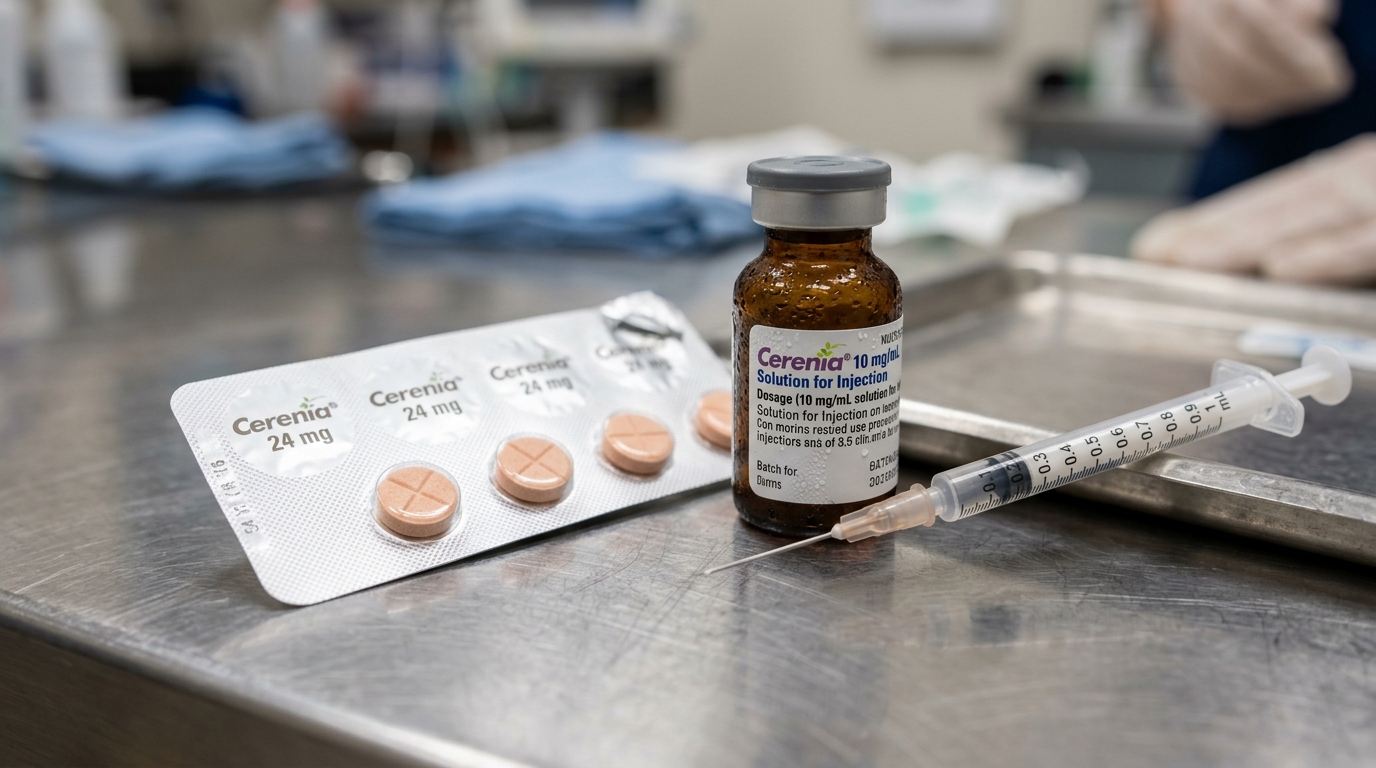
Pain or stinging at injection site when given subcutaneously (refrigerating the vial significantly reduces injection discomfort), mild lethargy, mild diarrhea.
Emergency Red Flag Reactions
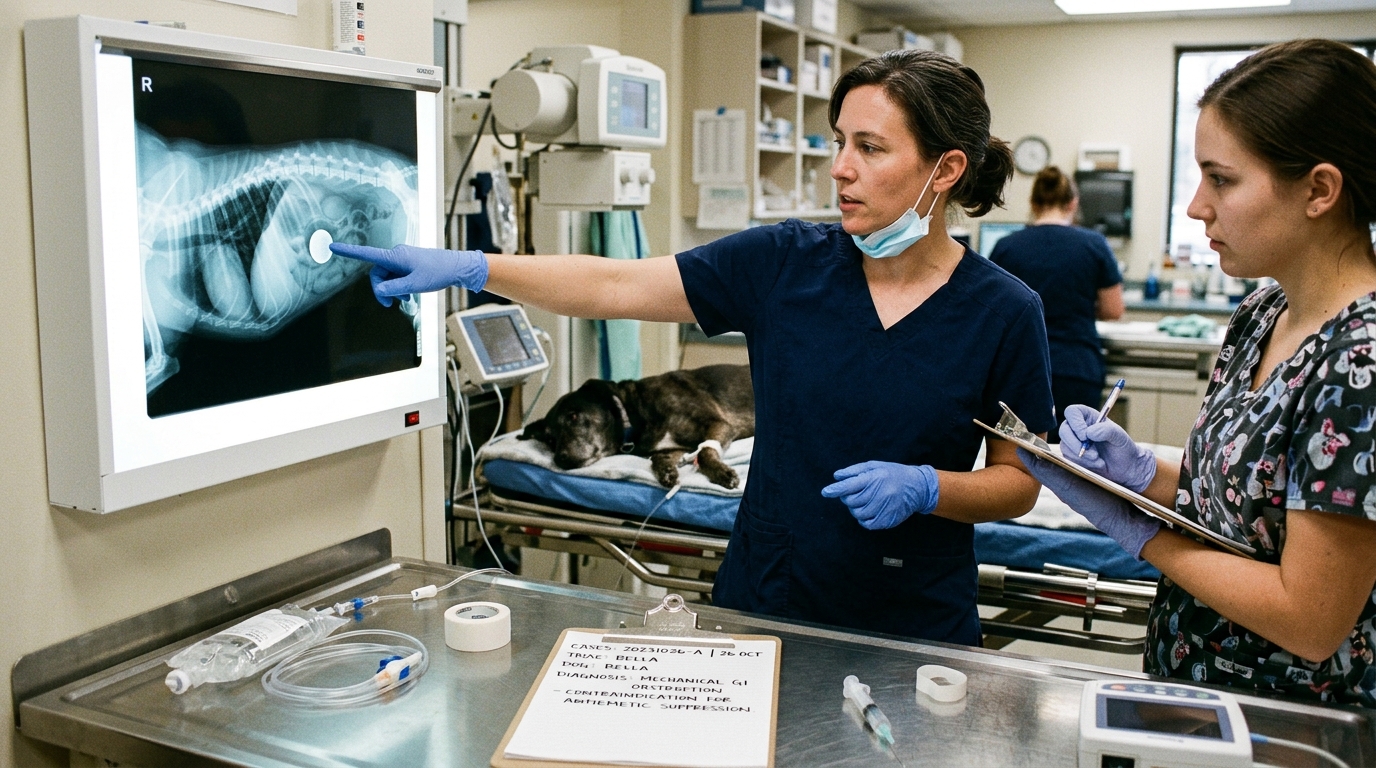
Persistent retching despite Cerenia administration—which strongly indicates a mechanical foreign body obstruction that requires immediate surgical intervention.
Clinical Contraindications & Interactions
- Do Not Use In: Known or suspected gastrointestinal mechanical obstruction (foreign bodies, intestinal intussusception). Puppies under 8 weeks of age or motion sickness dosing under 16 weeks.
Strict Rule S1 Veterinary Prescription Directive
VETERINARY DIRECTIVE: For motion sickness prevention, Cerenia tablets must be given at least 2 hours prior to travel with a small piece of food (do not wrap in fatty food like cheese which delays absorption). Cerenia stops the symptom of vomiting, but does NOT cure underlying systemic disease. Never administer human pharmaceutical products or adjust dosages without direct examination and bloodwork by a licensed Doctor of Veterinary Medicine (DVM).
Clinical Toxicology & Safety Tool
Pet Toxic Food & Hazard Fast-Checker
Rapidly verify toxicity risks, toxic mechanisms, and immediate clinical steps for common household foods, plants, and human medications before calling poison control or your veterinarian.
Printable tools