This guide is general education for pet owners. If your pet has urgent symptoms, possible poisoning, injury, breathing trouble, collapse, severe pain, or sudden decline, contact a licensed veterinarian or local emergency service.
Veterinary Medication & Dosage Boundary
Dosages must be calculated by a licensed veterinarian based on species, weight, and bloodwork. Never administer human medications or self-adjust prescription doses for pets.
Editorial standard
How this guide was prepared
Edited for decisionsNewsPet guides are structured around practical owner choices, tradeoffs, and safety boundaries.
Source policySources are listed when a guide relies on outside references.
Veterinary boundaryThis article does not diagnose or prescribe; urgent symptoms need veterinary care.
CorrectionsReaders can flag unclear, outdated, or inaccurate information through our contact page.
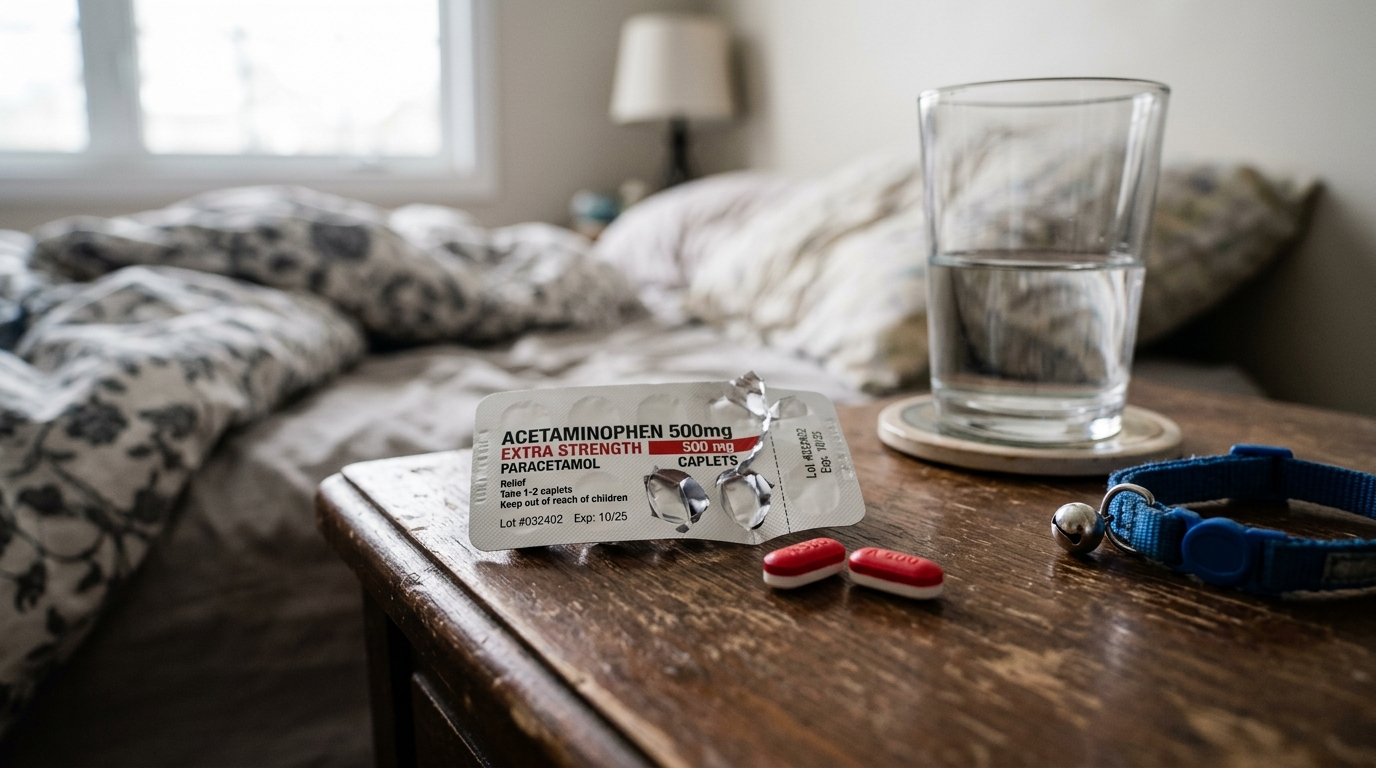
Cats CANNOT take acetaminophen (Tylenol, Paracetamol) in any quantity. Even a fragment of a single 500mg human tablet converts feline hemoglobin into methemoglobin, depriving vital tissues of oxygen and causing rapid death.
Mechanism of Action: Felines are naturally deficient in the hepatic enzyme glucuronyl transferase. Acetaminophen is shunted into cytochrome P450 oxidation, creating toxic NAPQI that oxidizes ferrous iron (Fe2+) into ferric iron (Fe3+), rendering red blood cells incapable of carrying oxygen.
Figure 1: Domestic human analgesic exposure. Never offer human pain medications to felines; a single 500mg tablet exceeds the fatal toxic dose for an adult cat by multiple orders of magnitude.
Clinical Signs & Staged Timeline
Onset Time: Cyanosis and facial edema within 1 to 4 hours; fatal anoxia within 12 to 24 hours.
Primary Symptoms: Brownish/muddy or cyanotic (blue) mucous membranes, chocolate-brown blood, facial and paw edema, severe dyspnea, hypothermia, acute hepatic necrosis.
Emergency Triage Protocol
IMMEDIATE ER VISIT (Specific Antidote Required)
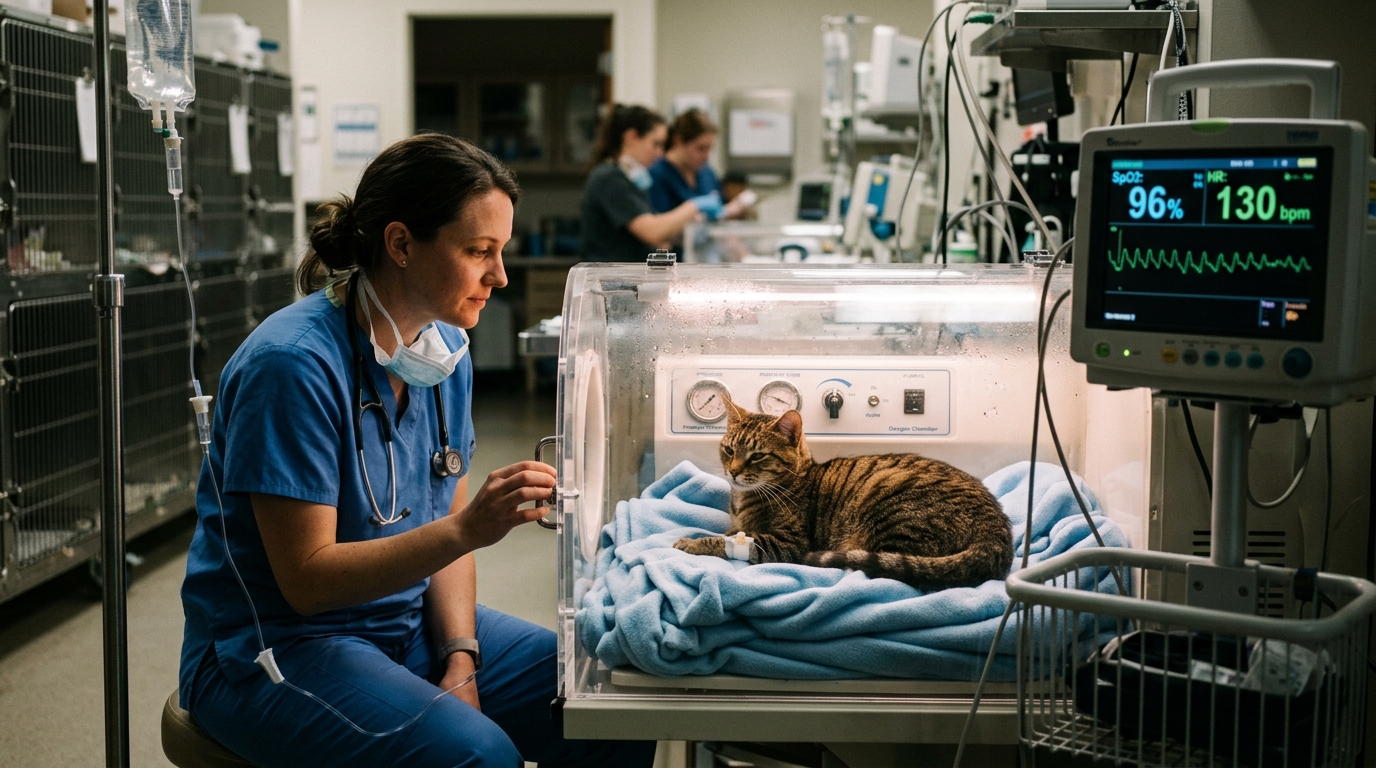
Bring the cat to an emergency clinic immediately. The specific antidote N-acetylcysteine (NAC) must be administered IV to replenish intracellular glutathione, alongside oxygen cage therapy and methylene blue.
Figure 2: Intensive oxygen cage resuscitation for feline methemoglobinemia. High inspired oxygen fractions (FiO2) and IV N-acetylcysteine diuresis combat lethal tissue hypoxia.
Strict Rule S1 Warning
NEVER induce vomiting at home using hydrogen peroxide without direct instruction from a DVM. Inappropriate emesis can cause fatal aspiration pneumonia. Always seek professional veterinary diagnosis.
Clinical Toxicology & Safety Tool
Pet Toxic Food & Hazard Fast-Checker
Rapidly verify toxicity risks, toxic mechanisms, and immediate clinical steps for common household foods, plants, and human medications before calling poison control or your veterinarian.
Is Philodendron Toxic to Cats? Feline Oxalate Triage Clinical Verdict: MODERATELY TOXIC Cats CANNOT chew Philodendron varieties (Heartleaf, Brasil, Hope). The leaves are loaded…
Dog Drank Toilet Bowl Cleaner: Acid Chemical Burn Triage Clinical Verdict: CRITICALLY SEVERE (Corrosive Chemical Hazard) Dogs CANNOT drink toilet bowl water containing automatic…
Cat Exposed to Liquid Potpourri: Tongue Necrosis Triage Clinical Verdict: HIGHLY SEVERE TO CRITICAL Cats CANNOT be exposed to liquid potpourri or essential oil…
Is Philodendron Toxic to Cats? Feline Oxalate Triage Clinical Verdict: MODERATELY TOXIC Cats CANNOT chew Philodendron varieties (Heartleaf, Brasil, Hope). The leaves are loaded…
Dog Drank Toilet Bowl Cleaner: Acid Chemical Burn Triage Clinical Verdict: CRITICALLY SEVERE (Corrosive Chemical Hazard) Dogs CANNOT drink toilet bowl water containing automatic…