This guide is general education for pet owners. If your pet has urgent symptoms, possible poisoning, injury, breathing trouble, collapse, severe pain, or sudden decline, contact a licensed veterinarian or local emergency service.
Editorial standard
How this guide was prepared
Clinical nutrition serves as a primary therapeutic modality, directly altering disease progression and extending survival times in chronic pathology. Prescription veterinary diets are rigorously formulated to modify specific metabolic pathways, mineral concentrations, or immune responses.
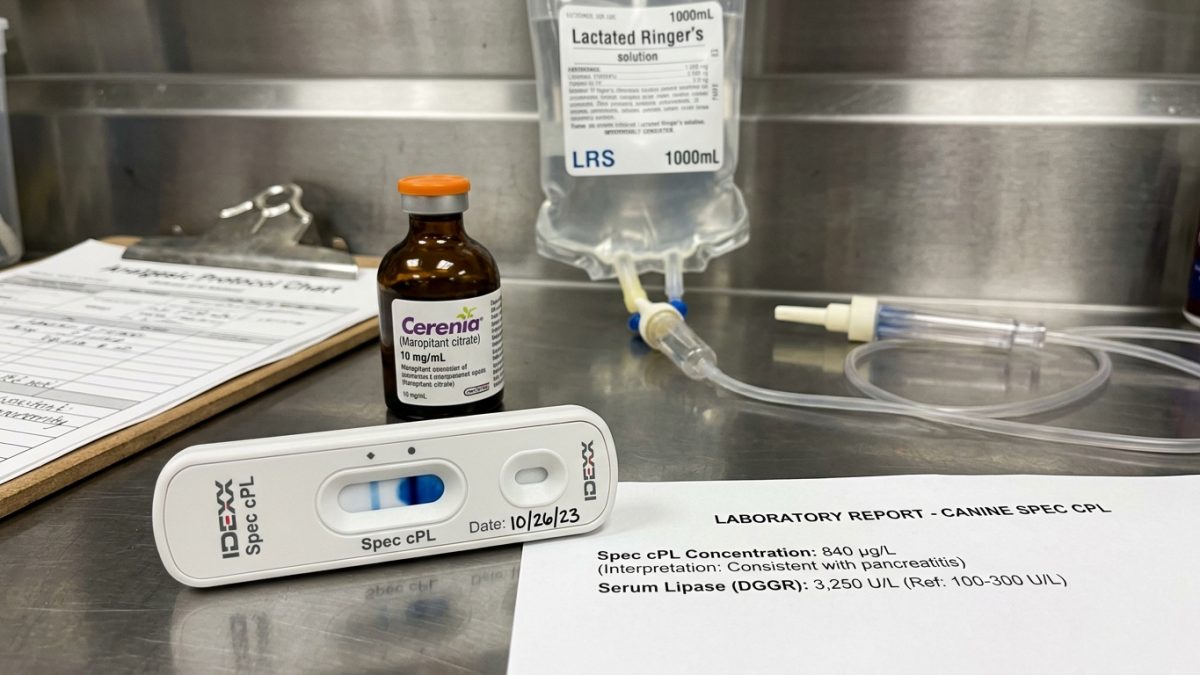
Strict Ultra-Low-Fat Nutritional Mandate: Canine pancreatitis involves premature autodigestion of pancreatic tissue by activated digestive enzymes, triggering intense visceral pain, systemic inflammatory response syndrome (SIRS), and potential multi-organ failure. Ingesting even a single high-fat treat (table scraps, bacon grease, cheese, butter, or fatty marrow bones) stimulates massive cholecystokinin release, reigniting acute necrotizing pancreatitis. Maintain an ultra-low-fat veterinary therapeutic diet (< 10% to 15% fat on a dry matter basis) indefinitely.
Clinical Quick Answer & Immediate Actions
Therapeutic diets require strict adherence to achieve clinical endpoints. Avoid mixing unauthorized treats or supplements that disrupt the carefully formulated mineral and macronutrient balances. Transition slowly over 7-10 days to prevent gastrointestinal upset.
Success depends entirely on strict compliance. A therapeutic diet cannot overcome constant influxes of inappropriate treats, table scraps, or competing food sources. Caregivers must view the prescribed diet as a daily medical intervention rather than a basic sustenance choice.
Macronutrient and Micronutrient Modification
Therapeutic formulations manipulate macronutrients to alleviate organ stress. For example, renal diets drastically reduce phosphorus to slow nephron destruction, while gastrointestinal diets utilize highly bioavailable, low-residue proteins to facilitate enterocyte absorption.
Transitioning to a new clinical diet must occur gradually over 7 to 10 days to prevent acute gastrointestinal distress or food aversion. Mix the therapeutic diet with the previous food, incrementally increasing the new diet’s ratio by 10-15% daily.
| Pathology | Key Nutritional Modification | Clinical Objective |
|---|---|---|
| Renal Disease (CKD) | Restricted Phosphorus / Mod Protein | Reduce uremic toxins and slow progression |
| Pancreatitis | Ultra-Low Fat (Canine) | Prevent exocrine pancreatic stimulation |
| Urolithiasis (Crystals) | Targeted RSS / pH Modulation | Dissolve or prevent crystal formation |
Food aversion is a common complication in chronically ill patients. If the animal refuses the therapeutic diet, do not attempt to starve them into compliance, particularly in obese felines prone to hepatic lipidosis. Consult the attending veterinarian for pharmacological appetite stimulants or alternative flavor formulations.
Accurate portion control requires measuring food by weight (grams) rather than volume (cups). Volumetric measuring introduces up to a 20% margin of error, severely compromising weight loss or tightly regulated metabolic plans.
When to Seek Emergency Intervention
Immediate veterinary reassessment is necessary if the patient experiences acute anorexia lasting more than 24 hours, intractable vomiting after dietary transition, or profound lethargy. These signs may indicate disease progression rather than simple food refusal.
Patients on strict elimination diets for suspected food allergies that break protocol by consuming unauthorized proteins must restart the entire 8-week trial from day one. There are no safe “cheat days” in a diagnostic food trial.
Nutritional Compliance Tracker
Consistency is critical for therapeutic success. Access our Daily Nutritional Log to track caloric intake, treat allowances, and transition schedules.
Pathophysiology of Premature Zymogen Activation & Autodigestion
In a healthy canine pancreas, digestive enzymes (trypsin, chymotrypsin, elastase, phospholipase A2, and lipase) are synthesized and packaged as inactive proenzymes (zymogens) within membrane-bound acinar granules:
- The Co-Localization Hypothesis: In acute pancreatitis, cellular sorting mechanisms fail. Zymogen granules fuse aberrantly with intracellular lysosomes containing cathepsin B. Cathepsin B cleaves trypsinogen into active, destructive trypsin directly within the pancreatic acinar cell. Active trypsin then prematurely catalyzes the activation cascade of all other zymogens, triggering severe enzymatic autodigestion of pancreatic parenchyma and peripancreatic mesenteric fat.
- Microvascular Thrombosis & Systemic SIRS: Activated phospholipase A2 and elastase degrade capillary basement membranes, inducing severe microvascular leakage, pancreatic ischemia, edema, and localized hemorrhage. Release of inflammatory mediators (TNF-α, IL-1, PAF) into systemic circulation can trigger systemic inflammatory response syndrome (SIRS), acute respiratory distress syndrome (ARDS), and disseminated intravascular coagulation (DIC).
- Dry Matter Fat Calculation Architecture: Commercial pet food labels list crude fat on an “as-fed” basis, which can be highly misleading when comparing dry kibble to wet canned food. Caregivers must calculate fat on a Dry Matter (DM) basis:
% Fat (Dry Matter) = [% Crude Fat (As Fed) ÷ (100 − % Moisture)] × 100
For dogs recovering from acute pancreatitis, the target diet must provide less than 10% to 15% fat on a Dry Matter basis (or less than 20 to 25 grams of fat per 1,000 kilocalories).
Clinical Management & Step-by-Step Dietary Transition Framework
Modern veterinary clinical guidelines emphasize early enteral nutrition once vomiting is controlled:
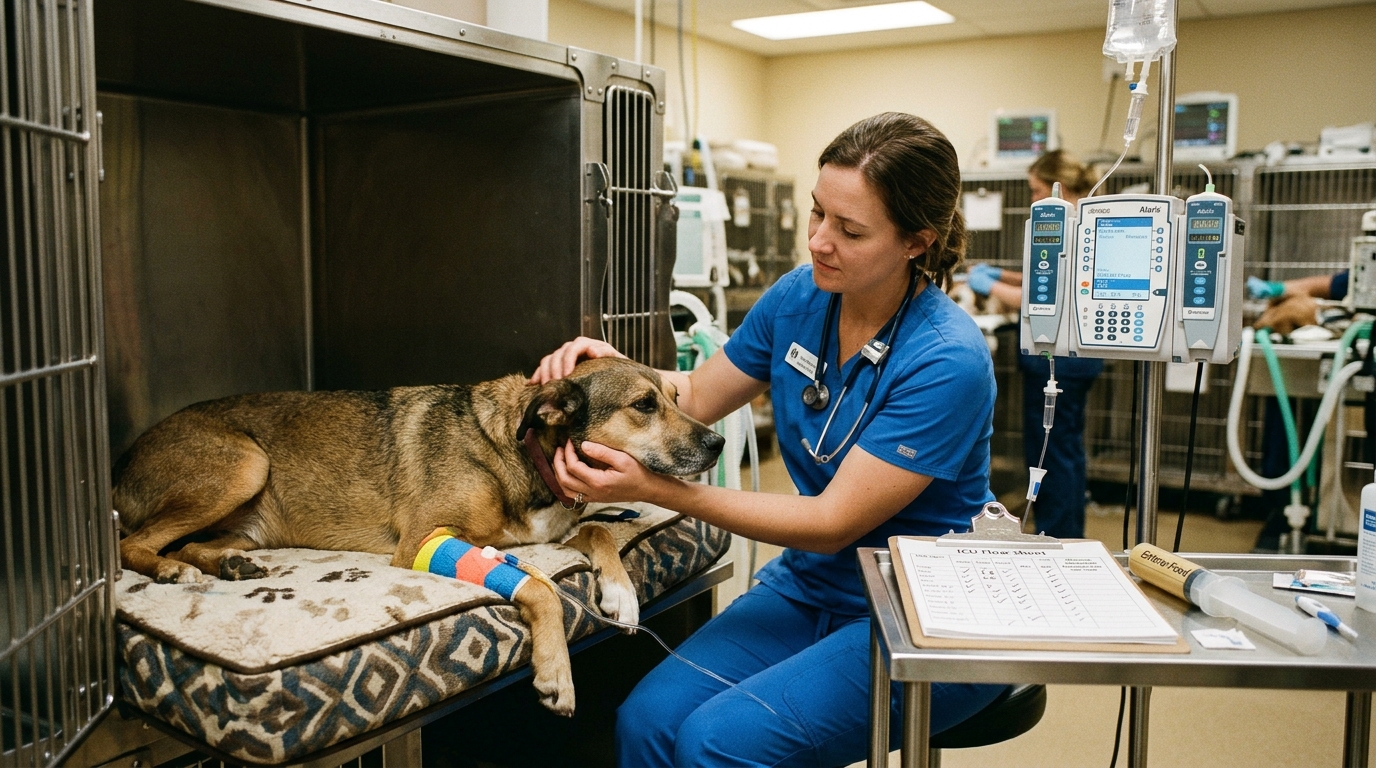
- Early Enteral Nutrition vs. Historical “Gut Rest”: Historical veterinary protocols recommended withholding all food for 48 to 72 hours (“resting the pancreas”). Contemporary evidence proves that early enteral feeding maintains intestinal enterocyte health, preserves mucosal barrier integrity, prevents bacterial translocation from the gut lumen into the bloodstream, and significantly reduces mortality. Enteral feeding should begin as soon as intractable vomiting is controlled with maropitant and ondansetron.
- Multimodal Visceral Pain Management: Pancreatitis produces intense, excruciating visceral pain. Managing pain with pure mu-opioids (fentanyl CRI, buprenorphine, or methadone) is vital not only for animal welfare, but because sympathetic nervous system catecholamine release causes splanchnic vasoconstriction, worsening pancreatic ischemia. NSAIDs are strictly contraindicated due to acute renal and gastrointestinal ulceration hazards in dehydrated patients.
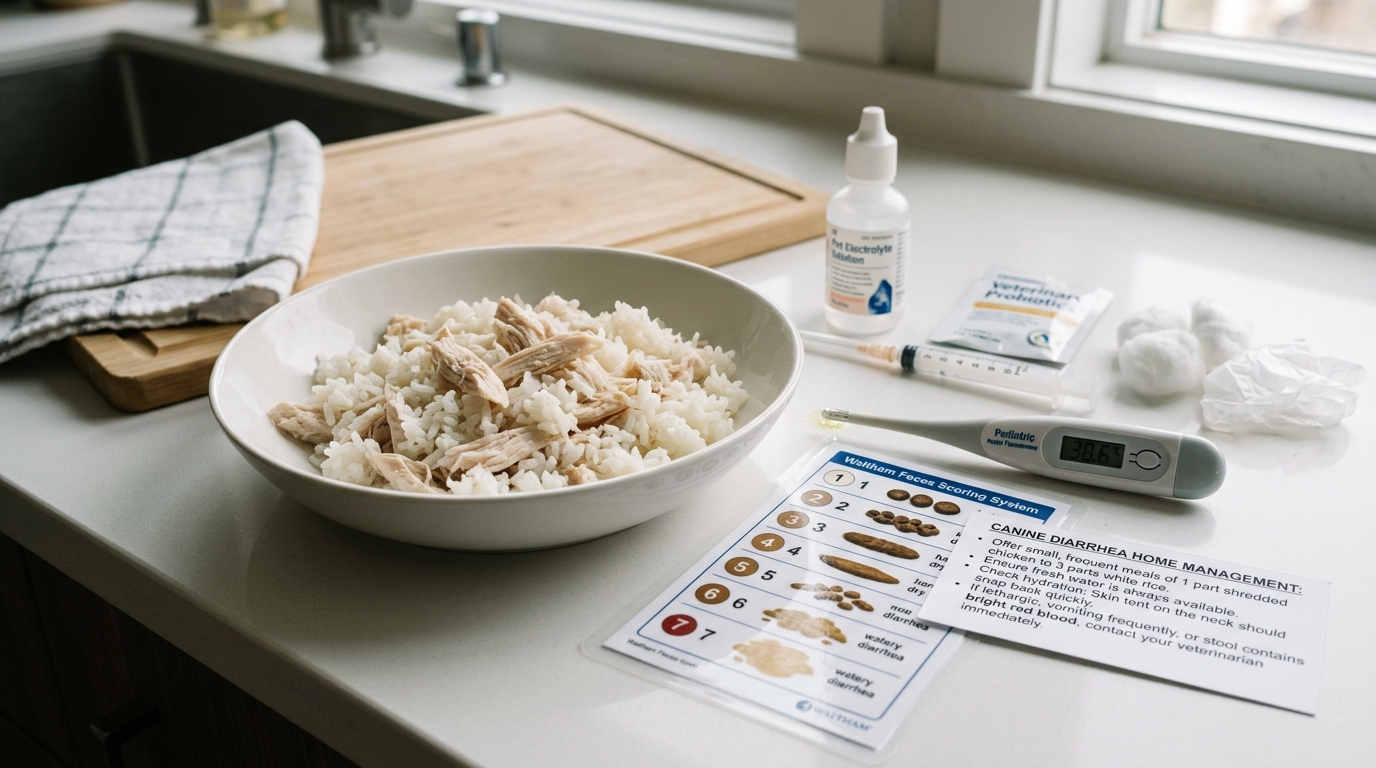
- The 10-Day Gradual Transition Curve: When transitioning a recovering dog from an in-hospital bland diet (such as boiled chicken breast and white rice) to a commercial veterinary therapeutic low-fat diet (such as Royal Canin Gastrointestinal Low Fat or Hill’s Prescription Diet i/d Low Fat), transition gradually over 10 days: Days 1–3 (25% new diet), Days 4–6 (50% new diet), Days 7–9 (75% new diet), Day 10 (100% low-fat therapeutic food). Feed 4 to 6 small, room-temperature meals daily to minimize pancreatic stimulation.
Frequently Asked Questions
Can I mix over-the-counter food with the prescription diet?
No. Mixing a maintenance diet with a therapeutic diet dilutes the targeted nutritional profile, rendering the treatment ineffective (e.g., introducing excess phosphorus to a renal patient or allergens to an allergy patient).
How long does an elimination diet take to work?
A strict elimination diet trial for dermatological allergies requires an absolute minimum of 8 to 12 weeks of exclusive feeding before clinical improvement can be accurately assessed.
Are homemade diets safer than commercial prescription diets?
Unless formulated by a Board-Certified Veterinary Nutritionist (DACVN), homemade diets are frequently deficient in essential micronutrients and lack the precise mineral balancing required for chronic disease management.
Emergency Triage Matrix: Clinical Presentation & Required Response
| Triage Level | Clinical Signs & Presentation | Immediate Action Protocol |
|---|---|---|
| Tier 1: Immediate Emergency (0-2 Hours) | Diabetic patient experiencing severe weakness/seizures (hypoglycemia), or a blocked feline straining to urinate unproductively. | Administer Karo syrup to gums (if diabetic/crashing) and transport to emergency care immediately. |
| Tier 2: Urgent Veterinary Care (Same-Day) | Complete anorexia for >24 hours in a chronically ill patient, or intractable vomiting after beginning a new diet. | Contact the attending veterinarian for an anti-emetic prescription or alternative nutritional formulation. |
| Tier 3: Home Monitoring & Scheduled Care | Mild soft stool during the initial 3 days of dietary transition, with normal appetite and hydration. | Slow the transition pace, monitor stool quality, and ensure constant access to fresh water. |
Dietary Compliance Warning
Therapeutic diets function as prescription medication. Deviations from the protocol can trigger severe metabolic relapses:
- Zero Table Scraps: A single high-fat treat can trigger a catastrophic pancreatitis relapse in sensitive dogs.
- Strict Portioning: Weigh all meals using a digital kitchen scale to maintain precise caloric and mineral intake.
Transition & Feeding Checklist
- Transition over a strict 7-10 day period to prevent gastrointestinal shock.
- Remove all competing food sources (including sibling pet bowls).
- Monitor water intake, especially for patients on dry therapeutic diets.
Related Clinical Guides & Tools
Peer-Reviewed Clinical References & Evidence Grounding
- Canine hyperlipidaemia (opens in new tab) (The Journal of small animal practice (2015) — Peer-reviewed veterinary study indexed on NCBI PubMed (PMID: 26456868).)
- Nutritional management of pancreatitis and concurrent disease in dogs and cats (opens in new tab) (Journal of the American Veterinary Medical Association (2024) — Peer-reviewed veterinary study indexed on NCBI PubMed (PMID: 38569533).)
- Exocrine pancreatic insufficiency in dogs and cats (opens in new tab) (Journal of the American Veterinary Medical Association (2024) — Peer-reviewed veterinary study indexed on NCBI PubMed (PMID: 37944252).)
- Today’s Veterinary Practice: Diagnosis Treatmenta Case Canine Acute Pancreatitis (opens in new tab) (Verified clinical reference retrieved via Antigravity Ground-Truth Search (todaysveterinarypractice.com).)
WSAVA 10% Treat Calorie Allowance Calculator
Calculate your pet's daily Resting Energy Requirement (RER) and maximum recommended 10% treat calorie budget based on WSAVA clinical nutrition consensus.
Printable tools
Download the matching worksheet
Source transparency
Reference mix for this guide
Source labels describe the type of organization behind each reference; they are not a claim that any outside organization reviewed this article.
- Emergency Triage Protocol Reference source · newspet.net
- Pharmacology Safety Standards Reference source · newspet.net
- Dog Ate Fertilizer or Bone Meal: Impaction & Pancreatitis Triage Reference source · newspet.net
- Canine hyperlipidaemia Government or public agency · pubmed.ncbi.nlm.nih.gov
- Nutritional management of pancreatitis and concurrent disease in dogs and cats Government or public agency · pubmed.ncbi.nlm.nih.gov
- Exocrine pancreatic insufficiency in dogs and cats Government or public agency · pubmed.ncbi.nlm.nih.gov
- Today's Veterinary Practice: Diagnosis Treatmenta Case Canine Acute Pancreatitis Veterinary organization · todaysveterinarypractice.com