Health and Safety Boundary
Jump to Emergency Red Flags ↓
This guide is general education for pet owners. If your pet has urgent symptoms, possible poisoning, injury, breathing trouble, collapse, severe pain, or sudden decline, contact a licensed veterinarian or local emergency service.
Editorial standard
How this guide was prepared
Edited for decisions
NewsPet guides are structured around practical owner choices, tradeoffs, and safety boundaries.
Source policy
Sources are listed when a guide relies on outside references.
Veterinary boundary
This article does not diagnose or prescribe; urgent symptoms need veterinary care.
Corrections
Readers can flag unclear, outdated, or inaccurate information through our contact page.
Dog Ate Fertilizer or Bone Meal: Impaction & Pancreatitis Triage
Clinical Verdict: MODERATE TO SEVERE (Mechanical & Toxic)
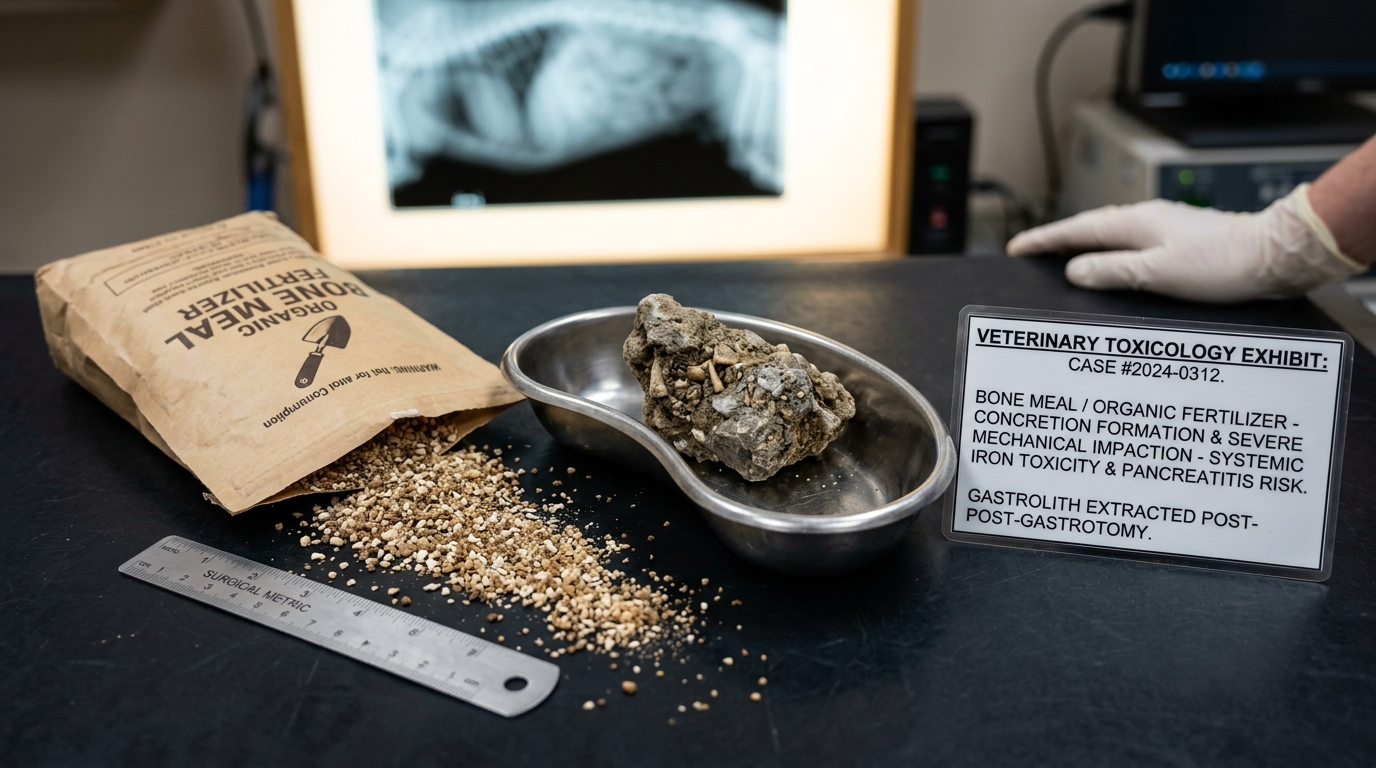
Dogs SHOULD NOT have access to garden fertilizers or bone/blood meal. Dogs find organic bone and blood meals irresistible, but they form hard, concrete-like gastrointestinal impactions and can trigger acute pancreatitis or heavy metal toxicity.
Toxic Mechanism & Agent
- Toxic Agent: Processed Animal Meals, Nitrates, Potassium, Iron, and Organophosphates
- Mechanism of Action: Bone meal mixes with stomach acid and water to form dense, obstructive concretions. Added iron compounds cause direct mucosal oxidation and severe systemic metabolic acidosis.
Clinical Signs & Timeline
- Onset Time: Vomiting/diarrhea within 2 to 8 hours; impaction signs develop within 24 to 48 hours.
- Primary Symptoms: Abdominal distension, non-productive retching, severe hemorrhagic gastroenteritis, dark tarry stools, lethargy, muscle weakness.
Emergency Triage Protocol
URGENT VET VISIT / RADIOGRAPHS REQUIRED
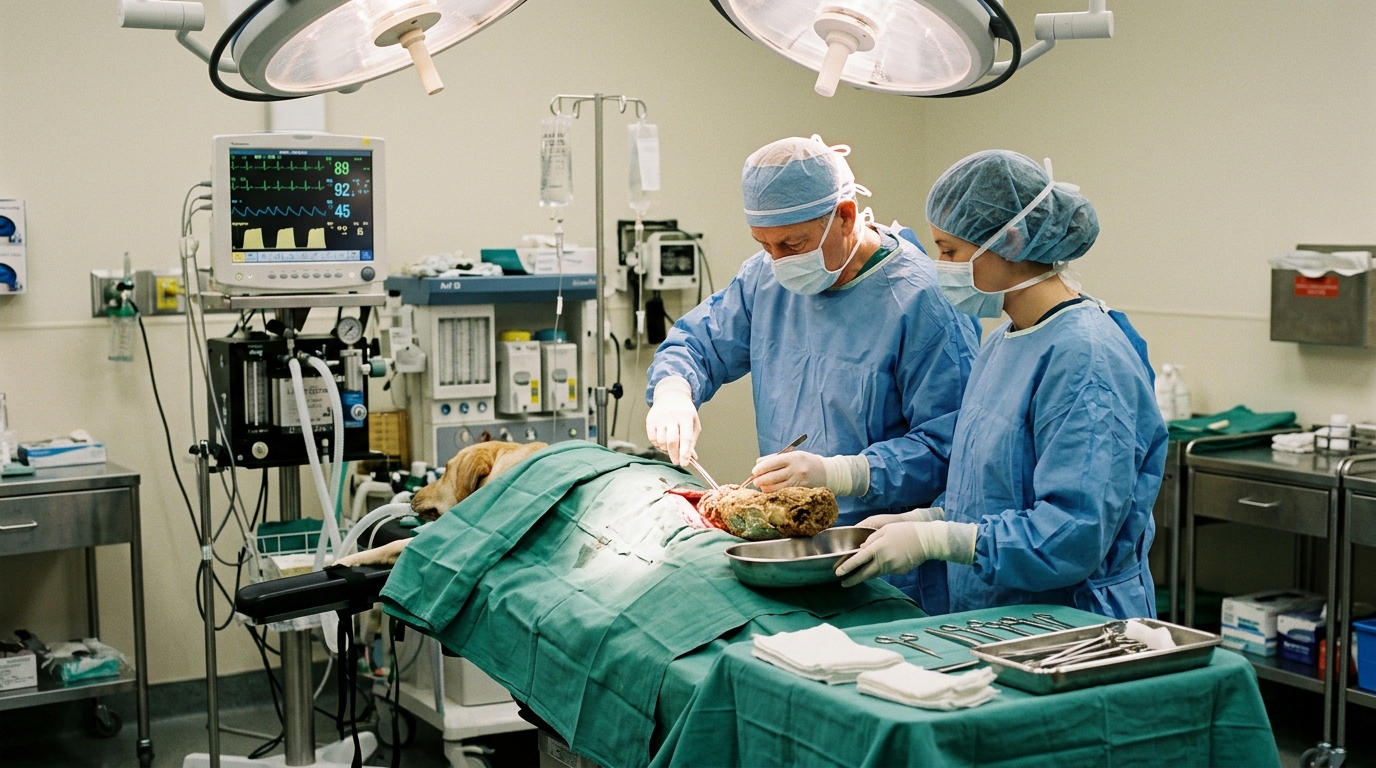
Abdominal radiographs to assess the size and density of the impaction. Aggressive IV fluid support to soften the gastric mass; surgical removal (gastrotomy) may be required if impaction fails to pass.
Strict Rule S1 Warning
NEVER induce vomiting at home using hydrogen peroxide without direct instruction from a DVM. Inappropriate emesis can cause fatal aspiration pneumonia, esophageal chemical burns, or gastric rupture. Always seek professional veterinary diagnosis.
Printable tools