
Health and Safety Boundary
Jump to Emergency Red Flags ↓
This guide is general education for pet owners. If your pet has urgent symptoms, possible poisoning, injury, breathing trouble, collapse, severe pain, or sudden decline, contact a licensed veterinarian or local emergency service.
Editorial standard
How this guide was prepared
Edited for decisions
NewsPet guides are structured around practical owner choices, tradeoffs, and safety boundaries.
Source policy
Sources are listed when a guide relies on outside references.
Veterinary boundary
This article does not diagnose or prescribe; urgent symptoms need veterinary care.
Corrections
Readers can flag unclear, outdated, or inaccurate information through our contact page.
Benazepril & Enalapril: Kidney, Heart Disease & Triage
Clinical Classification & Indications
- Drug Class: Angiotensin-Converting Enzyme (ACE) Inhibitor
- Approved Uses: Reduction of glomerular proteinuria in feline and canine Chronic Kidney Disease (CKD), systemic hypertension, and adjunctive therapy in canine Congestive Heart Failure (CHF).
Mechanism of Action (Pharmacodynamics)
Inhibits the conversion of Angiotensin I to Angiotensin II, abolishing vasoconstriction and decreasing aldosterone production. In the kidneys, it preferentially dilates efferent arterioles, reducing intraglomerular hypertension and protein loss.
Adverse Reactions & Side Effect Profile
Common / Expected Side Effects
Mild lethargy, mild hypotension (dizziness), decreased appetite, mild elevation of renal values (BUN/creatinine).
Emergency Red Flag Reactions
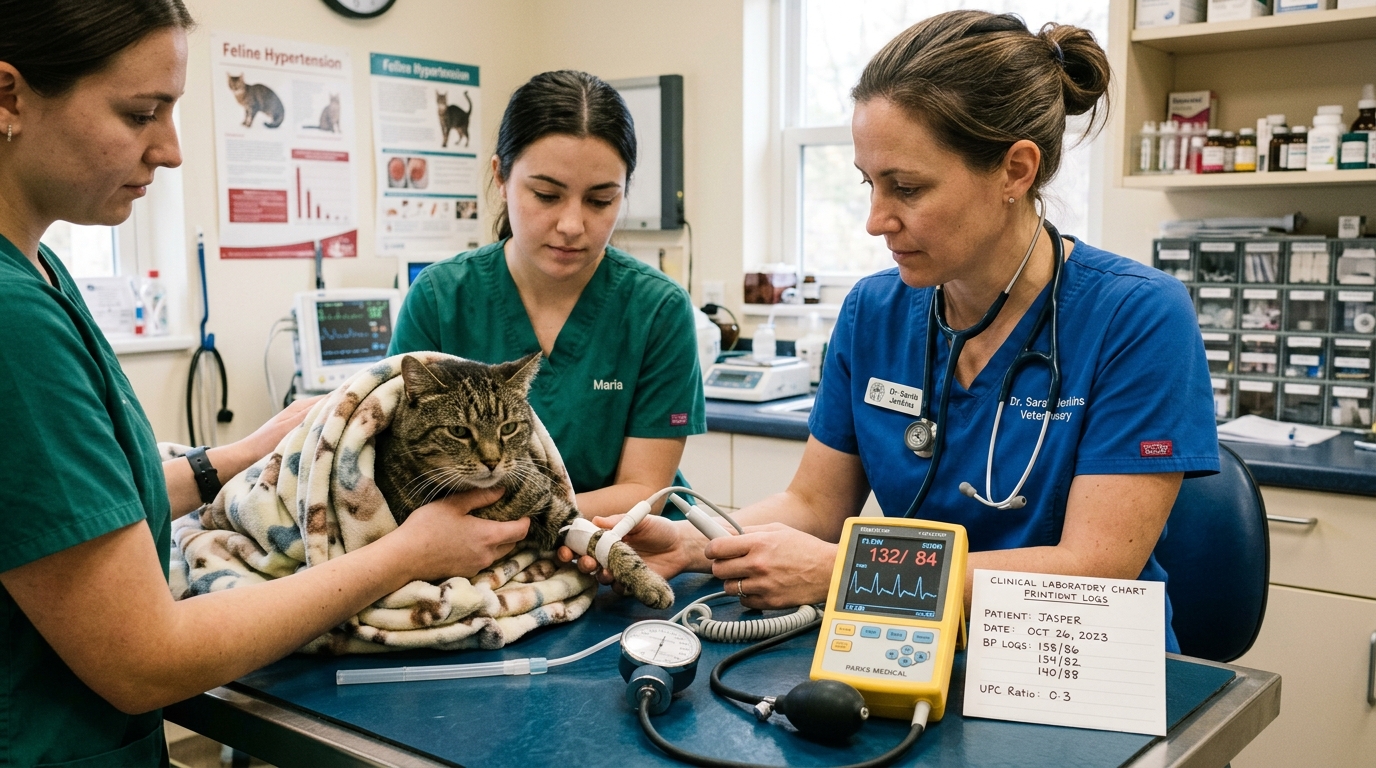
Severe hypotension: extreme weakness, collapse, cold extremities; acute severe azotemia or hyperkalemia.
Clinical Contraindications & Interactions
- Do Not Use In: Hypovolemia, severe dehydration, acute kidney injury (AKI), or breeding/pregnant animals. Benazepril is preferred in cats over enalapril due to dual hepatic-renal clearance pathways.
Strict Rule S1 Veterinary Prescription Directive
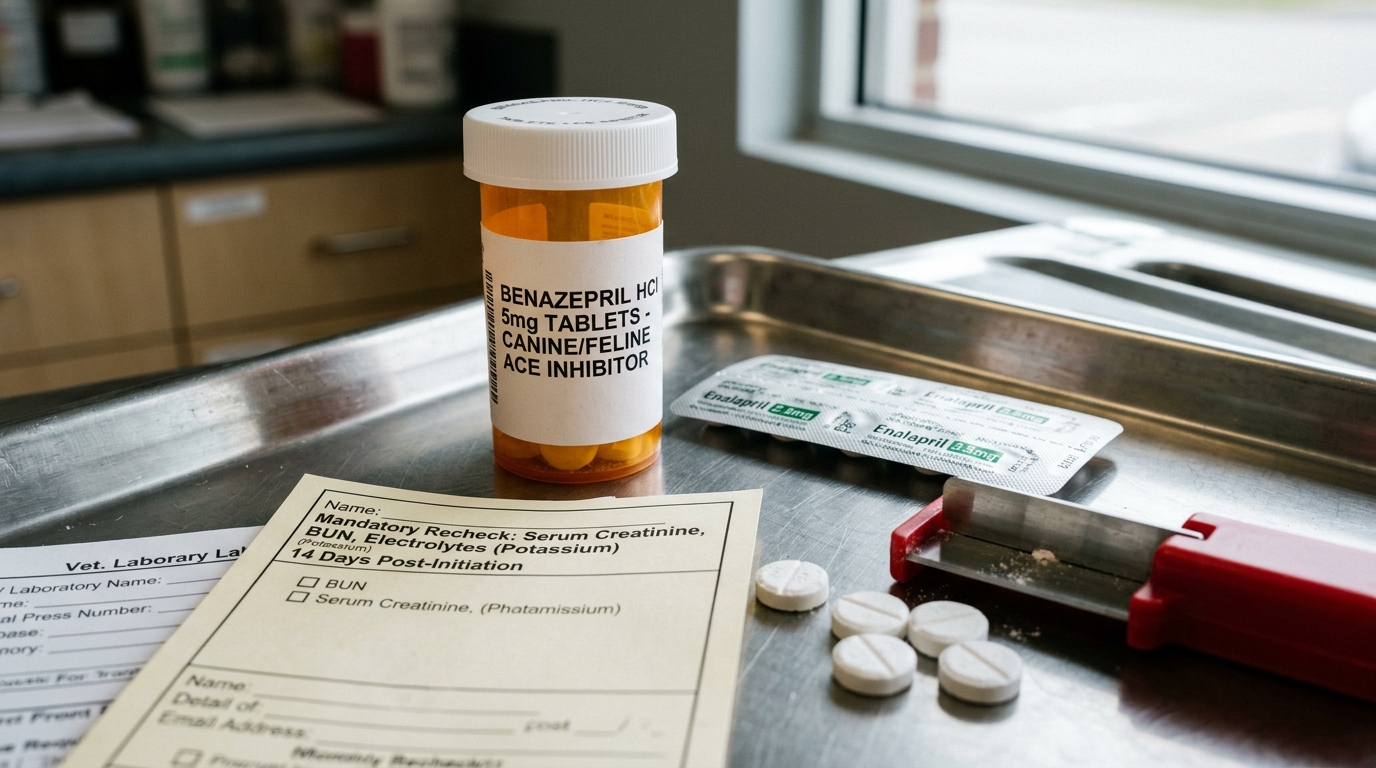
VETERINARY DIRECTIVE: A modest increase in creatinine (up to 30%) is an expected hemodynamic response to efferent dilation. However, serum electrolytes (especially potassium) and renal parameters must be evaluated 1 to 2 weeks following initiation. Never administer concurrently with potassium-sparing diuretics without close monitoring. Never administer human pharmaceutical products or adjust dosages without direct examination and bloodwork by a licensed Doctor of Veterinary Medicine (DVM).
Printable tools