This guide is general education for pet owners. If your pet has urgent symptoms, possible poisoning, injury, breathing trouble, collapse, severe pain, or sudden decline, contact a licensed veterinarian or local emergency service.
Dosages must be calculated by a licensed veterinarian based on species, weight, and bloodwork. Never administer human medications or self-adjust prescription doses for pets.
Editorial standard
How this guide was prepared
When adopting a newly rescued cat or older kitten, establishing an accurate immunization and quarantine plan is one of the most critical health decisions an adopter will make. Shelter and foster cats frequently arrive with incomplete medical histories, unverified booster schedules, or recent exposure to crowded rescue environments where viral pathogens spread rapidly. Rather than guessing which shots are due or restarting vaccines indiscriminately, cat owners should follow an individualized, risk-based veterinary protocol. Every cat requires baseline protection against life-threatening viruses, but lifestyle factors—including potential outdoor access, multi-cat household dynamics, and boarding frequency—dictate which non-core immunizations are necessary.
Clinical Quick Answer & Immediate Actions
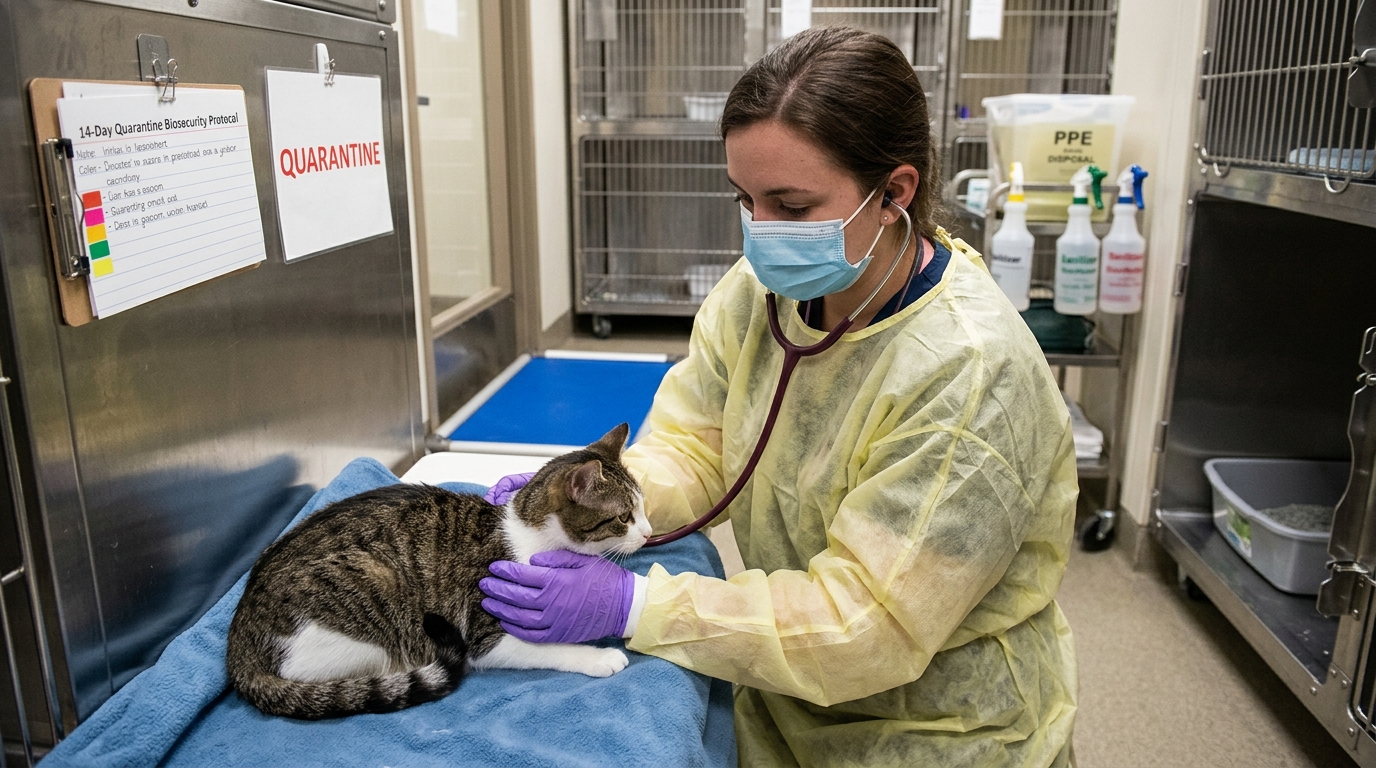
Vaccinating a newly adopted cat requires evaluating shelter documentation, establishing unknown-history baseline protocols, and enforcing strict quarantine before introducing resident cats. Adult cats with unverified or missing vaccination records must be clinically treated as unvaccinated, receiving two doses of core FVRCP (feline viral rhinotracheitis, calicivirus, panleukopenia) spaced 3 to 4 weeks apart, alongside a mandatory rabies vaccination. Point-of-care retroviral testing for Feline Leukemia Virus (FeLV) and Feline Immunodeficiency Virus (FIV) is non-negotiable prior to multi-cat integration.
Before introducing an adopted cat to resident pets, veterinarians strongly emphasize a mandatory 10-to-14-day isolation period, retroviral screening for Feline Leukemia Virus (FeLV) and Feline Immunodeficiency Virus (FIV), and a thorough pre-vaccine physical examination to ensure the cat is afebrile and clinically stable before immune stimulation.
Core vs. Lifestyle Vaccines: Understanding Feline Immunity
The American Association of Feline Practitioners (AAFP) and the American Animal Hospital Association (AAHA) classify feline immunizations into core (essential for all felines) and non-core (lifestyle-dependent) categories based on disease prevalence, lethality, and transmissibility:
| Vaccine Type | Target Pathogens | Clinical Significance & Administration Route | Recommended Frequency |
|---|---|---|---|
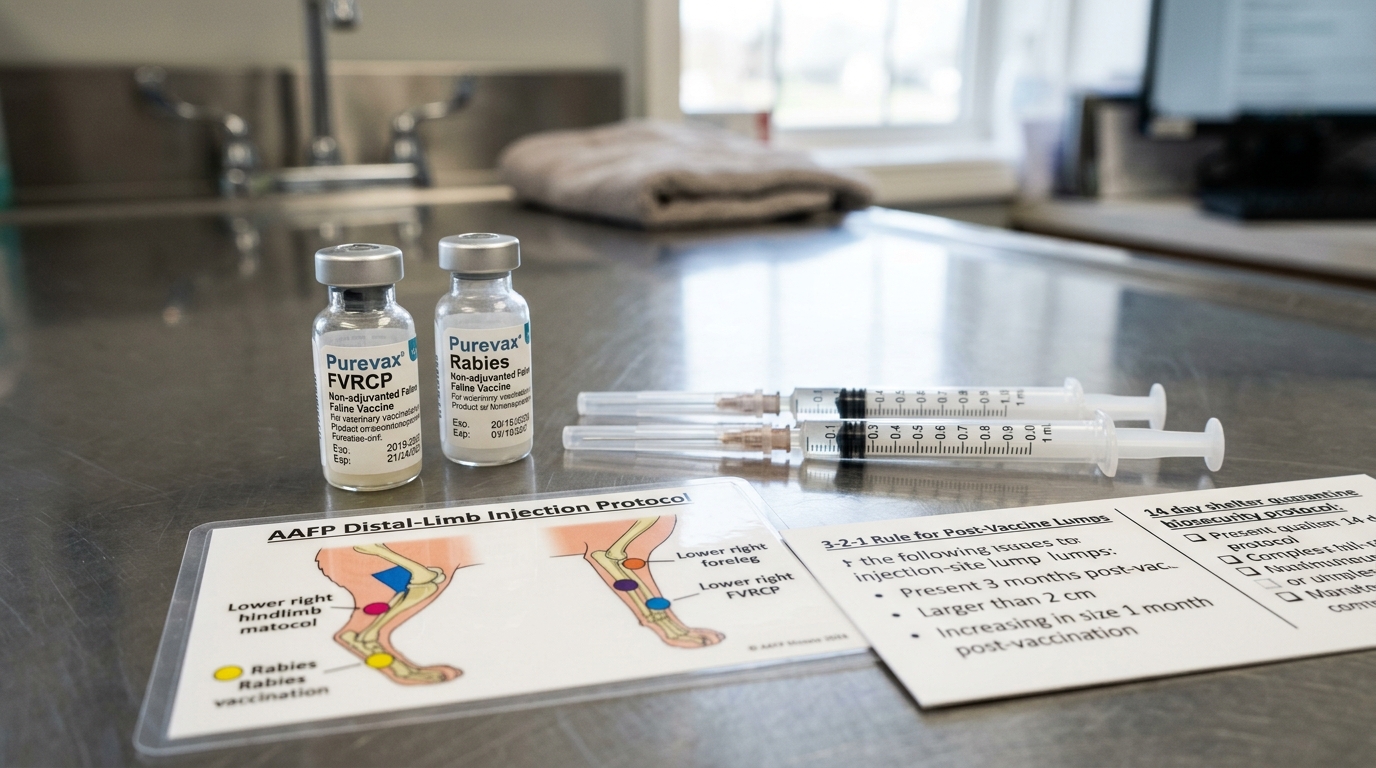
| FVRCP (Core) | Feline Viral Rhinotracheitis (FHV-1), Feline Calicivirus (FCV), Feline Panleukopenia (FPV) | Protects against debilitating upper respiratory tract infections, painful oral ulcerations, and highly lethal parvoviral panleukopenia. Administered subcutaneously in the distal right forelimb (below the elbow). | Initial dose upon adoption; booster 3–4 weeks later; revaccinate at 1 year, then every 3 years. |
| Rabies (Core) | Rabies Rhabdovirus | 100% fatal zoonotic encephalomyelitis transmissible to humans and other mammals. Legally required by public health statutes even for strictly indoor cats. Administered subcutaneously in the distal right hindlimb (below the stifle/knee). | Single dose at adoption/intake (age ≥12 weeks); booster at 1 year; then every 1 to 3 years depending on local municipal statute and vaccine label. |
| FeLV (Non-Core / Essential for Kittens) | Feline Leukemia Retrovirus | Transmitted via saliva, mutual grooming, shared food bowls, and bite wounds. Triggers fatal immunosuppression, bone marrow hypoplasia, and lymphoma. Administered subcutaneously in the distal left hindlimb (below the stifle/knee). | Recommended for all kittens and newly adopted adult cats up to 1 year of age; 2-dose initial series 3–4 weeks apart; annual boosters for outdoor or at-risk cats. |
| Chlamydia felis (Non-Core) | Chlamydia felis bacterium | Causes severe chronic conjunctivitis, chemosis, and blepharospasm in multi-cat breeding catteries and shelter clusters. | Reserved strictly for high-density shelter populations with confirmed active endemic chlamydial conjunctivitis. |
The AAFP Distal-Limb Injection Protocol: Why Anatomy Matters
In feline medicine, where an injection is placed is just as important as what is injected. Cats possess unique subcutaneous fibroblasts that can react to chronic localized inflammatory stimulation. In rare instances (estimated between 1 in 1,000 to 1 in 10,000 vaccinated cats), this inflammatory response can undergo malignant transformation into an aggressive, invasive tumor known as Feline Injection-Site Sarcoma (FISS).
To ensure patient safety, the AAFP Feline Vaccination Advisory Panel established strict anatomical injection rules:
- Right Forelimb (Below the Elbow): Designated exclusively for FVRCP antigens.
- Right Hindlimb (Below the Stifle/Knee): Designated exclusively for Rabies vaccinations.
- Left Hindlimb (Below the Stifle/Knee): Designated exclusively for Feline Leukemia Virus (FeLV) vaccinations.
- Dorsal Interscapular Space (The Scruff): STRICTLY CONTRAINDICATED. Injecting vaccines between the shoulder blades or over the neck is considered obsolete and unsafe. If an invasive sarcoma develops in the scruff, wide surgical resection with 5 cm clean margins and 2 fascial planes is anatomically impossible. Conversely, a tumor developing on a lower distal limb can be successfully and curatively managed with radical limb amputation.
Adjuvanted vs. Non-Adjuvanted Vaccines: The Immunology Behind Purevax
When reviewing vaccine options with your veterinarian, you may encounter the distinction between adjuvanted and non-adjuvanted biologicals:
- Adjuvanted Vaccines: Traditional killed-virus vaccines require chemical adjuvants (frequently aluminum hydroxide or mineral salts) to create a prolonged local immune depot, irritating tissue to provoke a stronger antibody response. However, this persistent local granulomatous inflammation is the primary histopathological precursor to feline sarcoma development.
- Non-Adjuvanted Recombinant Vaccines (Purevax Technology): Advanced modern vaccines utilize a canarypox virus vector engineered to express only the specific protective immunogens (such as the FeLV envelope glycoprotein) without replicating in mammalian cells. Because these vaccines stimulate vigorous cell-mediated and humoral immunity naturally, they contain zero chemical adjuvants. Clinical oncology studies confirm non-adjuvanted vaccines significantly reduce injection-site inflammation and minimize FISS risk.
Protocol for Incomplete Shelter Records: When to Booster
Rescue organizations and animal municipal shelters face extreme logistical burdens, and incoming records are frequently fragmented. Adopters often receive documentation noting a single intake injection without manufacturer lot numbers or prior history. Veterinary medicine handles these scenarios through standardized clinical protocols:
- Never Assume Unverified Immunity: A single FVRCP dose given to an adult cat of unknown background cannot be presumed to provide sterilizing protective titers. The feline immune system requires a prime-boost sequence to generate durable immunological memory.
- The Standard Rescue Catch-Up Protocol: Administer one dose of FVRCP immediately upon adoption examination. Schedule a mandatory booster 3 to 4 weeks later. This establishes a verified baseline, permitting the cat to transition safely to a 3-year revaccination interval.
- No Danger from Over-Vaccinating Healthy Adults: While unnecessary injections should be avoided, administering an extra booster dose to an adult cat whose previous records are lost does not overwhelm or damage the immune system; it simply acts as an anamnestic booster for circulating antibodies.
- Avoid Over-the-Counter Farm Store Vaccines: Never purchase and self-administer retail pet vaccines from farm supply stores. Commercial vaccines require continuous cold-chain refrigeration between 2°C and 8°C (35°F to 46°F). Temperature excursions, improper diluent handling, and incorrect subcutaneous administration frequently cause vaccine failure, injection abscesses, or sciatic nerve damage.
Maternal Antibody Interference (MDA) in Rescued Kittens
For adopters bringing home young kittens (under 16 weeks of age), understanding maternally derived antibodies (MDA) is critical. Kittens absorb maternal antibodies through the queen’s colostrum within the first 24 to 48 hours after birth. These antibodies protect the kitten during early life, but they also bind to and neutralize injected vaccine antigens before the kitten’s immature immune system can process them.
As maternal antibodies gradually decay between 6 and 16 weeks of age, kittens pass through a precarious “window of susceptibility” where maternal titers are too low to prevent wild viral infection, yet high enough to block vaccine response. Consequently, kittens must be vaccinated starting at 6 to 8 weeks of age and boosted every 3 to 4 weeks until they are at least 16 to 20 weeks old. The final dose in the series—administered after 16 weeks—is the definitive dose that guarantees long-term active immunity.
The 14-Day Stepwise Biosecurity & Quarantine Protocol
Introducing an adopted cat directly to resident felines without isolation invites devastating infectious outbreaks, including virulent calicivirus, feline panleukopenia, upper respiratory herpesvirus flare-ups, and ringworm (Microsporum canis). Implement this structured 14-day biosecurity schedule:
| Quarantine Phase | Clinical & Behavioral Focus | Actionable Household Protocol |
|---|---|---|
| Days 1 to 3 | Stress Decompression & Baseline Triage | Confine the new cat to a private, quiet room with door closed. Monitor water intake, appetite, and litter box habits. High cortisol suppresses immunity; minimize excessive handling and allow the cat to rest. |
| Days 4 to 7 | Pathogen Incubation & Viral Surveillance | Observe closely for sneezing, conjunctivitis, oral ulcers, fever, or loose stool. Submit a veterinary fecal sample for centrifugal flotation and Giardia ELISA. Complete veterinary baseline blood work and FeLV/FIV snap testing. |
| Days 8 to 10 | Indirect Olfactory Introduction | Swap bedding, blankets, or grooming brushes between the isolated cat and resident pets. Rub a clean washcloth on the cheeks of each cat and place it in the other’s territory to establish familiar facial pheromones. |
| Days 11 to 14 | Visual & Supervised Physical Integration | Utilize an adjustable mesh baby gate or crack the door 2 inches to allow visual contact during high-value meals. Proceed to short, supervised shared room sessions only after complete veterinary clearance. |
What to Expect After Vaccination: Normal Signs vs. Emergencies
Modern feline vaccines are remarkably safe, but stimulating an active immune response naturally induces mild, temporary physiological changes. Adopters should know how to distinguish expected post-vaccine lethargy from true medical emergencies:
- Normal Post-Vaccine Reactions (First 24 to 48 Hours):
- Mild sleepiness and reduced activity.
- Slightly decreased appetite for one or two meals.
- Mild tenderness or low-grade sensitivity at the injection site.
- Care advice: Provide a quiet, warm resting space, fresh water, and avoid vigorous handling.
- Immediate Hypersensitivity Emergencies (Seek Immediate Emergency Care):
- Facial swelling (angioedema around the eyes, lips, and muzzle).
- Urticaria (hives) or intense pruritus (frantic scratching of face and ears).
- Repeated, sudden vomiting or profuse watery diarrhea.
- Sudden weakness, pale or bluish mucous membranes, collapse, or hypothermic shock.
- Labored breathing, open-mouth panting, or acute stridor.
- Clinical note: Anaphylactic reactions typically emerge within 10 to 60 minutes post-injection and require immediate emergency administration of epinephrine, antihistamines, and intravenous corticosteroids.
The Feline 3-2-1 Monitoring Rule for Injection-Site Lumps
It is common for cats to develop a small, firm inflammatory knot (granuloma) beneath the skin at an injection site 1 to 2 weeks after vaccination as the immune system processes the antigens. In the vast majority of cases, this bump spontaneously regresses within a month. However, to screen proactively for feline injection-site sarcoma (FISS), veterinary oncologists follow the universally accepted 3-2-1 Rule:
Schedule an urgent veterinary biopsy or needle aspiration if an injection-site lump meets any one of the following criteria:
- The lump persists for more than 3 months after the vaccination date.
- The lump is larger than 2 centimeters in diameter (approximately the size of a grape or nickel).
- The lump continues to grow or increase in size 1 month after the injection.
Frequently Asked Questions About Adopted Cat Vaccinations
Does a strictly indoor cat really need vaccinations?
Yes. Rabies vaccination is legally required for all cats in most jurisdictions regardless of lifestyle, because bats, raccoons, and other wildlife vectors frequently enter residential homes through chimneys, screens, and attics. Also, feline panleukopenia virus (FPV) is exceptionally hardy and can easily be tracked indoors on human shoes, clothing, and carrier bags, where it can survive in the environment for over a year without direct animal contact.
What is the difference between an FeLV and FIV test?
Both are retroviruses tested using an in-clinic ELISA snap test on a small blood sample. FeLV (Feline Leukemia Virus) tests detect the viral p27 antigen circulating in the bloodstream. FIV (Feline Immunodeficiency Virus) tests detect host antibodies produced against the virus. A newly adopted cat should be tested upon arrival, and if negative but with known recent bite wounds, re-tested 60 days later to account for the incubation seroconversion window.
Can my cat be vaccinated if they have a minor cold or eye discharge?
Veterinarians generally advise postponing routine vaccinations if a cat is showing acute signs of infectious illness, including fever, purulent ocular or nasal discharge, severe lethargy, or loss of appetite. Vaccinating an acutely ill animal can diminish the immune response to the vaccine and complicate clinical monitoring. Once the infection has resolved, immunization can proceed safely.
When to Contact a Veterinarian
Schedule an initial veterinary wellness examination within 48 to 72 hours of adopting any new cat. Bring all shelter intake documents, prior medical records, and a fresh stool sample. Contact an emergency veterinary hospital immediately if your newly vaccinated cat displays facial swelling, persistent vomiting, respiratory distress, or severe lethargy.
For broader adoption transition guidance and emergency preparation, refer to our complete cat adoption first 30 days checklist and our pet emergency red flags guide.
Clinical Practice Tool: Pet Medication Log
Record core vaccination booster dates, parasite prevention schedules, and veterinary notes with our printable Pet Medication Log. Download and print your copy of the Pet Medication Log, or explore all practical pet care guides in the NewsPet Resource Center.
Sources
Sources checked: September 8, 2026.
- American Association of Feline Practitioners (AAFP): Feline Vaccination Guidelines
- AAHA/AAFP Feline Vaccination detailed Protocol
- Cornell Feline Health Center: Feline Vaccines, Benefits, and Risks
- World Small Animal Veterinary Association (WSAVA): Guidelines for the Vaccination of Dogs and Cats
- Merck Veterinary Manual: Routine Health Care and Vaccinations in Cats
Emergency Triage Matrix: Clinical Presentation & Required Response
| Triage Level | Clinical Signs & Presentation | Immediate Action Protocol |
|---|---|---|
| Tier 1: Immediate Emergency (0–2 Hours) | Newly adopted cat collapsing, hypothermic, vomiting profusely with hemorrhagic foul-smelling diarrhea, and profound leukopenia (acute feline panleukopenia virus crisis). | Immediate emergency hospital transport in strict viral isolation; aggressive intravenous fluid resuscitation, broad-spectrum IV antimicrobials, antiemetics, and intensive barrier nursing. |
| Tier 2: Urgent Veterinary Care (Same-Day) | Severe upper respiratory infection: bilateral purulent eye/nasal discharge, corneal ulceration, high fever >103.5°F, or complete anorexia lasting >24 hours. | Same-day veterinary clinical examination; supportive hydration, nebulization, feline-safe topical ophthalmic antivirals/antibiotics, and appetite stimulation. |
| Tier 3: Home Monitoring & Scheduled Care | Newly adopted cat displaying mild occasional sneezing, clear ocular discharge, normal vigorous appetite, and normal physical activity in home quarantine. | Maintain strict room isolation from resident pets, ensure dedicated litter box and bowls, and schedule a comprehensive post-adoption veterinary intake exam within 7 days. |
Rule S1 Boundaries & Shelter Adoption Vaccine Rules
Integrating newly adopted felines requires strict clinical isolation and immunological safety:
- NEVER introduce an adopted cat to resident felines without FeLV/FIV testing and 14-day quarantine: Shelter environments facilitate rapid transmission of deadly viral pathogens; introducing an unquarantined cat risks inoculating resident pets with panleukopenia, calicivirus, or feline leukemia.
- NEVER assume a single shelter intake vaccine provides complete lifetime protection: A single FVRCP vaccine administered upon shelter intake provides partial temporary immunity; without a second booster 3 to 4 weeks later, immunity wanes rapidly.
- NEVER vaccinate an adopted cat exhibiting acute febrile illness or severe respiratory distress: Vaccination during active acute illness diverts immunocompetence, risks vaccine failure, and can precipitate severe clinical decompensation.
- NEVER administer live-attenuated vaccines to pregnant queens or severely immunocompromised cats: Modified-live panleukopenia vaccines cross the placenta, causing fetal death or cerebellar hypoplasia in neonates; use killed formulations or defer vaccination under veterinary guidance.
Caregiver Adopted Cat Intake & Vaccine Action Checklist
- Establish a dedicated isolation room equipped with a litter box, food, fresh water, and scratching post completely separated from existing pets.
- Obtain all available shelter medical records and bring them to your veterinarian for vaccination and deworming audit.
- Execute point-of-care FeLV/FIV antibody/antigen testing prior to lifting quarantine or allowing contact with resident cats.
- Administer the initial or booster FVRCP core vaccination series (2 doses spaced 3 to 4 weeks apart) and legal rabies immunization.
- Practice strict barrier hygiene: wash hands thoroughly and change outer clothing after interacting with the quarantined cat before handling resident pets.
Related Clinical Guides & Tools
Peer-Reviewed Clinical References & Evidence Grounding
- PMID: 37632050: Feline Injection-Site Sarcoma and Other Adverse Reactions to Vaccination in Cats (Viruses, 2023) (opens in new tab)
- PMID: 34046443: Did the COVID-19 Pandemic Spark a Public Interest in Pet Adoption? (Front Vet Sci, 2021) (opens in new tab)
- PMID: 33508979: Health Status of ‘Community Cats’ Living in the Tourist Area of the Old Town in Onomichi City, Japan (J Appl Anim Welf Sci, 2022) (opens in new tab)
- Cornell Feline Health Center — Veterinary Clinical & Diagnostic Resources (opens in new tab)
Printable tools
Download the matching worksheet
Source transparency
Reference mix for this guide
Source labels describe the type of organization behind each reference; they are not a claim that any outside organization reviewed this article.
- American Association of Feline Practitioners (AAFP): Feline Vaccination Guidelines Veterinary organization · catvets.com
- AAHA/AAFP Feline Vaccination detailed Protocol Veterinary organization · aaha.org
- Cornell Feline Health Center: Feline Vaccines, Benefits, and Risks Academic or extension · vet.cornell.edu
- World Small Animal Veterinary Association (WSAVA): Guidelines for the Vaccination of Dogs and Cats Veterinary organization · wsava.org
- Merck Veterinary Manual: Routine Health Care and Vaccinations in Cats Veterinary organization · merckvetmanual.com
- Indoor Cat Enrichment: Build a Home That Meets Nat Reference source · newspet.net
- Cat Litter Box Problems: Causes & Solutions (V Reference source · newspet.net
- Why Cats Scratch Furniture and How to Redirect It Reference source · newspet.net