This guide is general education for pet owners. If your pet has urgent symptoms, possible poisoning, injury, breathing trouble, collapse, severe pain, or sudden decline, contact a licensed veterinarian or local emergency service.
Dosages must be calculated by a licensed veterinarian based on species, weight, and bloodwork. Never administer human medications or self-adjust prescription doses for pets.
Quick Answer
To reduce cat vet visit stress, keep your cat carrier permanently open in your living room as an everyday sleeping spot rather than bringing it out only on clinic days. Choose a sturdy plastic carrier with a removable top and wide front opening, line it with a soft fleece blanket sprayed with synthetic feline facial pheromones (Feliway Classic) thirty minutes prior to loading, and cover the carrier with a light towel during car transit to eliminate disorienting visual motion. For cats with moderate to severe clinical anxiety, ask your veterinarian about prescribing pre-visit oral gabapentin administered ninety to one hundred twenty minutes before leaving home.
Editorial standard
How this guide was prepared
For tens of millions of cat owners around the world, scheduling a routine veterinary appointment evokes intense dread and anxiety. The mere appearance of the pet carrier often triggers a stressful domestic pursuit, with panicked felines fleeing beneath beds or defending themselves with claws and teeth. By the time the cat finally arrives at the veterinary hospital lobby, their heart rate, blood pressure, and stress hormone cortisol levels are dangerously elevated, creating an adversarial medical environment that compromises clinical diagnostics and traumatizes both animal and owner.
Feline healthcare avoidance is one of the leading reasons cats receive significantly less preventive medical care than dogs, leading to delayed diagnoses of chronic kidney disease, dental resorptive lesions, and diabetes. Transforming veterinary visits into manageable, calm experiences requires understanding feline territorial psychology, implementing gradual carrier desensitization, and utilizing evidence-based Fear Free clinical handling protocols.
The 4 Golden Rules of Feline Carrier Desensitization
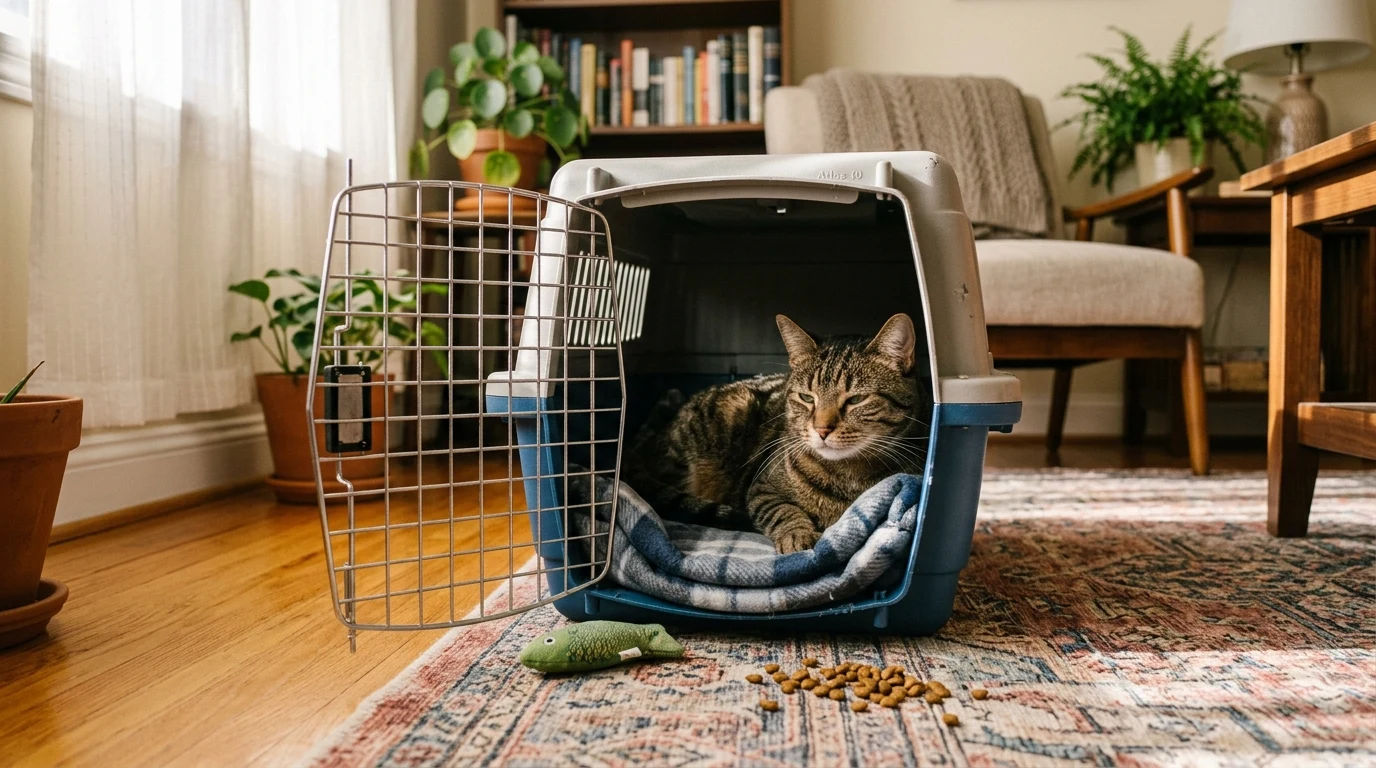
Cats fear the carrier because they associate it exclusively with capture, disorienting car motion, and unfamiliar clinical handling. Reprogram this negative conditioned emotional response with these four steps:
- 1. Make the Carrier Everyday Furniture: Never store the carrier in a dark garage or closet. Place it permanently in a cozy, high-traffic room with the door propped open or completely removed. Place comfortable bedding inside and drop high-value treats (like freeze-dried chicken or catnip) inside daily.
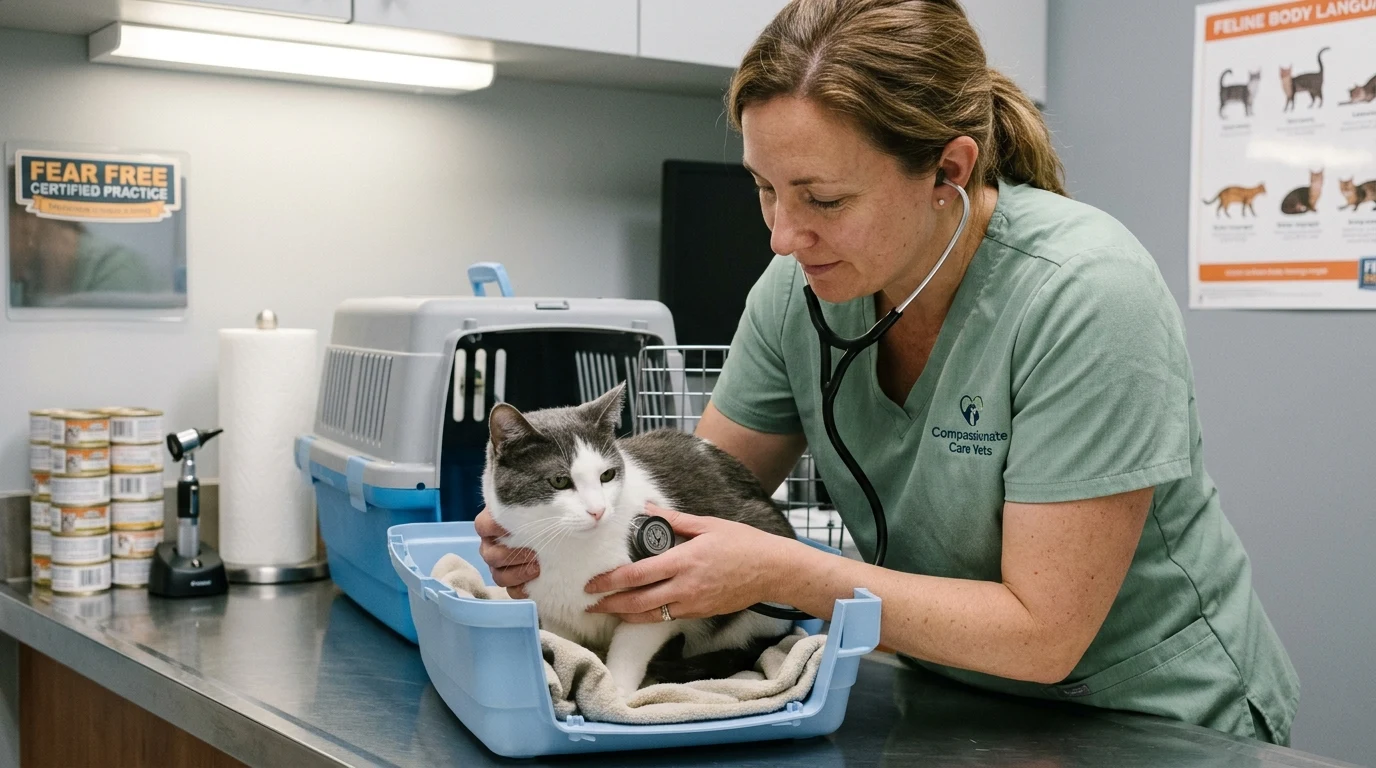
- 2. Invest in a Removable-Top Carrier: Sturdy hard plastic carriers where the entire top half unclips and lifts off are the gold standard of feline veterinary medicine. Modern “Cat Friendly Practices” can examine eighty percent of a cat’s body while the feline remains resting peacefully in the secure bottom tray.
- 3. Feed Meals Inside the Carrier: Gradually move your cat’s daily food bowl closer to the carrier entrance over several days, eventually placing the bowl completely inside the back of the carrier so the cat willingly enters for dinner.
- 4. Practice Neutral In-and-Out Sessions: Once your cat voluntarily lounges in the carrier, close the door for 30 seconds while offering treats, then open it and walk away. Gradually progress to picking up the carrier, carrying it across the room, and returning it without ever leaving the house.
Fear Free Travel & Car Setup Guide
Motion sickness and visual disorientation make car transit exceptionally terrifying for cats. Implement these veterinary travel safeguards:
| Travel Parameter | Recommended Clinical Protocol | Behavioral Benefit to Cat |
|---|---|---|
| Visual Stimulation | Drape a light, breathable towel or sheet completely over the carrier | Eliminates flashing roadside headlights, speeding trees, and visual motion sickness. |
| Carrier Placement in Car | Place carrier on the floorboard behind front seats (the safest, most stable zone) | Prevents sliding across seats during braking and minimizes centrifugal gravitational force on turns. |
| Acoustic Environment | Play low-volume classical music or species-specific music (e.g. David Teie music for cats) | Masks harsh engine rumble, road tire noise, and sudden traffic horns. |
| Pheromonal Calming | Spray 8 to 10 pumps of Feliway Classic inside carrier 30 minutes before departure | Synthetic F3 facial pheromone mimics natural feline bunting markers, signaling environmental safety. |
Pre-Visit Pharmaceutical Support: The Role of Gabapentin
When environmental conditioning is insufficient for highly reactive or terrified felines, modern veterinary medicine offers safe, targeted chemical anxiolysis. Prescribed pre-visit oral gabapentin (typically 50 to 100 mg per cat) administered 1.5 to 2 hours before the appointment dramatically reduces fear, anxiety, and aggression without causing respiratory depression or cardiovascular compromise. Review our pet medication safety guide to ensure proper dosing preparation.
Veterinary Lobby & Exam Room Survival Rules
The veterinary hospital waiting lobby is often filled with barking dogs, strange odors, and unfamiliar noises that shatter a cat’s remaining emotional equilibrium. Implement these hospital survival strategies:
- Elevate the Carrier Off the Floor: Cats feel threatened when placed at floor level, where strange dogs can approach and sniff through carrier mesh. Keep the carrier on your lap, a chair, or a designated raised feline shelf.
- Face the Carrier Toward You: Turn the carrier door to face your chest or a quiet wall, keeping the protective towel draped over the mesh until you are safely inside the private exam room.
- Ask for Direct Room Placement: Many Fear Free certified clinics allow cat owners to bypass the waiting lobby completely, moving directly into a quiet, dog-free feline examination room upon arrival.
- Bring a Scent-Soaked Comfort Blanket: Bring an unwashed towel or t-shirt smelling of home to place on the cold stainless-steel examination table before your veterinarian begins the physical exam.
When to Contact a Veterinarian Immediately
While vet visit preparation focuses on planned wellness checks, acute feline medical emergencies require immediate hospital transport regardless of carrier training. Transport your cat immediately to the nearest veterinary emergency clinic if you observe open-mouth panting or breathing, inability to stand, active seizures, severe trauma, or male cats straining painfully without producing urine. Call the emergency clinic ahead of time so the clinical triage team can meet you at the door with an oxygen chamber and immediate pain relief.
Clinical Practice Tool: Moving With Pets Checklist
Structure low-stress carrier habituation and safe veterinary transport using our printable Moving With Pets Checklist. Download and print your copy of the Moving With Pets Checklist, or explore all practical pet care guides in the NewsPet Resource Center.
Sources
- American Association of Feline Practitioners (AAFP): Cat Friendly Practice Standards
- Cornell Feline Health Center: Training Cats to Accept the Carrier Without Fear
- VCA Animal Hospitals: Comprehensive Strategies for Reducing Vet Visit Stress in Cats
- Today’s Veterinary Practice: Fear Free Clinical Handling and Pre-Visit Anxiolytics for Cats
Source transparency
Reference mix for this guide
Source labels describe the type of organization behind each reference; they are not a claim that any outside organization reviewed this article.
- American Association of Feline Practitioners (AAFP): Cat Friendly Practice Standards Veterinary organization · catvets.com
- Cornell Feline Health Center: Training Cats to Accept the Carrier Without Fear Academic or extension · vet.cornell.edu
- VCA Animal Hospitals: Comprehensive Strategies for Reducing Vet Visit Stress in Cats Reference source · vcahospitals.com
- Today's Veterinary Practice: Fear Free Clinical Handling and Pre-Visit Anxiolytics for Cats Veterinary organization · todaysveterinarypractice.com