
This guide is general education for pet owners. If your pet has urgent symptoms, possible poisoning, injury, breathing trouble, collapse, severe pain, or sudden decline, contact a licensed veterinarian or local emergency service.
Dosages must be calculated by a licensed veterinarian based on species, weight, and bloodwork. Never administer human medications or self-adjust prescription doses for pets.
Editorial standard
How this guide was prepared
Managing parasite prevention in a household that includes both dogs and cats presents unique pharmacological challenges and safety hazards that single-pet families never encounter. Because dogs frequently venture into outdoor environments where ticks, fleas, and intestinal worm larvae abound, they act as primary biological carriers that transport external parasites directly into shared indoor living quarters. However, attempting to eliminate these parasites with over-the-counter treatments without respecting cross-species physiological differences can lead to catastrophic medical emergencies.
Clinical Quick Answer & Immediate Actions
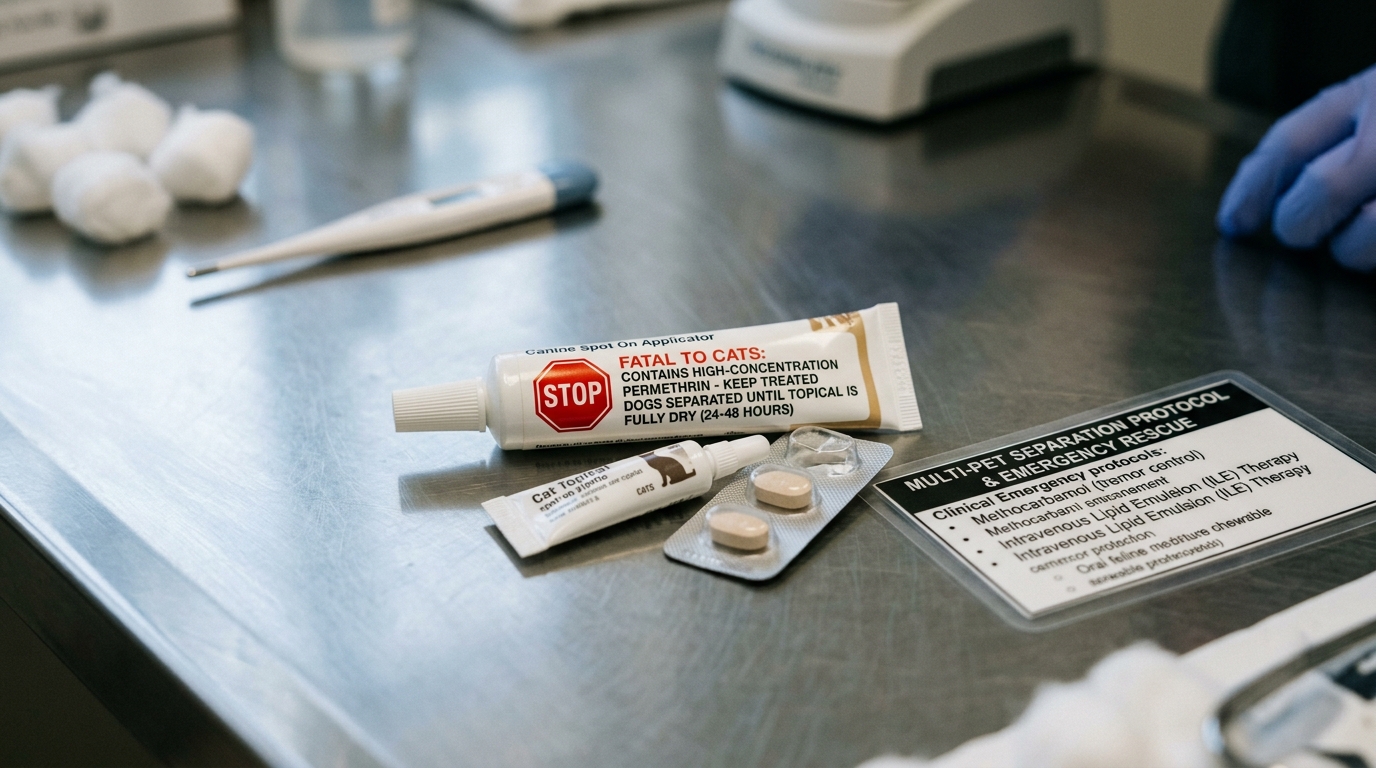
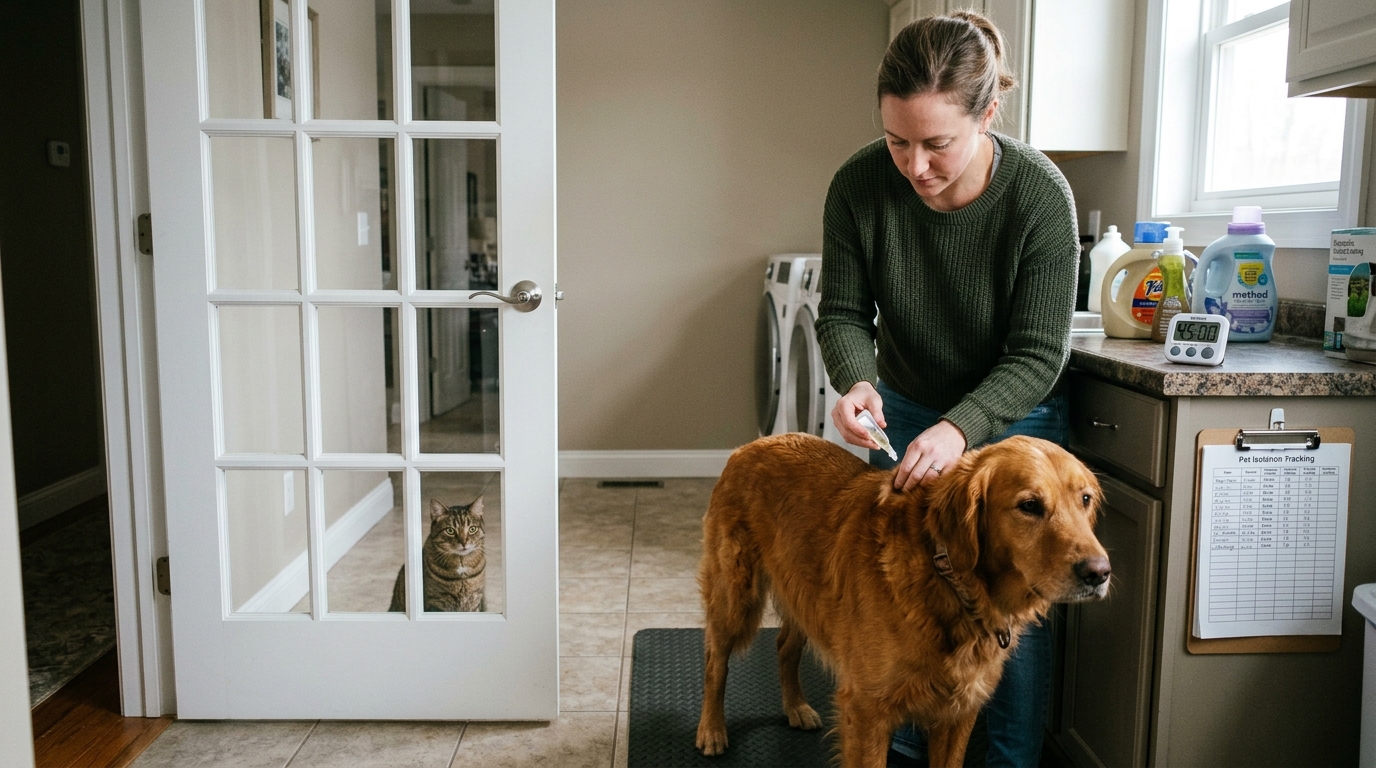
Managing ectoparasite prevention in a household shared by both dogs and cats requires strict pharmacological vigilance and species-specific safety protocols. A primary clinical catastrophe in multi-pet households is accidental feline permethrin toxicosis. High-concentration synthetic pyrethroids (permethrin, phenothrin) commonly found in over-the-counter canine spot-on treatments are lethal to cats due to their evolutionary deficiency in hepatic glucuronosyltransferase enzymes; cats that groom a recently treated dog, rub against treated canine fur, or share dog bedding absorb concentrated permethrin, triggering violent whole-body muscle tremors, hyperthermia, seizures, and death within hours. Safe multi-pet parasite management mandates utilizing feline-safe preventative formulations across all species, isolating dogs in a separate room for 24 to 48 hours following topical applications until completely dry, or transitioning dogs to oral systemic isoxazoline chewables that eliminate topical transfer risks entirely.
The single most dangerous threat in a multi-pet home is the inadvertent exposure of feline companions to canine-specific antiparasitic medications. Formulations engineered for dogs frequently contain high concentrations of permethrin, an active synthetic pyrethroid that is safely metabolized by the canine liver but intensely neurotoxic and frequently lethal to cats. Establishing a synchronized, species-segregated prevention schedule protects all pets under your roof without compromising feline biosafety.
The Fatal Threat: Permethrin Toxicity in Cats
Permethrin toxicity remains one of the most common and devastating accidental poisonings seen in emergency veterinary hospitals:
- The Enzymatic Deficiency: Feline hepatic metabolism lacks essential glucuronosyltransferase enzymes needed to break down synthetic pyrethroid molecules. While dogs metabolize and excrete permethrin rapidly, in cats the compound accumulates in neurological tissue, triggering continuous sodium channel depolarization across peripheral nerves.
- Transmission Routes: Feline toxicity occurs not only from direct accidental application of a dog tube, but frequently through mutual grooming of a newly treated dog, rubbing against damp furniture where a dog rested, or curling up to sleep beside a dog whose coat is not 100% dry.
- Clinical Hallmark Symptoms: Ear twitching, intense facial tremors, paw flicking, dilated pupils, drooling, high fever (hyperthermia from muscle contractions), violent whole-body seizures, and death within hours without rapid veterinary intervention. Review our dog parasite prevention comparison.
Multi-Pet Prevention Architecture: Recommended Safe Protocols
Veterinary parasitologists recommend structured regimens that eliminate accidental exposure risks:
| Household Dynamic | Recommended Strategy | Clinical Safety Rationale |
|---|---|---|
| Dog + Cat Cohabitation (Close Contact) | Oral Isoxazolines for Dog; Feline Topical for Cat | Oral chews leave zero chemical residue on the dog’s fur, making mutual grooming clinically verified for cats immediately. |
| Synchronized Monthly Dosing Day | Dose ALL animals on the 1st of every month | Prevents “ping-pong” flea re-infestations where parasites hop from an untreated pet to a treated one. |
| Mandatory 24-Hour Isolation (If Topicals Used) | Separate treated pets in different rooms until 100% dry | Ensures liquid carriers evaporate and active ingredients bind to skin sebum before pets interact. |
| Heartworm Protection for All Pets | Year-round monthly preventatives for both species | Mosquitoes indoors bite both species; cats suffer fatal pulmonary inflammation (HARD) from even 1 worm. |
How to Clear an Active Flea Infestation in a Multi-Pet Home
If fleas have established a foothold in your home, adult fleas on your pets represent only 5% of the total parasite biomass–the remaining 95% exists as eggs, larvae, and dormant pupae within carpets, floorboards, and bedding. Follow the veterinary three-phase eradication strategy:
- Phase 1: Treat Every Mammal in the House: Administer veterinary-approved adulticides (such as capstar for immediate kill, followed by monthly systemic preventatives) to every dog and cat simultaneously. Never leave a single pet untreated.
- Phase 2: Aggressive Environmental Vacuuming: Vacuum all carpets, baseboards, under sofa cushions, and along pet resting areas every other day for two weeks. Discard the vacuum bag or empty the canister outside immediately to prevent hatched larvae from crawling back indoors.
- Phase 3: High-Heat Laundering: Wash all pet beds, crate blankets, slipcovers, and human bedding in hot water (at least 60°C / 140°F) and dry on the highest heat setting for 40 minutes to desiccate flea eggs and larvae. Download our printable Daily Pet Care Routine Tracker to log environmental cleaning cycles.
When to Contact a Veterinarian Immediately
If a cat in your household displays twitching ears, tremors, uncoordinated walking, dilated pupils, drooling, or seizures after exposure to a dog treated with topical flea medication, transport the cat immediately to an emergency veterinary clinic. Do not attempt home baths or wait for symptoms to subside; immediate intravenous lipid emulsion (ILE) therapy, methocarbamol muscle relaxants, and seizure control are required to save the cat’s life.
Clinical Practice Tool: Pet Medication Log
Keep multi-pet parasite prevention schedules safe and synchronized with our printable Pet Medication Log. Download and print your copy of the Pet Medication Log, or explore all practical pet care guides in the NewsPet Resource Center.
Frequently Asked Questions
Why is permethrin toxicity a grave danger in multi-pet homes with both dogs and cats?
Many canine spot-on flea treatments contain concentrated permethrins. Cats lack the liver enzyme (glucuronyl transferase) to metabolize permethrins. Direct application or grooming contact with a treated dog causes fatal feline tremors, seizures, and death.
How can caregivers safely apply flea preventives to dogs in homes with grooming cats?
Isolate treated dogs in a separate room for 24 to 48 hours until topical applications have dried completely, or transition dogs to oral chewable isoxazoline medications that eliminate topical contact risks entirely.
What should you do immediately if a cat accidentally comes into contact with a dog’s topical flea medication?
Wash the cat’s skin immediately with mild dish soap and lukewarm water to remove unabsorbed oils, wrap the cat in a warm towel, and rush directly to an emergency veterinary hospital for intravenous lipid emulsion therapy.
Emergency Triage Matrix: Clinical Presentation & Required Response
| Triage Level | Clinical Signs & Presentation | Immediate Action Protocol |
|---|---|---|
| Tier 1: Immediate Emergency (0–2 Hours) | Cat exhibits muscle twitches, ear flicking, tremors, ataxia, violent whole-body seizures, or severe hyperthermia (>104.5°F) following direct or indirect contact with a dog treated with canine permethrin spot-on. | Immediate emergency veterinary transport; emergency life-saving protocol: IV lipid emulsion (ILE) therapy, methocarbamol muscle relaxation, active sedation, dermal decontamination wash with mild dish soap, and intensive neurological ICU support. |
| Tier 2: Urgent Veterinary Care (Same-Day) | Active flea infestation discovered across multiple household pets, severe flea allergy dermatitis (pruritus, alopecia, crusting), or attached engorged ticks on dogs and cats in the home. | Same-day veterinary evaluation; prescribe synchronous, species-specific veterinary ectoparasiticides for every animal in the home, cytological workup for secondary pyoderma, and environmental decontamination planning. |
| Tier 3: Home Monitoring & Scheduled Care | All dogs and cats in the home are healthy, energetic, and free of ectoparasites, but preventative administration dates are asynchronous across different months. | Synchronize all household preventative dosing onto a single recurring calendar day every month; verify that every product is strictly designated for the correct species and weight bracket. |
Rule S1 Boundaries & Multi-Pet Parasitology Rules
Multi-pet parasite management requires adherence to strict toxicological boundaries:
- NEVER apply canine-specific permethrin or phenothrin products to cats: Feline liver metabolism cannot process concentrated synthetic pyrethroids; exposure causes life-threatening tremors, continuous seizures, hyperthermia, and fatal circulatory collapse.
- NEVER allow cats to groom or share bedding with a dog treated with topical permethrin: Topical spot-on solutions take 24 to 48 hours to fully dry and absorb; mutual social grooming or cuddling during this period delivers a lethal toxic oral dose to cohabiting felines.
- NEVER split large-dog preventative pipettes or chewables between multiple smaller pets: Active pharmaceutical ingredients are unevenly suspended in chewable matrices and liquid pipettes; splitting doses results in fatal toxicity in smaller animals or complete therapeutic failure.
- NEVER treat only the symptomatic pet when fleas are discovered in a multi-pet home: Treating one animal leaves untreated housemates as active biological parasite reservoirs, guaranteeing continuous flea reproduction and perpetual household re-infestation.
Caregiver Multi-Pet Parasite Prevention & Safety Protocol
- Verify every medication package before application: double-check that cat products are labeled exclusively for felines and dog products are labeled exclusively for canines.
- Consider transitioning dogs to oral systemic isoxazolines (e.g., fluralaner, sarolaner, afoxolaner) to eliminate topical chemical transfer risks to cohabiting cats.
- If topical spot-ons are applied to dogs, isolate the dogs in a separate room away from all household cats for a full 24 to 48 hours until the application site is 100% dry.
- Treat all household animals (dogs, outdoor cats, strict indoor cats) simultaneously on the exact same calendar day every month to eliminate vector gaps.
- Wash all household dog and cat bedding, blankets, and sofa covers in hot water (minimum 60°C / 140°F) and vacuum all carpets thoroughly twice weekly.
- In case of suspected feline permethrin exposure, immediately bathe the cat in lukewarm water with mild dish soap (Dawn) to remove residue and seek emergency veterinary care.
Related Clinical Guides & Tools
Peer-Reviewed Clinical References & Evidence Grounding
- NCBI PubMed (PMID: 33769611) — International veterinary canine dyskinesia task force ECVN consensus statement: Terminology and classification (J Vet Intern Med, 2021) (opens in new tab) (Peer-reviewed veterinary clinical study indexed in NCBI PubMed (J Vet Intern Med, 2021).)
- NCBI PubMed (PMID: 38351524) — Defining sepsis in small animals (J Vet Emerg Crit Care (San Antonio), 2024) (opens in new tab) (Peer-reviewed veterinary clinical study indexed in NCBI PubMed (J Vet Emerg Crit Care (San Antonio), 2024).)
- NCBI PubMed (PMID: 38474142) — Canine Mammary Tumors: Classification, Biomarkers, Traditional and Personalized Therapies (Int J Mol Sci, 2024) (opens in new tab) (Peer-reviewed veterinary clinical study indexed in NCBI PubMed (Int J Mol Sci, 2024).)
- Merck Veterinary Manual: Pyrethroid and Multi-Species Ectoparasiticide Safety in Households (opens in new tab) (Verified clinical reference retrieved via Antigravity Ground-Truth Search (merckvetmanual.com).)
Source transparency
Reference mix for this guide
Source labels classify the institutional category of the references cited above.

