
This guide is general education for pet owners. If your pet has urgent symptoms, possible poisoning, injury, breathing trouble, collapse, severe pain, or sudden decline, contact a licensed veterinarian or local emergency service.
Dosages must be calculated by a licensed veterinarian based on species, weight, and bloodwork. Never administer human medications or self-adjust prescription doses for pets.
Editorial standard
How this guide was prepared
Parasite prevention is one of the most foundational healthcare responsibilities for pet owners, protecting canine companions from dangerous vector-borne pathogens including heartworm larvae, Lyme disease, ehrlichiosis, and flea allergy dermatitis. Choosing between modern oral chewables and topical spot-on medications requires understanding your dog’s lifestyle, swimming habits, household contact dynamics, and regional parasite burdens. Rather than guessing which product fits best or mixing medications haphazardly, owners need an evidence-based roadmap to administer preventatives safely and manage missed doses without compromising their dog’s immune protection.
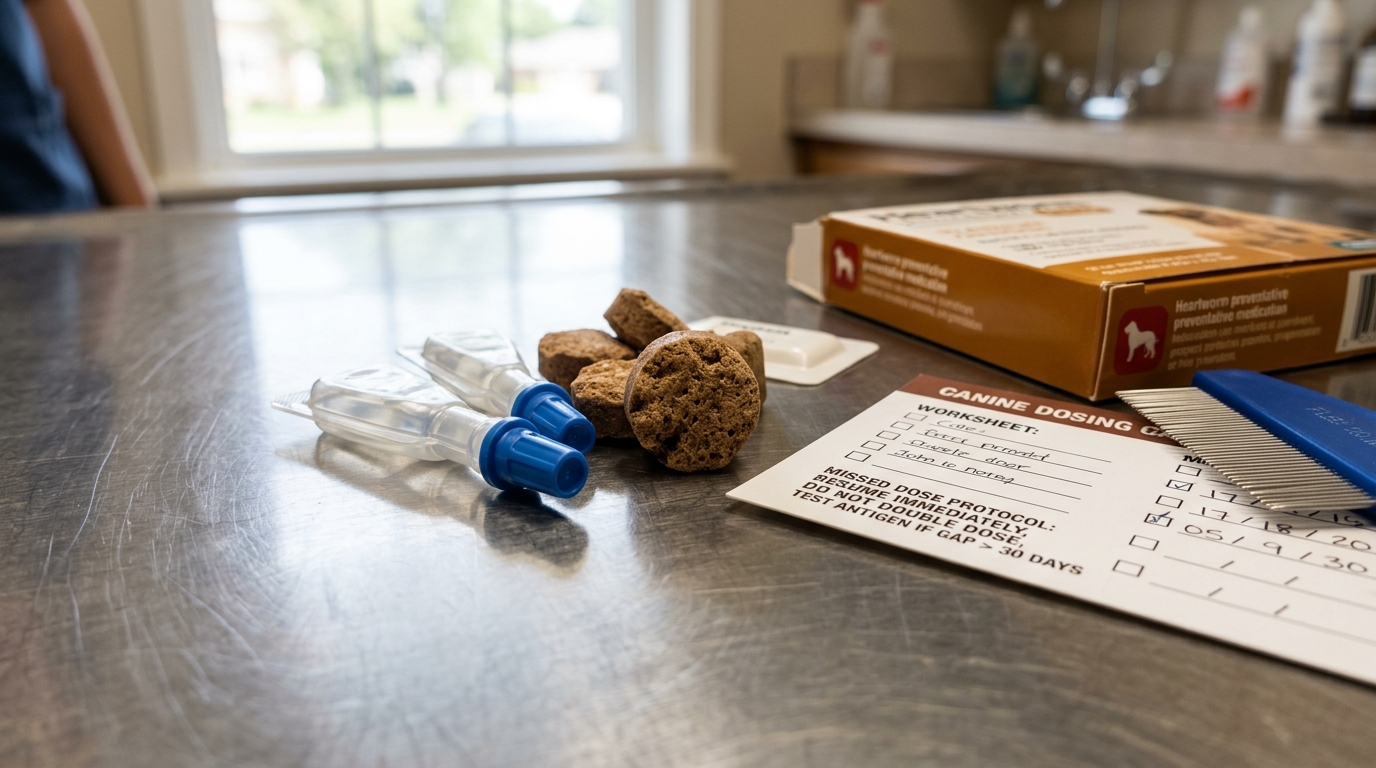
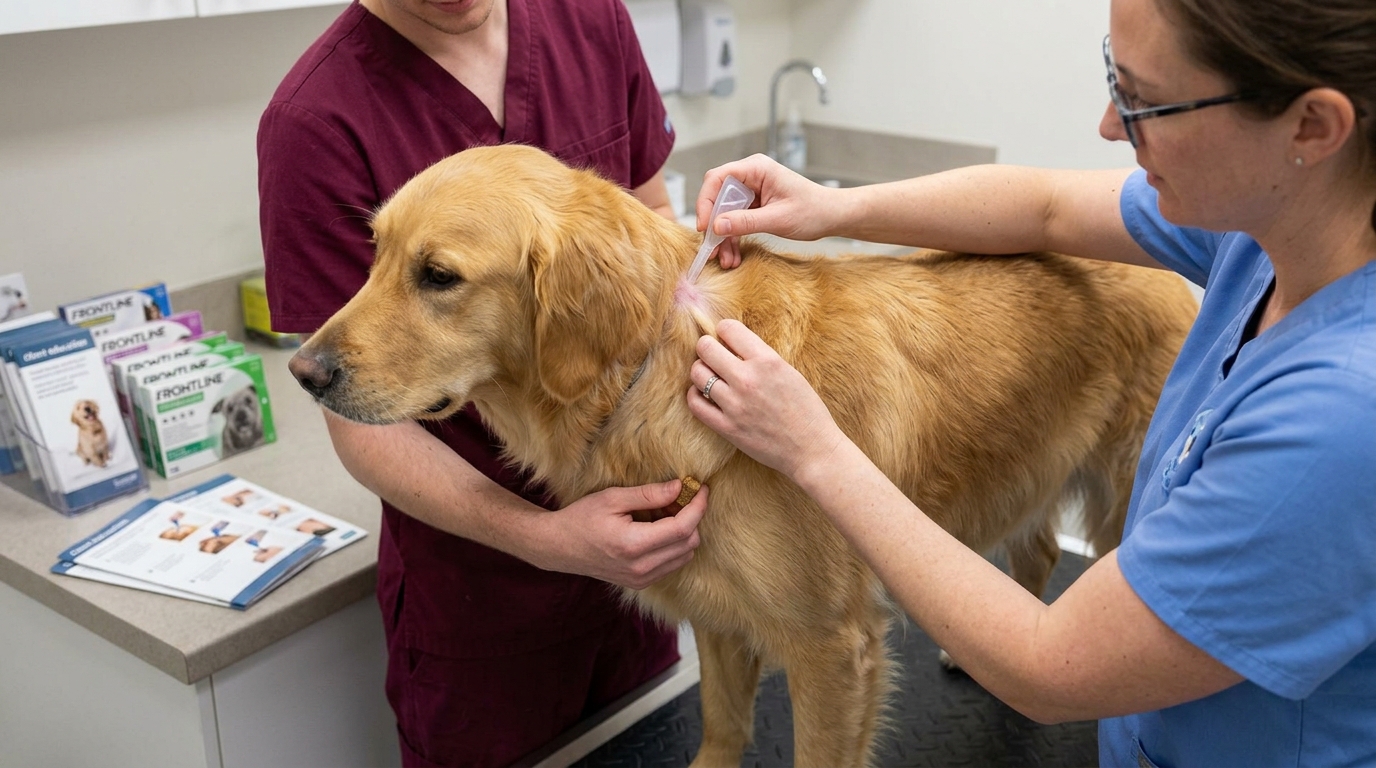
Clinical Quick Answer & Immediate Actions
Selecting between oral chewable and topical spot-on parasite preventatives depends on your dog’s medical history, swimming frequency, and household dynamics. Oral isoxazolines (fluralaner, sarolaner, afoxolaner) provide systemic bloodstream protection completely impervious to frequent bathing, swimming, or grooming, but require veterinary caution in dogs with pre-existing seizure disorders. Topical parasiticides provide surface barrier protection and can repel biting vectors, but require strict 48-hour pre- and post-application water avoidance. If a dose is missed by more than 30 days, retest for heartworms before resuming therapy.
Every dog requires consistent, year-round parasite control tailored to their specific weight, age, and medical history. Factors such as whether your dog suffers from food protein allergies, has a history of idiopathic seizures, or swims frequently in natural waterways dramatically influence whether oral systemic chewables or topical cutaneously absorbed formulations offer the safer, more efficacious clinical choice.
Oral Chews vs. Topical Preventatives: Clinical Comparison
The veterinary pharmaceutical setting offers two primary delivery routes for ectoparasite (fleas and ticks) and endoparasite (heartworms and intestinal worms) control. Understanding how these formulations work within canine physiology helps owners select the most reliable treatment:
| Feature / Factor | Oral Chewables (Isoxazolines & Milbemycin) | Topical Spot-Ons (Fipronil, Imidacloprid, Permethrin) |
|---|---|---|
| Mechanism of Action | Absorbed systemically into the bloodstream; parasites ingest active drug during feeding | Spreads across skin sebum and hair follicles; acts via contact toxicity without requiring a bite |
| Water & Bathing Resistance | 100% waterproof immediately; unaffected by swimming, shampooing, or rain | Requires 24 to 48 hours dry window before and after application; frequent bathing shortens efficacy |
| Household Safety Dynamics | Zero residue on coat; clinically verified around small children and other grooming pets | Must isolate pet until liquid dries completely (minimum 12-24h); fatal toxicity to cats if permethrin is used |
| Food Allergies & GI Sensitivity | Many chews contain artificial or natural pork/beef flavorings that may trigger dietary flares | Bypasses the gastrointestinal tract completely; ideal for dogs with inflammatory bowel disease |
| Neurological Considerations | Use caution in dogs with epilepsy or seizure history (FDA isoxazoline class advisory) | Preferred neurological safety profile for dogs prone to idiopathic seizures or tremors |
Why Year-Round Prevention Is Essential (Even in Winter)
A common misconception among pet parents is that parasite prevention can be safely discontinued during colder autumn and winter months. The Companion Animal Parasite Council (CAPC) and American Heartworm Society strongly advise continuous 12-month administration across all geographic regions for several vital clinical reasons:
- Indoor Microclimates: Fleas thrive in climate-controlled indoor environments, reproducing year-round within carpet fibers, baseboards, and pet bedding regardless of outside snowfall.
- Cold-Tolerant Ticks: Blacklegged ticks (deer ticks, vectors for Lyme disease) remain active whenever ambient temperatures rise above 4°C (40°F), frequently questing during mild winter afternoons.
- Heartworm Transmission Latency: Heartworm disease is transmitted by mosquitoes carrying Dirofilaria immitis microfilariae. Sudden unseasonable warm spells can trigger localized mosquito activity, creating unpredictable transmission windows that catch unprotected pets off guard.
Missed Dose Protocol: Step-by-Step Action Plan
In busy households, forgetting a scheduled monthly preventative dose is a common occurrence. How you respond depends directly on how many days have elapsed since the due date:
- Missed by 1 to 14 Days: Administer the scheduled dose immediately upon remembering. Reset your calendar or digital reminder app to make this new administration date your recurring monthly target. No emergency heartworm testing is required if prior compliance was consistent.
- Missed by 15 to 45 Days: Administer a single regular dose immediately. Do not administer a double dose to “make up” for lost time, as doubling medication creates acute pharmacological toxicity risks without accelerating protection. Contact your veterinary clinic to log the lapse in your dog’s medical chart.
- Missed by 60 Days or More: Administer a dose immediately to resume protection against incoming larvae. However, because heartworm preventatives only eliminate larvae acquired within the preceding 30 to 45 days, older larvae may have developed into juvenile worms that are resistant to standard preventatives. You must schedule a veterinary heartworm antigen and microfilaria blood test 6 months after the lapse, matching the prepatent incubation period of the parasite.
Special Breed & Life-Stage Safety Considerations
Not all dogs metabolize antiparasitic drugs in the same manner. Veterinary protocols identify several distinct safety categories:
- MDR1 Gene Mutation in Herding Breeds: Australian Shepherds, Collies, and related herding breeds frequently carry a mutation in the ABCB1 (MDR1) gene, causing a defective P-glycoprotein blood-brain barrier. While low-dose heartworm preventatives (like standard monthly ivermectin) are safe, high-dose antiparasitic treatments can cause severe neurotoxicity. Genetic testing is strongly advised.
- Puppy Weight & Age Thresholds: Puppies grow rapidly, often doubling their weight between veterinary visits. Ensure your puppy meets the minimum age (typically 6 to 8 weeks) and weight (usually 2 to 4 lbs) indicated on the package label before dosing, and re-weigh them monthly to ensure accurate dosage brackets. Review our first vet visit puppy checklist for intake health timelines.
- Multi-Pet Households with Cats: If you use topical spot-on preventatives on your dog that contain permethrin or synthetic pyrethroids, keep your dog separated from household cats until the application is completely dry. Feline liver metabolism lacks glucuronidation enzymes, making direct contact or mutual grooming with permethrin fatal to cats. For organized medication scheduling, download our printable Daily Pet Care Routine Tracker.
When to Contact a Veterinarian Immediately
If your dog demonstrates acute adverse reactions following preventative administration–including persistent vomiting, heavy drooling, muscle tremors, uncoordinated walking (ataxia), facial hives, or sudden lethargy–seek immediate emergency veterinary care. If a cat in your home accidentally comes into contact with a wet canine permethrin topical, transport the cat immediately to the nearest veterinary emergency clinic without waiting for seizures or tremors to develop.
Clinical Practice Tool: Pet Medication Log
Track monthly oral chew versus topical application schedules with our printable Pet Medication Log. Download and print your copy of the Pet Medication Log, or explore all practical pet care guides in the NewsPet Resource Center.
Frequently Asked Questions
What are the advantages of oral chewable parasite preventives compared to topicals?
Oral preventives (such as isoxazolines) provide systemic protection unaffected by frequent bathing or swimming, eliminate chemical transfer to furniture and human family members, and prevent grooming ingestion by housemates.
When are topical spot-on preventives clinically preferred over oral chews?
Topicals are preferred for pets with severe food protein allergies, history of refractory epilepsy or neurological seizures, or pets that experience vomiting following oral medication administration.
What protocol should be followed if a monthly flea and tick dose is missed by two weeks?
Administer the missed dose immediately, reset the monthly schedule from that date, and consult your veterinarian regarding an off-cycle heartworm antigen blood test in 6 months to confirm continuous protection.
Emergency Triage Matrix: Clinical Presentation & Required Response
| Triage Level | Clinical Signs & Presentation | Immediate Action Protocol |
|---|---|---|
| Tier 1: Immediate Emergency (0–2 Hours) | Severe acute neurological tremors, whole-body seizures, or ataxia within 24 hours of receiving an oral or topical preventative; or acute anaphylactic collapse with facial angioedema. | Immediate emergency veterinary transport; anticonvulsant stabilization (intravenous midazolam/levetiracetam), active cooling if hyperthermic, and supportive IV fluid diuresis. |
| Tier 2: Urgent Veterinary Care (Same-Day) | Severe cutaneous chemical burn, intense hair loss, erythema, and weeping ulcers at the topical spot-on application site; or vomiting/diarrhea persisting >12 hours after oral chew ingestion. | Urgent veterinary clinical examination; immediate dermal decontamination washing with mild liquid dish soap, topical anti-inflammatory therapy, and gastrointestinal antiemetics. |
| Tier 3: Home Monitoring & Scheduled Care | Routine monthly administration or missed dose by less than 14 days in a clinically normal dog with zero signs of pruritus, ticks, or lethargy. | Administer the single prescribed monthly dose immediately, reset the monthly calendar schedule, and continue year-round uninterrupted preventative therapy. |
Rule S1 Boundaries & Administration Safety Protocols
Canine parasite prevention requires strict pharmacological compliance:
- NEVER administer isoxazoline oral chewables to dogs with a history of seizures: The isoxazoline drug class lowers the seizure threshold in predisposed canines; dogs with idiopathic epilepsy, tremors, or prior seizures require topical alternatives approved by the veterinarian.
- NEVER bathe a dog within 48 hours before or after topical spot-on application: Topical spot-ons depend on the cutaneous lipid film to translocate across the body; shampooing strips epidermal lipids, resulting in complete failure of flea and tick protection.
- NEVER administer a double dose to compensate for a missed monthly preventative: Doubling doses does not accelerate protection and dramatically increases the risk of acute hepatotoxicity, nephrotoxicity, and gastrointestinal ulceration.
- NEVER restart heartworm prevention after a lapse >6 months without a heartworm antigen test: Administering macrocyclic lactones to a heartworm-positive dog harboring high microfilarial loads can trigger a massive microfilarial die-off and fatal anaphylactic shock.
Caregiver Preventative Selection & Administration Checklist
- Disclose your dog’s complete medical history, especially any neurological twitching, tremors, or seizures, to your attending veterinarian.
- Weigh your dog on a calibrated clinic scale immediately prior to purchasing preventative products to prevent under-dosing or overdosing.
- Administer oral chewables with a complete meal to ensure optimal gastrointestinal absorption and minimize transient post-dose nausea.
- Part the fur between the shoulder blades until bare skin is visible before applying topical pipettes directly to the epidermis.
- Prevent children and other household pets from touching or licking topical application sites until the liquid has dried completely (minimum 2 to 4 hours).
Related Clinical Guides & Tools
Peer-Reviewed Clinical References & Evidence Grounding
- NCBI PubMed (PMID: 31622127) — 2019 AAHA Canine Life Stage Guidelines (J Am Anim Hosp Assoc, 2019) (opens in new tab) (Peer-reviewed veterinary clinical study indexed in NCBI PubMed (J Am Anim Hosp Assoc, 2019).)
- NCBI PubMed (PMID: 36006301) — Canine Leishmaniasis: Update on Epidemiology, Diagnosis, Treatment, and Prevention (Vet Sci, 2022) (opens in new tab) (Peer-reviewed veterinary clinical study indexed in NCBI PubMed (Vet Sci, 2022).)
- NCBI PubMed (PMID: 27805725) — Laboratory tests for diagnosing and monitoring canine leishmaniasis (Vet Clin Pathol, 2016) (opens in new tab) (Peer-reviewed veterinary clinical study indexed in NCBI PubMed (Vet Clin Pathol, 2016).)
- Companion Animal Parasite Council (CAPC): Ectoparasite Prevention Guidelines for Dogs (opens in new tab) (Verified clinical reference retrieved via Antigravity Ground-Truth Search (capcvet.org).)
Source transparency
Reference mix for this guide
Source labels classify the institutional category of the references cited above.