
Health and Safety Boundary
Jump to Emergency Red Flags ↓
This guide is general education for pet owners. If your pet has urgent symptoms, possible poisoning, injury, breathing trouble, collapse, severe pain, or sudden decline, contact a licensed veterinarian or local emergency service.
Editorial standard
How this guide was prepared
Edited for decisions
NewsPet guides are structured around practical owner choices, tradeoffs, and safety boundaries.
Source policy
Sources are listed when a guide relies on outside references.
Veterinary boundary
This article does not diagnose or prescribe; urgent symptoms need veterinary care.
Corrections
Readers can flag unclear, outdated, or inaccurate information through our contact page.
Metronidazole (Flagyl): Diarrhea & Neurotoxicity Triage
Clinical Classification & Indications
- Drug Class: Nitroimidazole Antimicrobial and Antiprotozoal
- Approved Uses: Treatment of Giardia infections, acute anaerobic bacterial infections, inflammatory bowel disease (IBD), and acute non-specific canine diarrhea/colitis.
Mechanism of Action (Pharmacodynamics)
Diffuses across microbial cell walls where nitro-reduction generates toxic short-lived free radicals that bind and disrupt microbial DNA synthesis, producing rapid cell death.
Adverse Reactions & Side Effect Profile
Common / Expected Side Effects
Extreme bitter taste causing profuse hypersalivation (especially in cats), anorexia, vomiting, lethargy.

Emergency Red Flag Reactions
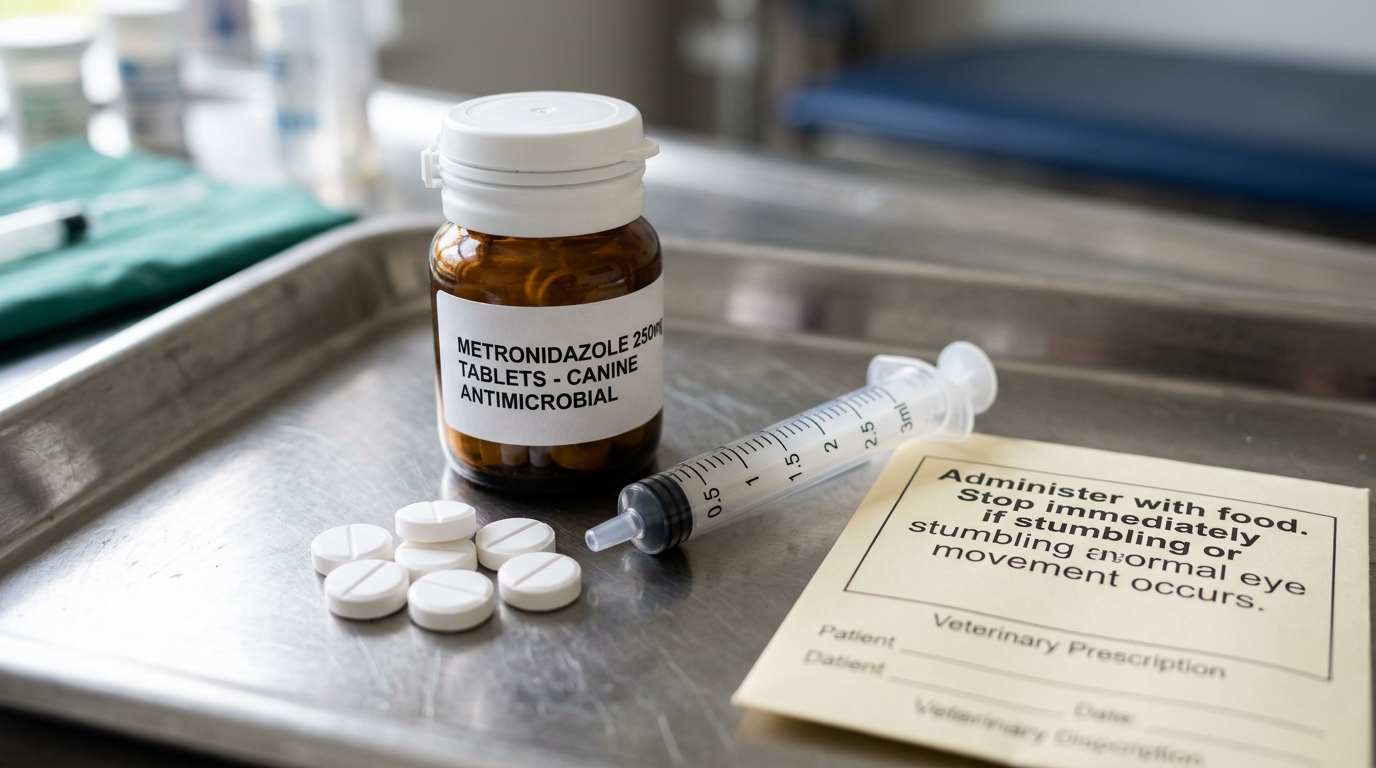
Metronidazole Neurotoxicity: Vertical or horizontal nystagmus (involuntary eye flicking), severe ataxia, head tilt, generalized muscle tremors, seizures, rigidity.
Clinical Contraindications & Interactions
- Do Not Use In: Severe hepatic dysfunction, pregnant or lactating animals. Do not crush tablets due to agonizingly bitter taste.
Strict Rule S1 Veterinary Prescription Directive
VETERINARY DIRECTIVE: If your pet develops a head tilt, wobbliness, or abnormal eye movements while taking Metronidazole, CEASE THE MEDICATION IMMEDIATELY and contact your ER vet. Intravenous diazepam serves as an effective therapeutic agent to rapidly clear metronidazole neurotoxicity. Never administer human pharmaceutical products or adjust dosages without direct examination and bloodwork by a licensed Doctor of Veterinary Medicine (DVM).
Clinical Toxicology & Safety Tool
Pet Toxic Food & Hazard Fast-Checker
Rapidly verify toxicity risks, toxic mechanisms, and immediate clinical steps for common household foods, plants, and human medications before calling poison control or your veterinarian.
Printable tools