Health and Safety Boundary
Jump to Emergency Red Flags ↓
This guide is general education for pet owners. If your pet has urgent symptoms, possible poisoning, injury, breathing trouble, collapse, severe pain, or sudden decline, contact a licensed veterinarian or local emergency service.
Editorial standard
How this guide was prepared
Edited for decisions
NewsPet guides are structured around practical owner choices, tradeoffs, and safety boundaries.
Source policy
Sources are listed when a guide relies on outside references.
Veterinary boundary
This article does not diagnose or prescribe; urgent symptoms need veterinary care.
Corrections
Readers can flag unclear, outdated, or inaccurate information through our contact page.
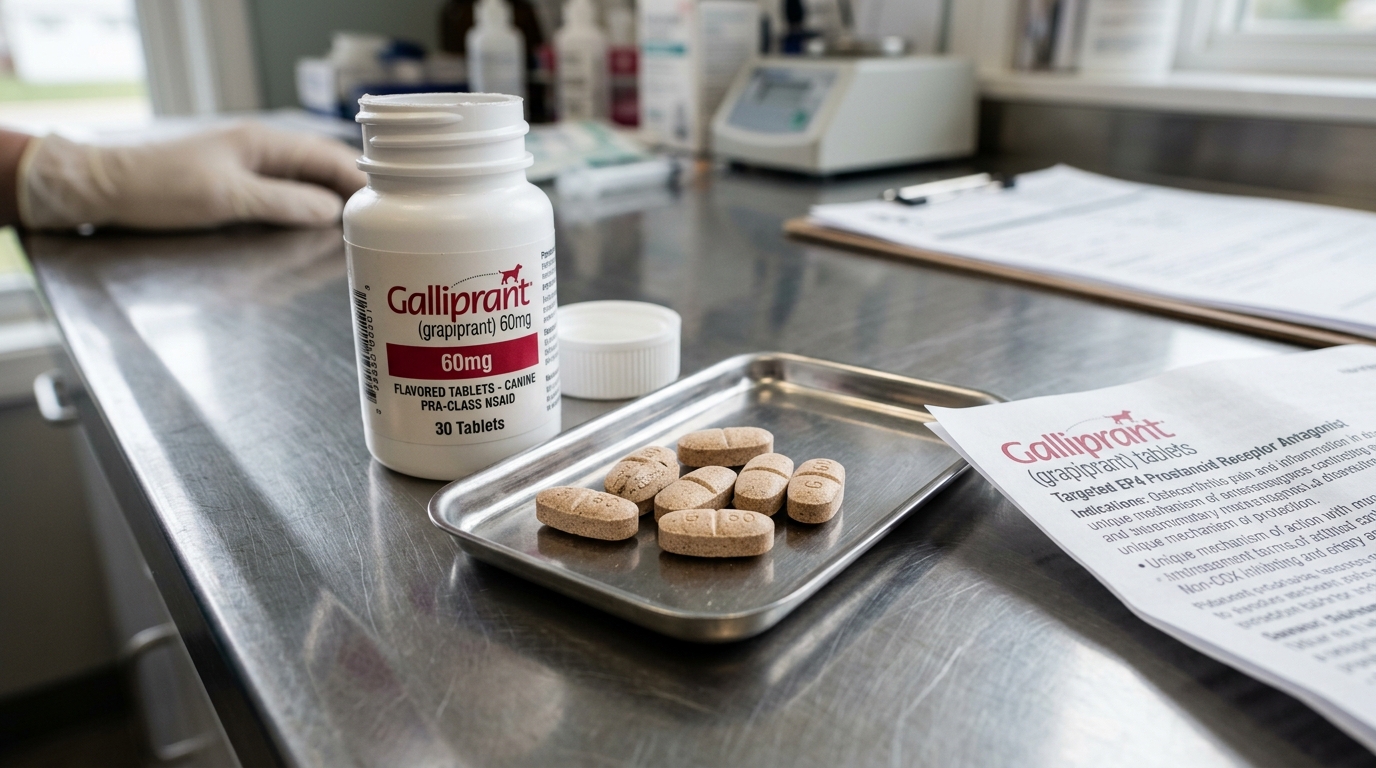
Galliprant (Grapiprant) for Dogs: Non-COX Osteoarthritis Triage
Clinical Classification & Indications
- Drug Class: Piprant Class (Non-COX-Inhibiting Prostaglandin Receptor Antagonist)
- Approved Uses: Control of pain and inflammation associated with mild to moderate canine osteoarthritis from early stages onwards.
Mechanism of Action (Pharmacodynamics)
Selectively blocks the EP4 prostaglandin receptor, the specific receptor primarily responsible for mediating osteoarthritic pain, without inhibiting COX enzymes and without suppressing protective homeostatic prostaglandins in kidneys and gut.
Adverse Reactions & Side Effect Profile
Common / Expected Side Effects
Vomiting, soft or mucous-coated stools, diarrhea, transient inappetence. Side effects are typically mild and self-limiting in the first 7 to 10 days of administration.
Emergency Red Flag Reactions
Persistent bloody diarrhea (hematochezia), continuous vomiting leading to severe dehydration, profound lethargy, or signs of protein-losing enteropathy.
Clinical Contraindications & Interactions
- Do Not Use In: Dogs weighing less than 8 lbs (3.6 kg), breeding/pregnant dogs, or dogs with pre-existing severe hepatic or cardiovascular conditions. Concurrent use with COX-inhibiting NSAIDs or systemic corticosteroids is strictly forbidden.
Strict Rule S1 Veterinary Prescription Directive
VETERINARY DIRECTIVE: Galliprant must be given once daily on an empty stomach (at least 1 hour before or 2 hours after a meal) for optimal absorption. While safer for liver and kidneys than traditional NSAIDs, routine veterinary monitoring remains standard of care. Never administer human pharmaceutical products or adjust dosages without direct examination and bloodwork by a licensed Doctor of Veterinary Medicine (DVM).
Printable tools