Health and Safety Boundary
Jump to Emergency Red Flags ↓
This guide is general education for pet owners. If your pet has urgent symptoms, possible poisoning, injury, breathing trouble, collapse, severe pain, or sudden decline, contact a licensed veterinarian or local emergency service.
Veterinary Medication & Dosage Boundary
Dosages must be calculated by a licensed veterinarian based on species, weight, and bloodwork. Never administer human medications or self-adjust prescription doses for pets.
Editorial standard
How this guide was prepared
Edited for decisions
NewsPet guides are structured around practical owner choices, tradeoffs, and safety boundaries.
Source policy
Sources are listed when a guide relies on outside references.
Veterinary boundary
This article does not diagnose or prescribe; urgent symptoms need veterinary care.
Corrections
Readers can flag unclear, outdated, or inaccurate information through our contact page.
Gabapentin for Dogs & Cats: Pain, Anxiety & Sedation Triage
Clinical Classification & Indications
- Drug Class: Voltage-Gated Calcium Channel Alpha-2-Delta Ligand (GABA Analogue)
- Approved Uses: Management of chronic neuropathic pain (nerve impingement, IVDD, osteoarthritis), acute surgical adjunct analgesia, and pre-visit situational fear/anxiety reduction in felines.
Mechanism of Action (Pharmacodynamics)
Binds structurally to the alpha-2-delta-1 subunit of presynaptic voltage-gated calcium channels in the central nervous system, reducing the influx of calcium and decreasing the exocytosis of excitatory neurotransmitters (glutamate, substance P).
Adverse Reactions & Side Effect Profile
Common / Expected Side Effects
Drowsiness, profound ataxia (wobbly ‘drunken’ hind legs), mild lethargy, increased appetite.
Emergency Red Flag Reactions
Extreme recumbency (inability to stand up), hypothermia, slow respiratory rate, severe disorientation (usually due to unintended overdose).
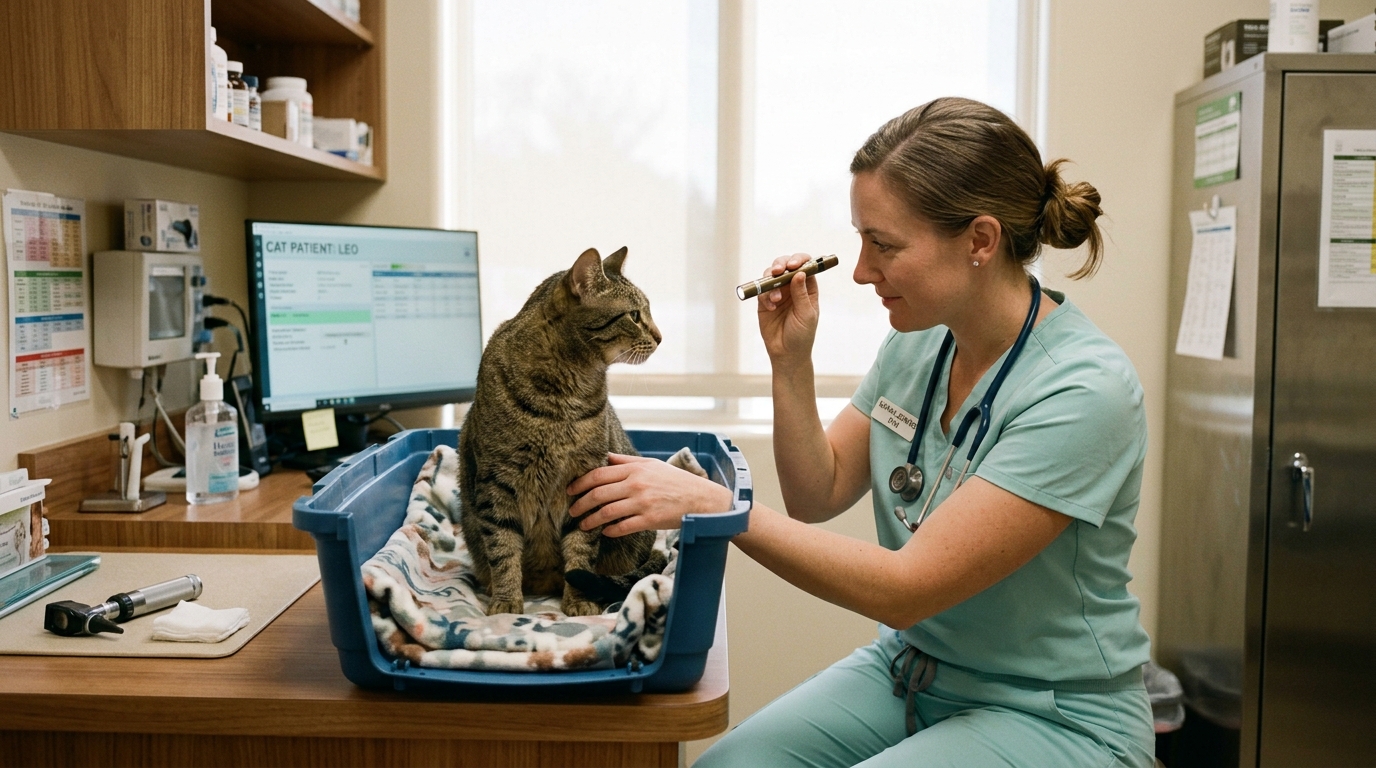
Clinical Contraindications & Interactions
- Do Not Use In: Known hypersensitivity, severe renal failure (requires dosage reduction as gabapentin is cleared primarily by renal excretion).
Strict Rule S1 Veterinary Prescription Directive
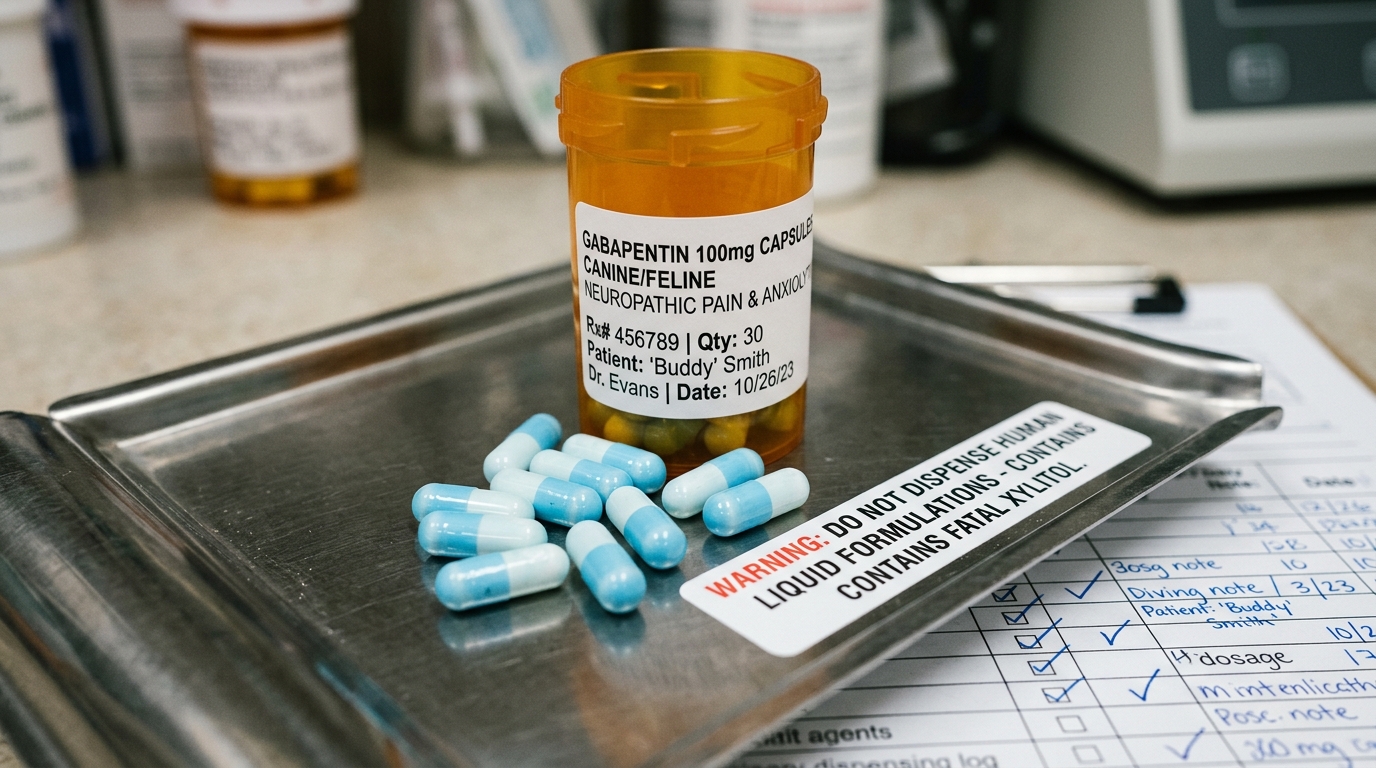
VETERINARY DIRECTIVE: NEVER use commercially prepared human liquid gabapentin for dogs, as it frequently contains XYLITOL which causes fatal canine hypoglycemia and liver necrosis. Always use veterinary-specific capsules or compounded xylitol-free formulations. Never administer human pharmaceutical products or adjust dosages without direct examination and bloodwork by a licensed Doctor of Veterinary Medicine (DVM).
Printable tools