This guide is general education for pet owners. If your pet has urgent symptoms, possible poisoning, injury, breathing trouble, collapse, severe pain, or sudden decline, contact a licensed veterinarian or local emergency service.
Dosages must be calculated by a licensed veterinarian based on species, weight, and bloodwork. Never administer human medications or self-adjust prescription doses for pets.
Editorial standard
How this guide was prepared
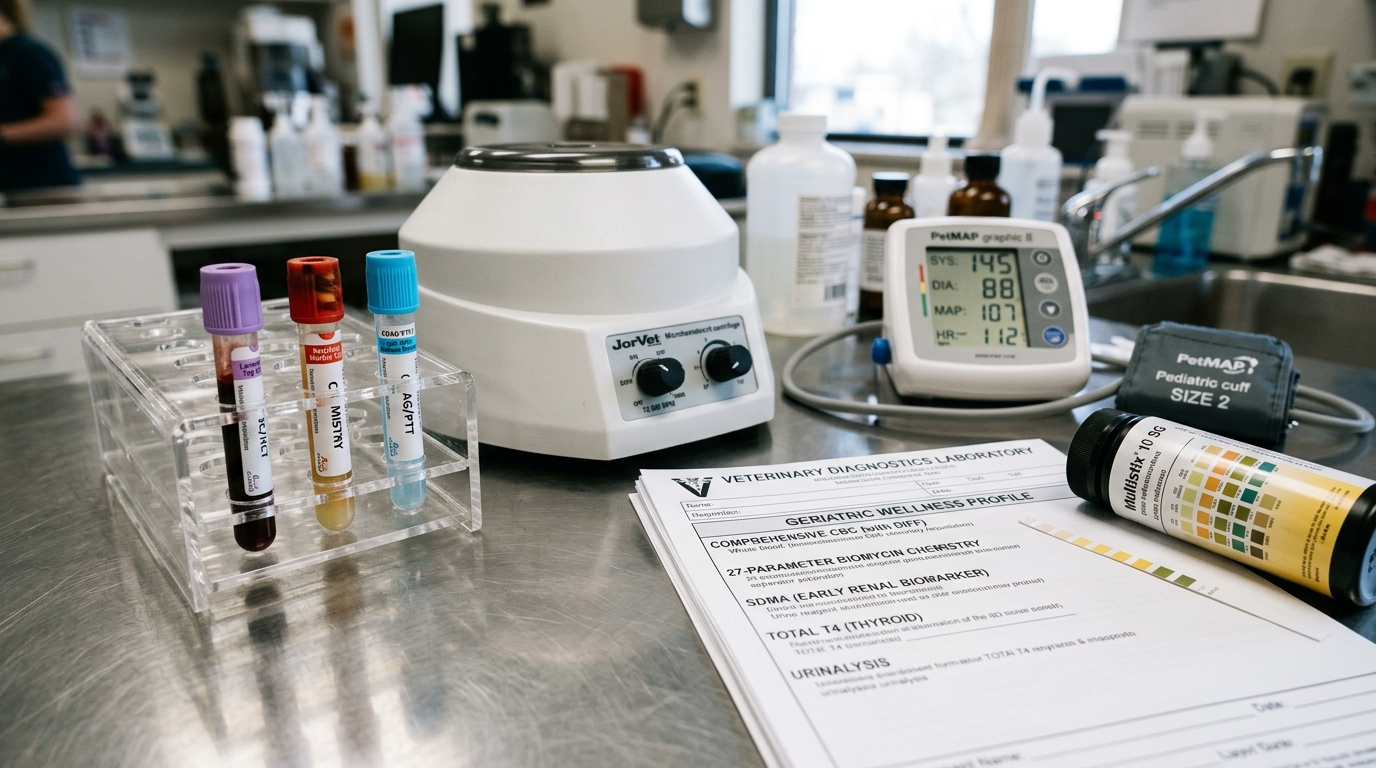
Clinical presentation of Feline Hyperthyroidism: Rapid Weight Loss, Heart Rate, and Radioiodine vs Methimazole requires immediate evaluation of baseline vital parameters and systemic stability. Veterinary assessment begins with a complete blood count, serum biochemistry, and urinalysis to establish metabolic function.
Veterinary References & Peer-Reviewed Literature
Clinical Quick Answer & Immediate Actions
Diagnosis and management require strict adherence to clinical protocols. Routine monitoring of vital signs, laboratory parameters, and behavioral indicators dictates therapeutic adjustments. Caregivers must utilize standardized tools to track disease progression objectively.
Diagnostic imaging, including thoracic radiography and abdominal ultrasonography, provides structural staging. Clients must monitor respiratory rate, mucous membrane color, and capillary refill time daily at home.
Pathophysiology and Clinical Progression
Disease progression alters metabolic pathways, increasing demands on hepatic and renal filtration systems. Cellular hypoxia and inflammatory cascades trigger secondary complications, necessitating multimodal therapeutic interventions.
Treatment focuses on restoring homeostatic balance through targeted pharmacological agents, dietary modification, and environmental stress reduction. Follow-up examinations at 14 and 30 days evaluate therapeutic efficacy and drug tolerability.
| Clinical Phase | Assessment Metric | Intervention Threshold |
|---|---|---|
| Initial Diagnosis | Baseline biochemistry | Initiate standard protocol |
| Maintenance | Symptom frequency | Adjust dosage parameters |
| Refractory | Organ function decline | Consider palliative transition |
Medication administration requires strict adherence to prescribed intervals. Subtherapeutic dosing risks treatment failure, while exceeding recommended limits increases the probability of hepatic or renal toxicity.
Caregivers should record daily observations in a structured health journal, noting appetite fluctuations, elimination patterns, and behavioral shifts. This data directly informs subsequent veterinary dosage adjustments.
When to Seek Emergency Intervention
Immediate veterinary care is mandatory if the patient exhibits acute collapse, cyanotic mucous membranes, unremitting vomiting, or status epilepticus. Delaying transport during these critical windows significantly decreases survival probability.
Contact the emergency clinic prior to arrival to prepare the triage team. Provide current medication lists and time of last administration to expedite admission protocols.
Clinical Monitoring Resource
Maintain objective records of clinical signs using validated scales. Access our Daily Symptom Tracker for structured at-home monitoring.
Frequently Asked Questions
What is the typical prognosis following initial diagnosis?
Prognosis depends entirely on disease staging at diagnosis and patient response to initial pharmacological intervention. Regular reassessment determines the long-term trajectory.
Are there dietary restrictions during maintenance therapy?
Yes. Prescription therapeutic diets modify macronutrient ratios and mineral profiles to reduce organ workload and slow disease progression.
How should missed medication doses be handled?
Never administer a double dose to compensate for a missed administration. Administer the next dose at the regularly scheduled interval and inform the attending veterinarian.
Emergency Triage Matrix: Clinical Presentation & Required Response
| Triage Level | Clinical Signs & Presentation | Immediate Action Protocol |
|---|---|---|
| Tier 1: Immediate Emergency (0-2 Hours) | Acute collapse, cyanosis, status epilepticus, or massive hemorrhage. | Immediate transport to emergency veterinary facility with oxygen support capability. |
| Tier 2: Urgent Veterinary Care (Same-Day) | Anorexia > 24 hours, intractable vomiting, severe lethargy, or vocalization indicating pain. | Same-day clinical evaluation for fluid therapy, analgesia, and laboratory reassessment. |
| Tier 3: Home Monitoring & Scheduled Care | Stable vital signs with minor fluctuations in appetite or activity levels. | Continue prescribed medication schedule and document changes in a daily health journal. |
Clinical Guardrails
The following protocols are essential for maintaining patient safety during therapy:
- Dosage Validation: Always verify exact weight-based dosing parameters before administration.
- Monitoring Protocol: Establish a consistent daily observation routine for early intervention.
Home Care Checklist
- Monitor water intake and urine output daily.
- Record appetite and weight fluctuations.
- Administer medications exactly as prescribed.
Related Clinical Guides & Tools
Advanced Clinicopathologic Staging, Differential Workup & Long-Term Monitoring
Feline hyperthyroidism is one of the most common endocrinopathies of middle-aged to older cats. It is caused most frequently by benign multinodular adenomatous hyperplasia of the thyroid glands, leading to autonomous, excessive secretion of thyroxine (T4) and triiodothyronine (T3).
Veterinary Pathophysiology for Feline Hyperthyroidism
Thyroid hormones influence the basal metabolic rate, oxygen consumption, and the function of nearly every organ system.
- Rapid Weight Loss (Metabolic Shift): Excess T4/T3 creates a hyper-metabolic state, drastically increasing resting energy expenditure (REE) and cellular oxygen consumption. Even though cats frequently exhibit a voracious appetite (polyphagia), catabolic pathways outstrip intake. This results in the depletion of lipid stores and significant lean muscle wasting (sarcopenia), leading to rapid weight loss.
- Cardiovascular Effects (Thyrotoxic Heart Disease): Thyroid hormones upregulate myocardial β1-adrenergic receptors and increase the density and sensitivity of catecholamines. Concurrently, they stimulate sarcoplasmic reticulum Ca2+-ATPase, enhancing myocardial contractility. This manifests clinically as tachycardia, systemic hypertension, systolic murmurs, high-output heart failure, and cardiomegaly (thyrotoxic cardiomyopathy). Prolonged workload can also lead to secondary hypertrophic cardiomyopathy changes or atrial enlargement.
Clinicopathologic Staging & Laboratory Monitoring
A thorough diagnostic database is required to stage the systemic impact of hyperthyroidism and screen for crucial comorbidities—most notably Chronic Kidney Disease (CKD).
- Minimum Database:
- Complete Blood Count (CBC): May reveal a non-regenerative anemia of chronic disease or, conversely, erythrocytosis due to increased metabolic oxygen demand.
- Serum Biochemistry Profile: Frequently shows mild-to-moderate elevations in liver enzymes (ALT, ALP, AST) secondary to mild thyrotoxic hepatopathy.
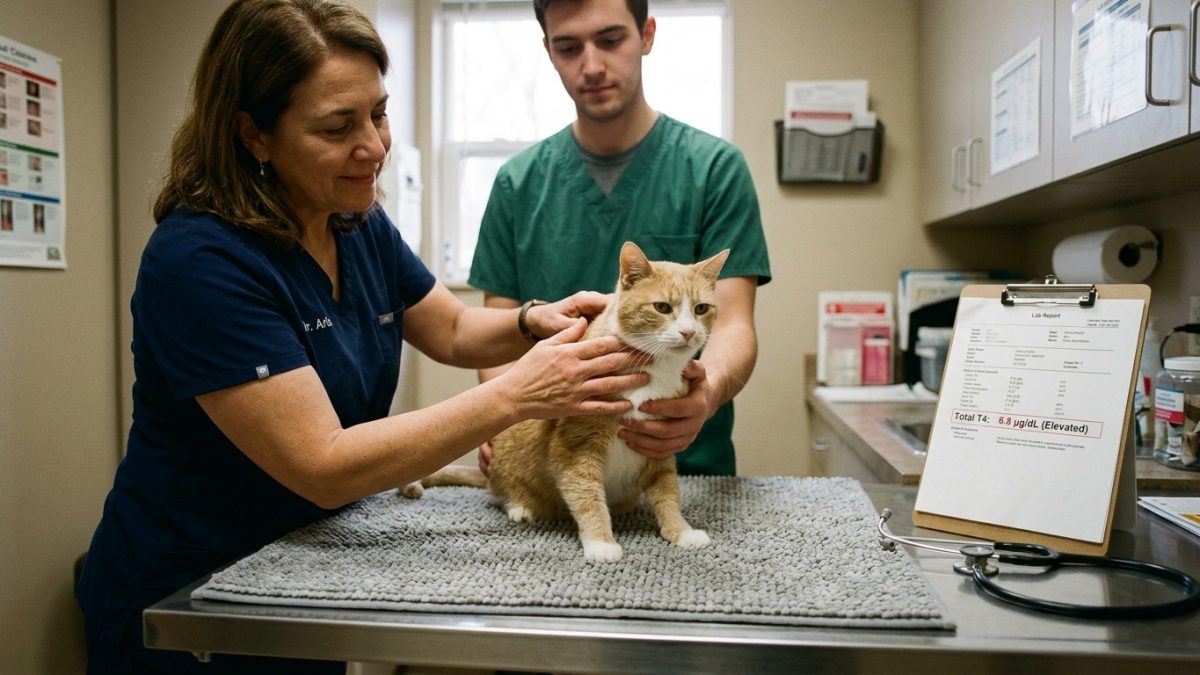
- Thyroid Panel: Elevated baseline Total T4 (TT4). If TT4 is within the normal reference range but clinical suspicion remains high (e.g., early disease or concurrent non-thyroidal illness), Free T4 by equilibrium dialysis (fT4ED) should be evaluated.
- Urinalysis (UA) & Urine Specific Gravity (USG): Essential for assessing baseline renal concentrating ability.
- The “Renal Masking” Phenomenon: Hyperthyroidism increases glomerular filtration rate (GFR) due to systemic hypertension and elevated cardiac output. This artificially enhances renal clearance, masking underlying CKD. When hyperthyroidism is successfully treated and a euthyroid state is achieved, GFR drops back to baseline, often unmasking concurrent azotemia.
- Staging: Staging should follow International Renal Interest Society (IRIS) guidelines for concurrent CKD, alongside systemic blood pressure screening to identify secondary hypertension.
Differential Diagnosis for Feline Hyperthyroidism
When evaluating an older cat presenting with weight loss, polyphagia, and tachycardia, the primary differentials include:
- Diabetes Mellitus: Shares polyphagia and weight loss, but typically features hyperglycemia and glucosuria rather than a palpable cervical thyroid slip and tachycardia.
- Exocrine Pancreatic Insufficiency (EPI) / Inflammatory Bowel Disease (IBD) / Small Cell Lymphoma: Causes weight loss and ravenous appetite (malabsorption/maldigestion), but lacks the metabolic speed, tachycardia, and goiter of hyperthyroidism.
- Primary Renal Disease / CKD: Causes weight loss and potential hypertension, but is usually accompanied by inappetence (anorexia/nausea) rather than polyphagia.
Management Modalities: Radioiodine (131I) vs. Methimazole
- Mechanism: Emits β-particles that selectively destroy hyperfunctioning/neoplastic thyroid tissue while sparing normal, atrophied parathyroid/thyroid tissue. — Inhibits thyroid peroxidase, blocking organification of iodide and coupling of iodotyrosines to prevent T3/T4 synthesis.
- Advantages: • Curative (>95% success rate with a single dose).
• No daily pill administration required.
• Avoids anesthesia and surgery. — • Non-permanent; allows “test of renal function” before committing to irreversible therapy.
• Highly titratable dosage.
• Readily available. - Disadvantages / Risks: • Requires specialized, licensed radiation isolation facilities.
• Upfront cost can be high.
• Permanent hypothyroidism can occur, which may negatively impact IRIS stage CKD. — • Requires lifelong, daily administration.
• High rate of side effects (facial pruritus, GI upset, transient lethargy, rare immune-mediated hemolytic anemia or hepatotoxicity).
• Does not halt tumor growth.
Long-Term Management & Monitoring Protocol
Long-term success relies on maintaining a strict euthyroid state while safeguarding renal perfusion:
- Initial Stabilization / Trial Period: If choosing a permanent modality like 131I or surgery, a temporary trial of Methimazole (or a prescription iodine-restricted diet) for 2 to 4 weeks is strongly advised. This acts as a “medical thyroidectomy” to unmask hidden renal disease and determine if the kidneys can tolerate a euthyroid GFR drop.
- Post-Treatment Recheck Schedule:
- Evaluate TT4, serum chemistry (BUN, Creatinine, SDMA), and electrolyte panel every 2–3 weeks during initial dose titration or post-131I stabilization until stable.
- Perform routine systemic blood pressure monitoring and urinalysis to track renal status.
- Maintenance Monitoring: Once stabilized, re-evaluate clinical weight, physical condition, TT4, and renal parameters every 6 months. The goal is to keep TT4 safely in the mid-to-lower half of the reference range while preventing iatrogenic hypothyroidism, which accelerates concurrent renal decline.
WSAVA 10% Treat Calorie Allowance Calculator
Calculate your pet's daily Resting Energy Requirement (RER) and maximum recommended 10% treat calorie budget based on WSAVA clinical nutrition consensus.
Printable tools
Download the matching worksheet
Source transparency
Reference mix for this guide
Source labels describe the type of organization behind each reference; they are not a claim that any outside organization reviewed this article.
- ACVIM Clinical Guidelines Reference source · acvim.org
- Journal of Veterinary Internal Medicine Veterinary organization · onlinelibrary.wiley.com
- Emergency Triage Protocol Reference source · newspet.net
- Pharmacology Safety Standards Reference source · newspet.net
- Methimazole (Felimazole) for Cats: Hyperthyroidism Triage Reference source · newspet.net