This guide is general education for pet owners. If your pet has urgent symptoms, possible poisoning, injury, breathing trouble, collapse, severe pain, or sudden decline, contact a licensed veterinarian or local emergency service.
Dosages must be calculated by a licensed veterinarian based on species, weight, and bloodwork. Never administer human medications or self-adjust prescription doses for pets.
Editorial standard
How this guide was prepared
Acute pancreatitis in dogs is a severe, agonizing, and potentially life-threatening inflammatory disease caused by the premature activation of digestive zymogens within pancreatic acinar cells. Under normal physiological conditions, the pancreas synthesizes powerful enzymes—such as trypsinogen, chymotrypsinogen, and lipase—in an inactive state, releasing them into the duodenum where they activate to digest dietary nutrients. In acute pancreatitis, this protective cellular barrier fails. Trypsin activates prematurely inside the pancreatic tissue itself, unleashing an uncontrolled cascade of auto-digestion, peripancreatic fat necrosis, microvascular thrombosis, and systemic endothelial injury. Without immediate emergency intervention, localized inflammation can rapidly deteriorate into systemic inflammatory response syndrome (SIRS), acute respiratory distress, disseminated intravascular coagulation, and hypovolemic shock.
Quick Answer: Identifying Canine Pancreatitis Emergency
Canine acute pancreatitis presents as acute cranial abdominal pain, relentless vomiting, severe lethargy, and a characteristic “prayer position” (front paws and chest pressed flat against the floor while the hindquarters remain elevated in the air). Dogs experiencing this medical crisis guard their abdomen fiercely, show rapid dehydration, and refuse all food. Immediate emergency veterinary evaluation is essential to provide intravenous crystalloid fluid resuscitation, targeted antiemetics, and injectable analgesia. Early hospitalization dramatically reduces the risk of systemic vascular collapse and multiorgan failure.
Recognizing the “Prayer Position” and Abdominal Pain Signals
The hallmark behavioral sign of intense cranial abdominal pain in dogs is the prayer position, clinically termed thoracic limb flexion with pelvic limb extension. In this distinctive stance, the dog lowers its head, neck, and forelimbs down to the floor while keeping its rear legs standing erect. This physical posture stretches the abdominal wall, relieving mechanical visceral tension on the inflamed pancreas, duodenum, and liver. Owners often mistake this posture for a playful stretching bow; however, a dog in an acute pancreatitis crisis displays dull glazed eyes, grimacing facial muscles, audible groaning, and an absolute unwillingness to move or interact.
Beyond the praying stance, dogs with pancreatic inflammation exhibit subtle to overt physical guarding. When touched near the ribcage or upper flank, the dog may arch its spine rigidly (kyphosis), snap defensive warnings, or exhibit abdominal muscle twitching. Tachycardia (elevated heart rate), tachypnea (rapid shallow panting), dry tacky gums, and persistent drooling from intense nausea are frequent concurrent clinical indicators.
Clinical Emergency Triage Matrix
| Triage Tier | Clinical Presentation | Required Action |
|---|---|---|
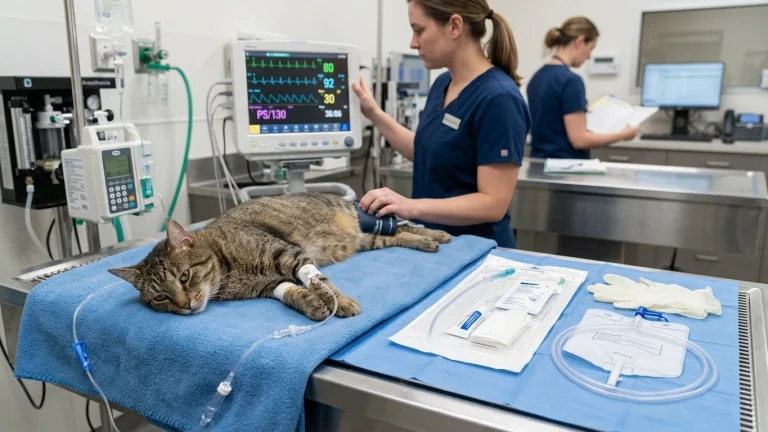
| Tier 1: Immediate Emergency (0-2h) | Dog assuming prayer position repeatedly; recumbent weakness or collapse; pale tacky gums with delayed capillary refill time (>2 seconds); intractable vomiting (more than 3 times in 4 hours) or bloody vomitus; fever >103.5°F or hypothermia <99.0°F. | Transport immediately to an emergency veterinary intensive care unit. Withhold all oral food and liquids. Prepare for aggressive intravenous fluid resuscitation, abdominal ultrasound, and blood gas analysis. |
| Tier 2: Urgent Veterinary Care (2-6h) | Vomiting once or twice with marked lethargy; complete refusal of meals for over 12 hours; arched spine or abdominal stiffness; diarrhea without bright blood; known ingestion of high-fat table scraps (bacon, roast skin, butter) within past 24 hours. | Schedule same-day urgent veterinary consultation. Withhold high-fat treats entirely. Monitor vital parameters and avoid rough abdominal palpation during transport. |
| Tier 3: Outpatient Observation (6-12h) | Single episode of mild nausea (lip licking, grass eating) with normal energy levels, pink moist mucous membranes, and soft, non-tender abdomen upon gentle palpation. | Rest the gastrointestinal tract for 4 to 6 hours, then introduce small sips of water. Contact your regular clinic if vomiting occurs or appetite fails to return by the next scheduled feeding. |
Dangerous Home Pitfalls: What NOT to Do (Rule S1)
- NEVER administer human pain relievers or anti-inflammatories: Giving ibuprofen, paracetamol/acetaminophen, naproxen (Aleve), or aspirin to a dog with pancreatitis is catastrophic. These compounds cause massive gastrointestinal perforation, intestinal necrosis, and irreversible acute kidney injury within hours.
- NEVER force-feed water, electrolytes, or broths during active vomiting: Forcing oral fluids into a nauseated, vomiting dog bypasses protective laryngeal reflexes, directly causing foreign material aspiration into the lungs and lethal aspiration pneumonia.
- NEVER offer fatty foods or recovery gravies: Ingesting even small quantities of dietary fat stimulates cholecystokinin release, triggering fresh pancreatic enzyme synthesis and drastically intensifying pancreatic necrosis.
- NEVER rely on home fasting alone without professional fluid support: While traditional dogma favored prolonged starvation, modern veterinary medicine demonstrates that dehydration reduces pancreatic blood flow. Dogs require balanced intravenous fluid therapy to sustain pancreatic microcirculation and survive acute attacks.
Pathophysiological Triggers: Diet, Breeds, and Endocrine Risks
While the precise molecular trigger for acute pancreatitis remains multifactorial, dietary indiscretion represents the most frequent precipitating event. Ingestion of fatty table scraps—such as turkey skin, bacon grease, barbecue trimmings, or butter—overwhelms pancreatic lipid metabolism, provoking cellular stress and hypersecretion of digestive enzymes. Scavenging garbage cans containing rancid fats and decomposing proteins carries an exceptionally high risk of severe acute necrosis.
Breed genetics also play a substantial role. Miniature Schnauzers possess a well-documented genetic predisposition to primary hyperlipidemia, resulting in an abnormal mutation of lipid clearance pathways that elevates pancreatitis risk by over fivefold compared to the general canine population. Yorkshire Terriers, Cocker Spaniels, Shetland Sheepdogs, and Miniature Poodles also exhibit heightened susceptibility. Furthermore, concurrent endocrine disorders—including Cushing’s disease (hyperadrenocorticism), hypothyroidism, and diabetes mellitus—substantially disrupt lipid metabolism, compounding pancreatic vulnerability.
Frequently Asked Questions
How does a veterinarian definitively diagnose acute pancreatitis?
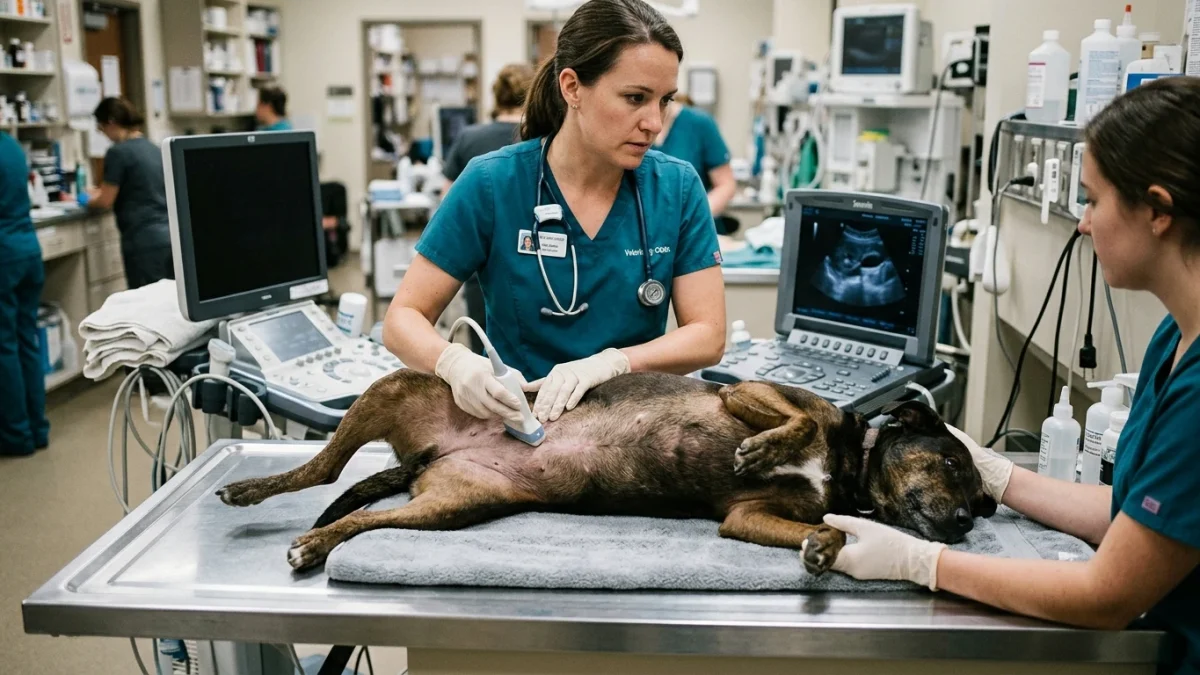
Veterinarians diagnose acute pancreatitis through a combination of clinical history, physical abdominal palpation, point-of-care canine pancreatic lipase immunoreactivity (Spec cPL or SNAP cPL) blood testing, and abdominal ultrasonography. High-resolution ultrasound allows the clinician to directly visualize pancreatic edema, hypoechoic tissue parenchymal swelling, hyperechoic peripancreatic fat saponification, and localized peritoneal effusion.
Why is intravenous fluid therapy the most critical medical treatment?
During acute pancreatitis, intense localized inflammation and capillary permeability lead to massive fluid transudation into the peritoneal cavity and retroperitoneum. This hypovolemia diminishes systemic blood pressure and drastically restricts pancreatic microvascular perfusion. Intravenous crystalloid fluids expand intravascular volume, restore organ blood flow, flush inflammatory mediators, and prevent secondary pancreatic ischemic necrosis.
Can a dog recover completely from an acute pancreatitis episode?
Yes, mild to moderate cases of acute pancreatitis that receive prompt veterinary intervention and aggressive fluid resuscitation carry an excellent prognosis, with clinical recovery typically occurring within 3 to 7 days. However, severe acute necrotizing pancreatitis carries a guarded prognosis and requires intensive multi-day hospitalization. Following recovery, the dog must remain permanently on a strict, highly digestible, ultra-low-fat veterinary prescription diet to prevent chronic recurrence.
Scientific Sources and Literature
- Xenoulis PG. “Diagnosis and management of pancreatitis in dogs.” Topics in Companion Animal Medicine. PMID: 29468761
- Mansfield C, Beths T. “Management of acute pancreatitis in dogs: a critical appraisal with focus on systemic complications and analgesia.” Journal of Small Animal Practice. PMID: 31057428
- Watson P. “Pancreatitis in dogs and cats: definitions and pathophysiology.” Journal of Small Animal Practice. PMID: 29938837
Caregiver Pancreatitis Action Checklist
- Observe body posture closely: identify prayer position, arched back, or rigid abdominal muscle guarding.
- Withhold all food, treats, table scraps, and broths immediately to prevent triggering further pancreatic enzyme release.
- Check gum color and capillary refill time by pressing gently on the gum above the canine tooth; report pale, dry, or muddy gums to the clinic.
- Never administer human pain medications or leftover canine prescriptions without direct veterinary authorization.
- Transport the dog gently in a recumbent position, supporting the chest and pelvic areas without applying pressure to the mid-abdomen.
- Proceed directly to a 24-hour emergency veterinary hospital equipped for blood testing, ultrasonography, and continuous intravenous therapy.
Source transparency
Reference mix for this guide
Source labels describe the type of organization behind each reference; they are not a claim that any outside organization reviewed this article.
- Dog Vomiting: Home Monitoring vs Emergency Red Flags Reference source · newspet.net
- Dog Bloat & GDV Gastric Torsion Emergency Reference source · newspet.net
- Dog Shaking & Lethargic Differential Triage Reference source · newspet.net
- Puppy Bloody Diarrhea & HGE Emergency Reference source · newspet.net
- PMID: 29468761 Government or public agency · pubmed.ncbi.nlm.nih.gov
- PMID: 31057428 Government or public agency · pubmed.ncbi.nlm.nih.gov
- PMID: 29938837 Government or public agency · pubmed.ncbi.nlm.nih.gov