This guide is general education for pet owners. If your pet has urgent symptoms, possible poisoning, injury, breathing trouble, collapse, severe pain, or sudden decline, contact a licensed veterinarian or local emergency service.
VETERINARY QUICK ANSWER
Quick Answer
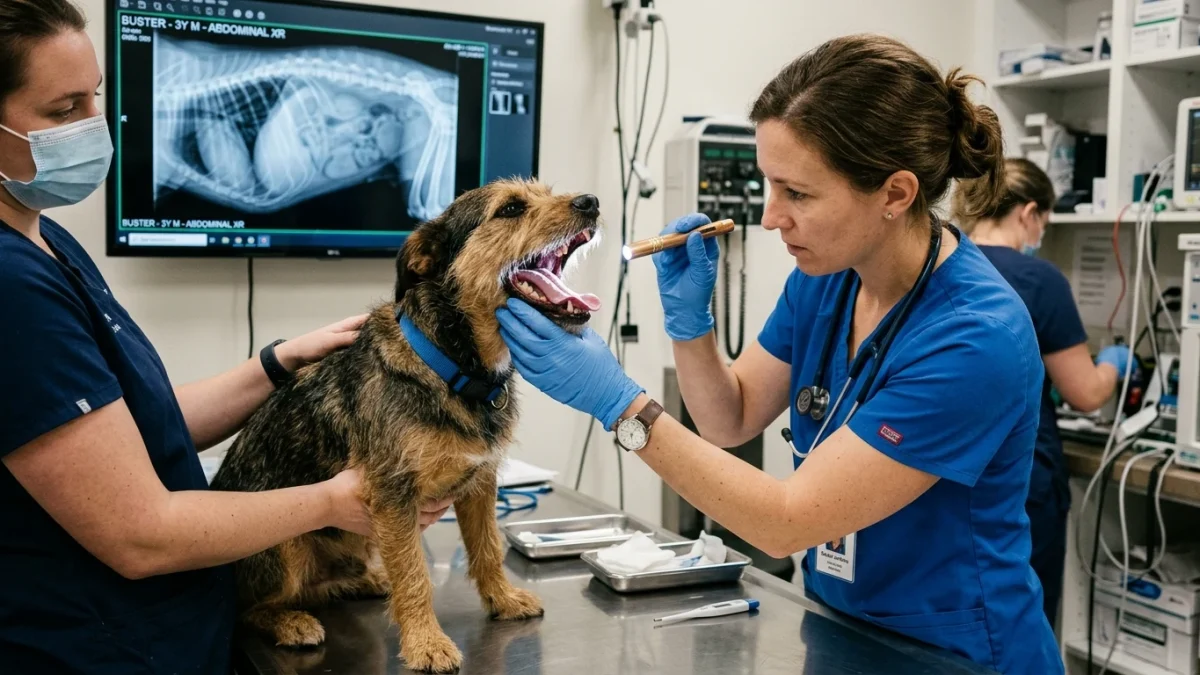
If your dog has swallowed a cooked chicken bone or another sharp object, contact a veterinarian immediately. Cooked bones splinter into needle-like fragments that can puncture the gastrointestinal tract. Do not induce vomiting, as bringing sharp objects back up the esophagus can cause fatal lacerations. Monitor for signs of perforation, such as abdominal guarding, bloody vomiting, and acute lethargy.
EMERGENCY ADVISORY: The ingestion of cooked bones or sharp foreign objects by a dog is a veterinary emergency. Sharp fragments can lacerate the esophagus, stomach, or intestines, leading to life-threatening peritonitis. Immediate consultation with a veterinarian is strongly recommended to determine if endoscopic retrieval or surgical intervention is necessary.
Cooked vs. Raw Bones: The Splintering Physics
There is a fundamental structural difference between raw and cooked bone matrices. The thermal process of cooking denatures the collagen fibers that give raw bones their elasticity and flexibility. Once this collagen matrix degrades, the bone becomes extremely brittle. When a dog bites down on a cooked chicken or turkey bone, it fractures into rigid, razor-sharp shards.
These shards behave like needles as they pass through the gastrointestinal mucosa. Conversely, raw bones maintain their cellular moisture and collagen integrity, which allows them to yield to jaw pressure without shattering into pointed fragments. While raw bones can still present impaction risks, cooked bones carry a significantly elevated risk of perforation.
The GI Transit Timeline: What Happens Hour by Hour
Understanding the gastrointestinal transit timeline is critical when assessing a foreign body ingestion. Clinical observation relies on understanding where the object likely resides at any given point:
- 0 to 2 Hours (Esophageal Passage): The immediate post-ingestion phase involves esophageal transit. Sharp objects can easily lodge in the distal esophagus. Signs of an esophageal laceration or impaction include excessive salivation, exaggerated swallowing movements, pacing, or regurgitation of water and food shortly after ingestion.
- 2 to 6 Hours (Gastric Retention): Objects that clear the esophagus typically remain in the stomach for several hours. This is the optimal window for endoscopic retrieval by a veterinary professional. Signs of gastric irritation include retching, restlessness, and abdominal distension. Note: if you observe vomiting, refer to our guide on dog vomiting.
- 6 to 72 Hours (Intestinal Transit): If the object passes the pyloric sphincter into the small intestine, the risk profile shifts from gastric laceration to intestinal obstruction and perforation. The narrowest points of the intestinal tract present the highest risk. Signs during this phase include profound lethargy, a rigid or guarded abdomen, anorexia, and hematochezia (bloody stool).
Common Dangerous Swallowed Objects
Cooked poultry bones are not the only dangerous household items. Other high-risk ingestions include:
- Rib Bones and Steak Bones: Even when raw, their dense structure can cause severe dental fractures or esophageal blockages.
- Corn Cobs: A leading cause of pyloric and intestinal obstruction. They do not digest and frequently become lodged in the small intestine.
- Socks and Underwear: Fabric materials frequently unspool or bunch together, creating a linear foreign body or a complete mechanical blockage that requires surgical excision.
- Wooden Skewers: Highly dangerous due to their length and sharp points, leading to migration through the GI tract into the liver or abdominal cavity.
- Batteries: Pose a dual threat of mechanical obstruction and chemical burns due to alkaline fluid leakage.
- Fruit Pits: Present a toxic risk (cyanide in certain pits) alongside the mechanical obstruction hazard. See our toxic ingestion guide or use the toxic food checker.
Clinical Emergency Triage Matrix
| Tier | Timeframe | Clinical Presentation | Required Action |
|---|
| Tier 1: Immediate Emergency | 0-2 Hours or Acute Distress | Known ingestion of sharp object, bloody vomiting, abdominal guarding, collapse, respiratory distress. | Immediate transport to emergency veterinary facility. Do not delay. |
| Tier 2: Same-Day Evaluation | 12-24 Hours | Ingestion of non-sharp object (e.g., small sock) with signs of lethargy, anorexia, or unproductive retching. | Contact veterinarian for imaging and evaluation within 12 hours. |
| Tier 3: Home Monitoring | Ongoing | Suspected ingestion of small, blunt objects with normal appetite, normal defecation, and no signs of distress. | Monitor stool for passage. Observe closely for changes in clinical status. Call vet for guidance. |
Dangerous Home Pitfalls: What NOT to Do (Rule S1)
Intervening at home without veterinary guidance often exacerbates the clinical situation. Adhere to these strict contraindications:
- NEVER force-feed bread or cotton balls: The folk remedy of feeding bulky carbohydrates to “cushion” sharp fragments is clinically ineffective and dangerous. Carbohydrate bulk does not reliably encase sharp shards. Furthermore, increasing gastric volume elevates the risk of spontaneous emesis, which is highly dangerous.
- NEVER induce vomiting at home for sharp objects: Inducing emesis with sharp objects in the stomach can cause the object to lacerate the esophageal wall or become lodged during reverse transit.
- NEVER administer hydrogen peroxide without veterinary authorization: Hydrogen peroxide is a mucosal irritant and should only be used for specific toxicities under direct professional guidance, never for sharp foreign bodies.
- NEVER wait for ‘it to pass’ if your dog shows distress: Delaying veterinary care when a dog is symptomatic significantly decreases the prognosis and increases surgical complications.
Sources
Caregiver Safety Checklist
- [ ] Identify the ingested object (type, size, quantity).
- [ ] Note the exact time of ingestion.
- [ ] Observe for immediate signs of distress (choking, heavy salivation).
- [ ] Prevent access to additional hazards (secure trash cans).
- [ ] Call your local emergency veterinarian for an immediate consultation.
- [ ] Do not administer any home remedies, food, or emetics.
EMERGENCY ADVISORY: This clinical article is intended for educational purposes and does not replace professional veterinary advice. If you suspect your dog has ingested a sharp foreign object or cooked bone, seek emergency veterinary care immediately.
Source transparency
Reference mix for this guide
Source labels describe the type of organization behind each reference; they are not a claim that any outside organization reviewed this article.
Government or public agency: 3
NP
About NewsPet Editorial Team
NewsPet guides are edited for clear owner decisions, source transparency, and safety boundaries. Health and safety articles avoid diagnosis and point readers toward veterinary care when symptoms are urgent or unclear.
Read our editorial policy