
Health and Safety Boundary
Jump to Emergency Red Flags ↓
This guide is general education for pet owners. If your pet has urgent symptoms, possible poisoning, injury, breathing trouble, collapse, severe pain, or sudden decline, contact a licensed veterinarian or local emergency service.
Editorial standard
How this guide was prepared
Edited for decisions
NewsPet guides are structured around practical owner choices, tradeoffs, and safety boundaries.
Source policy
Sources are listed when a guide relies on outside references.
Veterinary boundary
This article does not diagnose or prescribe; urgent symptoms need veterinary care.
Corrections
Readers can flag unclear, outdated, or inaccurate information through our contact page.
Dog Ate Cooked Bones: Splintering & Perforation Triage
Clinical Verdict: HIGH CRITICAL HAZARD (Mechanical / Septic)
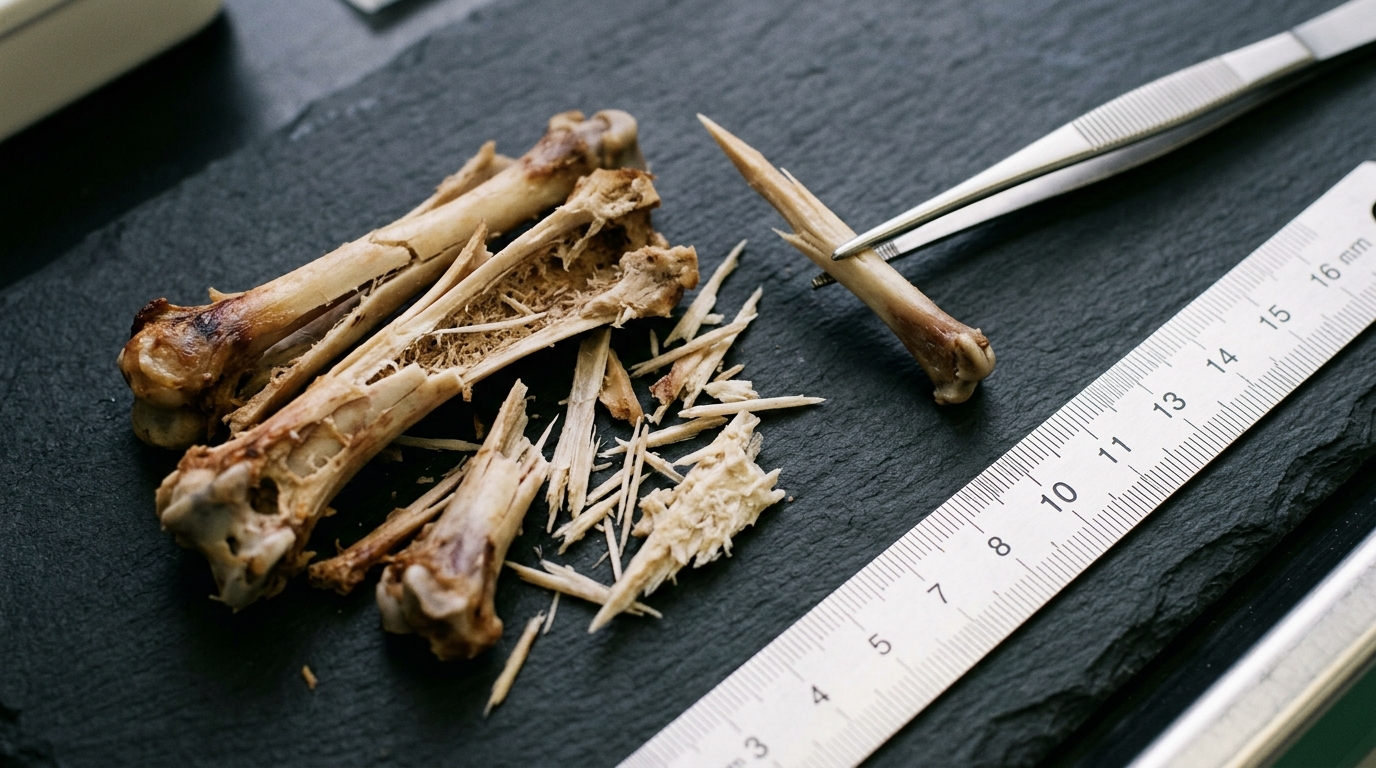
Dogs CANNOT eat cooked bones (chicken, pork, beef). Cooking denatures the collagen matrix, causing bones to splinter into razor-sharp shards that can puncture the esophagus, stomach, or bowel.
Toxic Mechanism & Agent
- Toxic Agent: Mechanical foreign body laceration
- Mechanism of Action: Sharp bone shards cause mechanical trauma: esophageal tearing, gastric ulceration, intestinal puncture leading to leaking gut contents and fatal septic peritonitis.
Clinical Signs & Timeline
- Onset Time: Choking/coughing immediate; Obstruction/perforation within 6 to 48 hours.
- Primary Symptoms: Gagging, pawing at mouth, acute lethargy, hunched posture, rigid abdomen, vomiting with fresh blood, black tarry stools (melena), fever.
Emergency Triage Protocol
IMMEDIATE ER VISIT
DO NOT induce vomiting at home; bringing sharp bone fragments back up risks catastrophic esophageal tearing. A vet will perform abdominal radiographs (X-rays) or CT to evaluate location and integrity.

Strict Rule S1 Warning
NEVER induce vomiting at home using hydrogen peroxide without direct instruction from a DVM. Inappropriate emesis can cause fatal aspiration pneumonia. Always seek professional veterinary diagnosis.
Printable tools