This guide is general education for pet owners. If your pet has urgent symptoms, possible poisoning, injury, breathing trouble, collapse, severe pain, or sudden decline, contact a licensed veterinarian or local emergency service.
Dosages must be calculated by a licensed veterinarian based on species, weight, and bloodwork. Never administer human medications or self-adjust prescription doses for pets.
Editorial standard
How this guide was prepared
Administering pharmacotherapy in an apartment setting requires clear preparation and precise routines. Compact urban floor plans, shared walls with neighbors, busy building elevators, and lack of private outdoor spaces present distinct medication challenges. A pet experiencing distress during oral pilling or topical administration can trigger excessive vocalization that stresses neighbors, while hurried morning elevator commutes risk missed doses or unobserved medication regurgitation. Preparing a comprehensive set of targeted questions for your veterinary team ensures smooth, stress-free medication management at home.
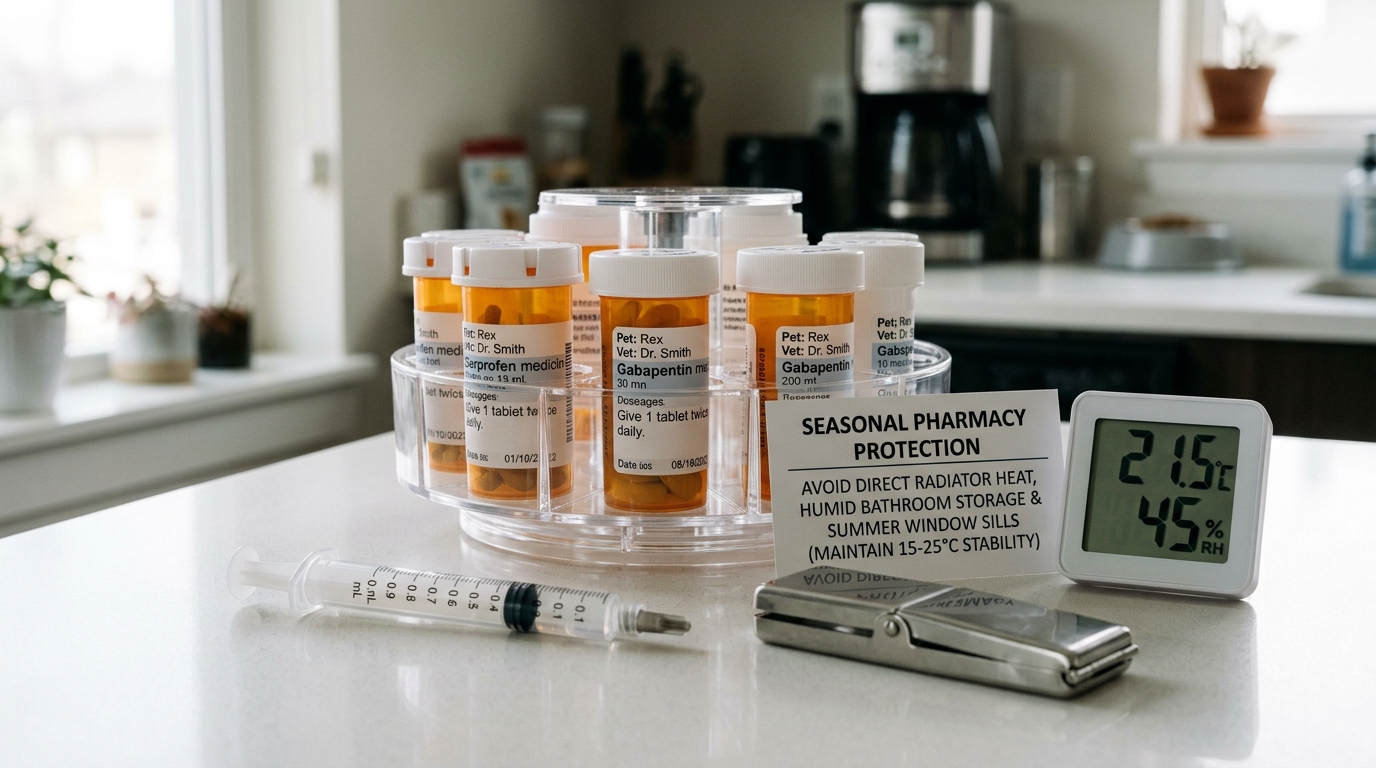
- Safe Storage Away from Heat and Humidity: Avoid storing veterinary prescriptions in humid apartment bathrooms or sunny windowsills; maintain storage in a dry, cool cabinet between 15°C and 25°C.
- Align Dosing with Commute Schedules: Ask your veterinarian whether twice-daily prescriptions (q12h) can be scheduled around your exact work commute times without compromising therapeutic drug levels.
- Address Seasonal Appetite Shifts: Winter indoor heating and summer heat waves can suppress pet appetite; consult your clinician on administering oral medications if a scheduled meal is refused.
This pharmaceutical management protocol conforms to American Veterinary Medical Association (AVMA) standards. Never crush tablets, open capsules, alter prescribed dosing intervals, or discontinue antimicrobials without explicit instruction from your attending veterinarian. If an accidental ingestion or severe adverse reaction occurs, contact your veterinary clinic or an emergency animal poison hotline immediately.
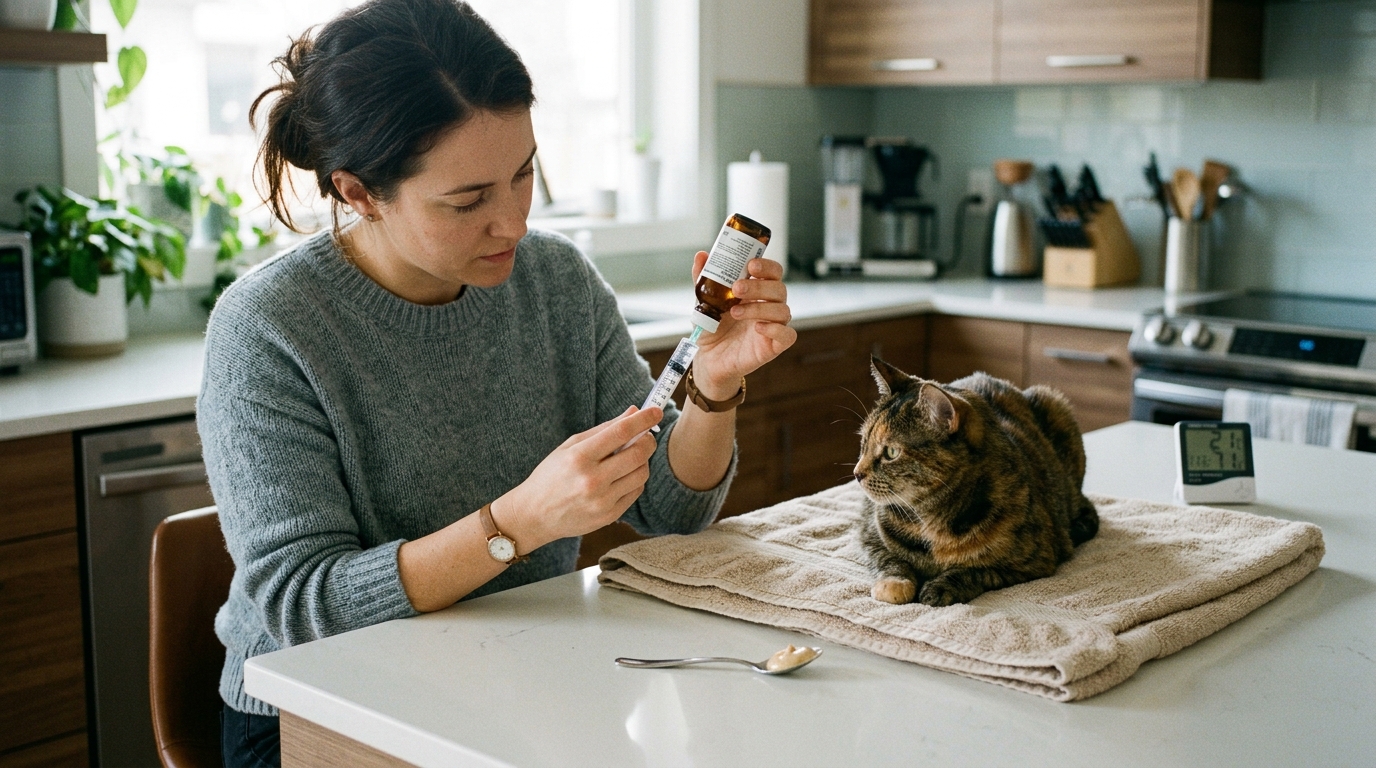
Apartment-Specific Pharmacological Challenges
Urban residential living introduces practical constraints that impact medical compliance:
- Noise-Sensitive Administration Stress: Forcing oral medications down an unwilling pet’s throat frequently results in intense struggling, hissing, or loud distress barking. In high-density apartment buildings with shared walls, owner anxiety regarding neighbor complaints often leads to abandoned therapeutic courses.
- Elevator Scheduling and Regurgitation Risks: Administering oral medications immediately before rushing out the apartment door for an elevator walk frequently provokes motion sickness and regurgitation, leaving owners uncertain whether the drug was absorbed.
- Shared Trash Chute and Disposal Hazards: Discarding unused veterinary pharmaceuticals, medicated patches, or dosing syringes into communal apartment trash chutes poses severe environmental contamination and pet safety hazards.
Vital Medication Questions for Your Veterinary Consultation
Before departing the veterinary hospital or pharmacy, review these essential clinical questions with your veterinarian or licensed technician:
| Clinical Consideration | Specific Question to Ask Your Doctor | Apartment Management Purpose |
|---|---|---|
| Formulation Options | “Is this medication available in a flavored chew, concentrated liquid, or transdermal inner-ear pinna gel?” | Eliminates high-stress pilling battles, supporting quiet and compliant administration inside apartment walls. |
| Timing & Commute Coordination | “Must this medication be given with a full meal, and how long should my pet rest quietly indoors before walking outdoors?” | Averts motion-induced vomiting in building elevators and ensures steady gastrointestinal drug absorption. |
| Regurgitation Protocols | “If my pet vomits 20 minutes after swallowing this tablet, should I re-administer a full dose, a half dose, or wait?” | Provides immediate guidance without panic, preventing dangerous accidental double-dosing of critical drugs. |
| Safe Pharmaceutical Disposal | “How should I safely dispose of leftover liquid medications or empty medication vials without using building chutes?” | Protects local municipal waterways and guards against accidental wildlife or scavenging animal toxicosis. |
| Adverse Behavioral Reactions | “Could this drug cause restlessness, sudden panting, or increased nighttime vocalization that could disrupt apartment quiet?” | Allows owners to plan quiet-hour routines and request alternative pharmacological agents if necessary. |
Low-Stress Apartment Dosing Workflow
Veterinary behaviorists recommend building medication delivery into positive, predictable daily rituals:
- The Cooperative Care Strategy: Never corner a companion animal in small bathrooms or under bedroom furniture. Offer high-value, palatable treats (such as lickable squeeze treats, canned liver paste, or pet-safe pill pockets) before, during, and after administration.
- The Three-Treat Masking Technique: Offer one plain unmedicated treat, immediately followed by the treat containing the hidden tablet, followed rapidly by a third enthusiastic plain treat. The animal swallows the medicated treat quickly to receive the incoming third reward without chewing or tasting bitter ingredients.
- Secure High-Cabinet Storage: Store all prescription pharmaceuticals in child-proof, pet-proof containers inside tall kitchen cabinets. Agile cats and curious urban dogs can chew through plastic bottles left resting on low coffee tables or kitchen islands.
Red-Flag Triage Matrix: Pharmaceutical Adverse Reactions
Consult this clinical triage hierarchy if your pet develops unexpected symptoms following drug administration:
| Triage Tier | Clinical Presentation | Required Action Protocol |
|---|---|---|
| Immediate Emergency (0–2 Hours) | Acute anaphylaxis (facial angioedema, widespread urticaria, collapse, acute respiratory gasping), profound neurological depression, seizures, or accidental ingestion of human NSAIDs or acetaminophen. | Transport immediately to an emergency veterinary hospital. Bring the medication container or prescription label so clinicians can immediately administer specific antidotes and calculate toxic thresholds. |
| Urgent Assessment (12–24 Hours) | Persistent vomiting or bloody diarrhea (melena) following medication, extreme lethargy, complete anorexia exceeding 24 hours, or severe skin erythema. | Contact your prescribing veterinary clinic. Withhold further doses of the suspected medication until speaking directly with your attending veterinarian. |
| Routine Clinical Follow-up | Transient mild hypersalivation following bitter liquid administration, slight temporary sluggishness known as an expected drug effect, or mild stool softening. | Call your veterinary practice during standard clinic hours to discuss flavor compounding or administration adjustments. |
Never administer human over-the-counter medications (such as acetaminophen, ibuprofen, naproxen, or aspirin) to relieve pain or inflammation in pets. These human compounds induce fatal methemoglobinemia, acute hepatic necrosis, and severe renal failure in companion animals.
Frequently Asked Questions
What should pet owners do if a scheduled medication dose is missed or vomited?
Always contact your veterinary clinic before re-administering. If a dose is vomited within 10 to 15 minutes and the intact tablet is visible, a veterinarian may advise re-dosing; if hours have passed, replacing the dose can cause accidental overdose. Never double up on subsequent doses.
Are human over-the-counter pain medications safe for dogs and cats?
No. Human pain relievers like ibuprofen, naproxen, and acetaminophen are highly toxic to companion animals, causing severe stomach ulcers, acute kidney injury, liver necrosis, and fatal blood disorders. Only use analgesics prescribed specifically by your veterinarian.
How should pet medications be stored to maintain their stability and effectiveness?
Store solid tablets in their original child-proof amber containers in a cool, dry area away from bathroom steam. Liquid antibiotic suspensions and biologicals must be kept refrigerated between 2 and 8 degrees Celsius and discarded after the labeled date.
Sources
- AVMA Guidelines on Veterinary Prescription Safety. American Veterinary Medical Association.
- Fear Free Protocols for Low-Stress Medication Administration. Fear Free Pets LLC.
- Merck Veterinary Manual: Pharmacology in Small Animal Medicine. Merck Sharp & Dohme Corp.
Caregiver Safety Checklist
- Never split or crush extended-release medications without explicit veterinary instruction — altering the delivery mechanism can cause toxicity or treatment failure.
- Store all medications at labeled temperatures; many biologics lose potency above 25C (77F) within 48 hours if left in a warm car or sunny windowsill.
- Contact your veterinarian before giving any OTC pain reliever; ibuprofen and acetaminophen are toxic to both dogs and cats at any dose.
Source transparency
Reference mix for this guide
Source labels classify the institutional category of the references cited above.