This guide is general education for pet owners. If your pet has urgent symptoms, possible poisoning, injury, breathing trouble, collapse, severe pain, or sudden decline, contact a licensed veterinarian or local emergency service.
Dosages must be calculated by a licensed veterinarian based on species, weight, and bloodwork. Never administer human medications or self-adjust prescription doses for pets.
Editorial standard
How this guide was prepared
A pet feeding station succeeds when the animal can eat comfortably in a natural anatomical posture and the caregiver can maintain hospital-grade sanitation every day. While commercial pet stores display hundreds of colorful feeder designs, material aesthetics matter far less than food-contact surface hygiene, stability, species-specific ergonomics, and digestive safety. In clinical practice, choosing the wrong feeder can trigger chronic conditions ranging from feline chin acne and whisker stress to life-threatening canine gastric dilatation.
Clinical Quick Answer & Immediate Actions
Selecting pet food and water bowls requires balancing material hygiene, species-specific biomechanics, and clinical safety. Non-porous food-grade 304 stainless steel or lead-free heavy ceramic represents the hygienic gold standard, preventing the microbial biofilm and plasticizer contact dermatitis (feline chin acne) common with plastic bowls. For cats, wide and shallow dishes prevent whisker sensory fatigue; for large and giant deep-chested dogs, floor-level feeding is critical because elevated feeders significantly increase the risk of fatal Gastric Dilatation-Volvulus (GDV/bloat).
Whether you are selecting a first bowl for a puppy, choosing an ergonomic saucer for a sensitive cat, or managing a dog that bolts food in ninety seconds, this detailed veterinary guide breaks down bowl materials, feeder heights, whisker mechanics, and sanitation protocols based on peer-reviewed veterinary literature.
1. Material Safety: Stainless Steel vs. Ceramic vs. Plastic
The chemical and physical properties of your pet’s bowl directly influence the microbial environment around their muzzle. Understanding how materials interact with food fats, saliva, and washing determines long-term dermatological and gastrointestinal health:
| Bowl Material | Clinical Advantages | Potential Drawbacks | Veterinary Sanitation Verdict |
|---|---|---|---|
| Food-Grade 304 Stainless Steel | Completely non-porous, highly durable, crack-resistant, chemical-free, and withstands commercial high-temperature dishwasher cycles. | Lightweight bowls can slide across slick tile unless equipped with a removable food-grade silicone non-skid base. | Gold Standard. The safest, most hygienic material for both canine and feline daily feeding and water stations. |
| Lead-Free Glazed Ceramic | Heavy and stable; difficult for pets to push or tip over. The vitrified glaze provides an ultra-smooth, non-porous barrier. | Can chip or crack if dropped. Microscopic glaze crazing or hairline cracks can trap bacteria and moisture. | Excellent Choice. Safe and aesthetic provided the bowl is inspected regularly for chips and certified lead- and cadmium-free. |
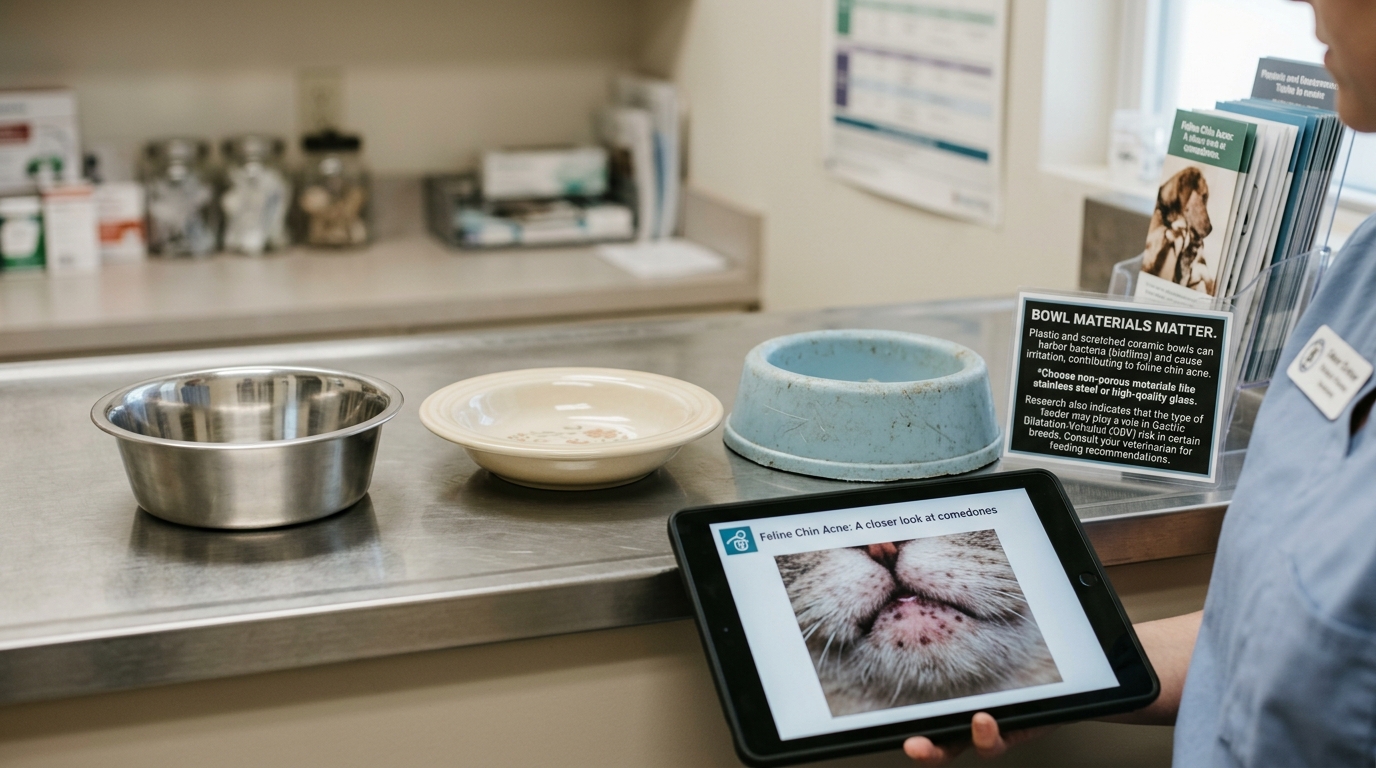
| Standard Plastic Bowls | Inexpensive, lightweight, and shatterproof. Widely available in diverse colors and built-in slow feeder designs. | Soft polymer surfaces readily suffer micro-scratches from pet claws, teeth, and cleaning sponges, creating irreversible bacterial reservoirs. | Clinically Discouraged. Leading contributor to contact dermatitis, bacterial pyoderma, and feline chin acne. |
The Pathology of Plastic Bowls: Feline Chin Acne & Facial Pyoderma
Plastic is a soft, lipophilic (fat-loving) polymer. As dogs and cats eat, animal fats from meat and kibble adhere tenaciously to plastic walls. Even vigorous hand scrubbing fails to penetrate microscopic surface gouges, allowing dense colonies of Staphylococcus pseudintermedius, Pseudomonas, and Malassezia yeast to establish impenetrable slime matrices known as bacterial biofilms.
When a cat repeatedly presses its chin against the rim of a contaminated plastic dish, these bacteria enter the submental hair follicles and sebaceous glands. This precipitates feline chin acne—manifesting initially as black comedones (“blackheads”) resembling dirt specks, which rapidly progress into painful, swollen, bleeding follicular pustules and chronic cellulitis. In dogs, contact with bacterial plastic rims results in painful muzzle pyoderma and allergic contact dermatitis. Replacing plastic bowls with sanitized stainless steel or ceramic resolves up to 70% of mild chin acne cases without requiring systemic antibiotic therapy.
2. Feline Ergonomics: Preventing Whisker Fatigue
Cats have unique sensory anatomy that dictates bowl design. A cat’s whiskers—technically known as vibrissae—are deeply rooted tactile hairs equipped with hundreds of sensory nerve endings, Merkel cell-neurite complexes, and blood sinus capsules. Vibrissae are so sensitive they can detect subtle air current shifts created by nearby moving objects.
Recognizing Whisker Stress
When fed from traditional deep, high-walled bowls, a cat’s vibrissae are forced to bend and compress against the sides of the dish with every bite. This continuous tactile over-stimulation triggers whisker fatigue (or whisker stress), generating neurological agitation and eating reluctance. Common behavioral indicators include:
- Pawing Food onto the Floor: The cat hooks dry or wet food with its claws and drops it onto the floor to eat away from the bowl walls.
- Eating Only the Center: The cat consumes food from the exact middle of the bowl but leaves food along the perimeter, meowing as if the bowl were empty.
- Pacing and Hesitation: Approaching the dish hungrily, sniffing, hesitating, pacing around the bowl, or pacing away before finishing.
- Bowl Tipping: Deliberately tipping the bowl over to access food on flat ground.
The clinical solution is straightforward: replace deep bowls with wide, shallow saucers, flat rimless ceramic plates, or specialized oval feline dishes measuring at least 6 inches (15 cm) across with curved sides under 1 inch (2.5 cm) high.
3. Canine Gulping and the Role of Slow Feeders
Many domestic dogs display ravenous eating behaviors, bolting entire meals in under sixty seconds. This rapid ingestion triggers aerophagia—the excessive swallowing of ambient air into the gastrointestinal tract during eating.
Physiological Consequences of Rapid Eating
- Acute Postprandial Regurgitation: Overloading the stomach with unchewed kibble and swallowed air causes sudden passive backflow of undigested food within 10 to 15 minutes of eating.
- Excessive Flatulence and Gastric Discomfort: Trapped swallowed air passes into the intestinal lumen, causing painful abdominal cramping, borborygmi (stomach gurgling), and severe flatulence.
- Choking Hazard: Inhaling kibble pieces into the larynx or trachea triggers acute paroxysmal coughing, choking, and foreign body aspiration.
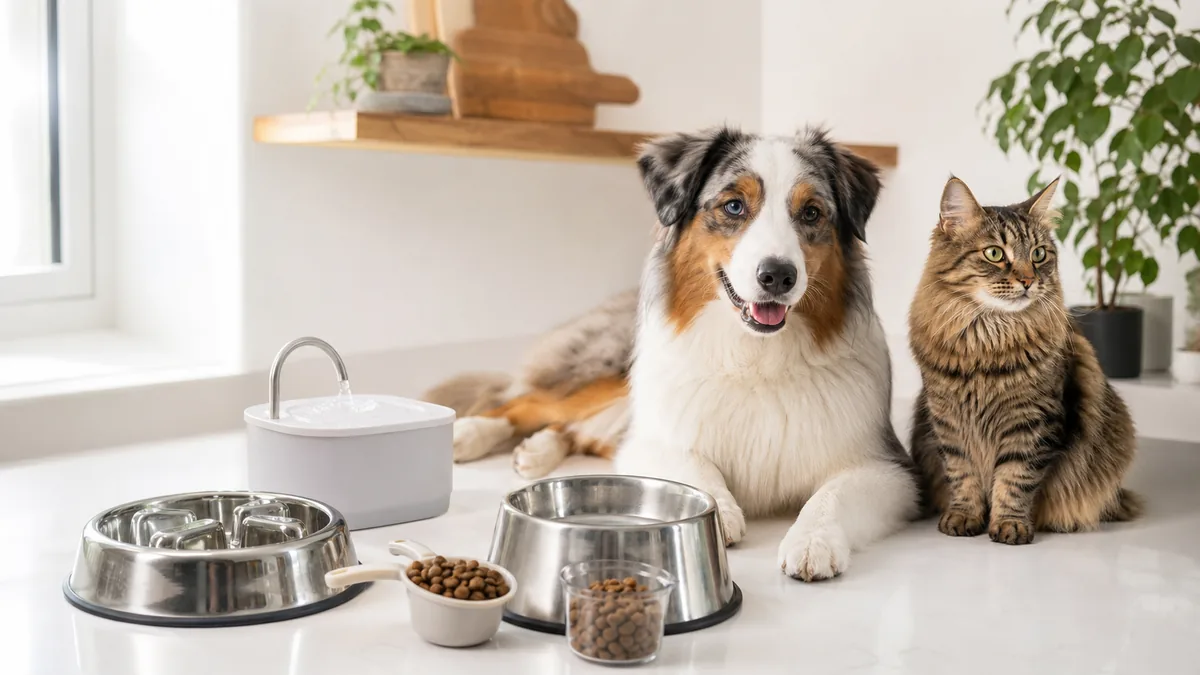
Maze and Puzzle Slow Feeders: Utilizing a bowl engineered with raised concentric ridges, spiral mazes, or silicone pillars forces the dog to use its tongue to isolate and retrieve individual kibbles. A well-designed slow feeder extends feeding times from 90 seconds to 8–15 minutes. This slow pacing stimulates cephalic phase digestion, increases satiety hormones, and prevents acute aerophagia.
4. The Elevated Feeder Controversy: Evidence on GDV (Bloat)
For decades, commercial pet manufacturers aggressively marketed raised or elevated feeding stands for large-breed dogs, claiming they improved digestion and prevented bloat. However, modern veterinary epidemiology has definitively overturned this marketing claim.
The Purdue University GDV Study
In a landmark multi-year prospective study published in the Journal of the American Veterinary Medical Association (JAVMA), veterinary researchers at Purdue University tracked over 1,600 large- and giant-breed dogs to analyze environmental risk factors for Gastric Dilatation-Volvulus (GDV). The study yielded startling clinical conclusions:
- Feeding from an elevated feeder was associated with a 110% increase in the risk of bloat (GDV) in large-breed dogs.
- In giant-breed dogs, elevated feeders were associated with a 200% increase in GDV risk compared to floor-level bowls.
- The authors estimated that approximately 20% to 52% of GDV cases in these cohorts were directly attributable to the use of elevated feeding stations.
When Are Elevated Feeders Actually Prescribed?
Elevated feeders should only be utilized when specifically prescribed by a veterinarian for targeted clinical diagnoses:
- Canine Megaesophagus: Dogs with esophageal hypomotility require eating in a strictly vertical position (such as in a custom Bailey Chair) so gravity can transport food boluses down to the stomach.
- Severe Cervical Spondylosis or Advanced Osteoarthritis: Senior dogs with debilitating neck fusion, severe spinal pain, or forelimb weakness that cannot bend down comfortably may benefit from moderate elevation adjusted precisely to elbow height.
For all healthy large and deep-chested breeds (such as Great Danes, German Shepherds, Standard Poodles, Boxers, and Weimaraners), feed at floor level to protect against GDV.
5. Automatic Feeders and Pet Water Fountains: Hygiene Protocols
Electronic automatic feeders and recirculating pet water fountains offer tremendous lifestyle convenience, but introduce complex internal moisture paths that require rigorous maintenance.
- Biofilm Slime in Water Fountains: Recirculating submersible pumps, silicone tubing, and plastic impellers accumulate slippery pink bacterial biofilms (frequently Serratia marcescens). Submersible pumps must be fully disassembled, soaked in 50/50 white vinegar and warm water, and scrubbed with a nylon pipe brush every 7 to 10 days.
- Stale Fat Accumulation in Feeder Chutes: Automatic kibble dispensers accumulate rancid fat residue inside the dispensing funnel and rotor blades. This oxidized lipid layer attracts mold spores and pantry pests. Empty the hopper and wash all removable food-contact chutes with hot soapy water monthly.
Veterinary Escalation Boundary: When to Seek Medical Attention
If your dog or cat develops sudden food refusal, repetitive regurgitation after swallowing, or swollen chin lesions, contact a veterinarian promptly to diagnose underlying dental pathology, megaesophagus, or feline acne. Immediate veterinary intervention prevents mild mechanical or dermatological issues from advancing to severe systemic complications.
Also, if a large-breed dog displays non-productive retching, restlessness, excessive drooling, or visible swelling of the left abdomen following a meal, this constitutes an acute Gastric Dilatation-Volvulus (GDV) emergency—transport the animal to an emergency veterinary surgical hospital immediately.
Clinical Practice Tool: Daily Pet Care Routine Tracker
Organize sanitary feeding schedules and stainless steel feeder sanitization routines with our printable Daily Pet Care Routine Tracker. Download and print your copy of the Daily Pet Care Routine Tracker, or explore all practical pet care guides in the NewsPet Resource Center.
Frequently Asked Questions
What is the safest material for pet food and water bowls?
Veterinary dermatologists and microbiologists recommend heavy-gauge, food-grade stainless steel (304 or 18/8) or lead-free porcelain ceramic. Plastic bowls develop microscopic surface scratches that harbor bacterial biofilms, triggering feline and canine chin acne (contact dermatitis).
How often should dog and cat bowls be washed?
Wash food bowls after every meal with hot water and pet-safe dish soap to eliminate harmful bacteria like Salmonella and E. coli. Water bowls should be rinsed and refilled with fresh water daily, and sanitized thoroughly in the dishwasher or with hot soapy water at least twice weekly.
Do elevated bowls cause bloat in dogs?
Large veterinary epidemiological studies indicate that elevated feeders significantly increase the risk of Gastric Dilatation-Volvulus (GDV or bloat) in large and giant deep-chested breeds. Elevated feeding is generally reserved for pets with medical indications like megaesophagus or severe cervical arthritis.
Sources
Sources checked: September 8, 2026.
- FDA Center for Veterinary Medicine: Tips for Safe Handling of Pet Bowls and Feeding Equipment
- CDC: Healthy Pets – Cleaning Food Bowls and Sanitation Guidelines
- JAVMA: Non-dietary Risk Factors for Gastric Dilatation-Volvulus in Large and Giant Breed Dogs
- FelineVMA / ISFM: Feline Environmental Needs Guidelines and Feeding Station Ergonomics
- Ohio State University Veterinary Medical Center: Indoor Pet Initiative – Mealtime Enrichment and Station Design
Emergency Triage Matrix: Clinical Presentation & Required Response
| Triage Level | Clinical Signs & Presentation | Immediate Action Protocol |
|---|---|---|
| Tier 1: Immediate Emergency (0–2 Hours) | Unproductive retching, severe abdominal distension, pacing, and collapse within 1 to 2 hours of eating a large meal from an elevated feeder in a deep-chested dog (GDV). | Immediate emergency hospital transport; emergency gastric trocharization/decompression, rapid fluid resuscitation, and emergency gastropexy surgery. |
| Tier 2: Urgent Veterinary Care (Same-Day) | Severe pustular chin acne, ulceration, or bleeding along the mandibular skin fold in a cat eating from scratched plastic bowls; or acute gastrointestinal vomiting from biofilm-contaminated water. | Veterinary clinical examination; deep skin scrape/cytology, antiseptic lavage, transition to stainless steel bowls, and culture-directed antibiotic therapy if infected. |
| Tier 3: Home Monitoring & Scheduled Care | Cat pawing food out of deep bowls onto the floor, hesitant to eat from narrow dishes, or mild bacterial slimy biofilm noted inside water dish. | Switch to wide, shallow whisker-friendly stainless steel plates and implement daily hot water washing and sanitization cycles. |
Rule S1 Boundaries & Feeding Station Safety Warnings
Hardware choices carry direct physiological and life-safety implications:
- NEVER use elevated feeders for deep-chested large or giant breed dogs unless clinically indicated: Landmark epidemiological studies show elevated feeding stations increase the risk of fatal Gastric Dilatation-Volvulus (bloat) by 110% in large breeds and 200% in giant breeds; use only if specifically prescribed for severe megaesophagus.
- NEVER use scratched, aged plastic bowls for food or water: Microscopic abrasions in plastic harbor entrenched bacterial biofilms (Serratia, Pseudomonas) and leech endocrine-disrupting chemicals that trigger refractory feline chin acne.
- NEVER leave pet water fountains uncleaned for weeks: Recirculating water fountain pumps rapidly accumulate slime biofilms, algae, and opportunistic pathogenic bacteria; disassemble and sanitize weekly with food-grade vinegar or hot soapy water.
- NEVER allow rapid food bolting without slow-feeder intervention: Rapid ingestion of large kibble volumes induces aerophagia (air-swallowing), postprandial regurgitation, and contributes to acute gastric distension.
Caregiver Feeding Station Sanitation & Selection Checklist
- Select heavy food-grade 304 stainless steel or certified lead-free ceramic bowls with non-slip silicone bases.
- Provide wide, shallow saucers or plates for cats to keep sensitive vibrissae (whiskers) from contacting bowl rims during feeding.
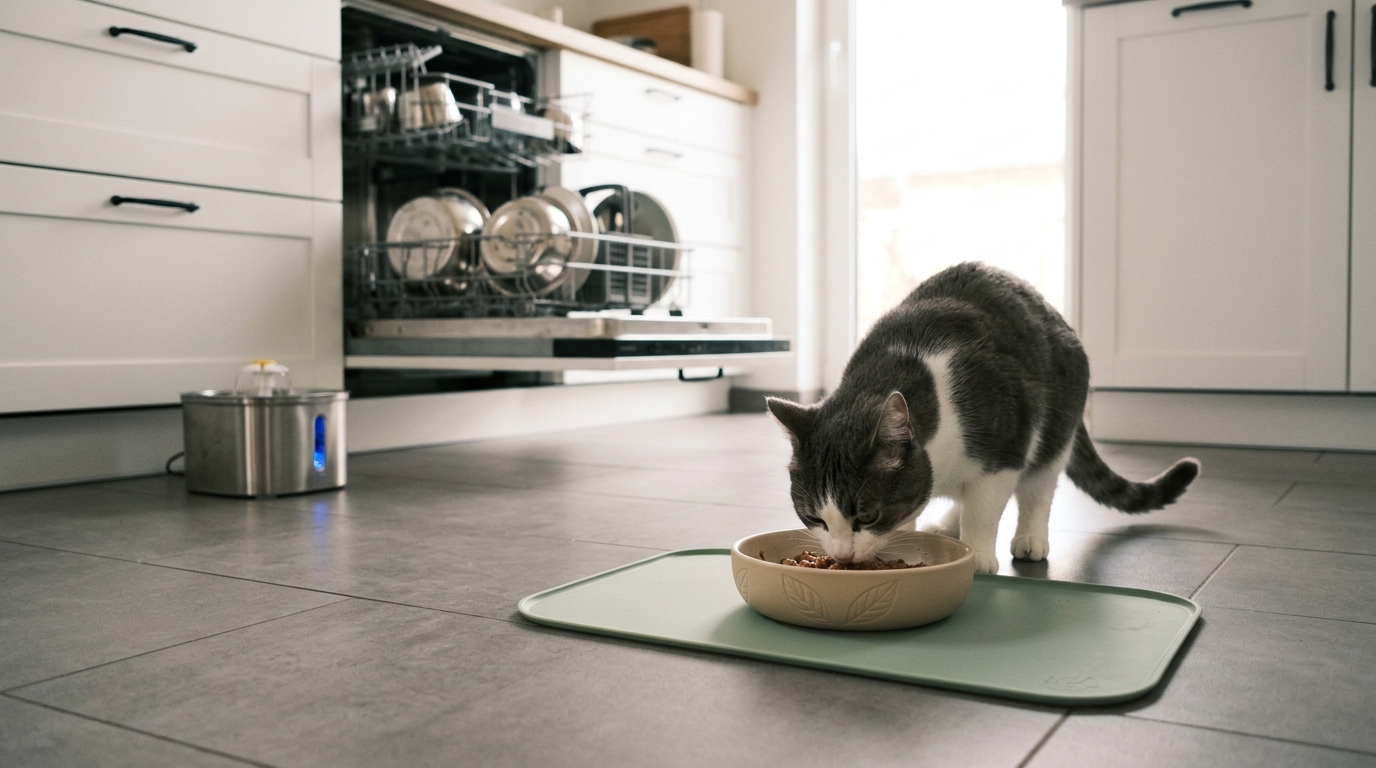
- Wash all food bowls daily with hot water (minimum 60°C / 140°F) and pet-safe dish soap; run through high-heat dishwasher cycles weekly.
- Keep water bowls placed at least 3 to 5 feet away from litter boxes and food stations to satisfy instinctive feline clean water preferences.
- Utilize puzzle feeders, slow-feed bowls, or lick mats for speed-eating dogs to extend meal duration from 30 seconds to over 10 minutes.
Related Clinical Guides & Tools
Peer-Reviewed Clinical References & Evidence Grounding
- PMID: 9753799: Feline dirofilariasis (Clin Tech Small Anim Pract, 1998) (opens in new tab)
- PMID: 26344646: Behavioural changes in dogs treated with corticosteroids (Physiol Behav, 2015) (opens in new tab)
- PMID: 27426073: Molecular and epidemiological characterization of canine Pseudomonas otitis using a prospective case-control study design (Vet Dermatol, 2017) (opens in new tab)
- Merck Veterinary Manual — Small Animal Clinical Medicine & Emergency Reference (opens in new tab)
Printable tools
Download the matching worksheet
Source transparency
Reference mix for this guide
Source labels describe the type of organization behind each reference; they are not a claim that any outside organization reviewed this article.
- FDA Center for Veterinary Medicine: Tips for Safe Handling of Pet Bowls and Feeding Equipment Government or public agency · fda.gov
- CDC: Healthy Pets – Cleaning Food Bowls and Sanitation Guidelines Government or public agency · cdc.gov
- JAVMA: Non-dietary Risk Factors for Gastric Dilatation-Volvulus in Large and Giant Breed Dogs Reference source · avmajournals.avma.org
- FelineVMA / ISFM: Feline Environmental Needs Guidelines and Feeding Station Ergonomics Veterinary organization · catvets.com
- Ohio State University Veterinary Medical Center: Indoor Pet Initiative – Mealtime Enrichment and Station Design Academic or extension · indoorpet.osu.edu
- Foods Dogs & Cats Cannot Eat: Toxic List & Reference source · newspet.net
- Pet Food Recalls: How to Check Lot Codes & Res Reference source · newspet.net
- Raw Pet Food Risks: What to Know Before Feeding Ra Reference source · newspet.net