This guide is general education for pet owners. If your pet has urgent symptoms, possible poisoning, injury, breathing trouble, collapse, severe pain, or sudden decline, contact a licensed veterinarian or local emergency service.
Editorial standard
How this guide was prepared
Clinical nutrition serves as a primary therapeutic modality, directly altering disease progression and extending survival times in chronic pathology. Prescription veterinary diets are rigorously formulated to modify specific metabolic pathways, mineral concentrations, or immune responses.
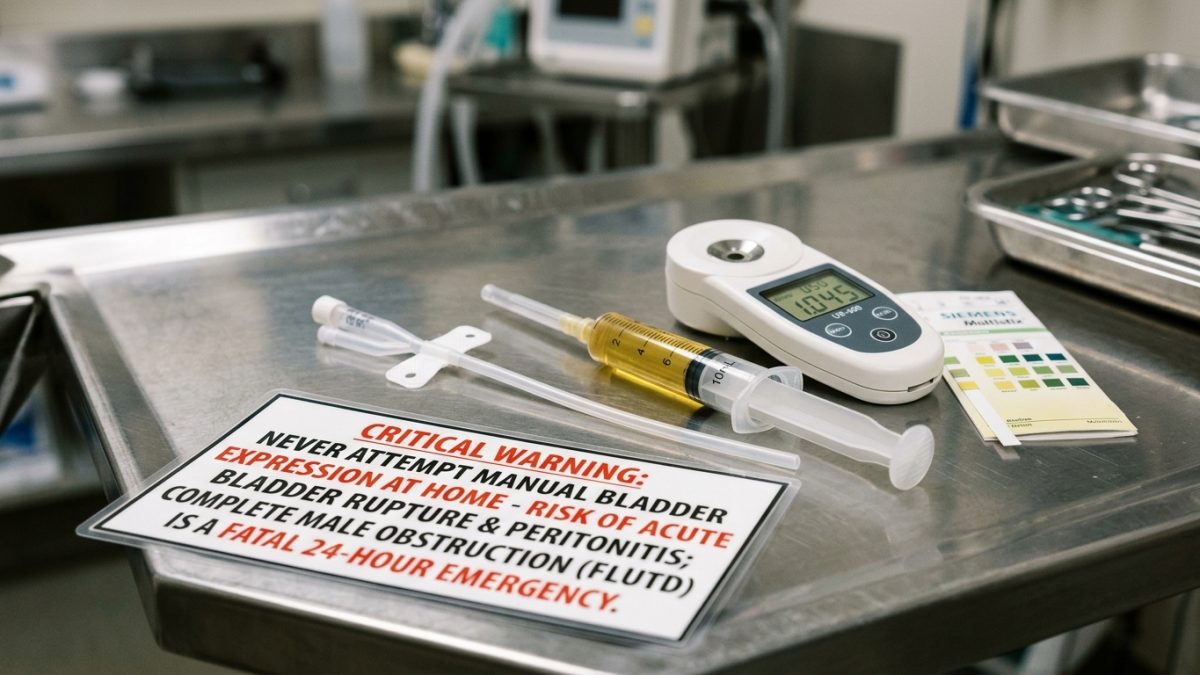
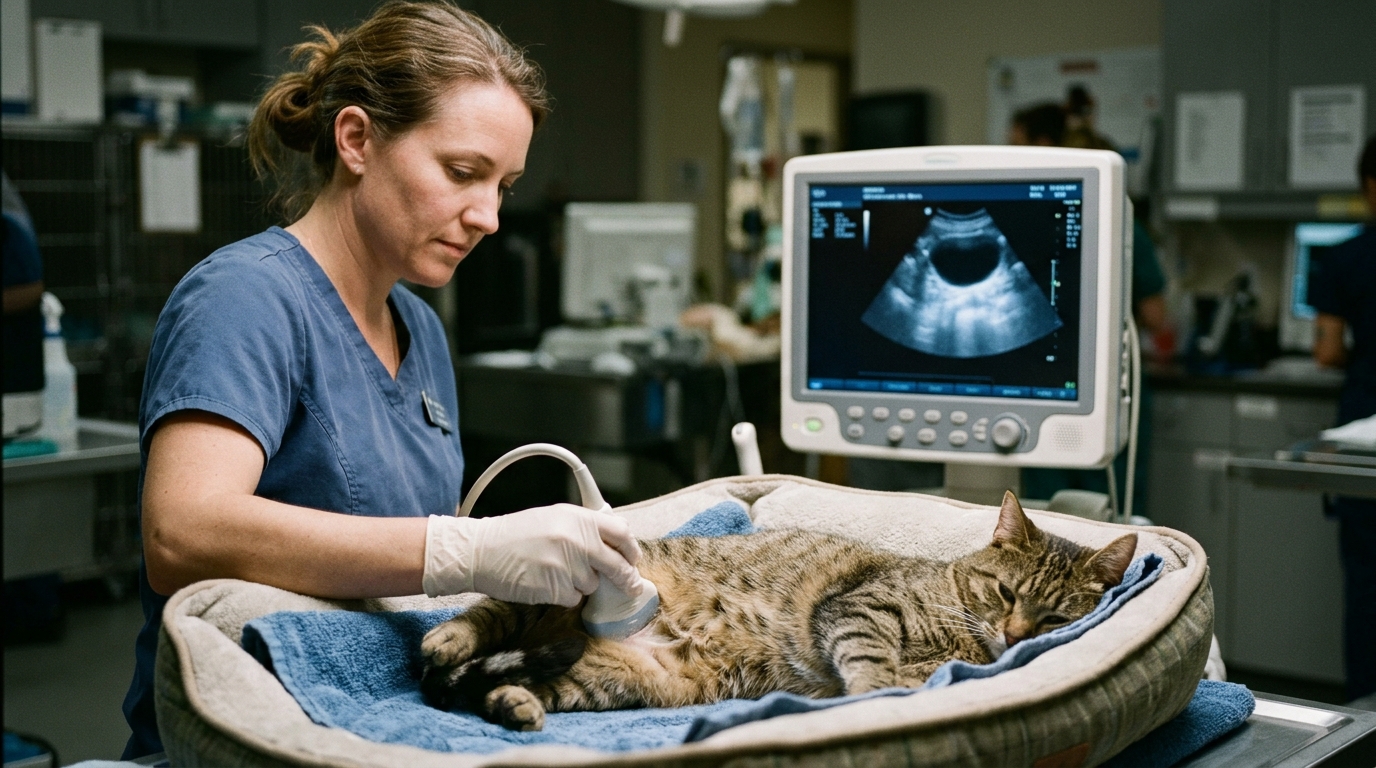
Immediate Triage for Male Cats: Feline Lower Urinary Tract Disease (FLUTD) frequently produces mineral crystal precipitation (struvite or calcium oxalate) and inflammatory urethral plugs. In male cats, crystals readily lodge in the narrow penile urethra, causing complete urinary obstruction. A blocked cat faces fatal hyperkalemia, acute post-renal azotemia, and cardiac arrest within 24 to 48 hours. If your cat strains unproductively in the litter box, cries out, vomits, or passes only drops of bloody urine, transport them immediately to an emergency veterinary hospital.

Clinical Quick Answer & Immediate Actions
Therapeutic diets require strict adherence to achieve clinical endpoints. Avoid mixing unauthorized treats or supplements that disrupt the carefully formulated mineral and macronutrient balances. Transition slowly over 7-10 days to prevent gastrointestinal upset.
Success depends entirely on strict compliance. A therapeutic diet cannot overcome constant influxes of inappropriate treats, table scraps, or competing food sources. Caregivers must view the prescribed diet as a daily medical intervention rather than a basic sustenance choice.
Macronutrient and Micronutrient Modification
Therapeutic formulations manipulate macronutrients to alleviate organ stress. For example, renal diets drastically reduce phosphorus to slow nephron destruction, while gastrointestinal diets utilize highly bioavailable, low-residue proteins to facilitate enterocyte absorption.
Transitioning to a new clinical diet must occur gradually over 7 to 10 days to prevent acute gastrointestinal distress or food aversion. Mix the therapeutic diet with the previous food, incrementally increasing the new diet’s ratio by 10-15% daily.
| Pathology | Key Nutritional Modification | Clinical Objective |
|---|---|---|
| Renal Disease (CKD) | Restricted Phosphorus / Mod Protein | Reduce uremic toxins and slow progression |
| Pancreatitis | Ultra-Low Fat (Canine) | Prevent exocrine pancreatic stimulation |
| Urolithiasis (Crystals) | Targeted RSS / pH Modulation | Dissolve or prevent crystal formation |
Food aversion is a common complication in chronically ill patients. If the animal refuses the therapeutic diet, do not attempt to starve them into compliance, particularly in obese felines prone to hepatic lipidosis. Consult the attending veterinarian for pharmacological appetite stimulants or alternative flavor formulations.
Accurate portion control requires measuring food by weight (grams) rather than volume (cups). Volumetric measuring introduces up to a 20% margin of error, severely compromising weight loss or tightly regulated metabolic plans.
When to Seek Emergency Intervention
Immediate veterinary reassessment is necessary if the patient experiences acute anorexia lasting more than 24 hours, intractable vomiting after dietary transition, or profound lethargy. These signs may indicate disease progression rather than simple food refusal.
Patients on strict elimination diets for suspected food allergies that break protocol by consuming unauthorized proteins must restart the entire 8-week trial from day one. There are no safe “cheat days” in a diagnostic food trial.
Nutritional Compliance Tracker
Consistency is critical for therapeutic success. Access our Daily Nutritional Log to track caloric intake, treat allowances, and transition schedules.
Pathophysiology of Feline Urolithiasis: Struvite vs. Calcium Oxalate Dynamics
Feline uroliths and crystalline matrices form via distinct biochemical and biophysical pathways requiring divergent nutritional therapies:
- Struvite (Magnesium Ammonium Phosphate Hexahydrate) Dynamics: Struvite crystallization occurs primarily in alkaline urine (pH > 6.8) with elevated urinary concentrations of magnesium, ammonium, and phosphate. Veterinary dissolution diets (such as Hill’s s/d, Royal Canin Urinary S/O, or Purina Pro Plan UR) utilize dietary acidification (target urinary pH 6.0 to 6.4) and restricted magnesium content. In acidic urine, struvite crystals dissolve completely, eliminating existing sterile stones within 2 to 4 weeks without surgical intervention.
- Calcium Oxalate Formation (Non-Dissolvable): Unlike struvite, calcium oxalate uroliths cannot be dissolved medically. They form in acidic or concentrated urine when calcium and oxalic acid exceed the solubility product. Once formed, calcium oxalate stones require surgical removal (cystotomy) or voiding urohydropropulsion. Preventive nutritional management focuses on mild urine alkalinization (target pH 6.6 to 7.0), controlled calcium and sodium levels, and maximizing dietary moisture to reduce urinary relative supersaturation (RSS).
- The Glycosaminoglycan (GAG) Layer & Feline Idiopathic Cystitis (FIC): In over 60% of FLUTD cases, no actual stones or bacterial infections are present; the underlying condition is neuro-hormonal Feline Idiopathic Cystitis (FIC). Stress activates the sympathetic nervous system, depleting the protective bladder urothelial glycosaminoglycan (GAG) layer and allowing caustic urine solutes to stimulate sub-mucosal sensory C-fibers. Multimodal environmental enrichment (MEMO) combined with therapeutic wet food is mandatory.
The Moisture Mandate & Urinary Relative Supersaturation (RSS) Technology
Modern feline urological medicine prioritizes moisture hydration over chemical additives:
- The Mandatory Wet Food Transition: Domestic felines evolved from desert-dwelling African wildcats (Felis lybica) and possess an inherently low thirst drive, concentrating their urine to specific gravities exceeding 1.050. Feeding dry kibble severely limits total daily water intake. Transitioning to 100% canned therapeutic diets dilutes urine to a target specific gravity below 1.030, physically flushing micro-crystals before they aggregate into obstructing uroliths.
- Promoting Water Turnover in the Home: Provide circulating pet water fountains (cats instinctively prefer flowing water), place water bowls well away from litter boxes and feeding stations, and add warm water or low-sodium pet-safe broth directly into canned food to maximize voluntary fluid intake.
- Monitoring Urinary pH and Specific Gravity at Home: Caregivers should monitor fresh morning urine samples using calibrated digital pH meters or litmus strips. Never administer over-the-counter urinary acidifiers (such as DL-methionine) alongside prescription urinary diets, as excessive acidification triggers systemic metabolic acidosis, hypokalemia, and precipitates calcium oxalate stone formation.
Frequently Asked Questions
Can I mix over-the-counter food with the prescription diet?
No. Mixing a maintenance diet with a therapeutic diet dilutes the targeted nutritional profile, rendering the treatment ineffective (e.g., introducing excess phosphorus to a renal patient or allergens to an allergy patient).
How long does an elimination diet take to work?
A strict elimination diet trial for dermatological allergies requires an absolute minimum of 8 to 12 weeks of exclusive feeding before clinical improvement can be accurately assessed.
Are homemade diets safer than commercial prescription diets?
Unless formulated by a Board-Certified Veterinary Nutritionist (DACVN), homemade diets are frequently deficient in essential micronutrients and lack the precise mineral balancing required for chronic disease management.
Emergency Triage Matrix: Clinical Presentation & Required Response
| Triage Level | Clinical Signs & Presentation | Immediate Action Protocol |
|---|---|---|
| Tier 1: Immediate Emergency (0-2 Hours) | Diabetic patient experiencing severe weakness/seizures (hypoglycemia), or a blocked feline straining to urinate unproductively. | Administer Karo syrup to gums (if diabetic/crashing) and transport to emergency care immediately. |
| Tier 2: Urgent Veterinary Care (Same-Day) | Complete anorexia for >24 hours in a chronically ill patient, or intractable vomiting after beginning a new diet. | Contact the attending veterinarian for an anti-emetic prescription or alternative nutritional formulation. |
| Tier 3: Home Monitoring & Scheduled Care | Mild soft stool during the initial 3 days of dietary transition, with normal appetite and hydration. | Slow the transition pace, monitor stool quality, and ensure constant access to fresh water. |
Dietary Compliance Warning
Therapeutic diets function as prescription medication. Deviations from the protocol can trigger severe metabolic relapses:
- Zero Table Scraps: A single high-fat treat can trigger a catastrophic pancreatitis relapse in sensitive dogs.
- Strict Portioning: Weigh all meals using a digital kitchen scale to maintain precise caloric and mineral intake.
Transition & Feeding Checklist
- Transition over a strict 7-10 day period to prevent gastrointestinal shock.
- Remove all competing food sources (including sibling pet bowls).
- Monitor water intake, especially for patients on dry therapeutic diets.
Related Clinical Guides & Tools
Peer-Reviewed Clinical References & Evidence Grounding
- Epidemiological investigations on microbial infection and crystals causing feline lower urinary tract disease in tomcats in Ismailia, Egypt (opens in new tab) (Open veterinary journal (2022) — Peer-reviewed veterinary study indexed on NCBI PubMed (PMID: 35603074).)
- Feline crystalluria. Detection and interpretation (opens in new tab) (The Veterinary clinics of North America. Small animal practice (1996) — Peer-reviewed veterinary study indexed on NCBI PubMed (PMID: 8711872).)
- Urinalysis and associated laboratory procedures (opens in new tab) (The Veterinary clinics of North America. Small animal practice (1989) — Peer-reviewed veterinary study indexed on NCBI PubMed (PMID: 2678714).)
- American Veterinary Medical Association (AVMA): Feline Lower Urinary Tract Disease (opens in new tab) (Verified clinical reference retrieved via Antigravity Ground-Truth Search (avma.org).)
WSAVA 10% Treat Calorie Allowance Calculator
Calculate your pet's daily Resting Energy Requirement (RER) and maximum recommended 10% treat calorie budget based on WSAVA clinical nutrition consensus.
Printable tools
Download the matching worksheet
Source transparency
Reference mix for this guide
Source labels describe the type of organization behind each reference; they are not a claim that any outside organization reviewed this article.
- Emergency Triage Protocol Reference source · newspet.net
- Pharmacology Safety Standards Reference source · newspet.net
- Epidemiological investigations on microbial infection and crystals causing feline lower urinary tract disease in tomcats in Ismailia, Egypt Government or public agency · pubmed.ncbi.nlm.nih.gov
- Feline crystalluria. Detection and interpretation Government or public agency · pubmed.ncbi.nlm.nih.gov
- Urinalysis and associated laboratory procedures Government or public agency · pubmed.ncbi.nlm.nih.gov
- American Veterinary Medical Association (AVMA): Feline Lower Urinary Tract Disease Veterinary organization · avma.org

