This guide is general education for pet owners. If your pet has urgent symptoms, possible poisoning, injury, breathing trouble, collapse, severe pain, or sudden decline, contact a licensed veterinarian or local emergency service.
Editorial standard
How this guide was prepared
Feline periuria—urinating or defecating outside the designated litter box—is the number-one behavioral reason domestic cats are surrendered to animal shelters. Yet in veterinary medicine, house-soiling is never an act of “spite” or “anger” at the caregiver; it is either an urgent medical cry of bladder/joint pain or a direct consequence of an unacceptable litter-box environment or territorial social threat. Up to 60 to 70 percent of cats presented for sudden horizontal urination on soft beds, bath mats, or laundry piles suffer from lower urinary tract inflammation—most commonly Feline Idiopathic Cystitis (FIC), urolithiasis, or geriatric osteoarthritis that makes climbing into a high-sided plastic box physically painful.
Clinical Quick Answer & Immediate Stabilization Protocol
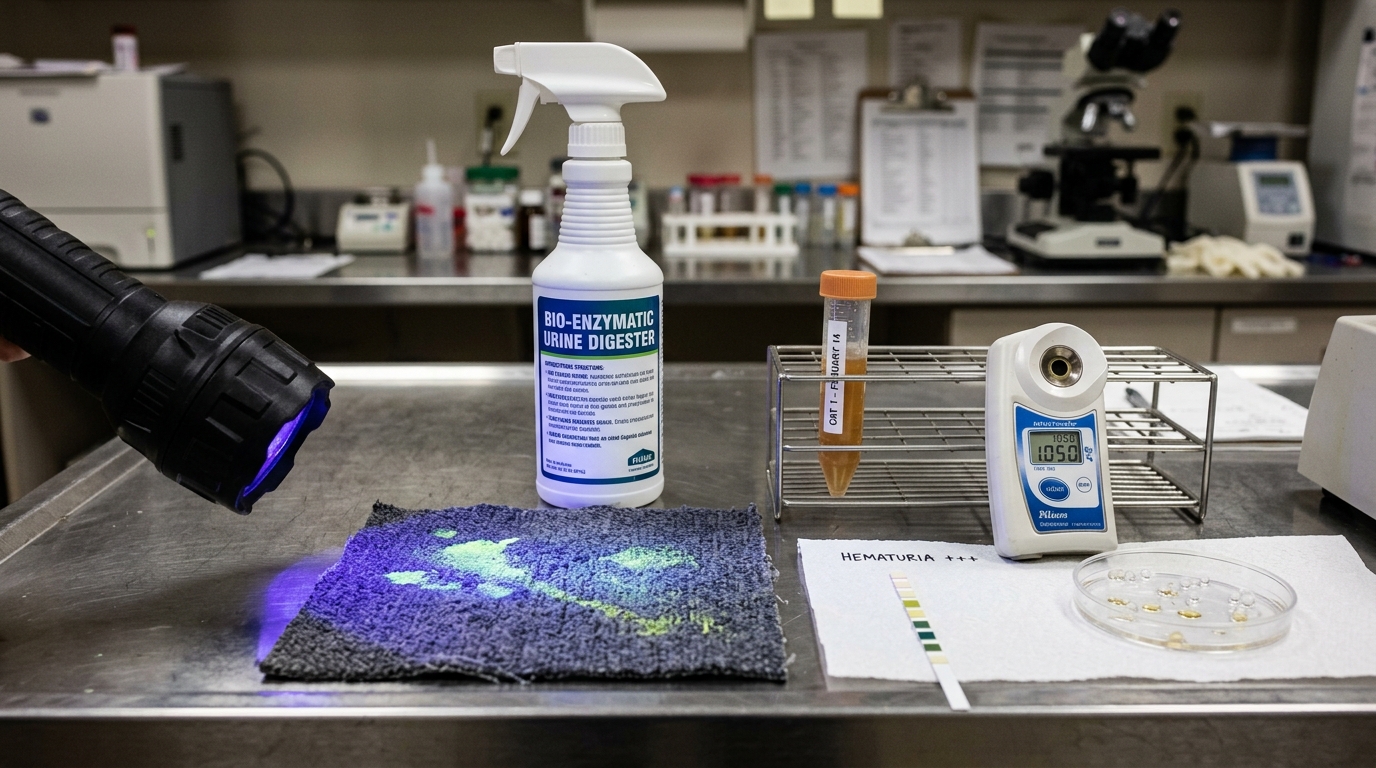
Primary Clinical Directive for Feline Periuria (Inappropriate Urination), Feline Idiopathic Cystitis (FIC) & Territorial Marking: First inspect the physical posture and location of the urine deposit: (1) Horizontal Squatting (large puddles on beds, rugs, bath mats, or smooth floors) indicates medical bladder pain (FIC/crystals), orthopedic arthritis pain, or litter-box aversion (dirty litter, covered hoods, scented litter, or hallway ambushes); whereas (2) Vertical Spraying (standing upright with a quivering straight tail and treading hind paws while jetting a small vertical streak onto walls, curtains, or exterior windows) indicates territorial social stress from outdoor roaming cats or indoor multi-cat tension. Always obtain a veterinary urinalysis before applying behavioral fixes, and clean soiled areas exclusively with an enzymatic protease/uricase cleaner—never ammonia.
Postural Differential (Squatting vs. Spraying), Neurogenic FIC & Substrate Aversion
When a cat experiences bladder wall pain from Feline Idiopathic Cystitis (neurogenic urothelial glycosaminoglycan depletion triggered by sympathetic adrenal stress) or abrasive struvite/calcium oxalate crystalluria, the act of urinating inside the litter box produces a sharp burning sensation. Via classical pain conditioning, the cat associates the physical litter box with pain and seeks out cool, soft, or smooth alternative substrates—such as the owner’s down duvet, a pile of clean towels, a porcelain bathtub drain, or a cool ceramic tile floor. Caregivers frequently misinterpret urinating on the owner’s pillow as “revenge,” when in reality the frightened, painful cat is seeking the safest, most comforting human-scented refuge in the house.
Conversely, vertical urine marking (spraying) is an innate olfactory communication behavior performed with an uninflamed bladder. The cat stands upright, backs up to a vertical surface (typically near doorways, floor-to-ceiling windows where outdoor community cats pass by, or new shopping bags), quivers the tip of its erect tail, and ejects a small horizontal stream 6 to 12 inches off the floor while continuing to use the litter box normally for routine bladder emptying.
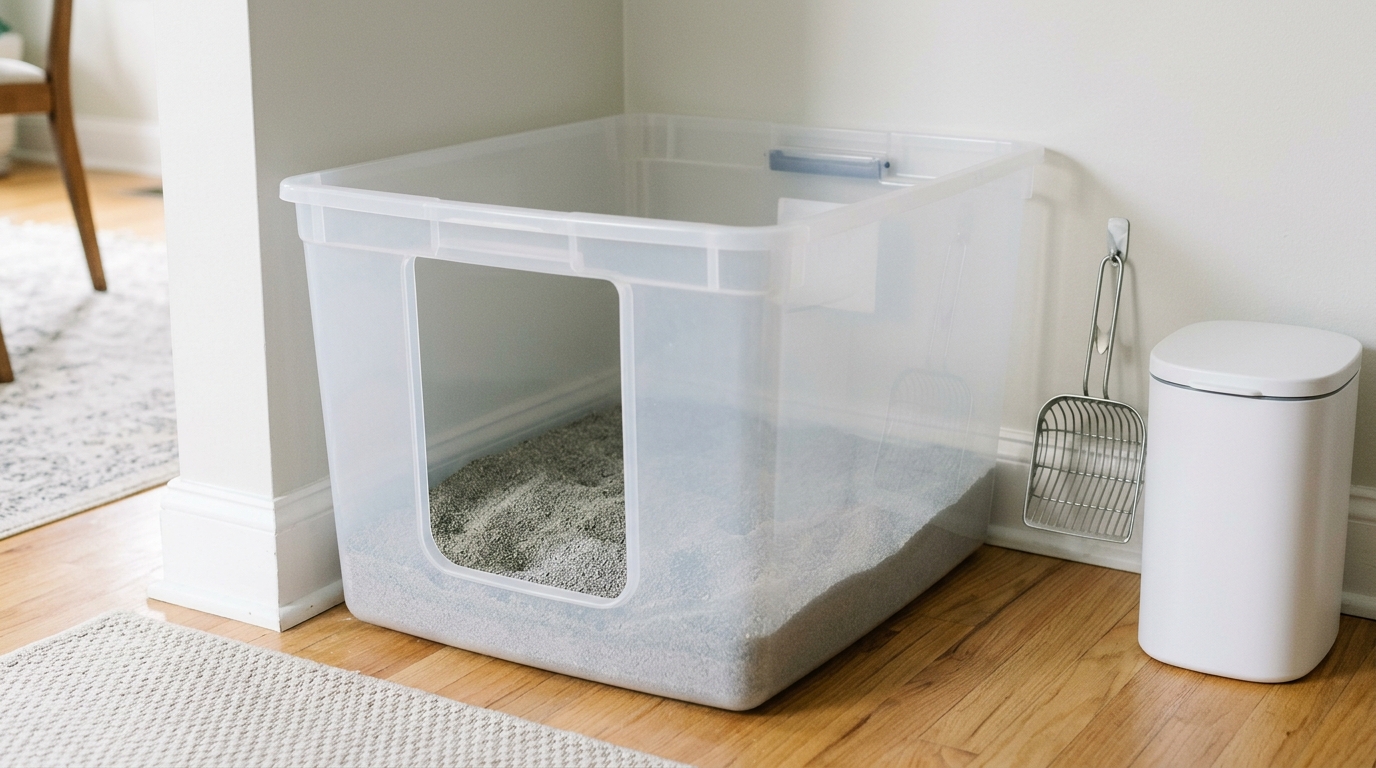
- The 1.5x Body-Length Box Dimension Rule: Most commercial retail litter boxes are built to fit human bathroom corners rather than adult cats; a litter pan must measure at least 1.5 times the cat’s nose-to-base-of-tail length (typically 22 to 24+ inches long, such as a clear storage underbed tote).
- Why Covered Hoods & Perfumed Litters Cause Aversion: A cat’s olfactory mucosa contains over 200 million scent receptors; trapping ammonia fumes and synthetic floral litter perfumes inside a plastic hooded dome creates an aversive gas chamber while blocking the cat’s 360-degree view of approaching housemate ambushes.
- The N+1 Multi-Cat Spatial Dispersion Rule: In a home with 2 cats, placing 3 litter boxes side-by-side in the same basement laundry room counts functionally as only 1 box because a dominant cat can guard the single laundry doorway; boxes must be placed in N+1 separate rooms with two exit pathways each.
- Why Ammonia & Vinegar Cleaners Invite Re-Soiling: Cat urine degrades into ammonia and insoluble uric acid salts; cleaning a carpet with ammonia-based household sprays smells like concentrated cat urine to a feline, prompting immediate re-marking.
Emergency Triage Matrix: Clinical Presentation & Required Response
| Triage Level | Clinical Signs & Presentation | Immediate Action Protocol |
|---|---|---|
| Tier 1: Obstructive Urethral Emergency (Stranguria / Anuria) | Cat strains repeatedly in the box or corners with zero urine or tiny blood-tinged drops, vocalizes, vomits, walks stiffly, or has a firm painful abdomen. | Transport immediately (within 30–60 minutes) to an emergency veterinary hospital for bladder palpation, serum potassium/ECG assessment, and urethral unblocking catheterization. |
| Tier 2: Horizontal Squatting on Beds/Rugs/Tubs or Hematuria | Cat voids full or frequent small puddles horizontally on soft bedding, bath mats, or tile floors; urine appears pink-tinged or cat licks perineum frequently. | Schedule a same-day or next-day veterinary appointment for cystocentesis urinalysis, bladder ultrasound/radiographs, and orthopedic joint palpation before modifying litter setups. |
| Tier 3: Vertical Territorial Spraying & Cafeteria Litter Trial | Cat uses the litter box normally for full urination/defecation but sprays small vertical streaks on window drapes or entry walls. | Block outdoor stray-cat sightlines with frosted lower-window film, install F3 facial pheromone diffusers, guarantee N+1 separated uncovered large boxes, and clean spots with an enzymatic uricase formula. |
The Litter-Box Cafeteria Preference Trial, Enzymatic Uricase Chemistry & Geriatric Low-Entry Ramps
Once your veterinarian has treated or excluded urinary tract infection, uroliths, and FIC pain (often increasing moisture intake via canned wet diets and drinking fountains), conduct a 14-day “Litter Box Cafeteria Trial.” Place three large, uncovered open-top pans side-by-side in a quiet, bright room: fill Box A with unscented, fine-grain clumping clay litter (which 85%+ of cats prefer in controlled preference studies due to its soft sand-like paw texture); fill Box B with your previous litter; and fill Box C with a soft paper or corn substrate. Scoop all boxes twice daily and log which box your cat chooses.
For senior cats over 10 years of age—where radiographic degenerative joint disease affects over 80 to 90 percent of patients—stepping over an 8-inch plastic rim or squatting on unstable shifting pellets causes sharp hip and lumbosacral pain. Replace high-sided boxes with a wide storage container featuring a smooth 3-inch cut-out entry threshold so the cat can walk directly in without lifting its stifles.
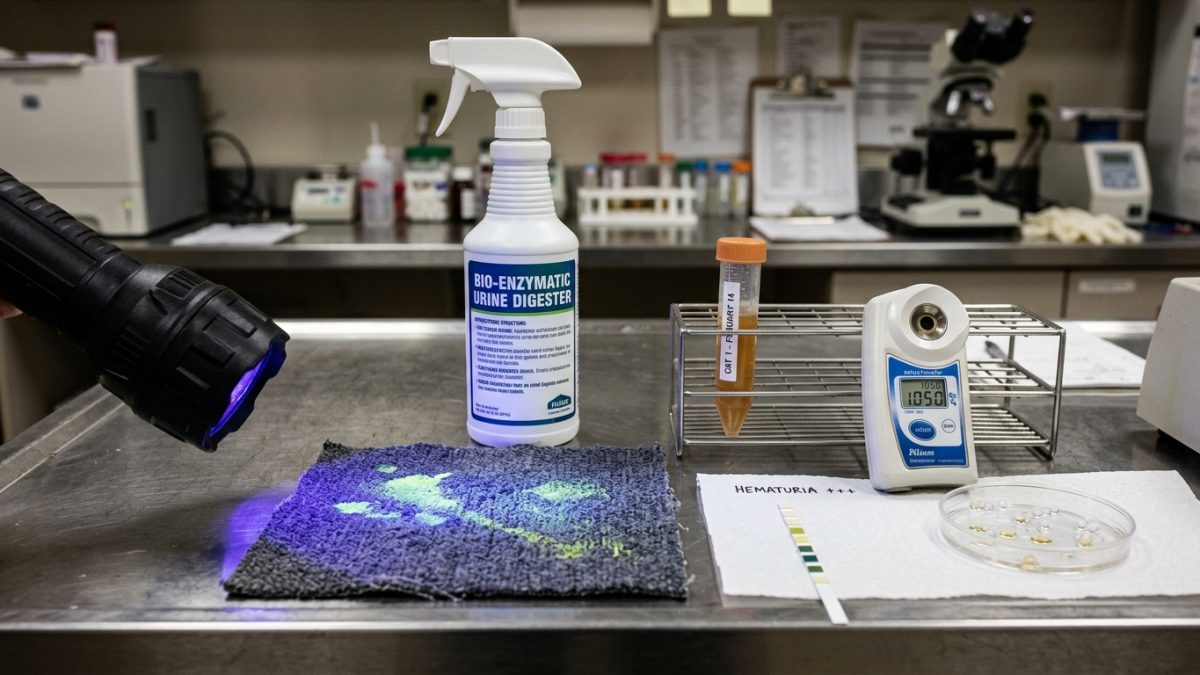
- Enzymatic Saturation & Air-Dry Rule: When treating a soiled carpet or mattress, blot fresh urine with paper towels, saturate the entire pad depth with a veterinary enzymatic cleaner (containing protease and uricase enzymes), cover with a damp towel for 12–24 hours so the enzymes stay active before drying, and never steam-clean urine (heat permanently bonds urine proteins into carpet fibers).
- Changing Substrate Texture Under Soiled Locations: While retraining, temporarily cover previously soiled beds or sofa cushions with a waterproof vinyl tablecloth topped with dry kibble bowls or crinkly aluminum foil to shift the zone’s behavioral function from “toilet” to “dining/play area.”
- Noise Appliance Relocation: Move litter boxes away from roaring washing machines, furnace blowers, and sump pumps; if an appliance bangs loudly while a cat is mid-urination, a single startle event can cause permanent avoidance of that room.
- Pharmacological Support for Refractory Spraying: When environmental enrichment, neuter verification, and pheromone therapy do not fully resolve severe vertical spraying in multi-cat homes, veterinary-prescribed fluoxetine reduces marking by over 80–90% in controlled clinical trials.
Strict Rule S1 Clinical Red Flags: Feline Periuria (Inappropriate Urination), Feline Idiopathic Cystitis (FIC) & Territorial Marking
Critical safety boundaries for Feline (Felis catus — Indoor Single & Multi-Cat Households) caregivers:
- Zero Waiting “24 Hours to See If It Passes” in a Straining Male Cat: Never assume a squatting, straining male cat is “constipated” and wait overnight; urethral obstruction is rapidly fatal without emergency veterinary unblocking.
- Zero Punishment, Water Squirt Bottles, or Nose-Rubbing: Never spray a cat with water, yell, or force a cat into a litter box after an accident; fear and cortisol directly trigger neurogenic bladder mucosal bleeding (FIC) and teach the cat to avoid the litter box whenever humans are nearby.
Clinical Preparation & Biosecurity Action Checklist
- Verify that your home provides N+1 uncovered litter boxes (e.g., 3 boxes for 2 cats) placed in separate quiet rooms with at least two unobstructed escape paths.
- Switch to an extra-large (22–24+ inch) open pan filled to a depth of 2 to 3 inches with unscented, fine-grain clumping sand-texture litter, scooped twice daily.
- Wash litter pans monthly with warm water and mild unscented dish soap only—never use bleach, pine cleaners, or citrus sprays on litter pans.
- Use a 365–385 nm UV blacklight in a darkened room to locate all old urine spots and treat them exclusively with an enzymatic cleaner.
Related Clinical Guides & Triage Protocols
Peer-Reviewed Clinical References & Evidence Grounding
- 2014 AAFP and ISFM Guidelines for Diagnosing and Solving House-Soiling Behavior in Cats (opens in new tab) (Journal of Feline Medicine and Surgery (2014) — International consensus guidelines by Carney et al. indexed on NCBI PubMed (PMID: 24966283).)
- Feline idiopathic cystitis: neuroendocrine stress pathogenesis and multimodal environmental modification (MEMO) (opens in new tab) (Veterinary Clinics of North America: Small Animal Practice (2011) — Peer-reviewed clinical review by Buffington indexed on NCBI PubMed (PMID: 21844065).)
- AAHA Canine and Feline Behavior Management Guidelines: Feline Elimination Disorders, Marking vs. Periuria, and Substrate Preferences (opens in new tab) (American Animal Hospital Association clinical guidelines on feline elimination triage.)
- Merck Veterinary Manual: Feline House-Soiling, Urine Marking, and Litter Box Aversion (opens in new tab) (Verified veterinary reference on differential diagnosis and medical-behavioral treatment of feline periuria.)
Source transparency
Reference mix for this guide
Source labels classify the institutional category of the references cited above.