This guide is general education for pet owners. If your pet has urgent symptoms, possible poisoning, injury, breathing trouble, collapse, severe pain, or sudden decline, contact a licensed veterinarian or local emergency service.
Dosages must be calculated by a licensed veterinarian based on species, weight, and bloodwork. Never administer human medications or self-adjust prescription doses for pets.
Editorial standard
How this guide was prepared
Chronic Kidney Disease (CKD) represents the leading cause of morbidity and mortality in aging feline populations, affecting over 30 percent of cats older than 10 years and over 80 percent of cats reaching 15 years. Because feline nephrons possess substantial functional reserve, clinical signs often remain completely invisible until approximately 66 to 75 percent of functional renal parenchyma has been irreversibly lost. While stable CKD can be managed medically for months to years, vulnerable patients frequently experience acute-on-chronic decompensation—an abrupt uremic crisis triggered by mild dehydration, systemic hypertension, pyelonephritis, or nephrolithiasis. Rapid differentiation between stable baseline progression and a life-threatening uremic emergency dictates patient survival.
Quick Answer: Recognizing Feline Renal Decompensation
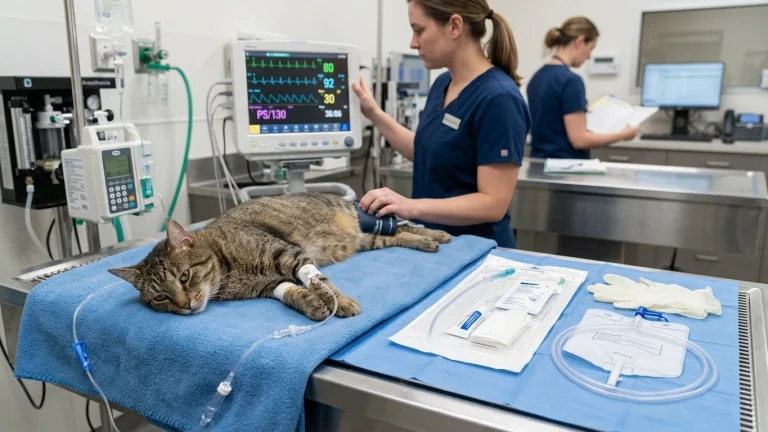
Stable feline kidney disease is characterized by chronic thirst (polydipsia), large urine clumps (polyuria), and gradual muscle loss across the spine over months. In contrast, an acute uremic crisis occurs when circulating nitrogenous wastes spike rapidly, precipitating sudden complete anorexia, intractable vomiting of clear or bile-tinged fluid, extreme lethargy, hypothermic shivering, and deep oral ulcerations. Immediate emergency hospitalization with IV fluid resuscitation is required to reverse prerenal azotemia and prevent fatal cardiac arrhythmias.
The IRIS Staging System: Understanding Disease Severity
Veterinary nephrologists classify feline kidney disease using the International Renal Interest Society (IRIS) staging framework, based on stable, fasted blood creatinine and symmetric dimethylarginine (SDMA) concentrations alongside blood pressure and proteinuria substaging:
- IRIS Stage 1 (Early / Non-Azotemic): Blood creatinine remains under 1.6 mg/dL (140 μmol/L), but SDMA is persistently elevated above 14 μg/dL, or the cat exhibits persistent renal proteinuria or inadequate urine concentrating ability (urine specific gravity <1.035). Clinical signs are absent, though nephron damage has already begun.
- IRIS Stage 2 (Mild Azotemia): Blood creatinine measures between 1.6 and 2.8 mg/dL (140–249 μmol/L). The cat exhibits mild compensatory polydipsia and polyuria. Urine concentration is compromised, but systemic symptoms like nausea are usually minimal. Renal therapeutic diets are introduced to slow progression.
- IRIS Stage 3 (Moderate Azotemia): Blood creatinine ranges between 2.9 and 5.0 mg/dL (250–439 μmol/L). Clinical signs are evident: progressive weight loss, unkempt coat, variable appetite, mild non-regenerative anemia (due to declining erythropoietin production), and intermittent vomiting. Management requires active intervention, including phosphorus binders and anti-nausea therapy.
- IRIS Stage 4 (Severe Azotemia & End-Stage): Blood creatinine exceeds 5.0 mg/dL (>440 μmol/L). The cat experiences profound uremic toxicity, intractable nausea, stomatitis, systemic acidosis, and secondary hyperparathyroidism. Without aggressive supportive therapy and regular fluid support, metabolic collapse occurs rapidly.
Clinical Emergency Triage Matrix
| Triage Tier | Clinical Presentation | Required Action |
|---|---|---|
| Tier 1: Immediate Emergency (0-2h) | Complete absence of urine output for >12 hours (anuria); acute collapse or inability to stand; cervical ventroflexion (chin pressed flat against chest due to profound hypokalemia); sudden dilated pupils with acute vision loss (hypertensive retinal detachment); hypothermic temperature (<37.0°C / 98.6°F) with slow heart rate (hyperkalemic bradycardia). | Transport immediately to an emergency veterinary hospital. Extreme risk of fatal hyperkalemic cardiac arrest, acute ureteral obstruction, or irreversible hypertensive encephalopathy. |
| Tier 2: Same-Day Veterinary Evaluation (12-24h) | Refusal of all food for >24–48 hours; daily protracted vomiting of clear foam; foul uremic breath with brown drool or oral mucosal ulcers; severe skin tenting (sunken eyes and loss of skin turgor indicating >7% dehydration); sudden profound lethargy. | Contact your veterinarian for an urgent same-day appointment. Immediate blood chemistry, venous blood gas, packed cell volume, and inpatient IV fluid diuresis are mandatory. |
| Tier 3: Home Monitoring & Scheduled Care | Gradual increase in water bowl visits with normal appetite and bright demeanor; stable weight over consecutive weeks; mild muscle loss along lumbar spine; active interest in prescription kidney diets. | Maintain clean, abundant water stations (fountains and wide ceramic dishes). Schedule quarterly veterinary checkups for blood pressure measurement, SDMA/creatinine monitoring, and urine protein:creatinine (UPC) ratios. |
Dangerous Home Pitfalls: What NOT to Do (Rule S1)
- NEVER restrict or withhold water from a cat with kidney disease: Renal cats cannot concentrate urine; they rely entirely on massive water intake to flush circulating nitrogenous toxins. Depriving a CKD cat of water for even a few hours precipitates catastrophic dehydration and acute uremic shutdown.
- NEVER administer human pain relievers or anti-inflammatories: NSAIDs like ibuprofen, naproxen, and aspirin destroy renal microvascular blood flow by inhibiting protective renal prostaglandins, causing acute-on-chronic cortical necrosis within single doses.
- NEVER force-feed fluids or pureed food to a vomiting cat: Force-feeding liquids by syringe into a nauseated cat carries an extreme risk of aspiration pneumonia and induces severe learned food aversion, permanently ruining appetite for therapeutic diets.
- NEVER administer over-the-counter human phosphorus binders or antacids: Compounds containing magnesium or aluminum can induce life-threatening magnesium toxicosis or encephalopathy in renal patients unable to clear minerals. Only use veterinarian-prescribed feline binders.
Pathology of the Acute Uremic Crisis
When glomerular filtration rate (GFR) drops past critical thresholds, metabolic waste products—including blood urea nitrogen (BUN), creatinine, guanidines, and phenolic compounds—accumulate in circulating blood. This state of systemic poisoning, termed uremia, ravages multiple organ systems:
Uremic Gastropathy and Stomatitis: Circulating uremic toxins induce microvascular thrombosis and mucosal ischemia throughout the gastrointestinal tract. Decreased renal clearance of the hormone gastrin triggers persistent gastric hyperacidity, leading to deep gastric ulcerations and intractable nausea. In the oral cavity, bacterial ureases break down urea in saliva into caustic free ammonia, burning deep, agonizing ulcers along the margins of the tongue and inner cheeks.
Severe Electrolyte and Acid-Base Derangements: Failing kidneys lose the ability to excrete hydrogen ions and phosphorus, generating severe metabolic acidosis and hyperphosphatemia. In early-to-moderate CKD, excessive potassium is lost in the urine, causing profound hypokalemia. Hypokalemic cats exhibit classic generalized muscle weakness, culminating in cervical ventroflexion—the physical inability to raise their head from the ground. Conversely, during acute anuric shutdown, potassium retention causes hyperkalemia, which blocks electrical cardiac conduction, resulting in severe bradycardia and fatal ventricular arrest.
Secondary Systemic Hypertension: Over 20 to 40 percent of cats with CKD develop concurrent systemic hypertension due to activation of the renin-angiotensin-aldosterone system (RAAS) and impaired sodium excretion. Uncontrolled systolic blood pressure exceeding 160 to 180 mmHg damages delicate end-organs (the eyes, brain, heart, and kidneys themselves). The most dramatic presentation is sudden acute blindness resulting from bilateral retinal detachment and intraocular hemorrhage.
Frequently Asked Questions
What is the earliest warning sign of kidney disease in cats?
The earliest clinical indicator is compensatory polydipsia and polyuria: caregivers notice the water bowl emptying much faster than usual and clean substantially larger, heavier urine clumps from the litter box. Urine also loses its concentrated dark yellow color and strong odor, appearing pale and watery.
Can kidney damage in cats be reversed?
Chronic kidney disease involves permanent structural nephron scarring and interstitial fibrosis that cannot be regenerated. However, the acute-on-chronic component caused by dehydration, infection, or hypertension is often highly reversible with prompt intravenous fluid therapy and targeted medical management.
Why do cats with advanced kidney disease suddenly stop eating?
Advanced renal azotemia produces profound uremic nausea. Accumulated metabolic toxins cross the blood-brain barrier to stimulate the chemoreceptor trigger zone in the brain, while concurrent hypergastrinemia causes painful stomach ulcers. Specialized anti-nausea therapy and appetite stimulants are required to re-establish caloric intake.
Scientific Sources and Literature
- Sparkes AH, et al. “ISFM Consensus Guidelines on the Diagnosis and Management of Feline Chronic Kidney Disease.” Journal of Feline Medicine and Surgery. PMID: 27151044
- Acierno MJ, et al. “ACVIM consensus statement: Guidelines for the identification, evaluation, and management of systemic hypertension in dogs and cats.” Journal of Veterinary Internal Medicine. PMID: 24962294
- Polzin DJ. “Chronic kidney disease in small animals.” Veterinary Clinics of North America: Small Animal Practice. PMID: 32675661
Caregiver Renal Care Checklist
- Provide multiple wide, clean ceramic or stainless steel water dishes and circulating water fountains throughout the home.
- Feed moisture-dense veterinary renal therapeutic canned wet diets, adding warm water to create a palatable slurry.
- Monitor weekly body weight using an accurate digital baby scale to detect subtle muscle wasting early.
- Observe litter box frequency and clump size daily to immediately identify sudden declines in urine production.
- Check gum color and capillary refill time; gums should be moist and pink, never dry, pale, or tacky.
- Schedule regular veterinary blood pressure and biochemistry screenings every 3 to 6 months based on IRIS stage.
Source transparency
Reference mix for this guide
Source labels describe the type of organization behind each reference; they are not a claim that any outside organization reviewed this article.
- Cat Not Eating & Anorexia Timeline Reference source · newspet.net
- Cat Drinking Lots of Water: Diabetes vs CKD Reference source · newspet.net
- Cat Vomiting: Acute vs Chronic Differentiation Reference source · newspet.net
- Cat Drooling & Oral Stomatitis Guide Reference source · newspet.net
- PMID: 27151044 Government or public agency · pubmed.ncbi.nlm.nih.gov
- PMID: 24962294 Government or public agency · pubmed.ncbi.nlm.nih.gov
- PMID: 32675661 Government or public agency · pubmed.ncbi.nlm.nih.gov