This guide is general education for pet owners. If your pet has urgent symptoms, possible poisoning, injury, breathing trouble, collapse, severe pain, or sudden decline, contact a licensed veterinarian or local emergency service.
Veterinary Medication & Dosage Boundary
Dosages must be calculated by a licensed veterinarian based on species, weight, and bloodwork. Never administer human medications or self-adjust prescription doses for pets.
Editorial standard
How this guide was prepared
Edited for decisionsNewsPet guides are structured around practical owner choices, tradeoffs, and safety boundaries.
Source policySources are listed when a guide relies on outside references.
Veterinary boundaryThis article does not diagnose or prescribe; urgent symptoms need veterinary care.
CorrectionsReaders can flag unclear, outdated, or inaccurate information through our contact page.
Cat Ate Ibuprofen: NSAID Toxicity & Renal Perforation Triage
Cats CANNOT take ibuprofen in any dosage. Cats are extraordinarily deficient in hepatic glucuronyl transferase enzymes; a fragment of a single 200mg human tablet causes acute renal necrosis and fatal gastric perforation.
Toxic Mechanism & Agent
Toxic Agent: Ibuprofen (NSAID)
Mechanism of Action: Profound, irreversible suppression of renal prostaglandin synthesis (PGI2, PGE2), terminating renal auto-regulation and precipitating acute medullary ischemic necrosis.
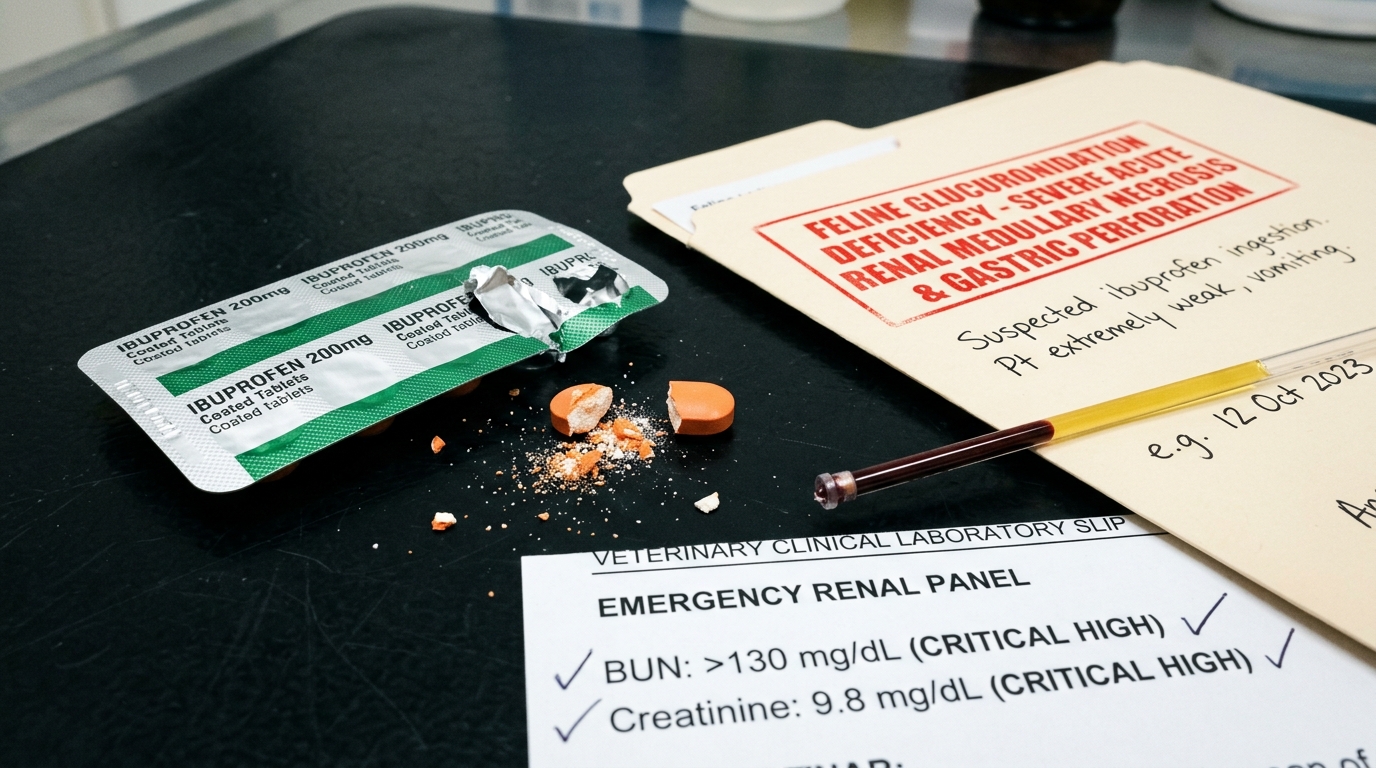
Figure 1: Feline Ibuprofen Toxicity & Renal Papillary Necrosis Exhibit — Macro clinical toxicology display highlighting marked feline sensitivity to NSAIDs due to hepatic glucuronidation deficits. Ingestion triggers swift renal hemodynamic collapse, marked azotemia (elevated BUN/creatinine), and gastric ulceration.
Clinical Signs & Timeline
Onset Time: Vomiting within 1-2 hours; severe acute renal failure within 12-24 hours.
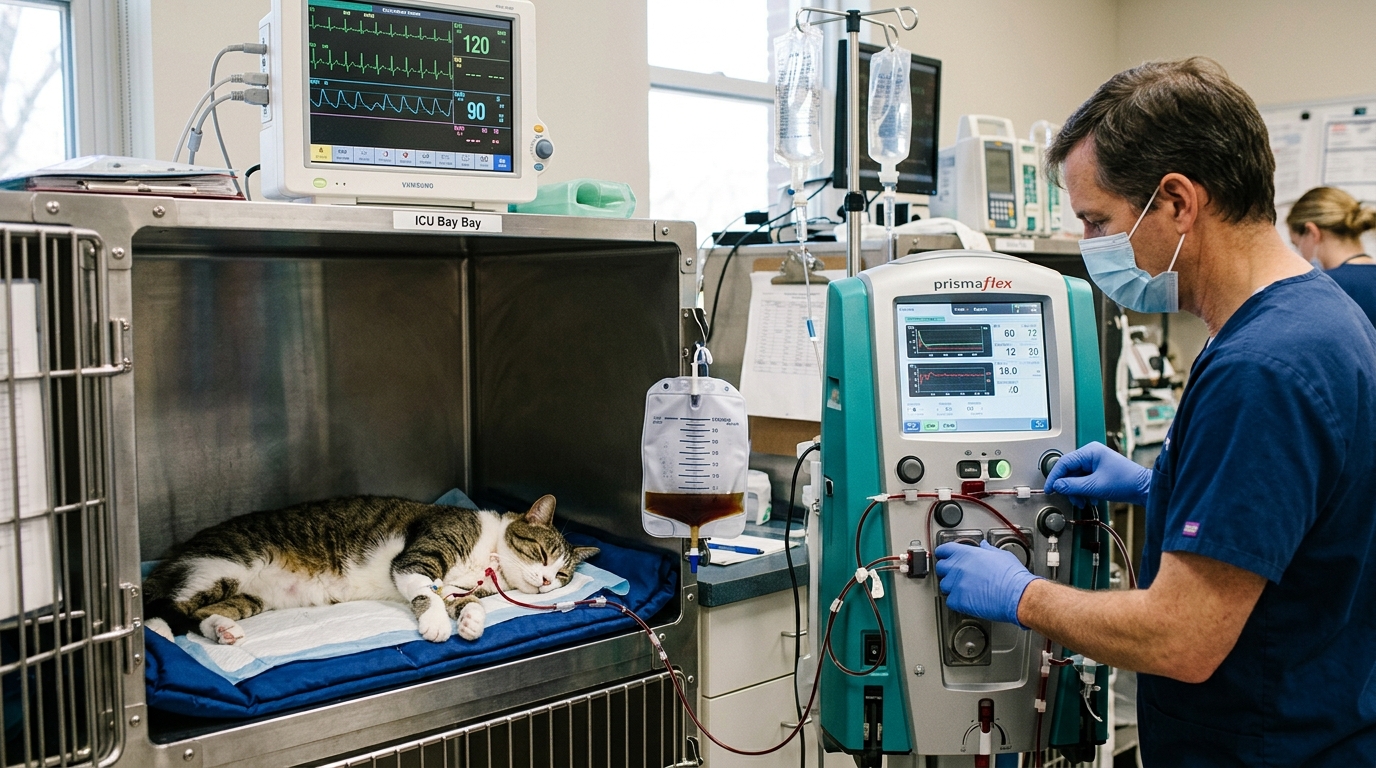
Mandatory emergency hospitalization with 72-hour aggressive IV diuresis. Administration of gastric cytoprotectants (misoprostol, pantoprazole), repeated activated charcoal, and renal hemodialysis if anuric.
Figure 2: Feline Hemodialysis & Critical Renal Triage — Specialized continuous renal replacement therapy (CRRT) and intensive urinary output monitoring for a feline patient in acute oliguric renal failure following accidental NSAID ingestion, providing vital extracorporeal clearance.
Strict Rule S1 Warning
NEVER induce vomiting at home using hydrogen peroxide without direct instruction from a DVM. Inappropriate emesis can cause fatal aspiration pneumonia. Always seek professional veterinary diagnosis.
Clinical Toxicology & Safety Tool
Pet Toxic Food & Hazard Fast-Checker
Rapidly verify toxicity risks, toxic mechanisms, and immediate clinical steps for common household foods, plants, and human medications before calling poison control or your veterinarian.
Is Philodendron Toxic to Cats? Feline Oxalate Triage Clinical Verdict: MODERATELY TOXIC Cats CANNOT chew Philodendron varieties (Heartleaf, Brasil, Hope). The leaves are loaded…
Dog Ate Cholecalciferol Rat Poison: Hypercalcemia Triage Clinical Verdict: HIGHLY FATAL (Narrow Margin of Safety) Dogs CANNOT ingest cholecalciferol rodenticides. Extremely small amounts cause…
Dog Ate Fertilizer or Bone Meal: Impaction & Pancreatitis Triage Clinical Verdict: MODERATE TO SEVERE (Mechanical & Toxic) Dogs SHOULD NOT have access to…
Dog Ate Foxglove: Digitalis Cardiac Glycoside Triage Clinical Verdict: EXTREMELY FATAL (All Plant Parts) Dogs CANNOT consume any part of a Foxglove plant. Foxglove…
Is Philodendron Toxic to Cats? Feline Oxalate Triage Clinical Verdict: MODERATELY TOXIC Cats CANNOT chew Philodendron varieties (Heartleaf, Brasil, Hope). The leaves are loaded…
Dog Drank Toilet Bowl Cleaner: Acid Chemical Burn Triage Clinical Verdict: CRITICALLY SEVERE (Corrosive Chemical Hazard) Dogs CANNOT drink toilet bowl water containing automatic…