Dog Ate Cholecalciferol Rat Poison: Hypercalcemia Triage
By NewsPet Editorial Team2 min readUpdated Clinically reviewed • Standards
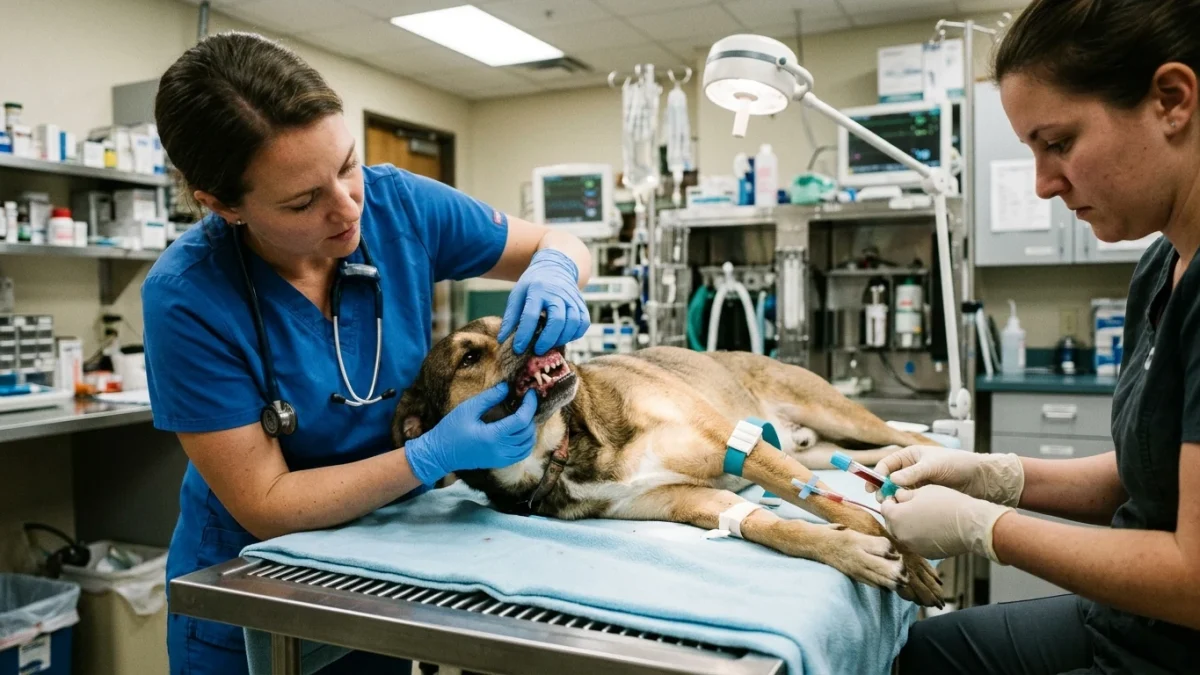
Veterinary clinical reference photography for Dog Ate Cholecalciferol Rat Poison: Hypercalcemia Triage. Verified against NewsPet evidence-based standards.
This guide is general education for pet owners. If your pet has urgent symptoms, possible poisoning, injury, breathing trouble, collapse, severe pain, or sudden decline, contact a licensed veterinarian or local emergency service.
Veterinary Medication & Dosage Boundary
Dosages must be calculated by a licensed veterinarian based on species, weight, and bloodwork. Never administer human medications or self-adjust prescription doses for pets.
Editorial standard
How this guide was prepared
Edited for decisionsNewsPet guides are structured around practical owner choices, tradeoffs, and safety boundaries.
Source policySources are listed when a guide relies on outside references.
Veterinary boundaryThis article does not diagnose or prescribe; urgent symptoms need veterinary care.
CorrectionsReaders can flag unclear, outdated, or inaccurate information through our contact page.
Dog Ate Cholecalciferol Rat Poison: Hypercalcemia Triage
Clinical Verdict: HIGHLY FATAL (Narrow Margin of Safety)
Dogs CANNOT ingest cholecalciferol rodenticides. Extremely small amounts cause acute hypercalcemia, resulting in calcium deposits forming inside internal organs and triggering rapid terminal kidney failure.
Toxic Mechanism & Agent
Toxic Agent: Cholecalciferol (Activated into 1,25-dihydroxycholecalciferol / Calcitriol)
Mechanism of Action: Drives excessive gastrointestinal absorption and bone resorption of calcium and phosphorus. When the calcium-phosphorus product exceeds 60-70 mg/dL, metastatic mineralization occurs in the kidneys, heart, and lungs.
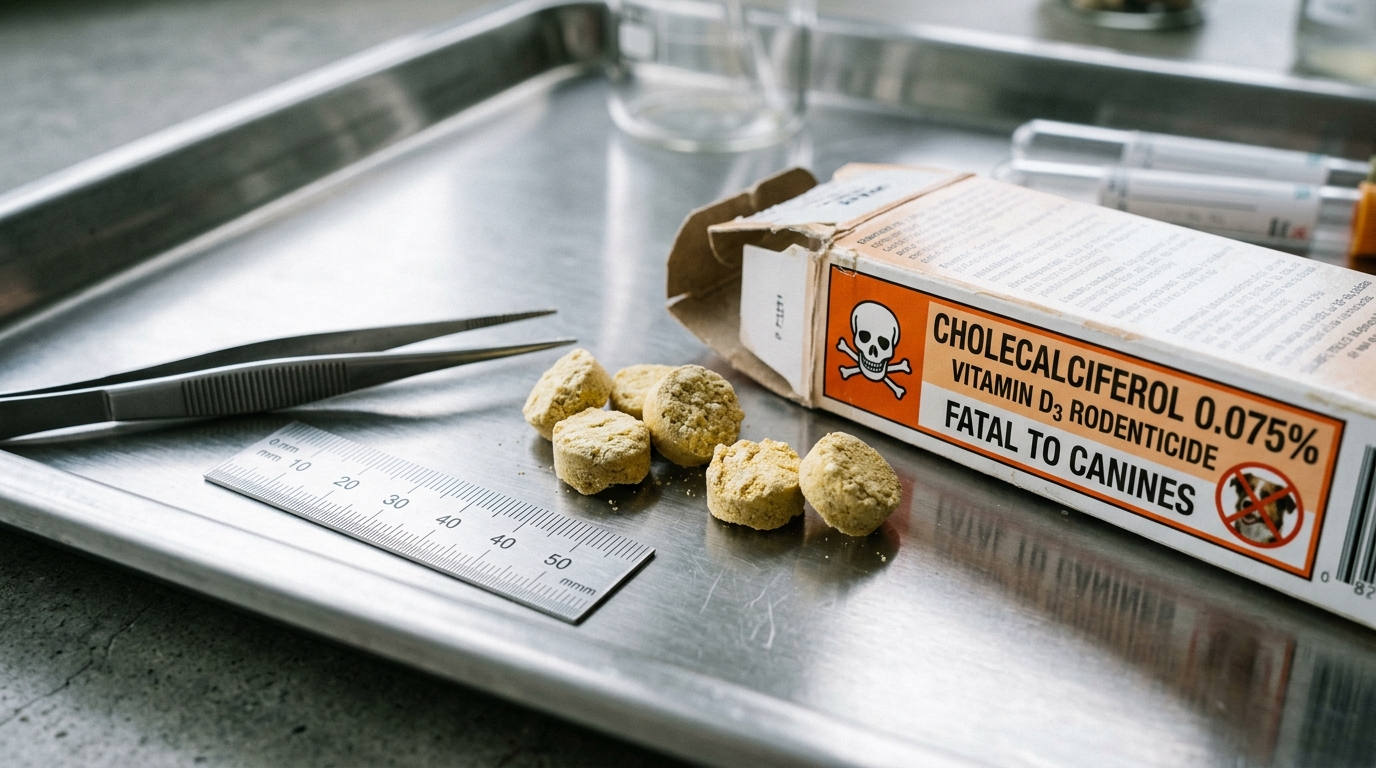
Figure 1: Commercial cholecalciferol (Vitamin D3) rodenticide bait. Formulated in compressed grain pellets, even micro-doses induce catastrophic hypercalcemia and metastatic tissue calcification in canines.
Clinical Signs & Timeline
Onset Time: Hypercalcemia within 12-24 hours; acute kidney failure within 24-48 hours.
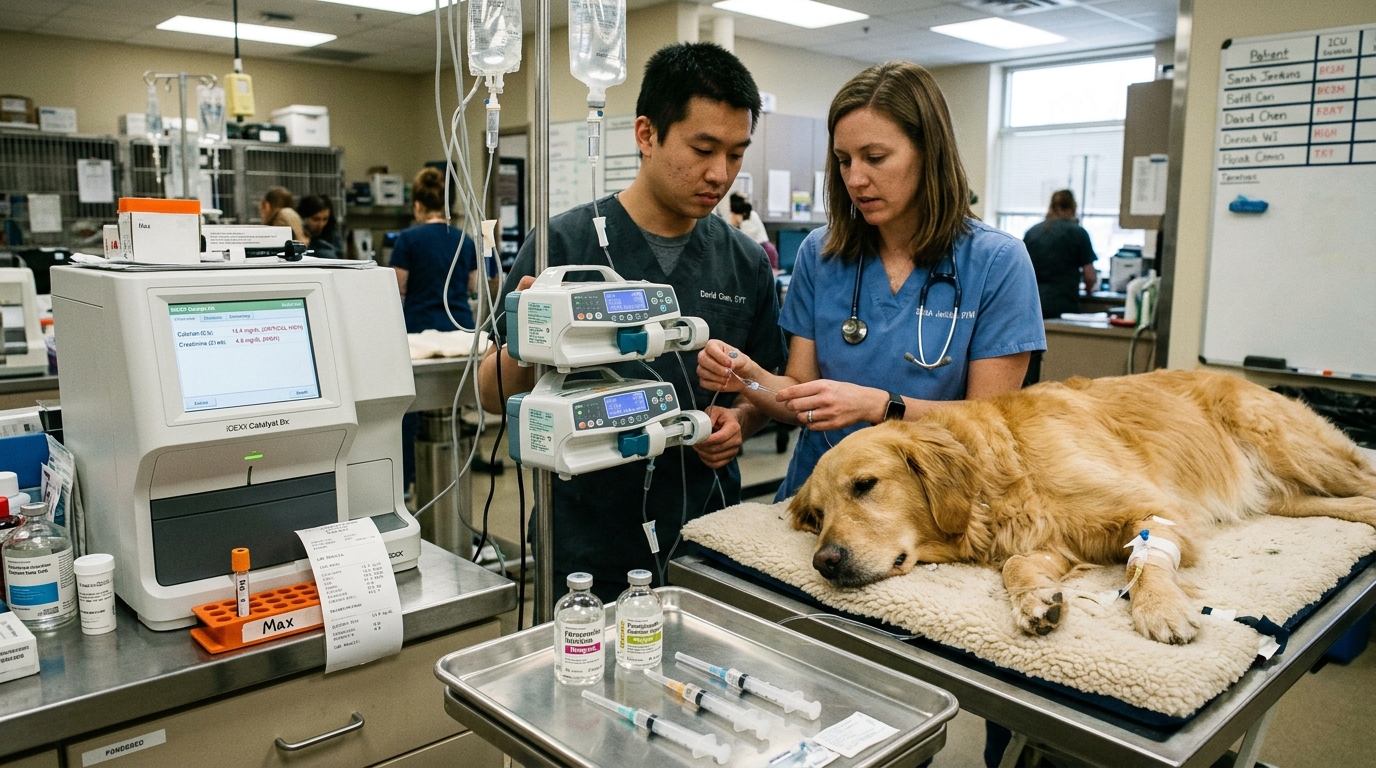
Requires aggressive 0.9% NaCl saline diuresis, furosemide (calciuretic loop diuretic), prednisone, and bisphosphonates (pamidronate or zoledronate) to inhibit osteoclastic bone resorption.
Figure 2: Veterinary ICU management of hypercalcemic renal crisis. Saline diuresis, calciuretic diuretics (furosemide), and bisphosphonates stabilize serum calcium while protecting renal parenchyma.
Strict Rule S1 Warning
NEVER induce vomiting at home using hydrogen peroxide without direct instruction from a DVM. Inappropriate emesis can cause fatal aspiration pneumonia, esophageal chemical burns, or gastric rupture. Always seek professional veterinary diagnosis.
Clinical Toxicology & Safety Tool
Pet Toxic Food & Hazard Fast-Checker
Rapidly verify toxicity risks, toxic mechanisms, and immediate clinical steps for common household foods, plants, and human medications before calling poison control or your veterinarian.
Is Philodendron Toxic to Cats? Feline Oxalate Triage Clinical Verdict: MODERATELY TOXIC Cats CANNOT chew Philodendron varieties (Heartleaf, Brasil, Hope). The leaves are loaded…
Is Philodendron Toxic to Cats? Feline Oxalate Triage Clinical Verdict: MODERATELY TOXIC Cats CANNOT chew Philodendron varieties (Heartleaf, Brasil, Hope). The leaves are loaded…
Dog Drank Toilet Bowl Cleaner: Acid Chemical Burn Triage Clinical Verdict: CRITICALLY SEVERE (Corrosive Chemical Hazard) Dogs CANNOT drink toilet bowl water containing automatic…