Health and Safety Boundary
Jump to Emergency Red Flags ↓
This guide is general education for pet owners. If your pet has urgent symptoms, possible poisoning, injury, breathing trouble, collapse, severe pain, or sudden decline, contact a licensed veterinarian or local emergency service.
Editorial standard
How this guide was prepared
Edited for decisions
NewsPet guides are structured around practical owner choices, tradeoffs, and safety boundaries.
Source policy
Sources are listed when a guide relies on outside references.
Veterinary boundary
This article does not diagnose or prescribe; urgent symptoms need veterinary care.
Corrections
Readers can flag unclear, outdated, or inaccurate information through our contact page.
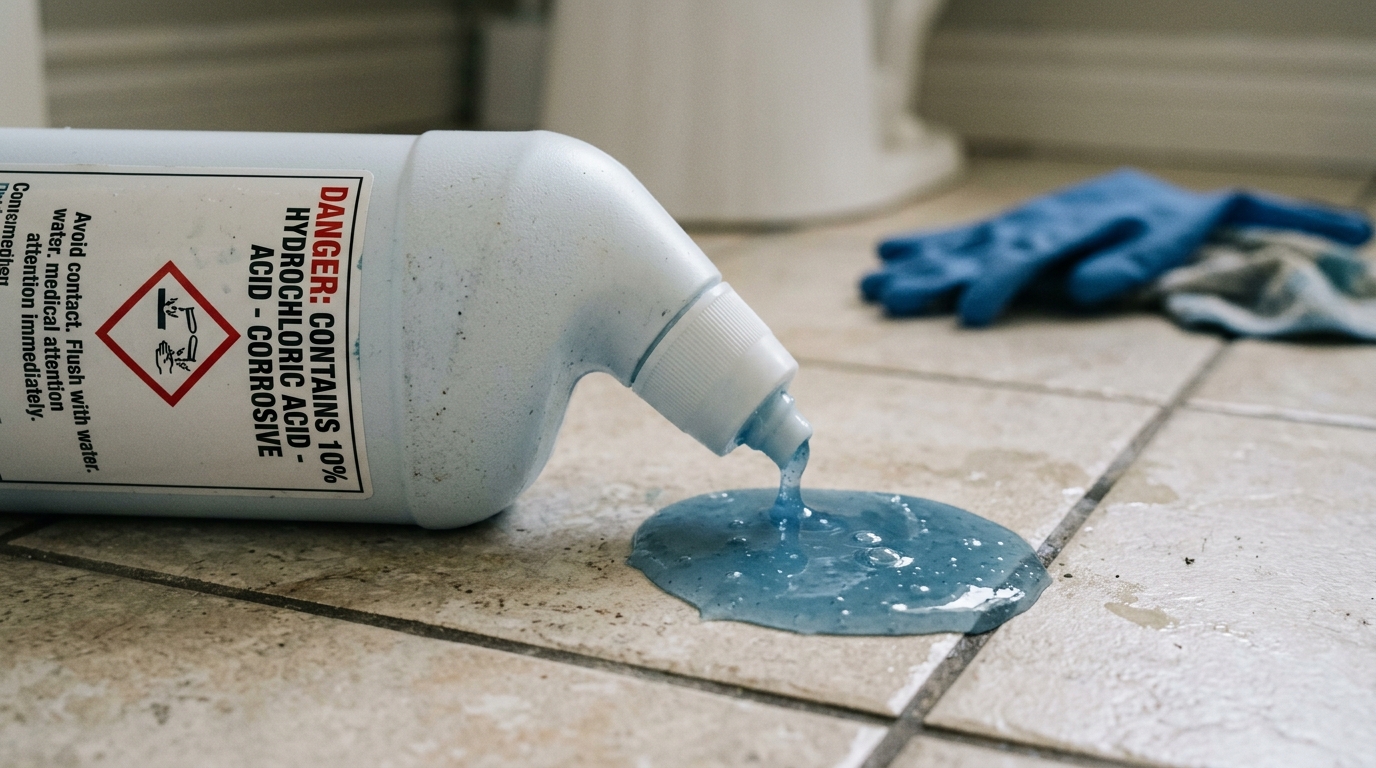
Dog Drank Toilet Bowl Cleaner: Acid Chemical Burn Triage
Clinical Verdict: CRITICALLY SEVERE (Corrosive Chemical Hazard)
Dogs CANNOT drink toilet bowl water containing automatic drop-in tablets, nor access opened drain or toilet cleaners. Concentrated hydrochloric, phosphoric, or sulfuric acids produce deep, agonizing corrosive tissue burns.
Toxic Mechanism & Agent
- Toxic Agent: Strong Mineral Acids (Hydrochloric, Sulfuric) or Strong Alkalis (Sodium Hydroxide)
- Mechanism of Action: Acids cause coagulative necrosis (forming protective eschars, but severely burning mucosal tissue); alkalis cause deep liquefactive necrosis that penetrates transmurally through the esophagus.
Clinical Signs & Timeline
- Onset Time: Immediate burning sensation, vocalization, and profuse salivation.
- Primary Symptoms: Excessive drooling, refusal to swallow, swelling of the tongue and lips, hoarse vocalization or coughing, vomiting with sloughed mucosal tissue or blood.
Emergency Triage Protocol
IMMEDIATE ER VISIT / DO NOT INDUCE EMESIS
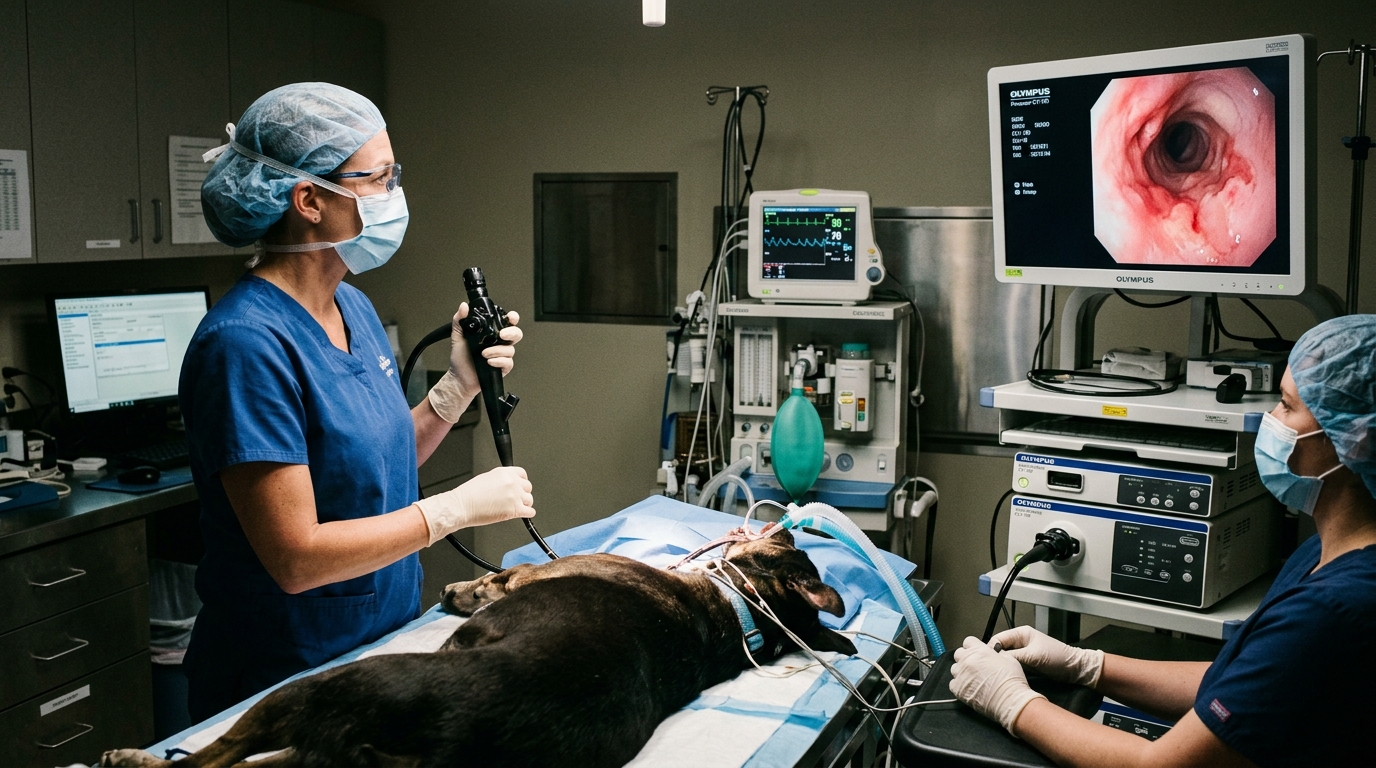
Never induce vomiting or administer neutralizing chemicals (which produce exothermic heat reactions). Dilute orally with small volumes of water. Emergency treatment requires parenteral analgesia, anti-ulcer therapy, and endoscopic staging.
Strict Rule S1 Warning
NEVER induce vomiting at home using hydrogen peroxide without direct instruction from a DVM. Inappropriate emesis can cause fatal aspiration pneumonia, esophageal chemical burns, or gastric rupture. Always seek professional veterinary diagnosis.
Printable tools