Editorial standard
How this guide was prepared
In canine behavioral science, the difference between rapid skill acquisition and chronic handler frustration rarely lies in the dog’s intelligence; it lies in temporal contiguity—the exact millisecond interval between a physical motor action and its consequence. When a dog sits, makes eye contact, or turns away from a distraction, midbrain dopaminergic neurons in the ventral tegmental area and nucleus accumbens evaluate causal associations within a sub-second window of 0.5 to 1.0 seconds. If a caregiver reaches into a zipped pocket after the dog has already stood back up, the delayed food delivery inadvertently reinforces standing or jumping rather than the original calm posture.
Clinical Quick Answer & Immediate Stabilization Protocol
Primary Clinical Directive for Canine Operant Contiguity & Conditioned Secondary Reinforcer Latency: To build reliable, stress-free behavior in a newly adopted or adolescent dog, establish a distinct conditioned secondary reinforcer—either a mechanical clicker or a crisp, single-syllable verbal marker word (“Yes!”)—that bridges the exact instant the desired behavior occurs to the subsequent delivery of food 1 to 2 seconds later. Never reach toward your treat pouch before or simultaneously with the marker signal, as movement of your hand overshadows the acoustic cue and blocks associative learning.
Striatal Dopamine Prediction Error, Temporal Contiguity & Signal Overshadowing
Neurobiological studies using functional magnetic resonance imaging (fMRI) in awake, unrestrained dogs demonstrate that the caudate nucleus exhibits a sharp phasic burst of dopaminergic activity immediately upon perceiving a conditioned reward-predicting stimulus (the marker), shifting away from the unconditioned primary food consumption itself once classical pairing is complete. This reward prediction error (RPE) mechanism requires strict temporal contiguity: when the delay between motor execution and the bridging signal exceeds 1.5 to 2.0 seconds, synaptic eligibility traces in corticostriatal circuits decay by more than 60 percent, inserting superstitious intermediate behaviors into the chain.
Equally critical is Pavlovian stimulus overshadowing. Canine visual cortex pathways process human limb motion faster and with higher salience than unfamiliar human vocalizations. When a handler moves their hand toward a treat pouch at the same instant they say “Yes” or press a clicker, the dog’s nervous system attends to the physical hand movement and ignores the acoustic marker—a mechanical flaw known as “hand-fading failure” that causes obedience behaviors to collapse whenever the handler’s hands are empty.
- Sub-Second Contiguity Window (0.5–1.0s): Associative pairing between a motor act (e.g., all four paws touching the ground) and the bridging marker peaks when latency is under 800 milliseconds.
- Classical Charging Protocol: A neutral acoustic click or marker word acquires secondary reinforcing value after 15 to 25 contiguous pairings where the sound precedes a high-value food morsel by 0.5 to 1.0 seconds without requiring any specific behavior.
- Reward Placement Biomechanics: The marker tells the dog when they earned the reward, but the spatial vector of food delivery dictates where the dog moves next—delivering food low between the front paws stabilizes a down-stay, whereas tossing food away resets the dog for another repetition.
- Frustrative Non-Reward Extinction Burst: Abruptly withholding rewards after poorly timed markers triggers sympathetic adrenal arousal, displacement lip-licking, and vocal frustration.
Emergency Triage Matrix: Clinical Presentation & Required Response
| Triage Level | Clinical Signs & Presentation | Immediate Action Protocol |
|---|---|---|
| Tier 1: Immediate Safety Disengagement (Aggression / Resource Guarding) | Dog freezes over dropped treats, snaps at the handler’s fingers when taking food, exhibits hard direct stare, or lunges at other household pets near the training pouch. | Cease hand-delivered food training immediately; switch to tossing rewards onto the floor at a safe distance, separate multi-pet sessions behind solid doors, and schedule a veterinary behavioral evaluation. |
| Tier 2: High-Arousal Frustration & Cue Confusion | Dog frantically offers five behaviors in rapid succession (barking, pawing, spinning), bites at the treat pouch, or only performs cues when food is visibly held in the handler’s fingers. | Eliminate visible food lures, enforce a stationary neutral hand position until 0.5 seconds after the verbal marker, shorten sessions to 3 minutes, and lower environmental distractions. |
| Tier 3: Precision Acquisition & Schedule Thinning | Dog responds smoothly to verbal or hand cues with relaxed ears, soft facial musculature, and immediate orientation upon hearing the marker signal. | Maintain 100% continuous reinforcement for new behaviors in novel environments, then transition gradually to variable differential reinforcement of excellent responses. |
Mechanical Execution Audits, Rate of Reinforcement (RoR) & Lure Fading Protocols
Clinical behaviorists evaluate handler mechanics using three quantitative metrics: marker latency (seconds from criterion behavior to acoustic bridge), delivery latency (seconds from acoustic bridge to food reaching the mouth), and overall Rate of Reinforcement (RoR, measured in reinforcers per minute). For an adolescent or newly adopted dog learning foundational focus in a quiet room, an optimal RoR is 10 to 15 rewards per minute using soft, pea-sized morsels (such as boiled chicken breast, freeze-dried liver, or commercial training diced roll) that require zero mastication.
When transitioning from food luring to an independent cue, the food lure must be removed from the hand by the third or fourth repetition. Continuing to wave a biscuit in front of a dog’s nose beyond five repetitions converts the visible food into a mandatory discriminative stimulus—meaning the dog learns that the verbal word “Sit” is irrelevant unless accompanied by the sight and odor of food in the hand.
- The Neutral-Hand Rule: Keep both arms relaxed at your sides or resting at your waist when issuing a cue and firing the marker; only move your reward hand toward the pouch after the marker sound has completely ended.
- Three-Second Consumption Test: If a dog takes longer than 3 seconds to chew a treat—or drops crumbs on the floor to sniff—the treat is either too large, too dry, or too low in palatability for active operant shaping.
- One-to-One Marker Integrity: Every single time the primary marker (“Yes!” or click) is fired, a primary food reward must follow, even if the handler accidentally clicked at the wrong moment; violating marker honesty extinguishes its dopaminergic prediction value.
- Micro-Session Consolidation: Three 3-minute training sessions separated by 2-hour sleep or sniffing decompression breaks produce superior hippocampal memory consolidation compared to a single exhausting 30-minute drill.
Strict Rule S1 Clinical Red Flags: Canine Operant Contiguity & Conditioned Secondary Reinforcer Latency
Critical safety boundaries for Canine (Canis lupus familiaris — Newly Adopted & Adolescent Learning Dogs) caregivers:
- Zero Aversive Collar Corrections for Timing Errors: Never jerk a leash, use a choke chain, or activate an electronic shock/vibration collar when a dog breaks a stay or misses a cue; punishing a dog for handler timing imprecision induces learned helplessness and defensive fear aggression.
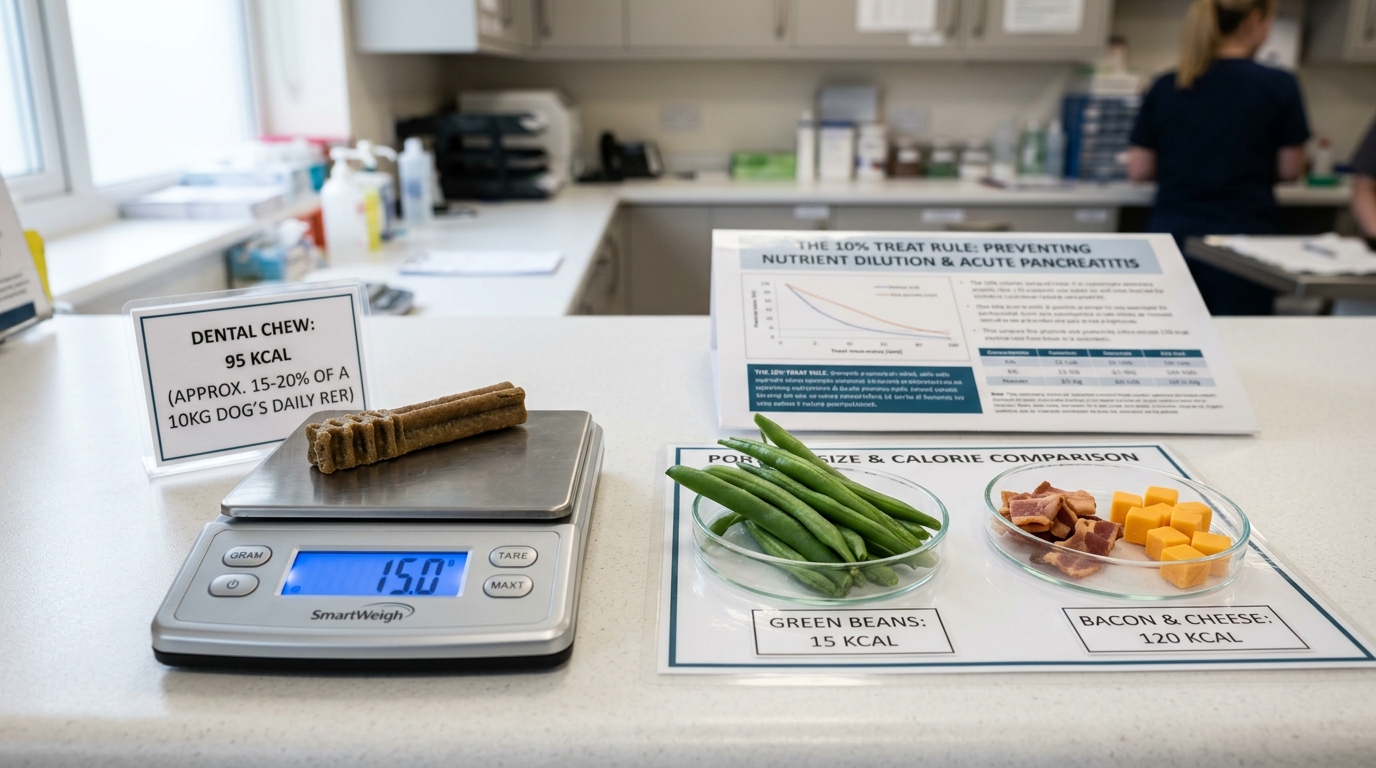
- Zero Xylitol or High-Fat Training Rewards: Never use sugar-free peanut butter containing xylitol (birch sugar) or greasy bacon/sausage scraps as high-value training rewards; xylitol causes peracute hypoglycemic seizures and hepatic necrosis, while high-fat scraps trigger acute canine pancreatitis.
Clinical Preparation & Biosecurity Action Checklist
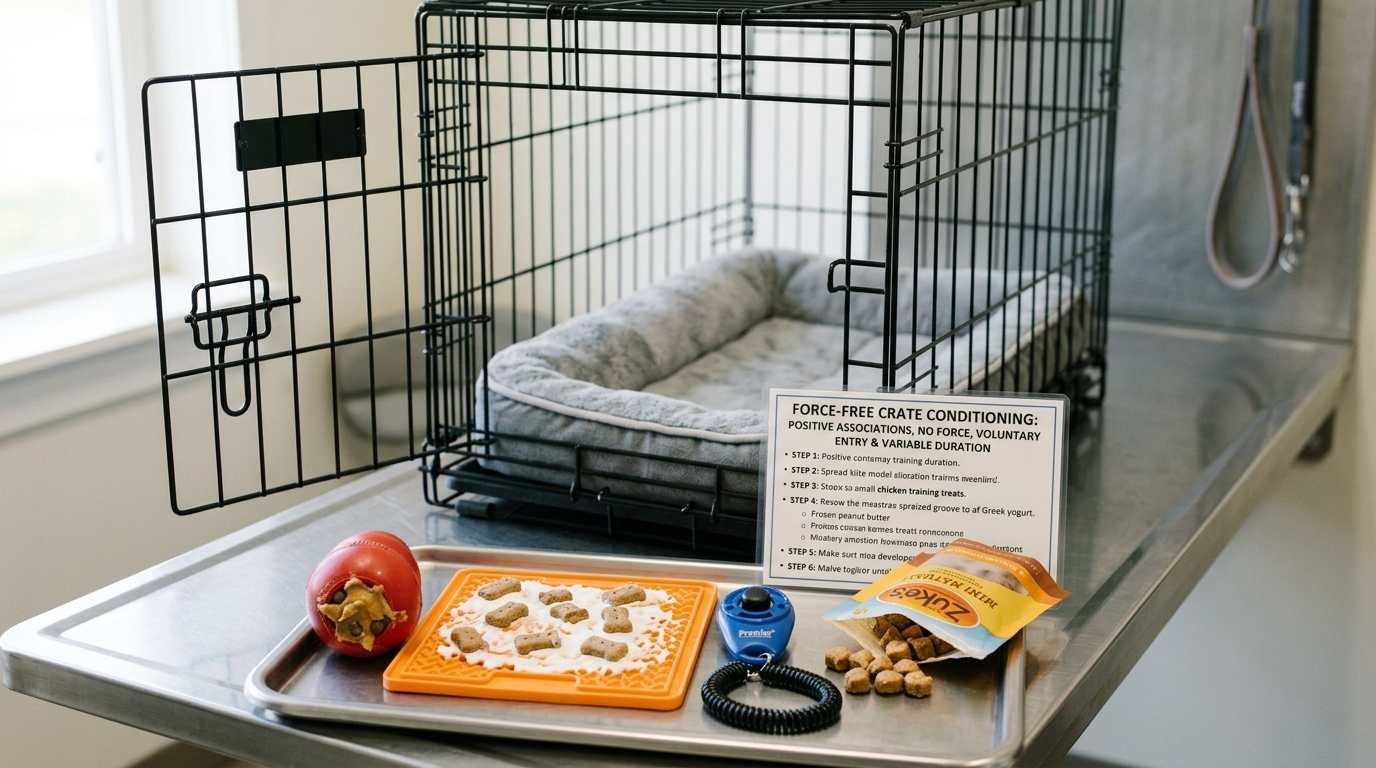
- Pre-chop 40 to 50 soft, pea-sized training treats and store them in an open-top magnetic belt pouch before calling your dog to begin a session.
- Record a 60-second smartphone video of your training mechanics to verify that your hand remains completely still until after your “Yes!” or click sound finishes.
- Deduct the caloric volume of daily training treats from your dog’s regular morning and evening meal rations to keep treats under 10% of total daily kilocalories.
- End every training session with an explicit “All done!” release cue and scatter a final handful of kibble onto a snuffle mat to lower post-training arousal.
Related Clinical Guides & Triage Protocols
Peer-Reviewed Clinical References & Evidence Grounding
- Functional MRI in awake unrestrained dogs reveals caudate nucleus activation to conditioned reward signals (opens in new tab) (PLOS ONE (2012) — Peer-reviewed canine neuroimaging study by Berns et al. indexed on NCBI PubMed (PMID: 22566772).)
- The effects of aversive and reward-based training methods on companion dog welfare and learning accuracy (opens in new tab) (Journal of Veterinary Behavior (2017) — Systematic veterinary behavioral review indexed on NCBI PubMed (PMID: 28636862).)
- AVSAB Position Statement on Humane Dog Training and Reward-Based Operant Conditioning (opens in new tab) (American Veterinary Society of Animal Behavior consensus standard on positive reinforcement and timing contiguity.)
- AAHA Canine and Feline Behavior Management Guidelines: Learning Theory and Conditioned Reinforcers (opens in new tab) (American Animal Hospital Association clinical guidelines on evidence-based behavioral modification.)
Source transparency
Reference mix for this guide
Source labels classify the institutional category of the references cited above.