Editorial standard
How this guide was prepared
Many dedicated dog owners mistakenly attempt to cure hyperactivity, leash reactivity, or evening restlessness (“zoomies” and frantic mouthing) by adding ever-more high-intensity physical exhaustion—repetitive Chuck-It ball throwing, crowded dog-park wrestling, or fast jogging beside a bicycle. In veterinary behavioral physiology, however, high-velocity repetitive chasing floods the canine bloodstream with adrenaline, noradrenaline, and cortisol without providing neural down-regulation. Far from creating a calm companion, chronic adrenaline cycling produces an athletic, hyper-vigilant dog whose hair-trigger sympathetic nervous system cannot transition into restorative REM sleep.
Clinical Quick Answer & Immediate Stabilization Protocol
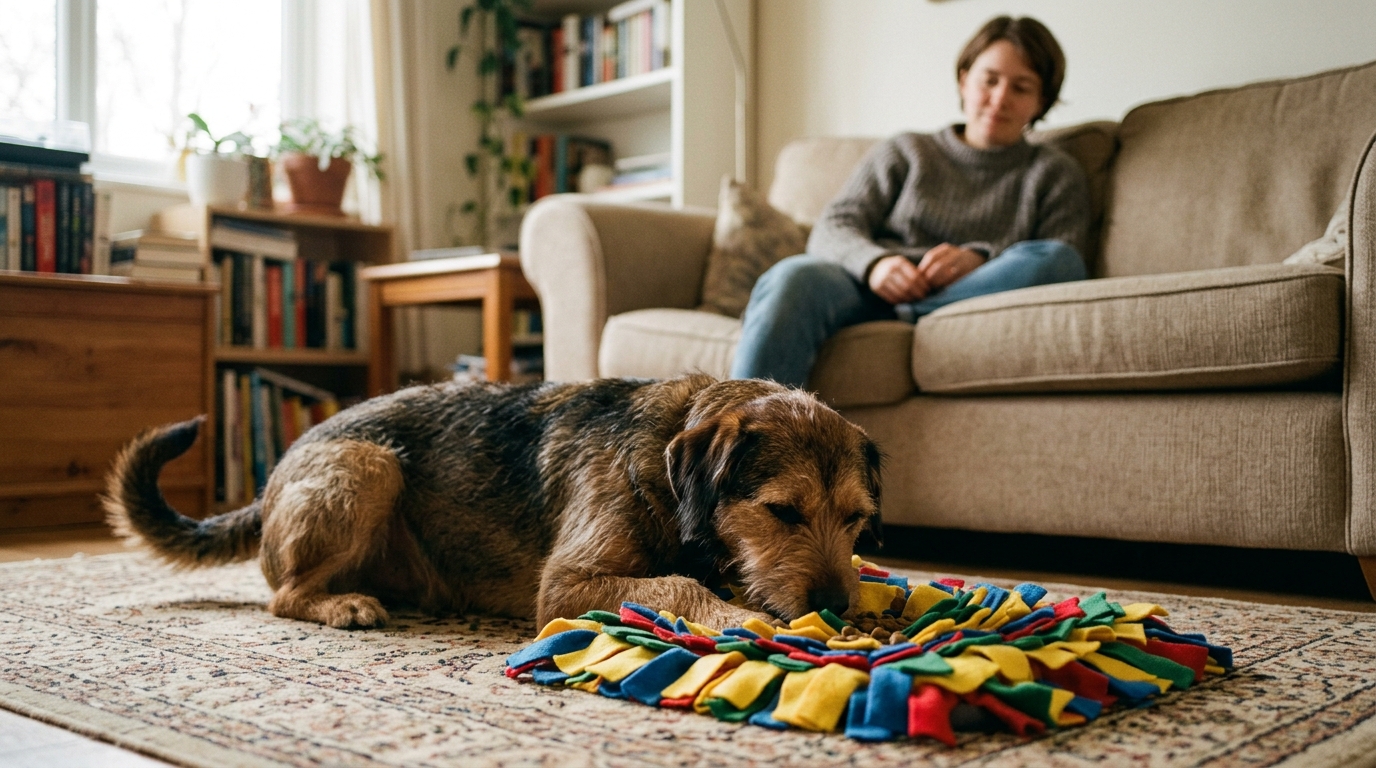
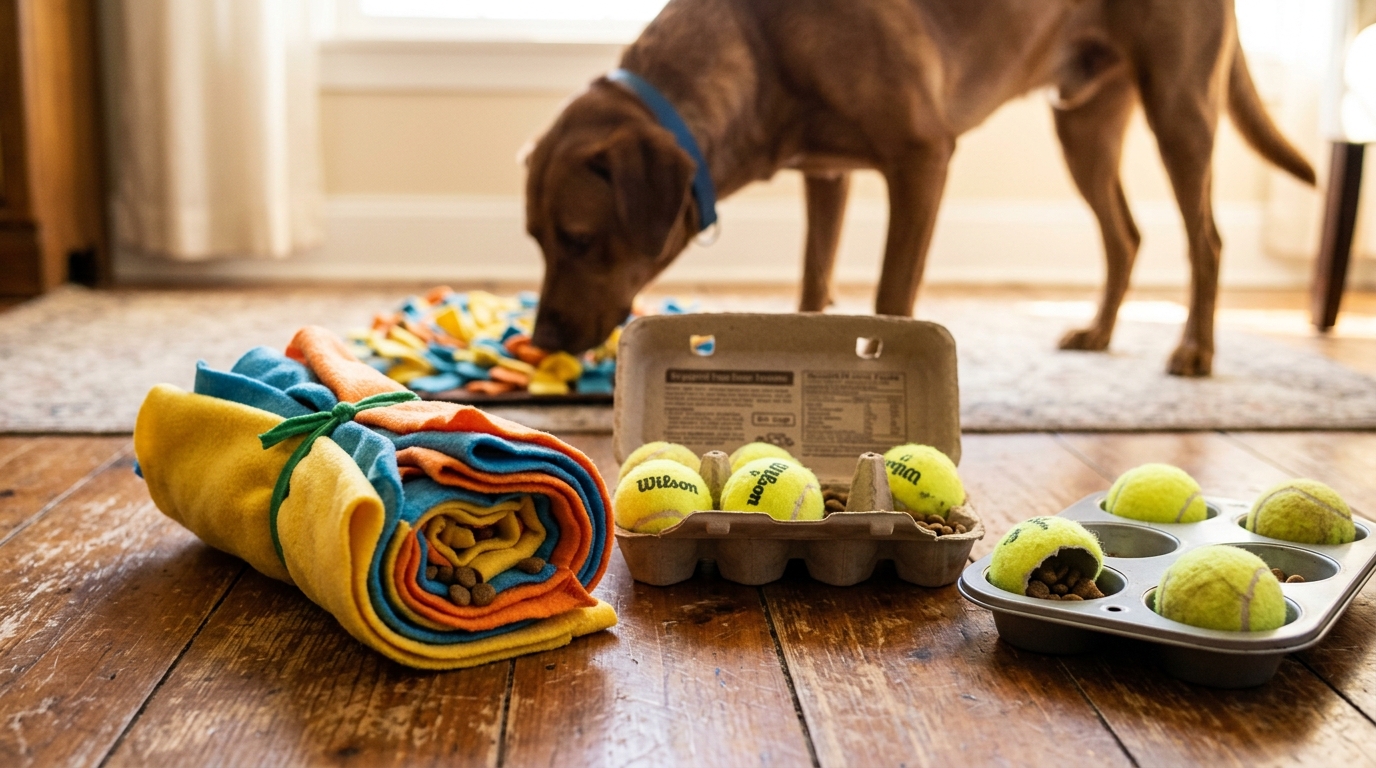
Primary Clinical Directive for Canine Sympathetic Hyperarousal, Trigger Stacking & Post-Excitement Dysregulation: When a dog becomes over-aroused after exciting visitors, reactive encounters on a walk, or vigorous play (characterized by frantic leash-biting, jumping, hard mouthing, or wide spatulate tongue panting), stop all fast-motion games and verbal commands immediately. Transition the dog into parasympathetic decompression using the “Sniff-Lick-Chew-Sleep” sequence: scatter 15 small treats in deep grass or a snuffle mat for nose-down olfactory tracking, offer a frozen lick mat or long-lasting chew in a dim quiet room, and enforce a 48-to-72-hour cortisol washout window after major stressful events.
HPA-Axis Cortisol Clearance Kinetics, Trigger Stacking & Vagal Olfactory Braking
While sympathetic catecholamines (epinephrine and norepinephrine) clear from peripheral circulation within 15 to 45 minutes after an acute scare or sprint, glucocorticoid serum cortisol peaks 20 to 30 minutes post-stressor and requires hours—or up to 48 to 72 hours following severe multi-trigger surges—to return completely to physiological baseline. During this protracted washout window, the dog operates under “trigger stacking”: three minor events that the dog normally tolerates individually (a delivery truck passing at 8:00 AM, a neighbor’s dog barking in the hallway at 10:00 AM, and a child dropping a pan at 11:00 AM) cumulatively push circulating cortisol past the reactive threshold, resulting in an explosive outburst over a seemingly trivial fourth stimulus.
Physiological down-regulation of the canine sympathetic nervous system is mediated through the vagus nerve (cranial nerve X) via three innate species-specific motor patterns: low-velocity olfactory sniffing, rhythmic lingual licking, and sustained molar mastication. Telemetry studies confirm that when a dog lowers its head below shoulder height and engages in slow sniffing (inhaling at 140 to 300 sniffs per minute), heart rate decelerates and heart-rate variability (HRV)—a direct biomarker of parasympathetic vagal tone—increases significantly.
- Repetitive Ball-Launch Addiction: High-impact fetch triggers micro-tears in cruciate ligaments and floods striatal dopamine + adrenal cortisol without completing the calming consumption/dissection phase of the predatory sequence.
- Leash-Biting & Redirected Frustration: Adolescent dogs that grab and thrash the leash or jump at their owner’s jacket mid-walk are rarely being “dominant”—they are experiencing acute sensory overload or frustrative arousal overflow.
- Adult Canine Sleep Requirement (12–16 Hours/Day): Healthy adult domestic dogs require 12 to 16 hours of daily sleep and resting polyphasic downtime (and puppies/seniors require 16 to 20 hours); sleep-deprived dogs exhibit severe impulse-control deficits.
- Licking-Induced Endorphin & Serotonin Release: Sustained licking of a textured silicone mat coated with wet food stimulates mechanoreceptors in the hard palate and tongue, promoting vagal calming.
Emergency Triage Matrix: Clinical Presentation & Required Response
| Triage Level | Clinical Signs & Presentation | Immediate Action Protocol |
|---|---|---|
| Tier 1: Acute Over-Threshold Redirected Biting / Heat Exhaustion | Dog locks onto handler’s clothing/arms with hard bruising bites, exhibits brick-red gums with curled spatulate tongue, stumbles, or cannot stop pacing/panting after vigorous exercise. | Step on or tether the leash safely to a fence post to remove human movement, scatter a handful of food on the ground to engage the nose, monitor rectal/gum temperature for heatstroke, and transport to a vet if panting persists >20 minutes indoors. |
| Tier 2: Stacked Trigger Overflow & Walk Dysregulation | Dog lunged at two dogs on a walk and is now scanning frantically, pulling hard, whining, grabbing the leash, and unable to respond to basic known cues. | Abort the neighborhood walk immediately; return to a quiet shaded yard or indoor decompression zone, scatter kibble for a 5-minute “find-it” sniff, and cancel high-stimulation outings for 48 hours. |
| Tier 3: Scheduled Parasympathetic Settling & Mat Protocol | Dog finishes a normal walk or greeting with mild excitement and transitions smoothly to a resting bed within 10–15 minutes. | Pair a specific portable fleece mat with quiet chews and relaxed belly-on-floor postures (Relaxation Protocol) without demanding rigid military eye-contact stays. |
The Sniff-Lick-Chew-Sleep Decompression Architecture & Cortisol Vacation Protocols
When rehabilitating a chronically over-aroused or reactive dog, veterinary behaviorists institute a 7-to-14-day “Cortisol Vacation.” During this reset window, all high-adrenaline triggers—ball launchers, flirt poles, crowded urban sidewalks, off-leash dog parks, and roughhousing—are temporarily suspended. Exercise is restructured into “decompression walks”: transporting the dog to a quiet industrial park, cemetery perimeter, or open meadow on a 15-foot biothane line attached to a Y-harness, where the dog is permitted to move at its own pace and sniff vegetation for 30 minutes without obedience drills.
To teach an explicit “off-switch” at home, avoid commanding a high-tension obedience “Down-Stay,” where the dog stares intensely at the handler waiting for the release click (which maintains high mental arousal). Instead, use Karen Overall’s Protocol for Relaxation or “Capturing Calmness”: quietly slide a low-to-medium-value kibble between the dog’s front paws whenever the dog voluntarily sighs, rolls onto one hip, and rests its chin on its bed.
- Emergency “Find-It” Grass Scatter: The instant a sudden trigger (a barking dog behind a fence or a skateboarder) spikes your dog’s arousal on a walk, cheerfully say “Find it!” and toss 8 to 10 smelly treats across a 1-square-meter patch of grass to lower the head and break visual fixation.
- Post-Walk Lick-Mat Transition: Keep two pre-frozen silicone lick mats smeared with canned wet dog food or plain unsweetened pumpkin in the freezer; serve one on the dog’s bed immediately upon returning from every walk to bridge outdoor activity into a 2-hour nap.
- Arousal-Matched Reward Delivery: Deliver rewards calmly on the floor when teaching settling; throwing treats through the air for the dog to catch spikes kinetic arousal.
- White Noise & Visual Barrier Shielding: Apply frosted static-cling window film to street-facing living room windows and run a box fan or brown-noise machine to halt chronic window-barking adrenaline loops.
Strict Rule S1 Clinical Red Flags: Canine Sympathetic Hyperarousal, Trigger Stacking & Post-Excitement Dysregulation
Critical safety boundaries for Canine (Canis lupus familiaris — Working Breeds, Adolescents & Urban Dogs) caregivers:
- Zero Forced Physical Pinning (“Alpha Rolls”) to Calm an Aroused Dog: Never wrestle, pin, or sit on an over-aroused dog to force submission; physical confrontation during a catecholamine surge triggers severe defensive bite injuries.
- Zero Rawhide, Weight-Bearing Antlers, or Cooked Bones for Decompression Chewing: Never offer cooked bones, split elk antlers, or unbuffered dried rawhide rolls; hard weight-bearing bones fracture carnassialfourth premolar teeth (requiring root canal or extraction), while large rawhide chunks cause esophageal and intestinal obstruction.
Clinical Preparation & Biosecurity Action Checklist
- Replace 20 minutes of high-speed ball throwing with a 20-minute long-line decompression sniff walk in a quiet, low-traffic green space.
- Apply opaque static-cling privacy film to the bottom 36 inches of front windows if your dog barks repeatedly at passing pedestrians or delivery vans.
- Prepare a quiet, dim resting sanctuary away from household foot traffic so your dog can achieve 14+ hours of uninterrupted daily sleep.
- Log trigger-stacking events in a weekly journal and grant your dog a 48-hour quiet recovery window after veterinary visits, houseguests, or thunderstorms.
Related Clinical Guides & Triage Protocols
Peer-Reviewed Clinical References & Evidence Grounding
- Let me sniff! Nosework induces positive judgment bias and lowers physiological arousal in pet dogs (opens in new tab) (Applied Animal Behaviour Science (2019) — Peer-reviewed study by Duranton & Horowitz indexed on NCBI PubMed (PMID: 30738126).)
- Heart rate variability and salivary cortisol as indicators of autonomic arousal and relaxation in domestic dogs (opens in new tab) (Physiology & Behavior (2016) — Peer-reviewed psychophysiology study indexed on NCBI PubMed (PMID: 27060778).)
- AAHA Behavior Management Guidelines: Trigger Stacking, Arousal Regulation, and Behavioral Relaxation Protocols (opens in new tab) (American Animal Hospital Association clinical guidelines on canine arousal management.)
- Veterinary Oral Health Council (VOHC) Safe Chew Standards and Dental Fracture Prevention (Thumbnail Rule) (opens in new tab) (Veterinary dental consensus on safe masticatory enrichment and avoidance of carnassial slab fractures.)
Source transparency
Reference mix for this guide
Source labels classify the institutional category of the references cited above.