
This guide is general education for pet owners. If your pet has urgent symptoms, possible poisoning, injury, breathing trouble, collapse, severe pain, or sudden decline, contact a licensed veterinarian or local emergency service.
Dosages must be calculated by a licensed veterinarian based on species, weight, and bloodwork. Never administer human medications or self-adjust prescription doses for pets.
Editorial standard
How this guide was prepared
As summer temperatures transition into the crisp, cool breezes of autumn, pet owners frequently make a dangerous healthcare assumption: they believe that the arrival of autumn signifies the natural demise of biting fleas and disease-bearing ticks. Operating under this widespread seasonal misconception, millions of dog and cat parents discontinue veterinary antiparasitic preventatives in September and October, leaving their companion animals completely vulnerable during what veterinary parasitologists recognize as one of the most intense parasite transmission windows of the entire calendar year.
Clinical Quick Answer & Immediate Actions
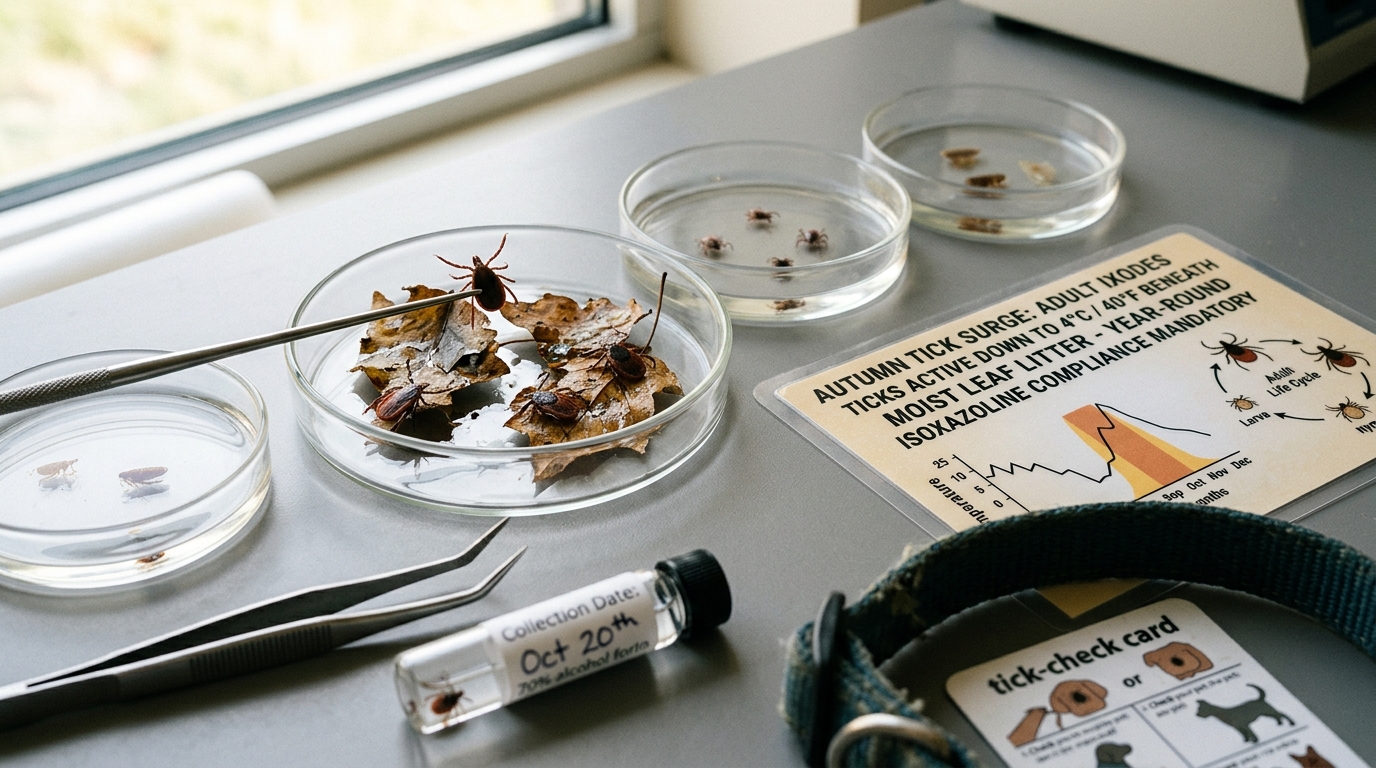
Discontinuing ectoparasiticide preventative treatment in autumn is one of the most widespread and clinically hazardous pet care misconceptions. In temperate climates, autumn produces a dramatic surge in adult blacklegged tick (Ixodes scapularis) questing activity as ambient temperatures drop into the 45°F to 65°F range, creating peak transmission windows for Borrelia burgdorferi (Lyme disease) and Anaplasma phagocytophilum. Simultaneously, dropping outdoor temperatures drive adult fleas and wildlife vectors closer to human dwellings, while residential central heating provides an optimal 70°F environment that accelerates flea pupal emergence into heated carpets and bedding. Sustaining uninterrupted, year-round veterinary ectoparasiticide therapy (isoxazolines or veterinary spot-on formulations) through autumn and winter is essential to eliminate severe seasonal infestation spikes and prevent chronic tick-borne morbidity.
In reality, autumn weather creates the ideal microclimatic conditions for ectoparasite surges. Dropping temperatures and autumn rains increase ambient relative humidity, driving adult fleas to seek warm mammalian hosts before frost, while adult blacklegged ticks (the primary vectors of Lyme disease) emerge from summer dormancy in staggering numbers to engage in peak questing activity. Maintaining continuous parasite protection through autumn is essential to prevent severe flea allergy dermatitis, Lyme arthritis, and chronic indoor household infestations.
Why Autumn Triggers an Ectoparasite Surge
Biological and environmental factors converge in autumn to create peak transmission risks for pets:
- The Blacklegged Tick Questing Peak: While nymphal deer ticks are active in late spring, adult blacklegged ticks emerge in October and November. These adult ticks require a final large blood meal before winter egg-laying, questing actively on tips of grass stems and leaf piles along woodland trails, parks, and suburban lawns.
- The Rush for Indoor Warmth: Fleas cannot survive sustained freezing temperatures in open soil. In late autumn, fleas actively seek warmth, carbon dioxide, and animal scent, hitchhiking onto dogs, outdoor cats, or urban rodents to migrate into residential basements, heated living rooms, and carpeted bedrooms.
- Leaf Litter Microclimates: Piles of damp, decomposing autumn leaves create an insulated, humidity-rich microhabitat that shields ticks and flea pupae from cold night winds and morning frosts, extending their survival weeks beyond open lawn areas.
Autumn Parasite Risk Matrix: Ticks vs. Fleas
Understanding seasonal parasite behavior helps owners anticipate exposure hotspots:
| Parasite Vector | Autumn Behavioral Activity Pattern | Primary Transmission Hotspots | Clinical Health Threats to Pet |
|---|---|---|---|
| Blacklegged Tick (Ixodes scapularis) | Peak adult questing season in October–December; active whenever temperatures rise above 40°F (4°C). | Fallen leaf piles, brush borders along walking trails, wooded park edges, tall unmowed grass. | Lyme disease (shifting lameness, joint swelling, fatal protein-losing Lyme nephritis), Anaplasmosis. |
| Cat Flea (Ctenocephalides felis) | Explosive reproduction in 60°F–75°F moist autumn weather; seeks indoor host environments before freeze. | Under porches, damp shaded yards, dog parks, wildlife migration corridors into crawlspaces. | Flea Allergy Dermatitis (FAD), secondary bacterial “hot spots”, Dipylidium tapeworm infestations, anemia. |
| Mosquitoes (Culicidae) | Unpredictable autumn warm spells trigger localized mosquito hatches carrying heartworm larvae. | Standing rainwater in clogged gutters, birdbaths, puddles, garden planters. | Heartworm disease: pulmonary arterial inflammation, right-sided heart failure in dogs; fatal HARD in cats. |
Essential Autumn Prevention & Yard Safety Rules
Protect your pets and living environment throughout the autumn season with these clinical strategies:
- Maintain Uninterrupted Monthly Protection: Continue administering veterinary-prescribed oral isoxazolines (for dogs) or feline topical preventatives (for cats) on their exact 30-day schedule without seasonal gaps. Review our dog parasite prevention guide and our indoor cat parasite prevention guide.
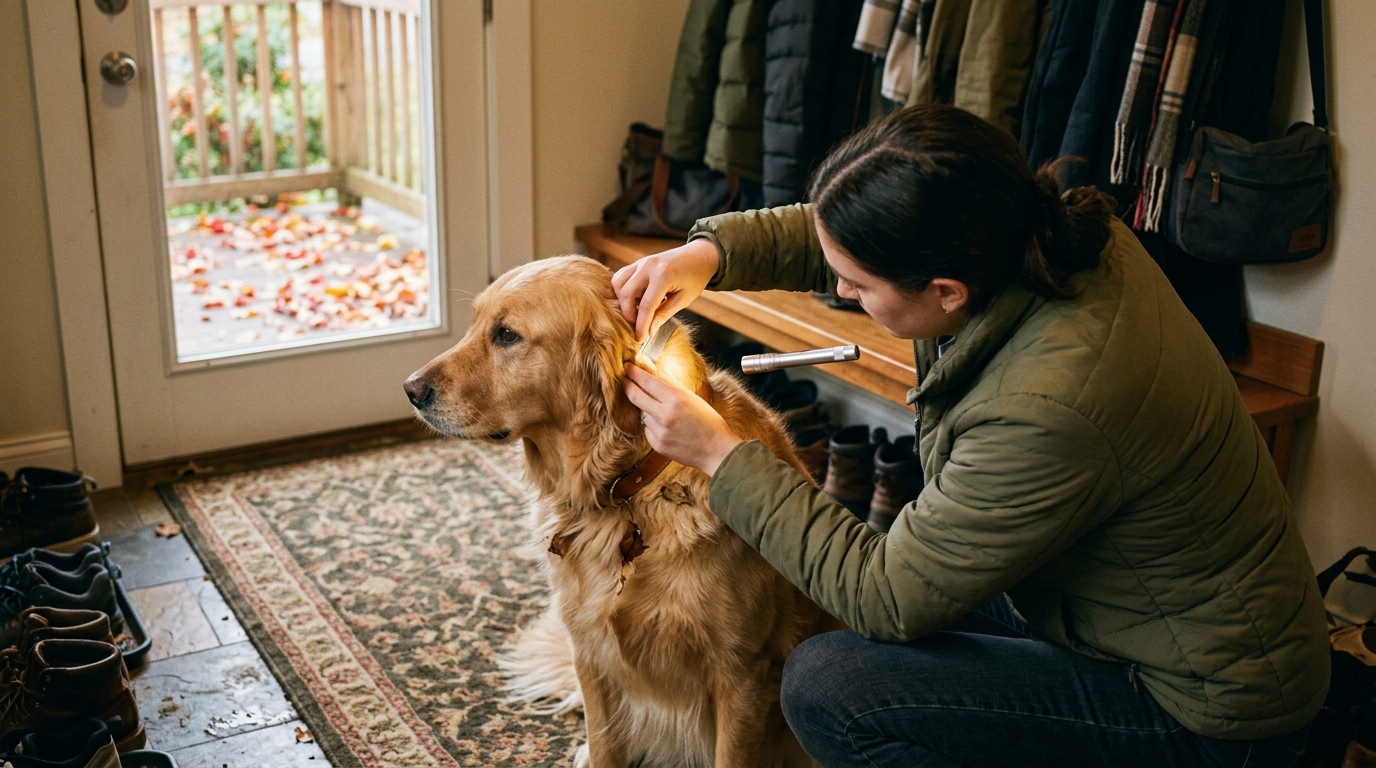
- Perform Daily Post-Walk Tick Checks: Run your hands firmly along your dog’s body after every walk, focusing on high-risk attachment zones: inside ears, between toes, under the collar, around the groin crease, and beneath the tail. Remove attached ticks immediately using fine-tipped tweezers by pulling straight upward with steady pressure.
- Yard Sanitation: Manage Leaf Piles: Rake and bag fallen leaves promptly. Do not allow children or dogs to play in damp, decaying leaf piles where adult ticks congregate in massive numbers. Keep lawn grass cut short to eliminate humid questing perches. Download our printable Daily Pet Care Routine Tracker to record monthly preventative dosing.
When to Contact a Veterinarian Immediately
Vector-borne pathogens transmitted during autumn often produce delayed clinical symptoms weeks or months later. Seek immediate veterinary hospital care if your pet develops shifting-leg lameness, swollen warm joints, sudden high fever, profound lethargy, loss of appetite, dark orange urine, or pale gums. Prompt in-clinic point-of-care 4Dx antibody screening and early doxycycline antibiotic therapy are critical to arresting Lyme disease and Anaplasmosis before permanent renal or joint damage ensues.
Clinical Practice Tool: Pet Medication Log
Protect against autumn flea and tick surges with our free printable Pet Medication Log. Download and print your copy of the Pet Medication Log, or explore all practical pet care guides in the NewsPet Resource Center.
Frequently Asked Questions
Why do flea and tick infestation risks spike during autumn months?
Adult fleas and ticks (especially deer ticks / Ixodes species) seek warm hosts before winter freezes. Ticks remain active whenever ambient temperatures exceed 40°F (4°C), making autumn peak transmission season for Lyme disease.
Should pet owners discontinue parasite prevention during the winter?
No. Fleas thrive indefinitely indoors in heated homes, pupae can remain dormant in carpets for months, and ticks emerge during unseasonably warm winter thaws. Year-round 12-month prevention is the veterinary standard.
What tick-borne pathogens are most commonly transmitted in the fall?
Borrelia burgdorferi (Lyme disease), Anaplasma phagocytophilum, and Ehrlichia canis are transmitted by autumn-active nymph and adult ticks, causing shifting leg lameness, fever, and lethargy.
Emergency Triage Matrix: Clinical Presentation & Required Response
| Triage Level | Clinical Signs & Presentation | Immediate Action Protocol |
|---|---|---|
| Tier 1: Immediate Emergency (0–2 Hours) | Pet exhibiting acute ascending motor weakness, ataxia, loss of bark, or dyspnea following autumn outdoor exposure (suspected tick paralysis); or cat displaying violent tremors and seizures after accidental exposure to canine permethrin. | Immediate emergency veterinary transport; complete physical tick search with careful blunt removal, respiratory support, intravenous fluid resuscitation, and administration of methocarbamol/lipid emulsion if permethrin toxicity is suspected. |
| Tier 2: Urgent Veterinary Care (Same-Day) | Severe autumn flea allergy dermatitis (FAD) flare with intense lumbar pruritus, open oozing ‘hot spots’, alopecia, or finding a fully engorged Ixodes tick attached for >36 hours accompanied by shifting-leg lameness and fever. | Same-day veterinary evaluation; tick-borne illness antibody screening (4Dx/SNAP ELISA), cytological examination of secondary bacterial/yeast dermatitis, and prescription ectoparasiticidal and anti-inflammatory therapy. |
| Tier 3: Home Monitoring & Scheduled Care | Single unengorged flat tick discovered and removed cleanly with mouthparts intact, or finding sparse flea dirt on an energetic pet with zero systemic distress or skin lesions. | Administer approved monthly veterinary preventative, wash all pet bedding in hot water (minimum 60°C / 140°F), vacuum living spaces thoroughly, and monitor daily for fever or joint stiffness for 30 days. |
Rule S1 Boundaries & Autumn Parasitology Rules
Fall parasite management requires strict adherence to safety protocols:
- NEVER cease flea and tick preventatives after the first autumn frost: Ticks remain actively questing on leaf litter whenever ambient temperatures exceed 4°C (39°F), and heated residential homes allow fleas to reproduce continuously throughout subzero winters.
- NEVER use matches, rubbing alcohol, or petroleum jelly to remove ticks: Smothering or burning an attached tick triggers violent regurgitation of midgut pathogens (Borrelia, Babesia) directly into the host circulation, drastically increasing infection transmission rates.
- NEVER apply canine permethrin or phenothrin formulations to cats: Feline hepatic glucuronidation deficits render concentrated pyrethroids highly neurotoxic; exposure induces fatal whole-body tremors and refractory seizures within hours.
- NEVER rely on ultrasonic collars or amber necklaces for parasite protection: Unregulated electronic or herbal devices lack peer-reviewed parasiticidal efficacy, leaving pets completely exposed to vector-borne pathogens and severe flea anemia.
Caregiver Autumn Parasite Prevention & Tick Check Protocol
- Perform a thorough whole-body tick check after every outdoor walk, focusing on the groin, armpits, between paw pads, under the collar, and deep inside ear flaps.
- Use fine-tipped veterinary tick tweezers to grasp attached ticks flush against the epidermal skin surface; pull straight out with steady, even traction without twisting.
- Preserve removed ticks in a sealed container with 70% isopropyl alcohol for morphological species identification if clinical symptoms develop.
- Maintain continuous 30-day or 12-week dosing cycles for prescription ectoparasiticides (isoxazolines) without seasonal lapse.
- Clear fallen autumn leaf piles and tall brush away from patio perimeters and canine relief zones to eliminate primary tick questing microhabitats.
- Wash all indoor companion animal bedding in hot water (minimum 60°C / 140°F) and vacuum carpets and baseboards twice weekly to capture newly emerged flea cohorts.
Related Clinical Guides & Tools
Peer-Reviewed Clinical References & Evidence Grounding
- PMID: 30268424: Diagnosis and Treatment of Canine Acral Lick Dermatitis (Vet Clin North Am Small Anim Pract, 2019) (opens in new tab)
- PMID: 37883677: 2023 AAHA Management of Allergic Skin Diseases in Dogs and Cats Guidelines (J Am Anim Hosp Assoc, 2023) (opens in new tab)
- PMID: 31082162: Flea Bites (Veterinary Journal, 2024) (opens in new tab)
- Merck Veterinary Manual — Small Animal Clinical Medicine & Emergency Reference (opens in new tab)
Source transparency
Reference mix for this guide
Source labels classify the institutional category of the references cited above.

