This guide is general education for pet owners. If your pet has urgent symptoms, possible poisoning, injury, breathing trouble, collapse, severe pain, or sudden decline, contact a licensed veterinarian or local emergency service.
Dosages must be calculated by a licensed veterinarian based on species, weight, and bloodwork. Never administer human medications or self-adjust prescription doses for pets.
Editorial standard
How this guide was prepared
Accidents, lacerations, insect stings, and acute household trauma can happen in an instant, leaving pet owners with mere seconds to react before professional veterinary assistance can be reached. Whether your dog cuts a paw pad on broken glass during an evening walk or your cat accidentally contacts a hot stove element, having a dedicated pet first-aid kit and understanding evidence-based emergency triage principles can mean the difference between rapid recovery and catastrophic complication. First aid is never a substitute for veterinary medical care, but it serves as the critical bridge that stabilizes vital functions and minimizes tissue damage while transporting your pet to safety.
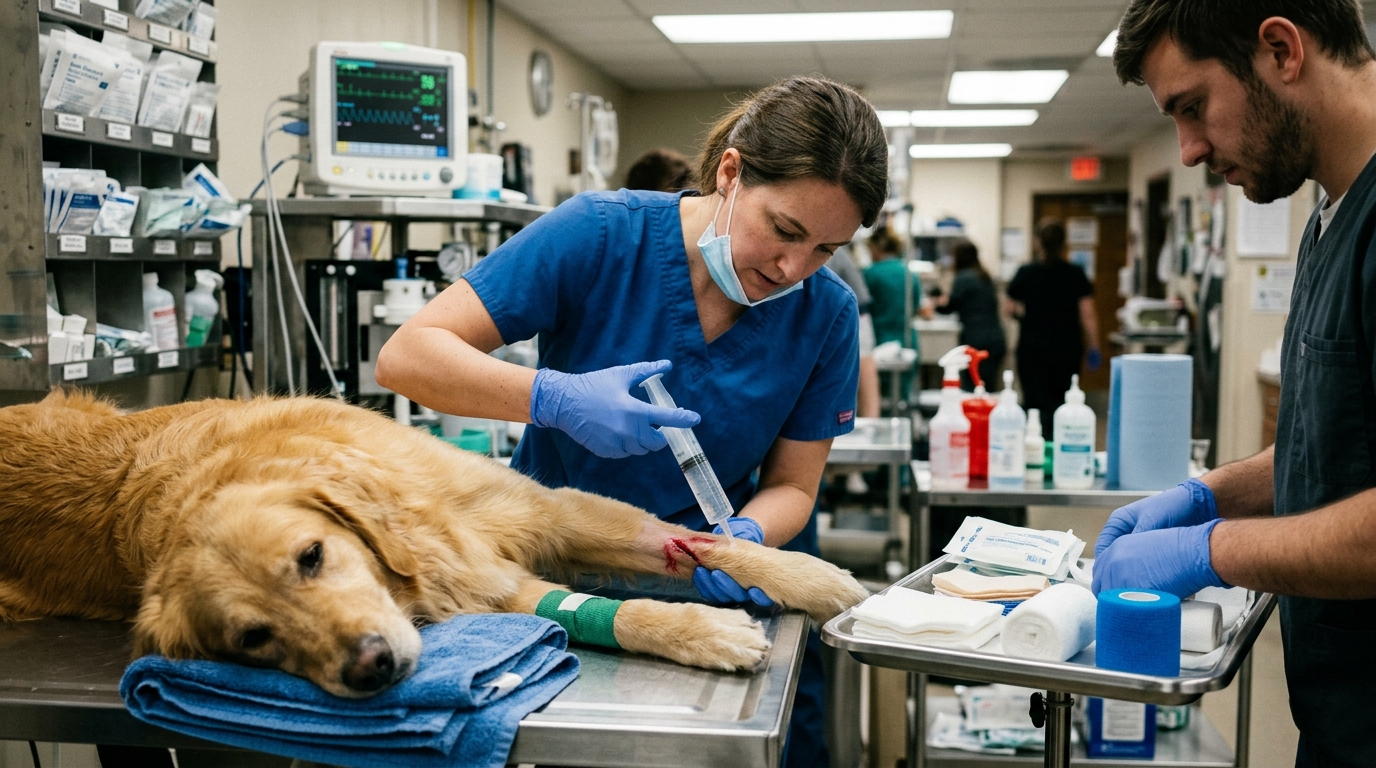
Clinical Quick Answer & Immediate Actions
Effective pet first aid relies on three core principles: ensuring handler safety via gentle restraint, controlling acute hemorrhage through continuous direct pressure, and avoiding cytotoxic antiseptics like hydrogen peroxide. Severe wounds require prompt surgical closure within 6 hours to prevent tissue necrosis.
Administering emergency first aid to a frightened, injured animal requires technical composure, safety protocols, and a clear understanding of physiological boundaries. Animals in severe pain reflexively bite and scratch, even toward their most beloved human caregivers. Knowing how to secure an injured pet safely and apply targeted initial care prevents secondary injuries and protects both pet and family members.
The Essential Pet First-Aid Kit Inventory
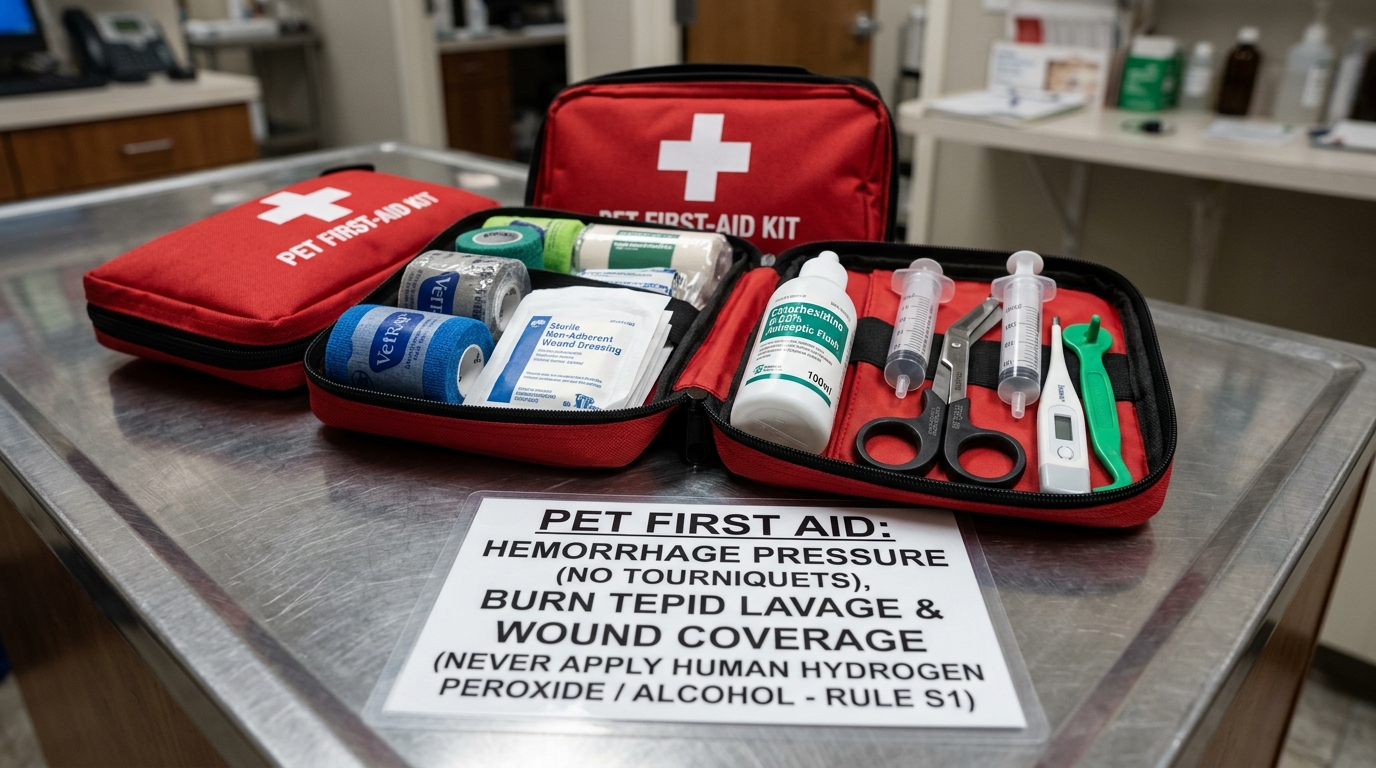
Keep a dedicated, portable, water-resistant container stocked with these veterinary-grade emergency supplies:
| First-Aid Item | Recommended Specification | Clinical Purpose & Proper Use |
|---|---|---|
| Sterile Saline Solution | 0.9% Sodium Chloride flush (squeeze bottle) | Flushing debris and dirt out of eyes and lacerations without burning or destroying granulating tissue. |
| Antiseptic Wound Wash | Chlorhexidine gluconate 0.05% dilute solution | Gentle broad-spectrum antimicrobial irrigation; far safer than alcohol or peroxide. |
| Non-Stick Gauze & Cast Padding | Sterile Telfa pads and cotton roll padding | Primary wound contact layer that absorbs exudate without tearing delicate healing skin upon removal. |
| Cohesive Flexible Bandage | Self-adhering wrap (Vetrap / Coban, 2″ and 4″) | Holds dressings securely without sticking to fur; apply smoothly without excessive tension to avoid ischemia. |
| Direct Pressure Hemostatic Tools | Sterile surgical gauze sponges & styptic powder | Controlling arterial/venous hemorrhage and sealing broken toenails or minor superficial claw lacerations. |
| Diagnostic & Handling Gear | Digital thermometer, blunt scissors, soft muzzle, slip leash | Monitoring core body temperature (normal: 100.0°F–102.5°F) and securing injured pets safely during transport. |
Step-by-Step Triage for Common At-Home Emergencies
Follow these clinical protocols for the most frequent pet trauma presentations:
- 1. Active Bleeding & Cut Paws: Place sterile gauze directly over the bleeding site and apply firm, continuous pressure with your hand for a full 5 minutes. Do not repeatedly lift the gauze to “peek,” as this tears newly formed fibrin clots. If blood soaks through, add more gauze directly on top; never remove the original layer. Bandage snugly with cohesive wrap and travel to the clinic.
- 2. Burns & Thermal Injury: Immediately flush the burned area with cool, running tap water for 10 to 15 minutes. NEVER apply ice, butter, petroleum jelly, or human burn ointments, as ice causes tissue necrosis and grease traps heat deeper within the dermis. Cover loosely with a damp sterile towel.
- 3. Insect Stings & Swelling: Remove stingers by gently scraping with a credit card edge; never squeeze stingers with tweezers, which injects venom. If mild swelling occurs, contact your vet for exact diphenhydramine (Benadryl) dosing (typically 1 mg per pound of body weight, ensuring no decongestants or artificial sweeteners like xylitol). If facial swelling is rapid, travel to an emergency clinic immediately.
- 4. Suspected Fractures & Trauma: Do not attempt to “set” or splint broken bones at home, which causes intense pain and can force sharp bone ends through skin. Gently slide a firm board, ironing board, or folded blanket underneath the pet to act as a stretcher, keeping the spine and limbs as immobilized as possible.
Dangerous First-Aid Mistakes to Avoid
Well-meaning owners frequently cause severe harm by applying human first-aid treatments to animals:
- NEVER Use Hydrogen Peroxide on Wounds: Hydrogen peroxide is cytotoxic; it destroys healthy fibroblasts and white blood cells, causing chemical tissue burns and drastically delaying wound healing. Use only sterile saline or dilute chlorhexidine.
- NEVER Give Human Pain Killers: Acetaminophen (Tylenol), ibuprofen (Advil), and naproxen cause fatal acute liver necrosis and perforated gastric ulcers in pets. Review our complete pet medication safety guide.
- Do Not Wrap Bandages Too Tightly: Wrapping elastic bandages too tight cuts off arterial blood flow, causing limb necrosis and toe swelling within hours. Always verify that two fingers can slip comfortably beneath bandage edges.
When to Contact a Veterinarian Immediately
First aid is intended solely to preserve life while en route to a veterinary hospital. Transport your pet immediately to an emergency clinic if you observe pulsatile arterial bleeding, open chest or abdominal wounds, protruding bone fragments, unconsciousness or seizures, severe eye injuries, burns covering more than five percent of the body, or extreme pain. Call the hospital before arriving so the emergency medical team can prepare an oxygen cage, intravenous catheters, and pain medications.
Clinical Practice Tool: Pet Emergency Kit Checklist
Inventory your home pet first aid kit and emergency wound care supplies with our printable Pet Emergency Kit Checklist. Download and print your copy of the Pet Emergency Kit Checklist, or explore all practical pet care guides in the NewsPet Resource Center.
Frequently Asked Questions
What are the critical steps for stopping active arterial or venous bleeding from a pet’s wound?
Apply firm, direct pressure over the wound using a clean gauze pad or cloth continuously for at least 5 minutes without lifting to check. Never apply a tight tourniquet unless instructed by an emergency clinician.
Can human antiseptic ointments like Neosporin or hydrogen peroxide be applied to pet wounds?
Do not use hydrogen peroxide; it causes oxidative tissue damage that delays healing. Human ointments can cause severe gastrointestinal toxicity if licked off. Flush wounds with sterile saline and seek veterinary care.
What clinical signs indicate that a bleeding laceration requires emergency surgical closure?
Gauze soaking through within minutes, bleeding pulsing synchronously with the heartbeat, wounds deeper than the full thickness of the skin exposing fat or muscle, or wounds located over joints require emergency surgery.
Emergency Triage Matrix: Clinical Presentation & Required Response
| Triage Level | Clinical Signs & Presentation | Immediate Action Protocol |
|---|---|---|
| Tier 1: Immediate Emergency (0–2 Hours) | Arterial pulsatile bleeding, penetrating wounds of the chest or abdomen, open fractures with visible bone, third-degree burns, pet unresponsive or in shock. | Apply immediate sterile pressure dressing; do not remove penetrating objects; transport immediately to surgical emergency facility. |
| Tier 2: Urgent Veterinary Care (2–6 Hours) | Full-thickness lacerations extending through dermis, bite wounds with subcutaneous pocketing, deep paw pad avulsions, continuous venous oozing. | Flush with warm sterile saline, apply temporary protective bandage, and seek veterinary surgical closure within the 6-hour golden period. |
| Tier 3: Home First Aid & Monitoring | Superficial epidermal abrasions, broken toenails with minimal bleeding, mild localized swelling from insect stings without respiratory signs. | Clean gently with dilute chlorhexidine (0.05%) or saline, apply e-collar to prevent licking, and inspect daily for signs of infection. |
Rule S1 Boundaries & Wound Care Contraindications
Inappropriate home treatments frequently compound tissue destruction and introduce resistant pathogens:
- NEVER flush wounds with hydrogen peroxide: Hydrogen peroxide causes microvascular thrombosis and cellular lysis in healthy fibroblasts, severely delaying wound contracture and granulating tissue formation.
- NEVER apply human triple antibiotic creams containing hydrocortisone: Topical corticosteroids suppress local immune responses, promote bacterial colonization, and cause steroid hepatopathy upon ingestion.
- NEVER wrap elastic adhesive bandages tightly: Excessive bandage tension causes tourniquet-like venous occlusion, rapid distal edema, ischemic necrosis, and permanent neurovascular compromise.
- NEVER pull out impaled penetrating objects: Sticks, wire, or glass impaled in tissue often tamponade lacerated vessels; removing them at home triggers uncontrolled internal or external exsanguination.
Caregiver Acute Wound Management Checklist
- Ensure handler safety: use a soft muzzle or towel wrap for painful dogs and cats before attempting wound manipulation.
- Apply direct continuous pressure with clean sterile gauze pads for at least 3 to 5 minutes without peeking.
- Irrigate gross contamination using copious warm sterile 0.9% saline solution (or clean tap water in emergencies).
- Apply an Elizabethan collar immediately to eliminate licking and self-trauma.
- Transport to a veterinary clinic for professional debridement, exploring bite wound tracts, and appropriate systemic analgesia.
Related Clinical Guides & Tools
Peer-Reviewed Clinical References & Evidence Grounding
- PMID: 35775308: Feline Diaphyseal Fractures: Management and treatment options (J Feline Med Surg, 2022) (opens in new tab)
- PMID: 20123486: AAFP-AAHA: feline life stage guidelines (J Feline Med Surg, 2010) (opens in new tab)
- PMID: 23122178: Canine hearing loss management (Vet Clin North Am Small Anim Pract, 2012) (opens in new tab)
- Merck Veterinary Manual — Small Animal Clinical Medicine & Emergency Reference (opens in new tab)
Source transparency
Reference mix for this guide
Source labels classify the institutional category of the references cited above.