
This guide is general education for pet owners. If your pet has urgent symptoms, possible poisoning, injury, breathing trouble, collapse, severe pain, or sudden decline, contact a licensed veterinarian or local emergency service.
Dosages must be calculated by a licensed veterinarian based on species, weight, and bloodwork. Never administer human medications or self-adjust prescription doses for pets.
Editorial standard
How this guide was prepared
A persistent and hazardous myth across feline care is the assumption that strictly indoor cats live in an impenetrable biological bubble, completely immune to parasitic vectors. Because indoor felines never wander outdoors or roam wooded trails, caregivers frequently discontinue veterinary flea, tick, and heartworm preventatives under the mistaken belief that indoor housing guarantees safety. In reality, external parasites exploit numerous entryways into residential homes, posing significant clinical risks to unprotected cats that lack acquired immunity.
Clinical Quick Answer & Immediate Actions
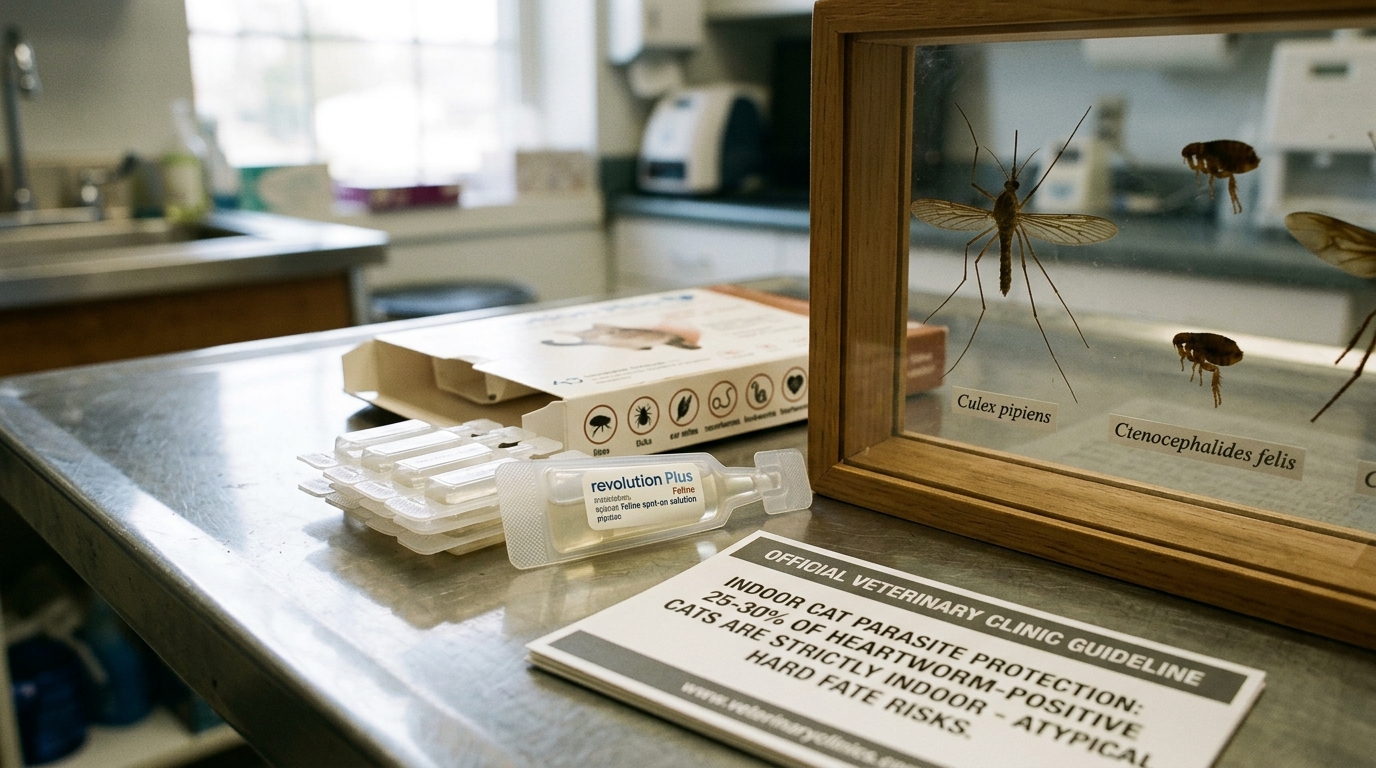
A common and hazardous misconception among cat owners is that strictly indoor cats do not require parasite prevention. Clinical research confirms that over 25 percent of cats diagnosed with heartworm disease are exclusively indoor animals. Mosquitoes easily penetrate window screens and open doors, while fleas hitchhike on human clothing and resident dogs. In cats, heartworm causes Heartworm-Associated Respiratory Disease (HARD) and sudden fatal pulmonary arterial collapse, and there is no approved adulticide treatment. Year-round broad-spectrum preventative therapy is mandatory for all cats.
Vector-borne pathogens do not respect apartment doors or window screens. Mosquitoes carrying heartworm microfilariae enter homes through open doors, window crevices, and ventilation ducts, while fleas and ticks frequently hitchhike indoors on human shoes, clothing, houseplants, or cohabitating canine family members. Understanding how parasites infiltrate home environments allows cat owners to maintain effective, stress-free protection year-round.
How Parasites Infiltrate Strictly Indoor Homes
Veterinary epidemiological research documents multiple pathways through which parasites enter indoor domestic spaces:
- Mosquito Infiltration & Feline Heartworms: Mosquitoes readily slip inside when exterior doors open or enter through fine mesh screens. In cats, as few as one or two adult worms (or even non-maturing larvae) trigger an intense immune response in the pulmonary arteries, resulting in acute respiratory failure.
- The Canine Vector Bridge: In multi-pet households where dogs walk outdoors, dogs frequently carry live fleas, flea eggs, or deer ticks indoors on their coats. Once inside, fleas drop eggs into rugs and furniture, where they hatch and immediately seek feline hosts. Review our dog parasite prevention comparison.
- Human Clothing & Luggage Transport: Unfed fleas and ticks can cling to socks, trousers, shoes, or gardening equipment, hitchhiking into apartment interiors without being noticed.
- Rodent & Urban Wildlife Incursions: Mice, rats, or bats nesting in attics, wall cavities, or crawlspaces introduce fleas, mites, and tapeworm eggs into the living quarters of domestic cats.
Heartworm Associated Respiratory Disease (HARD) in Felines
The pathology of heartworm disease in cats differs fundamentally from canine heartworm infection:
| Clinical Feature | Canine Heartworm Disease | Feline Heartworm Disease (HARD) |
|---|---|---|
| Host Relationship | Natural definitive host; worms mature and reproduce readily (30+ worms common) | Atypical host; low worm burdens (typically 1 to 3 adult worms), but severe tissue reaction |
| Primary Pathology | Right-sided heart failure, exercise intolerance, pulmonary hypertension | Acute vascular and airway inflammation; severe asthma-like respiratory crisis (HARD) |
| Curative Adulticide Treatment | Melarsomine dihydrochloride deep intramuscular injections kill adult worms | NO approved adulticide drug exists; melarsomine is fatal to cats due to acute pulmonary embolism |
| Primary Clinical Outcome | Chronic cough, ascites, gradual physical decline over months | Severe coughing, acute dyspnea, or sudden acute collapse with zero prior symptoms |
Safe Feline Preventatives vs. Lethal Canine Medications
Selecting and applying parasite preventatives to felines requires strict adherence to species safety boundaries:
- Monthly Topical Formulations: Modern veterinary topicals (such as selamectin, moxidectin, or fluralaner) combine flea, mite, nematode, and heartworm protection in a single skin application placed at the base of the skull where the cat cannot lick it off.
- FATAL TOXICITY WARNING: Canine Permethrin Products: NEVER apply a dog flea product to a cat. Canine topicals frequently contain high concentrations of synthetic pyrethroids (permethrin, 45–65%), which cats cannot metabolize due to deficient hepatic glucuronidation enzymes. Permethrin exposure in cats causes violent tremors, hyperthermia, seizures, and death within hours without emergency decontamination.
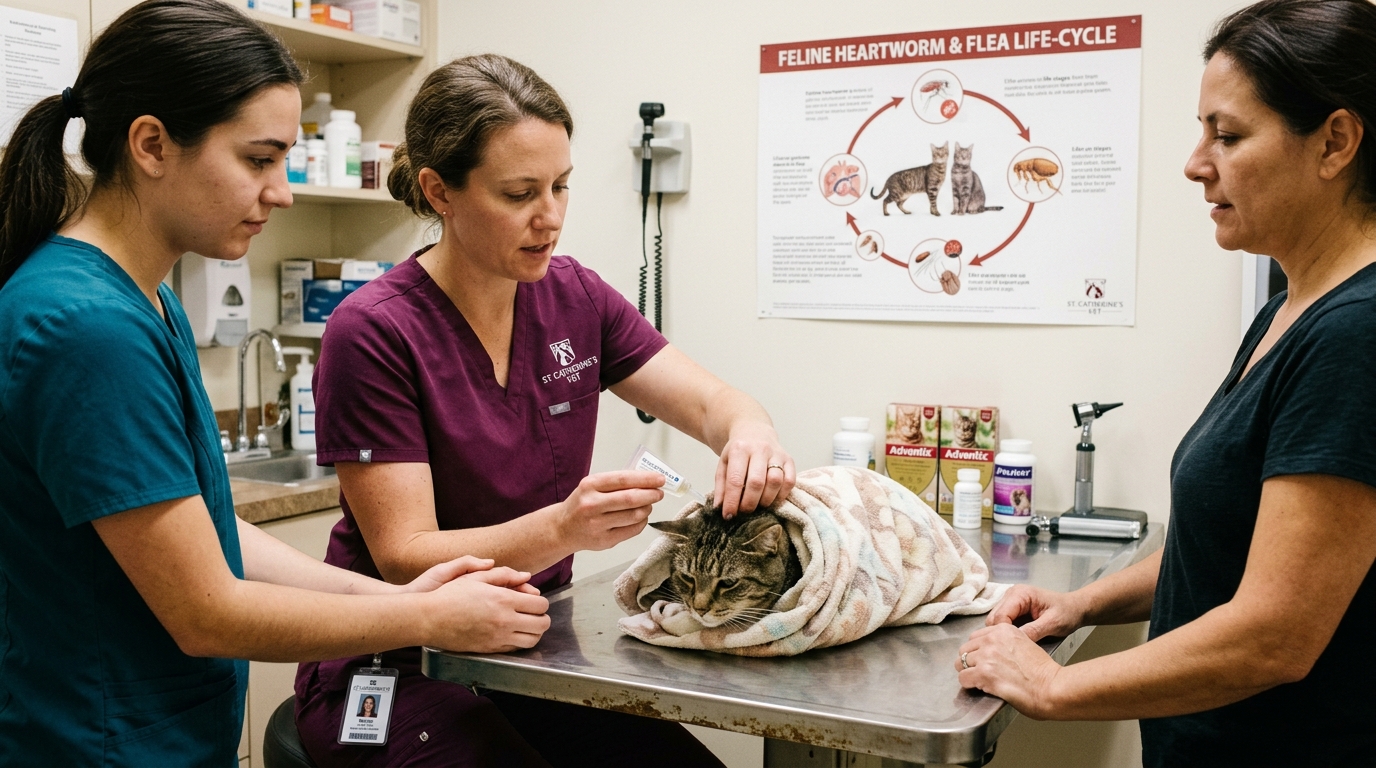
- Stress-Free Application Technique: Apply topical liquids while your cat is relaxed or distracted with a high-value lickable treat. Part the fur completely until bare skin is visible between the shoulder blades and dispense the tube directly onto the skin. Download our printable Daily Pet Care Routine Tracker to record dosing dates.
Feline Tapeworms & Flea Ingestion Risks
Many cat owners are shocked to discover tapeworm segments on their strictly indoor feline. Understanding the biological life cycle explains how easily indoor cats become infested:
- The Flea-Tapeworm Connection: The common flea tapeworm (Dipylidium caninum) requires a flea intermediate host. Immature flea larvae in carpets swallow tapeworm eggs. When an adult cat grooms a single hitchhiking flea from its fur and swallows it, the tapeworm cysticercoid hatches inside the feline small intestine.
- Invisible in Standard Fecal Tests: Tapeworm eggs are released in packets inside mobile proglottids rather than distributed evenly throughout feces, meaning standard fecal flotation tests frequently return false-negative results. Owners typically spot tiny white segments resembling moving grains of rice or dried sesame seeds around the anus or on sleeping bedding.
- Dormant Environmental Flea Pupae: Flea pupae within household carpets and floorboards can remain dormant in protective cocoons for up to 6 to 12 months, hatching when indoor temperatures rise or when carbon dioxide and footsteps indicate a host is near.
When to Contact a Veterinarian Immediately
If your cat exhibits acute breathing distress, open-mouth panting, severe coughing spells, sudden weakness, or vomiting, transport them immediately to an emergency veterinary clinic. If a cat has been accidentally exposed to a canine flea and tick product containing permethrin, do not wait for symptoms; wrap the cat in a towel and travel immediately to the nearest veterinary emergency hospital for intravenous lipid emulsion and anticonvulsant therapy.
Clinical Practice Tool: Pet Medication Log
Maintain year-round indoor feline heartworm and flea protection with our free printable Pet Medication Log. Download and print your copy of the Pet Medication Log, or explore all practical pet care guides in the NewsPet Resource Center.
Frequently Asked Questions
Why do indoor-only cats need heartworm prevention if they never leave the apartment?
Heartworms are transmitted by mosquitoes, which easily enter homes through opened doors, window screens, or ventilation corridors. Feline heartworm disease causes acute respiratory distress and has no safe approved medical cure.
How do indoor cats acquire flea infestations without going outside?
Fleas can enter on human shoes and clothing, hitchhike on visiting dogs, or migrate through apartment wall voids and shared hallways from adjacent infested residences.
What is the safest frequency for administering feline parasite preventives?
Apply vet-prescribed broad-spectrum topical spot-ons every 30 days year-round, ensuring protection against fleas, heartworms, ear mites, roundworms, and hookworms.
Emergency Triage Matrix: Clinical Presentation & Required Response
| Triage Level | Clinical Signs & Presentation | Immediate Action Protocol |
|---|---|---|
| Tier 1: Immediate Emergency (0–2 Hours) | Acute respiratory distress: open-mouth breathing, panting, cyanotic (blue/grey) mucous membranes, acute collapse, or sudden death in a cat with suspected heartworm exposure (acute HARD crisis). | Immediate emergency veterinary transport in an oxygen chamber; strict minimal handling, injectable dexamethasone, bronchodilators, and cage rest. |
| Tier 2: Urgent Veterinary Care (Same-Day) | Chronic intermittent coughing resembling hairball hacking, vomiting unrelated to food, unexplained weight loss, or intense miliary dermatitis from flea infestation. | Urgent veterinary clinical examination; feline heartworm antibody/antigen testing, thoracic radiography to evaluate pulmonary arterial tortuosity, and prescription topical parasiticide. |
| Tier 3: Home Monitoring & Scheduled Care | Healthy indoor cat with no respiratory symptoms, normal appetite, and zero fleas, receiving routine monthly preventative updates. | Apply veterinarian-prescribed feline spot-on medication monthly, maintain window screens, and schedule annual wellness antibody screening. |
Rule S1 Boundaries & Feline Parasiticide Precautions
Protecting indoor cats requires strict adherence to pharmacological boundaries:
- NEVER use canine heartworm or flea products on a cat: Dog formulations contain lethal permethrin levels or active ingredient concentrations that trigger fatal feline neurological seizures, coma, and respiratory failure.
- NEVER attempt to treat feline heartworm disease with melarsomine: The canine arsenic-based adulticide melarsomine is directly lethal in cats; dying heartworms cause catastrophic pulmonary embolism and fatal anaphylaxis in feline vasculature.
- NEVER assume indoor housing provides an absolute barrier to mosquito vectors: Mosquitoes routinely enter residential homes through door entries and exhaust vents; a single infective bite transmitting 1 to 2 larvae can cause fatal feline disease.
- NEVER use over-the-counter grocery store flea collars on cats: Generic collars contain toxic organophosphates and carbamates that cause contact dermatitis, salivation, miosis, and systemic organophosphate toxicity.
Caregiver Indoor Feline Parasite Prevention Checklist
- Consult your veterinarian for a broad-spectrum topical spot-on approved for felines that covers heartworms, fleas, ticks, ear mites, and intestinal parasites.
- Apply the topical medication directly onto the skin at the base of the skull (nape of neck) where the cat cannot groom or ingest it.
- Keep all window screens securely latched and repair mesh tears promptly to restrict mosquito and insect ingress.
- Treat all household dogs concurrently to prevent canine companions from importing fleas and tick vectors into the indoor cat’s environment.
- Record preventative administration dates on a calendar or smartphone reminder to ensure zero monthly coverage gaps.
Related Clinical Guides & Tools
Peer-Reviewed Clinical References & Evidence Grounding
- NCBI PubMed (PMID: 2014621) — Control of ticks (Vet Clin North Am Small Anim Pract, 1991) (opens in new tab) (Peer-reviewed veterinary clinical study indexed in NCBI PubMed (Vet Clin North Am Small Anim Pract, 1991).)
- NCBI PubMed (PMID: 29143687) — Prevalence and epidemiology of canine and feline heartworm infection in Taiwan (Parasit Vectors, 2017) (opens in new tab) (Peer-reviewed veterinary clinical study indexed in NCBI PubMed (Parasit Vectors, 2017).)
- NCBI PubMed (PMID: 32041155) — Uncontrolled Outdoor Access for Cats: An Assessment of Risks and Benefits (Animals (Basel), 2020) (opens in new tab) (Peer-reviewed veterinary clinical study indexed in NCBI PubMed (Animals (Basel), 2020).)
- Companion Animal Parasite Council (CAPC): Year-Round Feline Parasite Control Guidelines (opens in new tab) (Verified clinical reference retrieved via Antigravity Ground-Truth Search (capcvet.org).)
Source transparency
Reference mix for this guide
Source labels classify the institutional category of the references cited above.