This guide is general education for pet owners. If your pet has urgent symptoms, possible poisoning, injury, breathing trouble, collapse, severe pain, or sudden decline, contact a licensed veterinarian or local emergency service.
Dosages must be calculated by a licensed veterinarian based on species, weight, and bloodwork. Never administer human medications or self-adjust prescription doses for pets.
Editorial standard
How this guide was prepared
When a dog or cat snaps at a honeybee, yellowjacket wasp, fire ant, or receives an immunogenic biological exposure, Type I IgE-mediated mast-cell degranulation can follow two vastly different clinical pathways within 5 to 30 minutes: localized cutaneous urticaria/angioedema (a puffy swollen muzzle and hives with bright energy) OR fulminant, life-threatening systemic anaphylactic shock. Crucially, caregivers often miss early canine anaphylactic shock because they look for human symptoms (wheezing and puffy lips). In dogs, the primary shock organ is NOT the lungs—it is the liver and splanchnic portal vein. A dog that is stung by a bee and suddenly vomits, passes explosive diarrhea, and collapses with pale gums and a flat quiet face within 10 minutes is in critical hepatic anaphylactic shock.
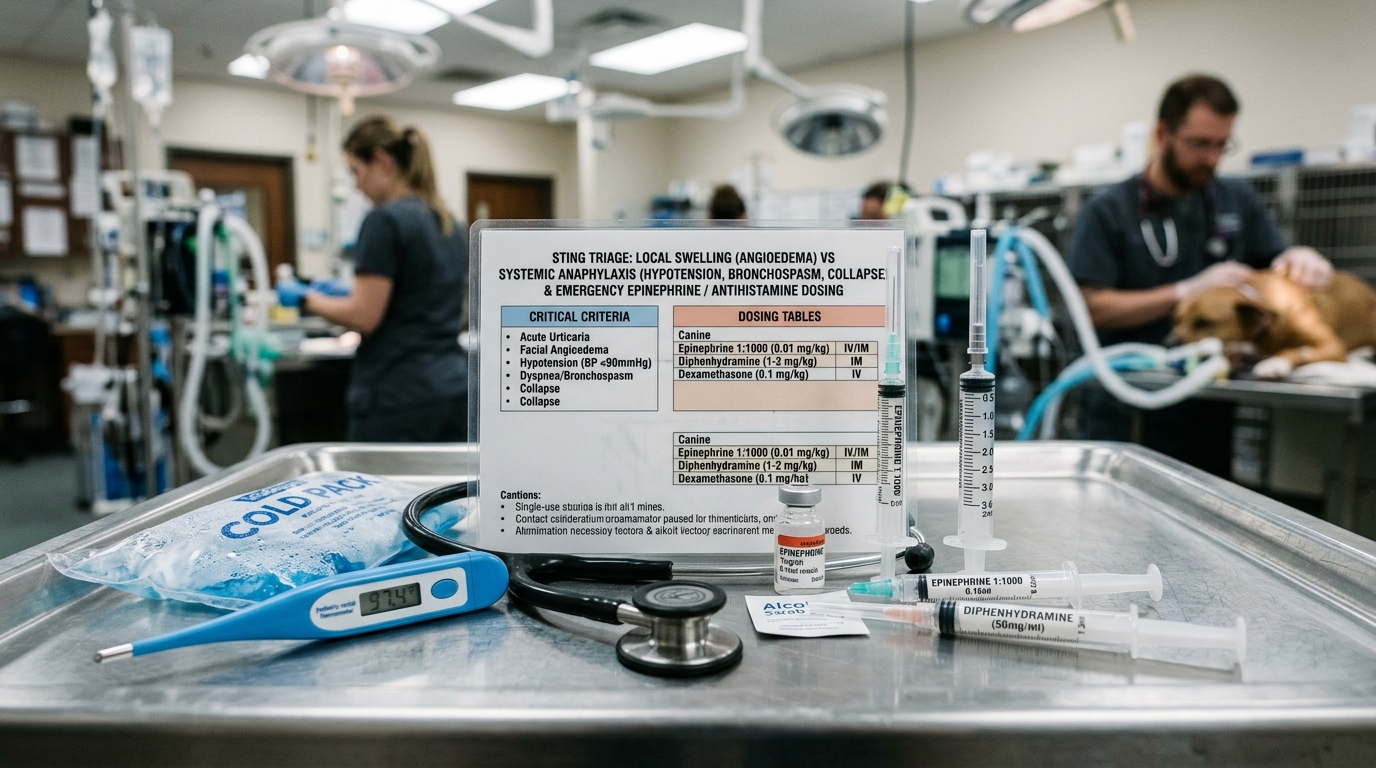
Clinical Quick Answer & Immediate Stabilization Protocol
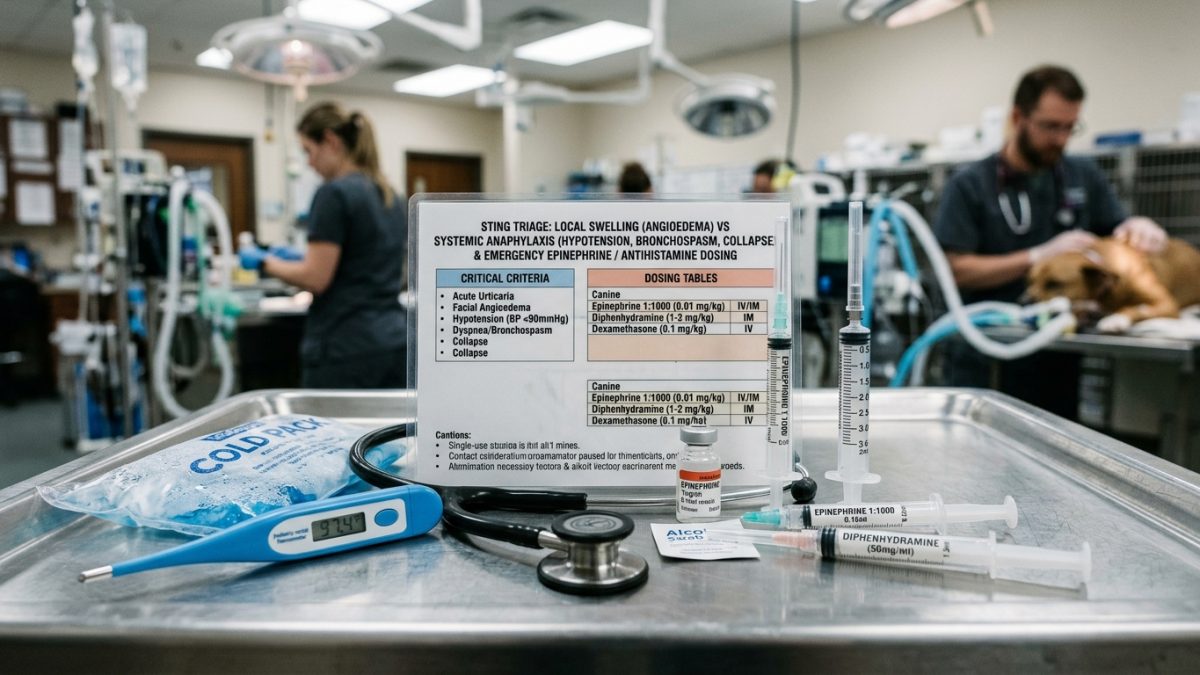
Primary Clinical Directive for Systemic Type I IgE Anaphylactic Shock & Cutaneous Facial Angioedema: Immediately separate systemic anaphylaxis from simple facial hives: (1) Tier 1 Systemic Anaphylactic Shock (sudden vomiting, diarrhea—often bloody, collapse, pale gums, cold legs, weak rapid pulse, or open-mouth breathing in cats within 5–30 minutes of a sting—often WITH ZERO FACIAL SWELLING) requires immediate emergency veterinary transport for intramuscular epinephrine and shock fluids; whereas (2) Tier 2 Cutaneous Angioedema / Urticaria (swollen puffy muzzle, swollen eyelids, raised bumpy skin wheals/hives, intense itching, but normal pink gums, normal breathing, and zero vomiting/collapse) requires scraping out any barbed honeybee stinger with a rigid credit card and prompt same-day veterinary parenteral antihistamine/dexamethasone stabilization.
Species-Specific Shock Organs (Canine Hepatic Veins vs. Feline Lungs) & The Ultrasound Gallbladder Halo Sign
When allergen cross-linking of IgE antibodies on sensitized mast cells and basophils triggers massive release of histamine, heparin, tryptase, leukotrienes, and prostaglandin D2, the hemodynamic crash targets distinct anatomical “shock organs” depending on species. In the domestic dog, the smooth muscle lining the hepatic veins and caval outflow tracts contains a dense concentration of H1 histamine receptors. Acute histamine binding causes violent constriction of the hepatic venous sphincters, trapping up to 60 to 70 percent of the dog’s circulating blood volume inside the liver and splanchnic intestinal capillary bed within minutes. Because venous return to the right heart plummets, cardiac output collapses while massive portal hypertension forces plasma and erythrocytes across the intestinal mucosa (causing peracute vomiting and hemorrhagic diarrhea) and distends the lymphatic vessels of the gallbladder wall.
On rapid point-of-care abdominal ultrasound (AFAST), this acute hepatic venous congestion produces a pathognomonic striation of subserosal gallbladder wall edema known as the “Gallbladder Halo Sign” (double-layered hypoechoic/echogenic gallbladder wall >3 mm thick), accompanied by markedly elevated serum alanine aminotransferase (ALT often spikes >500–2,000 U/L within hours due to hypoxic hepatocyte permeability). In the domestic cat, by contrast, the primary shock organ is the pulmonary vasculature and bronchial tree: feline anaphylaxis manifests with acute bronchoconstriction, pulmonary edema, laryngeal edema, severe dyspnea, and hemoconcentration alongside gastrointestinal vomiting.
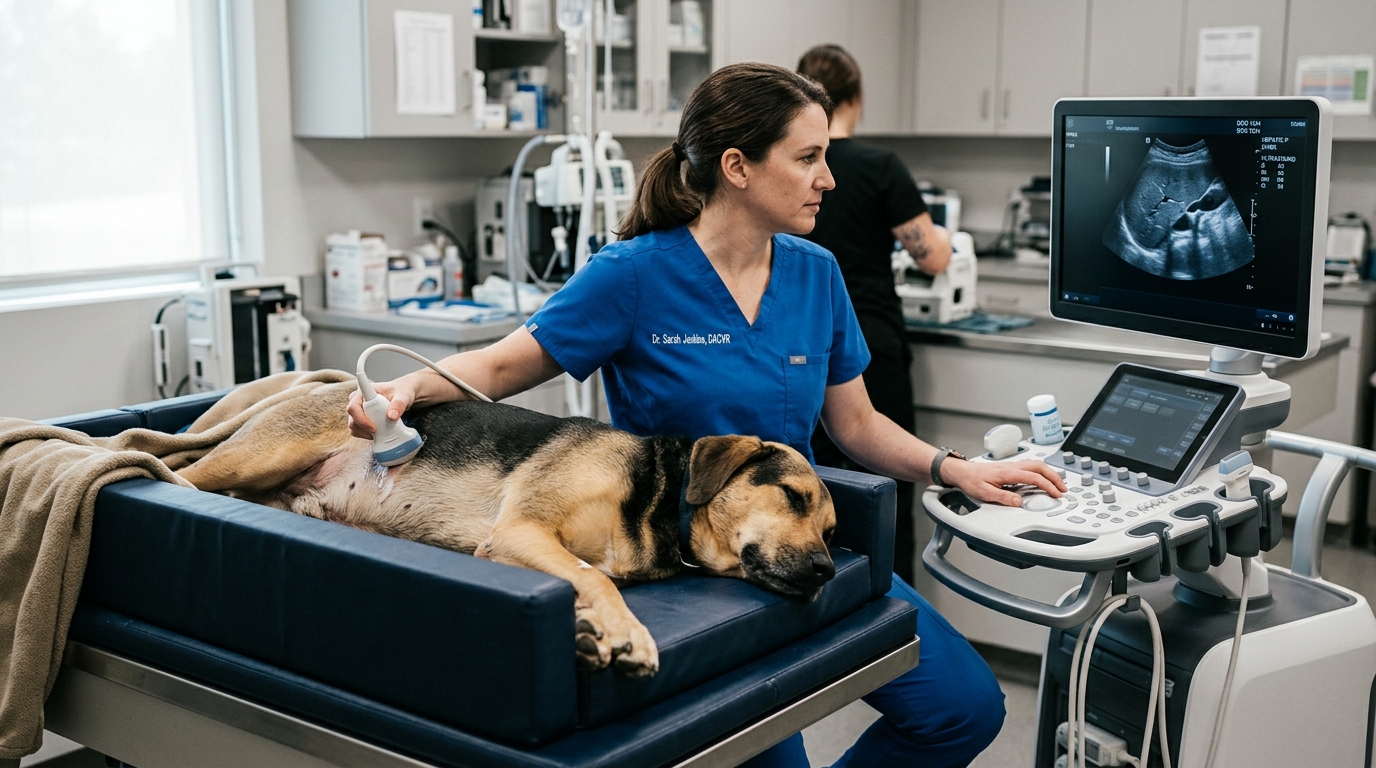
- Why Anaphylactic Dogs Often Have a Normal, Unswollen Face: Up to 50% of dogs presenting in lethal hepatic anaphylactic shock after a hymenoptera sting show zero facial swelling or skin hives; sudden vomiting + collapse after being in the yard is anaphylaxis until proven otherwise.
- Credit-Card Stinger Scraping vs. Tweezer Squeezing: Unlike wasps and hornets (which have smooth stingers and sting repeatedly), the worker honeybee leaves behind a barbed stinger attached to a pulsating venom sac that continues pumping melittin and phospholipase A2 into the skin for 60–90 seconds; pinching the stinger with tweezers squeezes the venom sac into the dog, whereas scraping sideways with a rigid credit card flicks it out intact.
- Biphasic Anaphylaxis Recurrence Window (4–24 Hours): Even after initial epinephrine resuscitation resolves shock, a second wave of leukotriene- and cytokine-driven biphasic anaphylaxis can recur 4 to 24 hours later, mandating 12-to-24-hour ICU hospitalization.
- Hemorrhagic Gastroenteritis (AHDS) Differential: Because canine anaphylaxis causes hemoconcentration (PCV >55–60%) and bloody diarrhea, AFAST ultrasound screening for the gallbladder halo sign and elevated ALT rapidly differentiates anaphylaxis from idiopathic AHDS.
Emergency Triage Matrix: Clinical Presentation & Required Response
| Triage Level | Clinical Signs & Presentation | Immediate Action Protocol |
|---|---|---|
| Tier 1: Systemic Anaphylactic Shock or Airway Stridor (0–15 Minutes) | Sudden vomiting, defecation/bloody diarrhea, collapse or extreme weakness, pale/white gums, racing weak pulse, noisy stridor/wheezing, or open-mouth breathing within 5–60 minutes of a sting or outdoor exposure. | Do not waste time looking for the stinger or giving oral pills; load the pet immediately into the car and drive straight to the nearest veterinary clinic while phoning ahead so the crash cart (epinephrine + IV fluid boluses + oxygen) is waiting at the door. |
| Tier 2: Cutaneous Facial Angioedema & Generalized Hives (1–2 Hours) | Puffy swollen muzzle (“hippo face”), swollen eyelids shutting the eyes, raised circular skin bumps (urticaria/hives) lifting tufts of hair across the back, and pawing at the face—with normal energy, pink gums, and ZERO vomiting or weakness. | Scrape out any visible stinger with a credit card edge, apply a cool damp washcloth to the swollen muzzle, and transport to a veterinarian for injectable diphenhydramine and short-acting dexamethasone to prevent progression to laryngeal edema. |
| Tier 3: Localized Single-Paw Sting Without Systemic or Facial Signs | Pet licks or holds up one paw after stepping on a bee; mild localized 1-cm redness at the pad with normal face, normal breathing, normal energy, and zero GI signs after 60 minutes. | Scrape out the stinger with a card edge, apply a cool compress wrapped in a cloth for 10 minutes, monitor closely for 4 hours for any vomiting or facial puffiness, and consult your vet before giving any oral medication. |
Epinephrine Physiological Antagonism, AFAST Gallbladder Halo Imaging & Post-Reaction Prevention
In systemic anaphylactic shock, epinephrine (adrenaline) is the only first-line drug of choice because it acts as a complete physiological antagonist to mast-cell degranulation: its alpha-1 adrenergic activity constricts dilated peripheral capacitance vessels and reverses laryngeal mucosal edema; its beta-1 activity restores myocardial inotropy; and its beta-2 activity relaxes bronchospasm, relieves hepatic venous sphincter constriction, and stabilizes mast-cell membranes via cyclic AMP elevation to halt further histamine release. Antihistamines (H1 blockers like diphenhydramine and H2 blockers like famotidine) and glucocorticoids (dexamethasone) are essential secondary adjuncts to prevent late-phase recurrence, but glucocorticoids require 4 to 6 hours to alter gene transcription and never replace epinephrine in acute shock.
Simultaneously, because hepatic venous pooling sequesters massive intravascular volume, anaphylactic dogs require rapid intravenous isotonic crystalloid fluid resuscitation (often titrated in sequential weight-scaled shock boluses up to full blood-volume replacement) to restore right-ventricular preload, paired with serial monitoring for coagulopathy if severe hemorrhagic enteritis develops.
- Why Human OTC Multi-Symptom Allergy Pills Are Lethal to Pets: Never give a dog or cat an allergy tablet labeled “D” (e.g., Benadryl-D, Claritin-D, Zyrtec-D) or liquid children’s allergy syrup without veterinary verification; the “-D” indicates pseudoephedrine/phenylephrine (which causes fatal canine/feline hypertension, hyperthermia, and seizures), while many sugar-free liquid syrups contain xylitol.
- Vaccine-Associated Reaction Protocol: If a dog or cat ever experienced facial hives or vomiting after a prior vaccination, always inform your veterinarian before future boosters so the pet can be pre-medicated with parenteral diphenhydramine 20–30 minutes pre-vaccine and observed in the clinic for 60 minutes afterward.
- Canine EpiPen Prescriptions for Prior Anaphylaxis Survivors: For dogs that survive confirmed hymenoptera anaphylactic shock, ask your veterinarian about prescribing weight-matched epinephrine auto-injectors (EpiPen / EpiPen Jr) or pre-measured emergency syringes for field hikes.
- ALT Liver Enzyme Spike Normalization: Although serum ALT frequently spikes >1,000 U/L during acute canine anaphylaxis due to hepatic congestion, hepatocellular function typically recovers completely within 2 to 3 weeks once perfusion is restored.
Strict Rule S1 Clinical Red Flags: Systemic Type I IgE Anaphylactic Shock & Cutaneous Facial Angioedema
Critical safety boundaries for Canine & Feline (Canis lupus familiaris & Felis catus — All Breeds & Life Stages) caregivers:
- Zero Reliance on Oral Benadryl Tablets During Collapse or Vomiting: Never attempt to shove an oral diphenhydramine pill down the throat of a vomiting, collapsing, or gasping dog or cat; oral pills cause aspiration and fail to stop acute hepatic/pulmonary anaphylactic shock.
- Zero Decongestant “-D” Allergy Formulations (Pseudoephedrine / Phenylephrine): Never administer human sinus/allergy combination pills containing pseudoephedrine or phenylephrine; even a single human tablet causes life-threatening sympathomimetic toxicosis in small dogs and cats.
Clinical Preparation & Biosecurity Action Checklist
- Memorize the non-classic triad of canine anaphylactic shock: Bee/Outdoor exposure + Sudden Vomiting/Diarrhea + Collapse/Pale gums (even if the face is not swollen).
- Keep a rigid plastic card in your wallet or hiking pack to scrape barbed honeybee stingers sideways off the skin without squeezing the attached venom sac.
- Remove fallen rotting fruit, uncovered compost, and flowering clover patches directly adjacent to dog potty areas where yellowjackets and ground bees nest.
- Remain inside your veterinary clinic lobby for 30 to 45 minutes after any vaccination if your pet is a toy breed (Dachshund, Pug, French Bulldog, Chihuahua) or has any history of allergic sensitivity.
Related Clinical Guides & Triage Protocols
Peer-Reviewed Clinical References & Evidence Grounding
- Quantification of the ultrasound gallbladder halo sign and serum alanine aminotransferase elevation as diagnostic markers of canine anaphylaxis (opens in new tab) (Journal of Veterinary Emergency and Critical Care (2009) — Landmark clinical study by Quantz, Miles, Reed & White indexed on NCBI PubMed (PMID: 19827989).)
- Anaphylaxis in small animals: species-specific shock organs, hemodynamic collapse, and epinephrine resuscitation (opens in new tab) (Journal of Veterinary Emergency and Critical Care (2011) — Peer-reviewed critical care review by Shmuel & Cortes indexed on NCBI PubMed (PMID: 21418315).)
- AAHA Canine Vaccination Guidelines: Recognition and Emergency Management of Type I Hypersensitivity and Anaphylactic Reactions (opens in new tab) (American Animal Hospital Association clinical emergency protocol for acute hypersensitivity.)
- Merck Veterinary Manual: Type I Hypersensitivity (Anaphylaxis and Urticaria) in Dogs and Cats (opens in new tab) (Verified veterinary reference on canine hepatic venous pooling vs feline pulmonary anaphylaxis.)
Source transparency
Reference mix for this guide
Source labels classify the institutional category of the references cited above.