This guide is general education for pet owners. If your pet has urgent symptoms, possible poisoning, injury, breathing trouble, collapse, severe pain, or sudden decline, contact a licensed veterinarian or local emergency service.
Dosages must be calculated by a licensed veterinarian based on species, weight, and bloodwork. Never administer human medications or self-adjust prescription doses for pets.
Editorial standard
How this guide was prepared
Across North America and globally, over 150,000 companion dogs and cats suffer venomous snakebites annually. In North America, 98 percent of envenomations are inflicted by Crotalinae pit vipers (rattlesnakes, copperheads, and cottonmouth water moccasins), whose complex enzymatic venoms contain zinc metalloproteinases, phospholipase A2, and thrombin-like serine proteases that digest capillary endothelium, lyse erythrocytes, and consume blood clotting factors. The remaining 1 to 2 percent involve Elapidae coral snakes (and neurotoxic Mojave or timber rattlesnake populations), whose post-synaptic alpha-neurotoxins block nicotinic acetylcholine receptors at the neuromuscular junction, producing ascending flaccid paralysis and respiratory arrest up to 12 to 18 hours after a seemingly painless bite.
Clinical Quick Answer & Immediate Stabilization Protocol
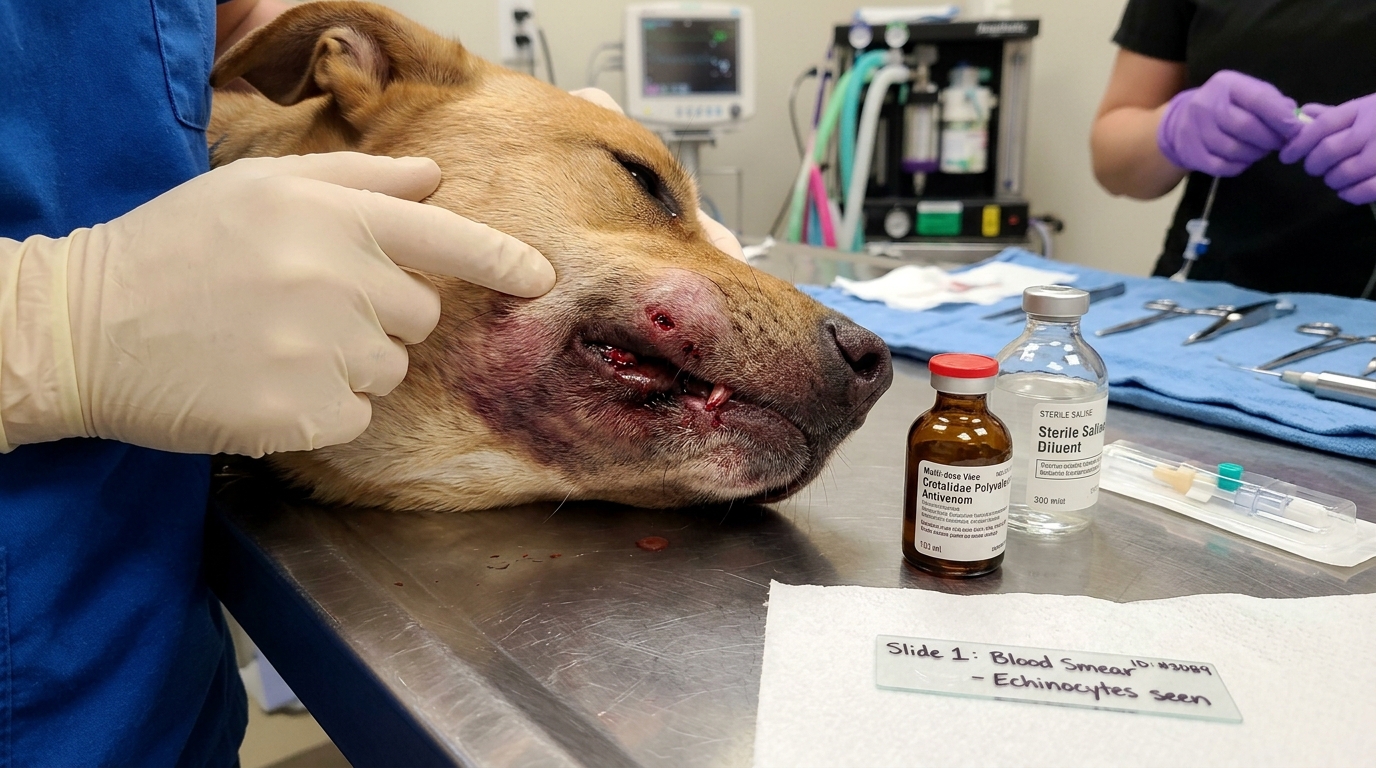
Primary Clinical Directive for Crotalid (Pit Viper) Hemotoxic & Elapid (Coral Snake) Neurotoxic Envenomation: Treat every suspected snakebite as an immediate Tier 1 hospital emergency, even if the bite initially shows minimal swelling (“dry bite” vs. delayed neurotoxic envenomation). Keep the pet calm, carry the pet (if safe to lift without being bitten due to pain) to limit lymphatic venom circulation, keep the bitten limb at or slightly below heart level without constricting wraps, photograph the snake from a safe distance (>10 feet) ONLY if immediately visible without attempting to catch or kill it, and transport directly to an emergency veterinary ICU for baseline blood smears (echinocyte check), coagulation profiling (PT/aPTT/platelets), intravenous opioids, and specific antivenom therapy.
Crotalid Metalloproteinase Coagulopathy, Echinocytosis & Elapid Nicotinic Neuromuscular Blockade
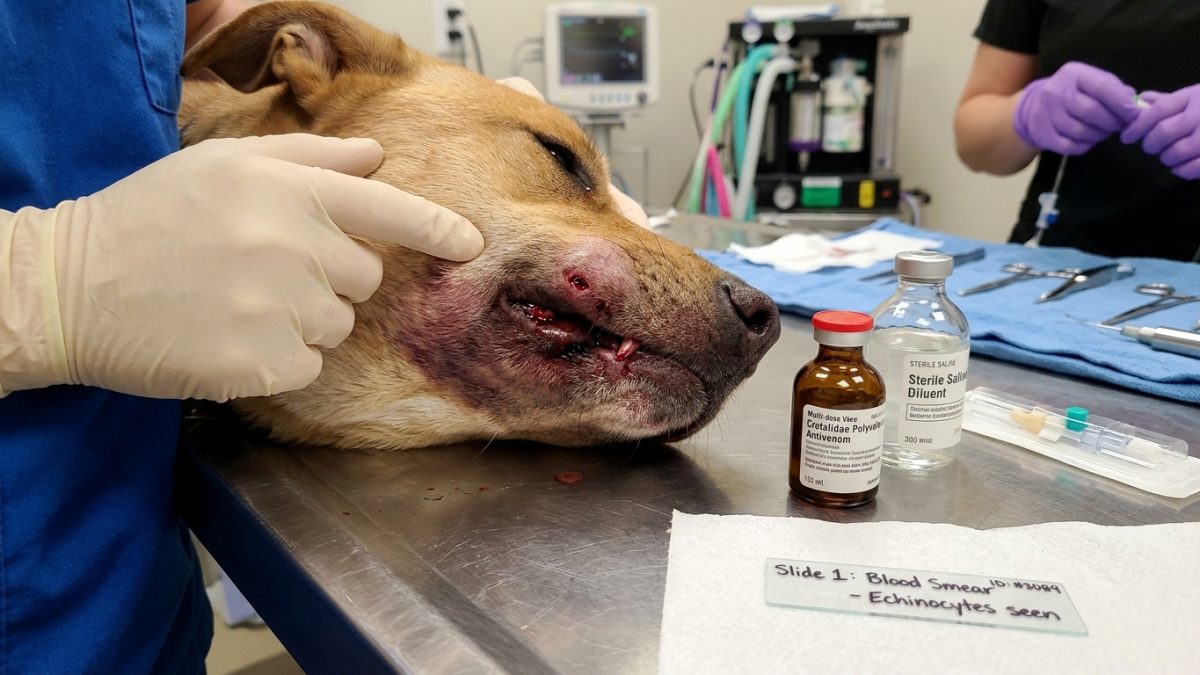
Because curious dogs explore brush piles nose-first while cats bat at moving prey with their forepaws, over 75 percent of canine snakebites occur on the muzzle, lips, face, or forelimbs, whereas feline bites predominate on the distal forelimbs and thorax. Following a crotalid pit-viper strike, local hyaluronidase and zinc-dependent hemorrhagic metalloproteinases cleave basement membrane type-IV collagen within minutes. Protein-rich plasma and red blood cells extravasate massively into the subcutaneous tissue (“third-spacing”), producing tense, painful, ecchymotic purple edema that exudes serosanguinous fluid from the paired (or single) fang punctures. Systemically, venom phospholipase A2 alters erythrocyte lipid membranes within 15 to 30 minutes, transforming normal biconcave red blood cells into spiculated, burred “echinocytes” (Type III echinocytosis) visible on a rapid cage-side blood smear.
Concurrently, thrombin-like venom enzymes cleave fibrinogen into unstable fibrin split products without cross-linking Factor XIII, inducing venom-induced consumptive coagulopathy (VICC), profound thrombocytopenia, hypovolemic/distributive shock, and myoglobinuric acute kidney injury. In stark contrast, coral snake (Micrurus fulvius/tener) and neurotoxic Mojave rattlesnake (Crotalus scutulatus Type A) venoms cause virtually zero local swelling; their low-molecular-weight alpha-neurotoxins bind competitively and semi-irreversibly to skeletal muscle nicotinic acetylcholine receptors, causing progressive lower motor neuron tetraparesis, megaesophagus, loss of gag reflex, and diaphragmatic asphyxiation 6 to 18 hours post-bite.
- Why Benadryl Does Not Neutralize Snake Venom: Snake venom damages tissue via enzymatic proteolysis and coagulopathy, not histamine-mediated allergy; giving home antihistamines wastes the critical 4-hour golden window when antivenom most effectively prevents tissue sloughing.
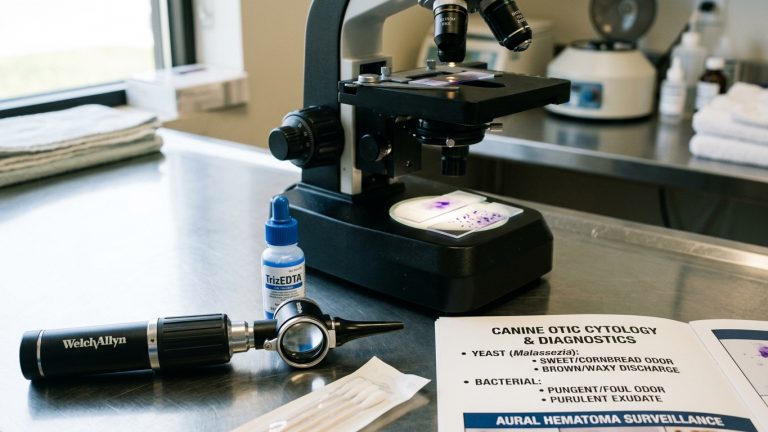
- Echinocytes on Peripheral Blood Smear: Detecting >10–20% spiculated echinocytes on a stained blood film within 1 hour of presentation confirms systemic envenomation (as opposed to a non-envenomating “dry strike”), though echinocytes frequently resolve back to normal morphology after 24–48 hours.
- Muzzle Bite Airway Risk vs. Myth: While massive facial and submandibular swelling from a muzzle bite looks alarming, true laryngeal obstruction is uncommon unless the bite penetrates the intraoral pharynx or dorsal tongue base directly—nonetheless, continuous hospital airway monitoring is mandatory.
- The Rattlesnake Vaccine Caveat: Dogs vaccinated with the Crotalus atrox toxoid vaccine STILL require immediate emergency veterinary evaluation and antivenom therapy; the vaccine does not cross-protect against Mojave neurotoxin, water moccasins, or coral snakes, and only aims to delay peak toxin kinetics.
Emergency Triage Matrix: Clinical Presentation & Required Response
| Triage Level | Clinical Signs & Presentation | Immediate Action Protocol |
|---|---|---|
| Tier 1: Peracute Envenomation / Coagulopathy / Neurotoxic Paralysis (0–30 Mins) | Rapidly expanding dark purple/red swelling on muzzle or limb, oozing blood from fang punctures, pale gums, collapse, vomiting, or subtle hindlimb weakness/voice change after potential coral/Mojave snake contact. | Carry the pet to the car, call the emergency veterinary hospital ahead so staff can begin reconstituting polyvalent crotalid or coral snake antivenom, and initiate IV crystalloid resuscitation, pure-mu opioid analgesia (fentanyl/hydromorphone), and antivenom infusion. |
| Tier 2: Suspected “Dry Bite” or Unwitnessed Brush Yelp (1–2 Hours) | Dog yelped while sniffing tall grass or rocks and has two small puncture dots with minimal initial swelling and normal energy. | Do not observe at home; up to 25% of venomous strikes are dry bites, but neurotoxic venoms and delayed coagulopathies show zero early swelling—hospitalize for a minimum 8-to-12-hour serial blood smear, platelet, and PT/aPTT monitoring protocol. |
| Tier 3: Post-Discharge Tissue Necrosis & Delayed Serum Sickness Watch | Stabilized snakebite survivor discharged 24–72 hours post-antivenom with receding edema. | Monitor the bite site daily for dermal necrosis/eschar sloughing, prevent licking with an E-collar, and watch for fever, joint stiffness, or hives 5–14 days post-discharge (type III hypersensitivity serum sickness). |
Serial Coagulation Profiling, Polyvalent Antivenom Infusion & Strict First-Aid Contraindications
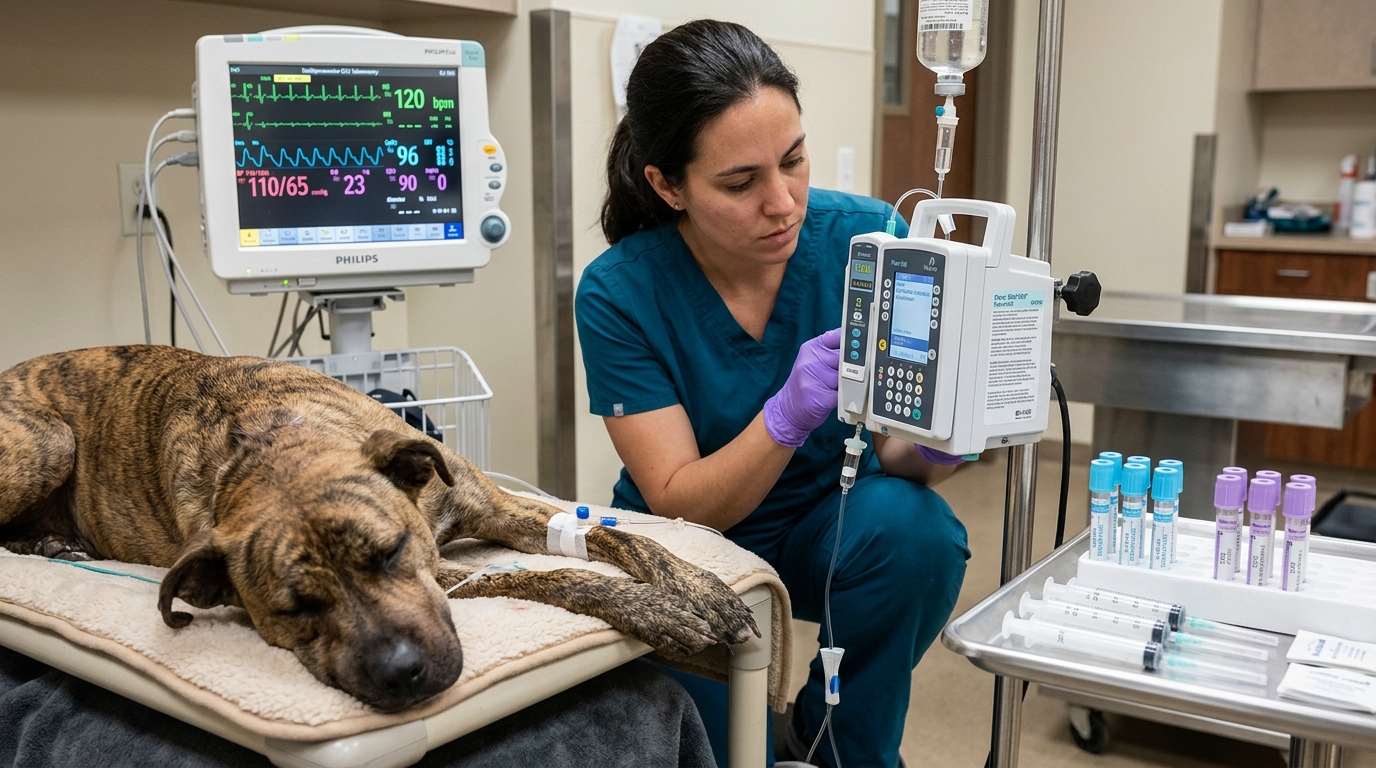
Upon emergency hospital admission, the veterinary team draws baseline blood samples before fluid dilution to evaluate Packed Cell Volume/Total Solids, platelet count, a fresh blood smear for echinocytes, prothrombin time (PT), activated partial thromboplastin time (aPTT), fibrinogen, and serum creatine kinase (CK) plus renal values. The advancing margin of swelling around the bite is marked on the skin with an indelible surgical skin marker and re-measured every 30 to 60 minutes to objectively track tissue progression.
Definitive treatment of moderate-to-severe crotalid envenomation is intravenous administration of equine- or ovine-derived polyvalent Crotalidae antivenom (such as Antivenin Crotalidae Polyvalent, CroFab Fab fragments, or F(ab’)2 antivenom), which binds and neutralizes circulating free venom toxins. While antivenom achieves maximum efficacy when infused within the first 4 to 6 hours post-bite, it remains clinically beneficial 12 to 24+ hours later to reverse persistent venom-induced coagulopathy. Pain management must rely strictly on pure-mu opioids (fentanyl, methadone, or hydromorphone); NSAIDs are strictly contraindicated due to severe thrombocytopenia, coagulopathy, and renal hypoperfusion.
- Why Tourniquets and Ice Packs Cause Amputation: Tying a tourniquet or packing ice around a bitten leg traps concentrated proteolytic metalloproteinases inside a hypoxic tissue compartment, virtually guaranteeing full-thickness gangrenous necrosis and limb amputation—and releasing the tourniquet floods the heart with hyperkalemic, acidic cellular debris.
- Why “Cut-and-Suck” Kits Are Harmful: Incising fang wounds with a blade severs digital tendons and nerves in a patient whose blood cannot clot, causing uncontrollable hemorrhage while removing less than 0.01% of injected venom.
- Antimicrobial Stewardship in Snakebites: Contrary to older habits, routine prophylactic antibiotics are often unnecessary in uncomplicated non-necrotic snakebites (incidence of primary abscessation is <5%), though broad-spectrum coverage is instituted if extensive tissue necrosis or intraoral puncture occurs.
- Feline Snakebite Survival Advantage & Risks: Domestic cats possess a lower body weight (receiving a higher mg/kg venom dose) yet exhibit higher physiological resistance to crotalid hemotoxins per gram than dogs; however, cats present late after hiding outdoors with severe flaccid paresis and hemorrhagiclymphedema.
Strict Rule S1 Clinical Red Flags: Crotalid (Pit Viper) Hemotoxic & Elapid (Coral Snake) Neurotoxic Envenomation
Critical safety boundaries for Canine & Feline (Canis lupus familiaris & Felis catus — Hiking, Rural & Suburban Pets) caregivers:
- Zero Tourniquets, Ice Packs, Incisions, or Electric Shock First Aid: Never constrict blood flow, apply ice, cut the bite site, or apply electric shocks (stun guns/car batteries) to a snakebite; these folk remedies cause devastating tissue necrosis and fatal arrhythmias.
- Zero NSAIDs (Carprofen, Meloxicam, Aspirin, Ibuprofen) After a Snakebite: Never give any non-steroidal anti-inflammatory drug for snakebite pain or swelling; NSAIDs inhibit platelet aggregation and renal prostaglandins, precipitating fatal hemorrhage and kidney failure in an envenomated pet.
Clinical Preparation & Biosecurity Action Checklist
- Save the direct phone number and GPS address of the nearest 24/7 emergency veterinary hospital that stocks polyvalent crotalid (and coral snake, if in the Southeast/Southwest) antivenom before hiking season.
- Keep your dog on a fixed 6-foot leash on cleared center trails during warm months and prevent sniffing inside hollow logs, rock crevices, or palmetto brush.
- Clear backyard woodpiles, tall weeds, and spilled birdseed (which attracts rodents that draw venomous snakes into residential yards).
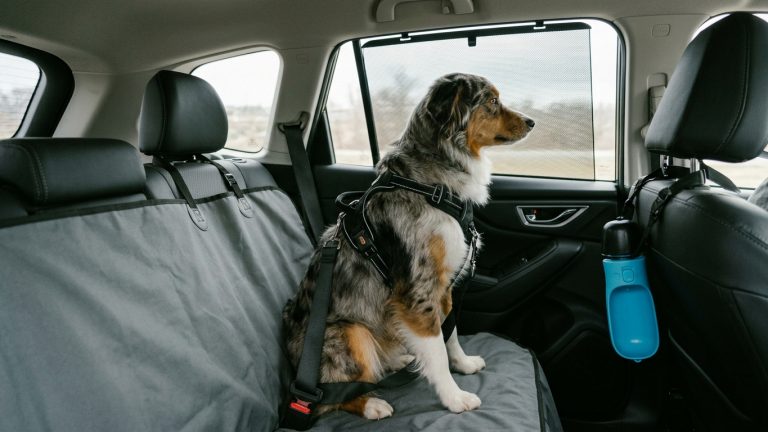
- Lift and transport your pet directly to the car after any suspected strike and telephone the emergency clinic immediately while driving so the antivenom vial can be thawed/reconstituted before you arrive.
Related Clinical Guides & Triage Protocols
Peer-Reviewed Clinical References & Evidence Grounding
- Consensus treatment guidelines for crotalid (pit viper) envenomation in dogs and cats in North America (opens in new tab) (Journal of Veterinary Emergency and Critical Care (2012) — Consensus clinical guideline by Armentano & Schaer indexed on NCBI PubMed (PMID: 22748165).)
- Overview and clinical management of crotalid and elapid snakebite envenomation in small animals (opens in new tab) (Journal of Veterinary Emergency and Critical Care (2011) — Peer-reviewed clinical review by Peterson indexed on NCBI PubMed (PMID: 21418318).)
- Merck Veterinary Manual: Snakebites in Animals — Pathophysiology, Echinocytosis, and Antivenom Therapy (opens in new tab) (Verified veterinary toxicology reference on pit viper and coral snake envenomation.)
- AVMA Emergency First Aid Guidelines: Envenomation, Transport Stabilization, and Contraindicated Field Interventions (opens in new tab) (American Veterinary Medical Association emergency triage guidance.)
Source transparency
Reference mix for this guide
Source labels classify the institutional category of the references cited above.