Editorial standard
How this guide was prepared
Canine Separation-Related Distress (SRD)—encompassing clinical separation anxiety and generalized isolation distress—affects an estimated 14 to 20 percent of companion dogs presented to veterinary behavioral practices, with even higher prevalence among newly adopted shelter rescues and post-pandemic rehomed dogs. When a dog chews through wooden door frames, fractures canine teeth on wire crate bars, howls continuously for hours, or salivates puddles onto the floor when left alone, the animal is not acting out of spite, stubbornness, or revenge. The dog is experiencing a full-blown neurobiological panic attack comparable to human panic disorder.
Clinical Quick Answer & Immediate Stabilization Protocol
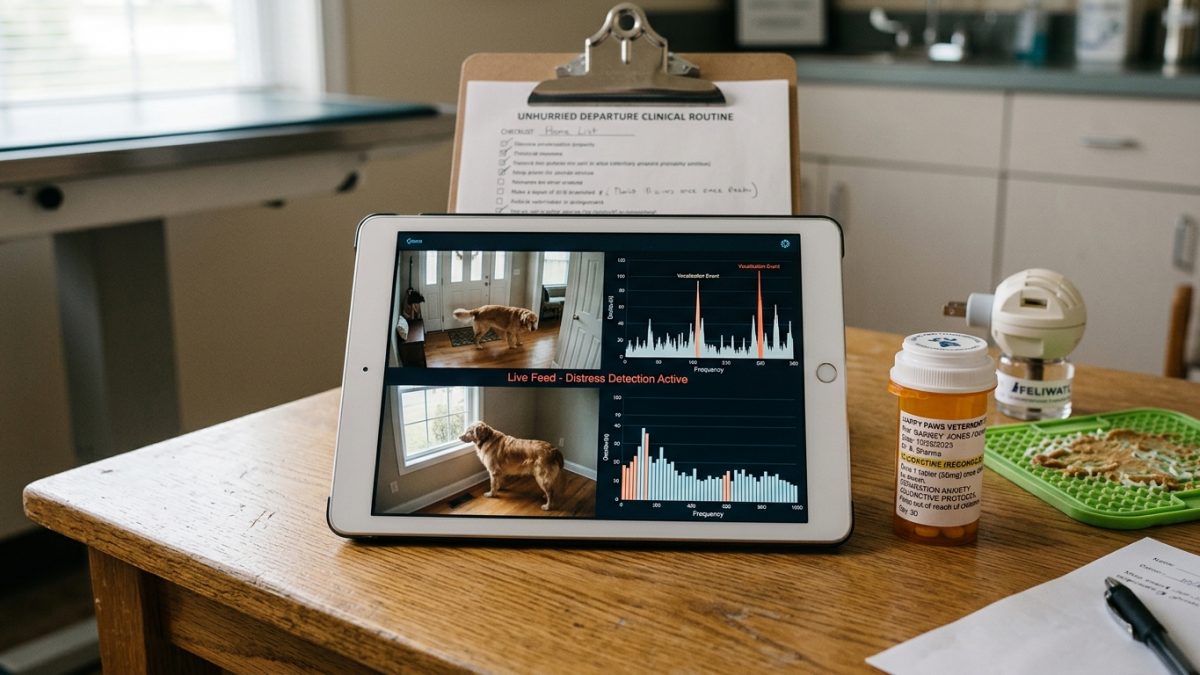
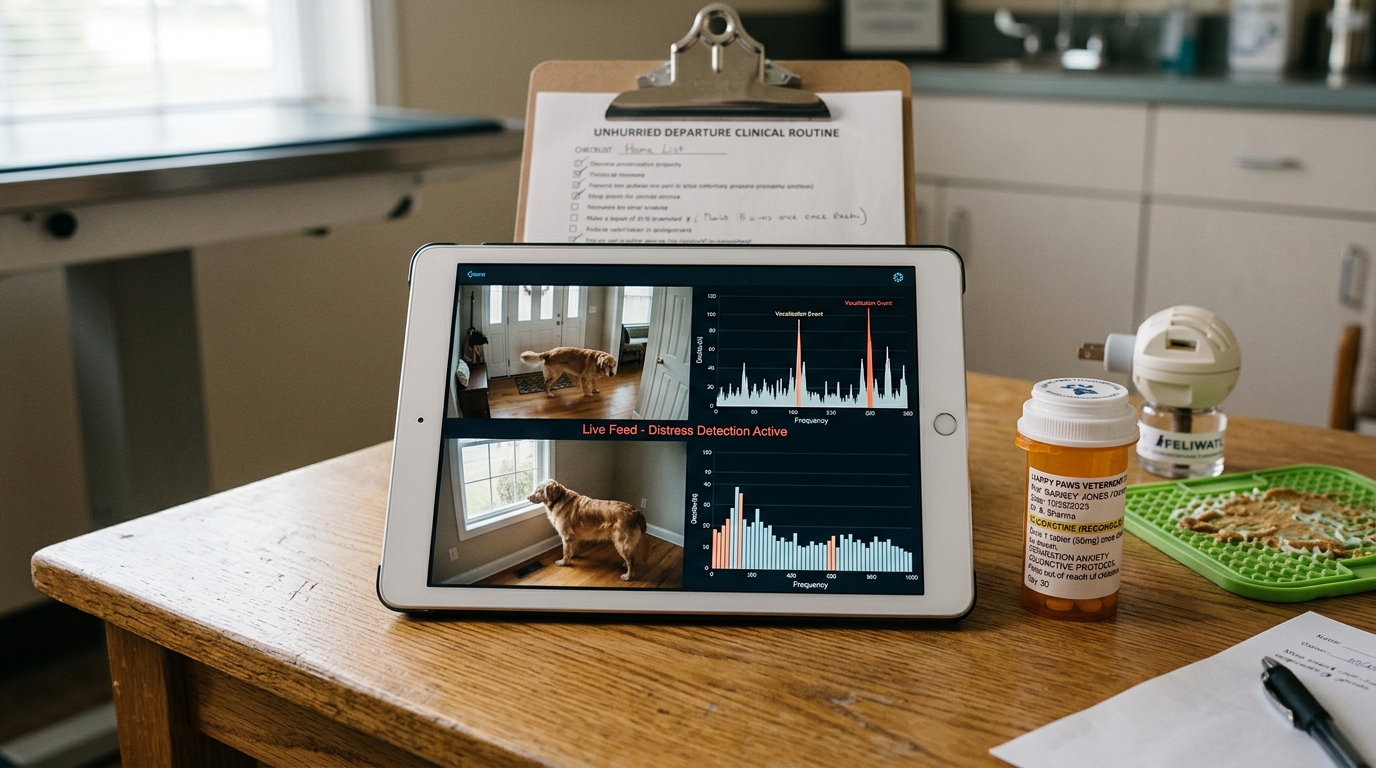
Primary Clinical Directive for Canine Separation-Related Distress (SRD) & Isolation Panic Disorder: First differentiate true separation panic from simple under-enrichment boredom by recording a 30-minute video via a laptop or phone camera when you walk out the front door: a bored dog sleeps first and chews household items hours later while ignoring your stuffed Kong at departure only once finished, whereas a separation-panic dog refuses to eat even high-value food once the door clicks shut and begins pacing, whining, drooling, or scratching at the exit within 0 to 30 minutes. Treatment requires suspending scary unsupervised absences, ditching food puzzles as a standalone “distraction” cure, and practicing structured sub-threshold absences measured in seconds.
Attachment-System Hyperactivation, Hypersalivation & Crate Confinement Self-Trauma
From a neurochemical perspective, canine separation panic involves hyper-reactivity of the locus coeruleus-norepinephrine system and amygdala fear circuits coupled with dysregulated serotonergic (5-HT) modulation in the prefrontal cortex. As the caregiver performs pre-departure cues—picking up car keys, putting on shoes, or zipping a coat—anticipatory sympathetic activation begins before the front door even opens. Once the attachment figure disappears, sympathetic tone spikes: heart rate accelerates, pupils dilate, gastrointestinal motility halts (explaining why panicked dogs leave peanut-butter Kongs completely untouched until the owner walks back through the door), and watery parasympathetic/sympathetic hypersalivation drenches the chest and floor.
Crucially, roughly 60 to 70 percent of dogs diagnosed with clinical separation anxiety exhibit concomitant barrier claustrophobia when locked inside a crate. Confining an isolation-panicked dog inside a 36-inch wire cage compounds attachment panic with physical entrapment panic, driving the dog to bite and pull on steel welds until teeth shatter and gingival blood coats the crate tray.

- Separation Anxiety vs. Isolation Distress: True hyper-attachment separation anxiety occurs when one specific primary human leaves (even if another family member remains home), whereas isolation distress occurs whenever the dog is left without any human companion.
- Exit-Point vs. Random Destruction Differential: Panic destruction targets exit barriers (chewing door frames, scratching drywall beside the front door, tearing window blinds), whereas boredom chewing targets accessible cushions, shoes, or trash bins anywhere in the room.
- Anorexia During Absence Marker: If a dog ignores a roast-beef bone the entire time the owner is gone and frantically devours it the moment the owner returns, the dog was in sympathetic survival lock-out during the absence.
- Noise Phobia Comorbidity: Over 40% of dogs with separation anxiety also suffer from thunderstorm or fireworks noise phobia; an unexpected thunderclap while the dog is home alone can acutely trigger severe separation panic.
Emergency Triage Matrix: Clinical Presentation & Required Response
| Triage Level | Clinical Signs & Presentation | Immediate Action Protocol |
|---|---|---|
| Tier 1: Acute Self-Trauma / Escape Injury Triage | Dog breaks teeth or bleeds from gums/paws chewing a wire crate or door frame, leaps through window screens, or exhibits hyperthermic collapse and pool-like hypersalivation when left alone. | Discontinue crate confinement and solitary absences immediately (use a trusted pet sitter, family helper, or dog-friendly daycare); seek urgent veterinary evaluation for dental/paw wounds and baseline situational anxiolytic pharmacotherapy. |
| Tier 2: Sub-30-Minute Vocalization, Pacing & Anorexia | Video camera shows pacing between door and window, whining/barking/howling starting within 3 to 20 minutes of departure, yawning, trembling, and refusal to eat stuffed food toys while alone. | Determine the dog’s exact baseline threshold on video (e.g., 45 seconds before pacing starts), eliminate food-toy departure cues, and initiate a daily sub-threshold absence desensitization plan with veterinary behavioral support. |
| Tier 3: Mild Pre-Departure Following & Newly Adopted Adjustment | Newly adopted dog shadows owner from room to room (velcro behavior) and whines briefly for 60 seconds at an interior baby gate before lying down to chew a toy and sleep. | Practice relaxed interior room separations behind a baby gate while you remain visible or audible in the next room, gradually extending calm independent rest duration. |
Video-Guided Sub-Threshold Desensitization, Pre-Departure Cue Neutralization & Pharmacotherapy
Modern evidence-based resolution of canine separation panic (pioneered by veterinary behaviorists and certified separation anxiety specialists) rests on one non-negotiable rule: during rehabilitation, the dog must never be pushed over its emotional panic threshold. Every time a dog experiences a full panic attack alone, the amygdala re-sensitizes and erases weeks of progress. Caregivers first conduct a live camera baseline assessment to identify the exact second the dog shifts from relaxed resting to anxious scanning (for example, 25 seconds after the front door closes).
Once the baseline threshold is established, the caregiver performs structured, randomized sub-threshold warm-up steps and absences 4 to 5 days per week. If the dog’s threshold is 30 seconds, a 15-minute training session might consist of: walk to the door, touch the handle, return to the sofa (rest 60s); open the door 4 inches, close it, sit down (rest 90s); step outside for 8 seconds, return calmly; step outside for 20 seconds, return calmly; step outside for 5 seconds, return; step outside for 28 seconds, return. Because no food toy is handed to the dog at departure, the dog’s nervous system learns directly that the front door opening and closing is a boring, non-threatening non-event.
- Why Departure Food Toys Often Backfire in True Panic: In severe separation anxiety, handing the dog a special peanut-butter Kong only when you leave turns the Kong itself into a predictive “poisoned cue” that screams “I am about to abandon you for 4 hours!”, spiking anxiety the instant the freezer opens.
- Calm, Low-Key Departures & Returns: Treat walking out and back through the door with the exact same neutral demeanor as walking to the kitchen sink for a glass of water—no dramatic tearful goodbyes and no hyper-excited squealing upon return.
- Pharmacological Neurochemical Support: Board-certified veterinary behaviorists frequently combine a daily maintenance selective serotonin reuptake inhibitor (fluoxetine) or tricyclic antidepressant (clomipramine) with a rapid-acting situational event medication (trazodone, gabapentin, or clonidine) to raise the panic threshold while sub-threshold training proceeds.
- Dogappeasing Pheromone (Adaptil) & Acoustic Masking: Continuous synthetic Dog Appeasing Pheromone diffusers paired with brown noise or classical music help mask outdoor hallway footsteps during absence drills.
Strict Rule S1 Clinical Red Flags: Canine Separation-Related Distress (SRD) & Isolation Panic Disorder
Critical safety boundaries for Canine (Canis lupus familiaris — Newly Adopted, Rehomed & Singly Housed Dogs) caregivers:
- Zero “Cry It Out” Extinction or Bark Collar Punishment: Never lock a panicked dog in a crate to “cry it out” or attach a shock/ultrasonic bark collar to silence separation howling; panic does not extinguish through flooding, and shocking a terrified dog for vocalizing causes severe psychological decompensation and gastrointestinal ulceration.
- Zero Abrupt Discontinuation of Prescribed SSRIs/TCAs: Never stop veterinary-prescribed fluoxetine or clomipramine cold-turkey without a veterinarian-directed taper schedule, and never combine SSRIs/TCAs with monoamine oxidase inhibitors (selegiline or amitraz) due to fatal serotonin syndrome.
Clinical Preparation & Biosecurity Action Checklist
- Set up an inexpensive Wi-Fi camera or two-device video call aimed at your front door and your dog’s resting bed before attempting any absence training.
- Test a dog-proofed open room (or gated living room zone) rather than a locked wire crate if your dog panted, drooled, or bit crate bars on camera.
- Arrange a supportive network of neighbors, friends, family members, or force-free pet sitters to cover necessary work absences while your dog’s threshold is under 4 hours.
- Consult your veterinarian early for a complete behavioral blood panel (including thyroid screening) and discussion of anxiolytic medication if your dog’s baseline threshold is under 5 minutes.
Related Clinical Guides & Triage Protocols
Peer-Reviewed Clinical References & Evidence Grounding
- Diagnosis and clinical management of separation-related problems in companion dogs: systematic behavioral and pharmacological protocols (opens in new tab) (Veterinary Clinics of North America: Small Animal Practice (2020) — Peer-reviewed clinical review indexed on NCBI PubMed (PMID: 32050123).)
- Efficacy and safety of fluoxetine chewable tablets coupled with behavior modification for treatment of canine separation anxiety (opens in new tab) (Veterinary Therapeutics (2007) — Peer-reviewed randomized clinical trial by Landsberg et al. indexed on NCBI PubMed (PMID: 17402976).)
- AAHA Canine and Feline Behavior Management Guidelines: Separation Anxiety Diagnosis, Crate Contraindications, and Desensitization (opens in new tab) (American Animal Hospital Association clinical guidelines on separation distress.)
- Merck Veterinary Manual: Separation Anxiety and Isolation Distress in Dogs (opens in new tab) (Verified veterinary reference on differential diagnosis of separation panic vs boredom and pharmacological treatment.)
Source transparency
Reference mix for this guide
Source labels classify the institutional category of the references cited above.