This guide is general education for pet owners. If your pet has urgent symptoms, possible poisoning, injury, breathing trouble, collapse, severe pain, or sudden decline, contact a licensed veterinarian or local emergency service.
Editorial standard
How this guide was prepared
Canine Dilated Cardiomyopathy (DCM) is a primary disease of the cardiac muscle characterized by progressive loss of cardiomyocyte systolic contractility and eccentric dilation of the left—or both—ventricles without proportionate wall hypertrophy. Historically understood as an inherited autosomal dominant disorder with incomplete penetrance in Doberman Pinschers, Great Danes, Irish Wolfhounds, Boxers, and Newfoundlands, a distinct reversible phenotype—Nutrition-Associated DCM (nDCM)—has been documented by veterinary cardiologists and the U.S. Food and Drug Administration (FDA) in Golden Retrievers, mixed-breed dogs, and atypical small breeds consuming pulse-heavy (pea, lentil, chickpea) non-traditional diets.
Clinical Quick Answer & Immediate Stabilization Protocol
Primary Clinical Directive for Canine Genetic & Nutrition-Associated Dilated Cardiomyopathy (DCM): Evaluating canine DCM requires separating hereditary sarcomeric/mitochondrial forms from reversible nutritional forms. While hereditary DCM in Dobermans (linked to PDK4 and Titin variants) progresses irreversibly and benefits from early Stage B2 pimobendan initiation (PROTECT study), dogs developing myocardial systolic dysfunction on diets where peas, lentils, chickpeas, or potatoes appear among the top ingredients frequently achieve significant echocardiographic reverse remodeling within 3 to 9 months when transitioned to a WSAVA-compliant grain-inclusive diet supplemented with taurine and L-carnitine alongside medical heart failure therapy.
Eccentric Ventricular Remodeling, Fractional Shortening Collapse & Pulse-Diet Bile Acid Loss
At the cellular level, canine DCM stems from defective ATP generation or impaired calcium handling across the myocardial sarcomere. As left ventricular systolic contractility declines, end-systolic blood volume rises inside the chamber. Compensatory activation of the sympathetic nervous system and the renin-angiotensin-aldosterone system (RAAS) expands plasma volume to preserve stroke volume via the Frank-Starling mechanism. Over months, chronic volume overload stretches the left ventricle into a thin-walled sphere (increased sphericity index), stretching the mitral valve annulus until secondary functional mitral regurgitation and elevated left atrial pressures drive fluid transudation into the pulmonary alveoli.
In nutrition-associated DCM, two overlapping biochemical mechanisms have been investigated. First, certain breeds (Golden Retrievers, American Cocker Spaniels, Newfoundlands) exhibit lower hepatic synthesis rates of the sulfur-containing beta-amino acid taurine from dietary methionine and cysteine. Diets high in soluble legume fibers and oligosaccharides ferment in the colon, accelerating fecal loss of taurocholic bile acids (the primary bile conjugate in dogs) and depleting myocardial taurine stores even when plasma taurine appears borderline. Second, metabolomic profiling of pulse-heavy diets has identified elevated non-protein phytochemicals and altered carnitine bioavailability that may directly impair myocardial mitochondrial fatty acid oxidation independent of blood taurine deficiency.
- Echocardiographic Diagnostic Criteria: Definitive DCM diagnosis requires M-mode and 2D Simpson’s disc echocardiography demonstrating increased left ventricular internal diameters in diastole and systole (LVIDd/LVIDs normalized to body weight) and depressed fractional shortening (<20–25%) or ejection fraction (<40%).
- Occult Arrhythmic Sudden Death: Myocardial fibrosis and stretching in Doberman Pinschers and Boxers generate re-entrant ventricular premature complexes (VPCs) and paroxysmal ventricular tachycardia detectable only via 24-hour ambulatory Holter monitoring.
- Whole-Blood vs. Plasma Taurine Assays: Plasma taurine reflects only recent 24-hour dietary intake and can spike falsely if red blood cells hemolyze during venipuncture; submitting both lithium-heparin whole blood (target >200–250 nmol/mL) and EDTA plasma (target >60–80 nmol/mL) is required for accurate assessment.
- Reversible Myocardial Remodeling in nDCM: Unlike genetic Doberman DCM (median survival 6–18 months after CHF onset), dogs with diet-associated DCM transitioned off legume-rich diets and treated with taurine and pimobendan can experience normalization of ventricular chamber dimensions.
Emergency Triage Matrix: Clinical Presentation & Required Response
| Triage Level | Clinical Signs & Presentation | Immediate Action Protocol |
|---|---|---|
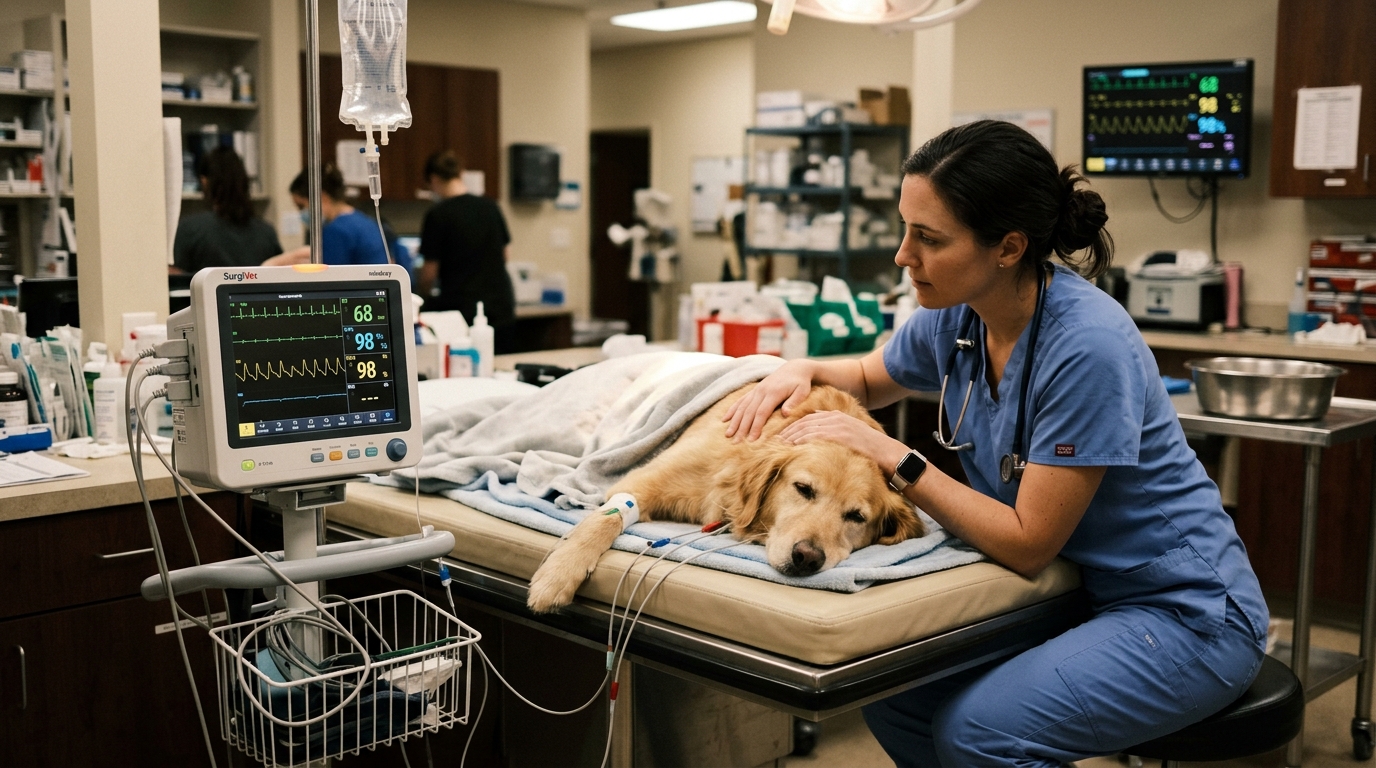
| Tier 1: Immediate Emergency (0–1 Hour) | Syncope (sudden fainting or collapse during excitement), sleeping respiratory rate >40 breaths/min, orthopnea (standing with elbows wide and neck extended), pink frothy nasal fluid, or pale/gray gums. | Transport immediately to a 24-hour emergency veterinary hospital for oxygen cage stabilization, parenteral furosemide diuresis, pimobendan inodilator support, and antiarrhythmic lidocaine/sotalol infusion. |
| Tier 2: Urgent Cardiology Workup (24–72 Hours) | Newly auscultated soft systolic heart murmur or gallop rhythm, pulse deficits, unexplained slowing on daily walks, nocturnal restlessness, or cough in a large-breed or grain-free-fed dog. | Schedule a veterinary echocardiogram, 6-lead ECG, thoracic radiographs, NT-proBNP/cardiac troponin I biomarkers, and whole-blood + plasma taurine testing. |
| Tier 3: Preclinical Screening & Nutritional Audit | Asymptomatic predisposed breed (Doberman, Great Dane, Golden Retriever, Cocker Spaniel) or dog fed a boutique pulse-heavy diet for >6 months. | Perform annual screening (NT-proBNP, Holter monitor, or echocardiogram beginning at age 3 in Dobermans) and transition gradually over 7–10 days to a WSAVA-aligned diet free of high pulse concentrations. |
Echocardiographic Staging, 24-Hour Holter Telemetry & Nutritional Reversal Protocols
Because up to 50 percent of dogs in preclinical (occult Stage B2) DCM lack an audible heart murmur on routine stethoscope auscultation, early detection relies on multimodal screening. Plasma N-terminal pro-B-type natriuretic peptide (NT-proBNP >900 pmol/L) indicates myocardial wall stretch, while high-sensitivity cardiac troponin I (cTnI) quantifies active cardiomyocyte necrosis. In Doberman Pinschers, a 24-hour ambulatory Holter ECG revealing >50 ventricular premature complexes (VPCs) in 24 hours—or any couplets, triplets, or runs of ventricular tachycardia—satisfies diagnostic criteria for occult arrhythmogenic DCM even before chamber dilation peaks.
Once echocardiographic left ventricular systolic dysfunction is confirmed (Stage B2 or Stage C), administering the calcium sensitizer and phosphodiesterase-III inhibitor pimobendan significantly prolongs the preclinical phase and delays the onset of congestive heart failure by an average of 15 months. For any dog consuming a diet containing peas, lentils, chickpeas, dry beans, or potatoes in the top 10 ingredients, veterinary cardiologists implement a structured diet change alongside oral taurine and L-carnitine supplementation, repeating echocardiography at 3, 6, and 9 months to verify reverse ventricular remodeling.
- The PROTECT Trial Stage B2 Benchmark: Initiating pimobendan in preclinical Dobermans with echocardiographic left ventricular enlargement significantly extends survival and time to first congestive heart failure event.
- FDA Adverse Event Reporting Protocol: When diet-associated DCM is suspected, save the original pet food bag (recording the UPC, lot number, and best-by date) and ask your veterinarian to submit echocardiographic data and whole-blood taurine results to the FDA Center for Veterinary Medicine.
- Home Sleeping Respiratory Rate (SRR) Telemetry: Once a dog is diagnosed with Stage B2 or Stage C DCM, counting sleeping breaths per minute every night is the single most sensitive home indicator of incipient pulmonary edema (a sustained rise >30 breaths/min warrants immediate diuretic adjustment).
- Gradual Sodium & Diet Transition: Switch from pulse-heavy diets to a traditional grain-inclusive formula with moderate sodium restriction (avoiding high-salt jerky treats, cheese, and deli meats Used as pill pockets) over 7 to 10 days.
Strict Rule S1 Clinical Red Flags: Canine Genetic & Nutrition-Associated Dilated Cardiomyopathy (DCM)
Critical safety boundaries for Canine (Canis lupus familiaris — Large/Giant Breeds, Cocker Spaniels & Pulse-Fed Dogs) caregivers:
- Zero Abrupt Withdrawal of Cardiac Medications: Even if a dog with nutrition-associated DCM shows normal energy or improved echocardiographic measurements after a diet change, never stop pimobendan, furosemide, spironolactone, or ACE inhibitors unless a veterinary cardiologist directs a monitored taper.
- Zero High-Sodium Pill Pockets in CHF Patients: Never wrap daily cardiac tablets in cured ham, bacon, hot dogs, or salted peanut butter; acute sodium loading expands intravascular volume and precipitates flash pulmonary edema.
Clinical Preparation & Biosecurity Action Checklist
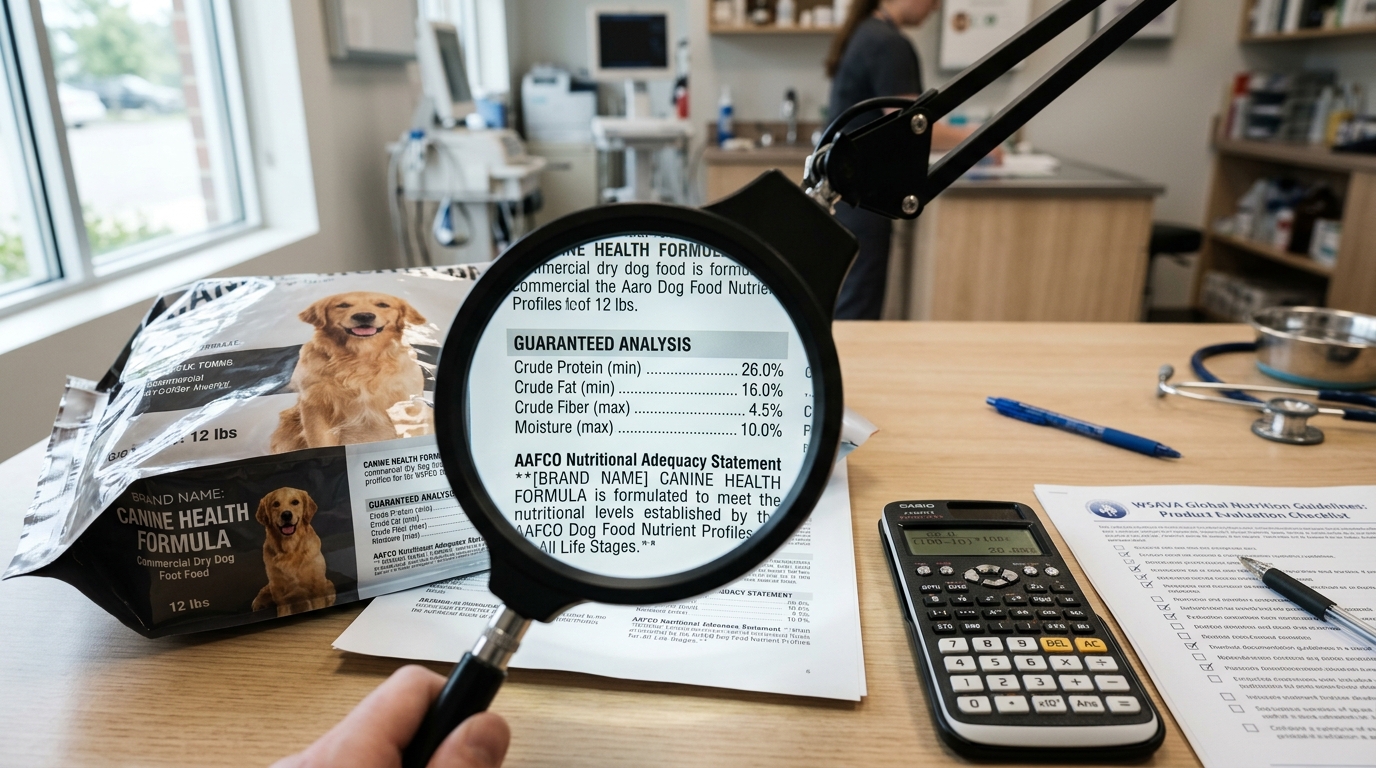
- Inspect your dog’s current food ingredient panel: if peas, pea protein, lentils, chickpeas, or potatoes appear within the first 5 to 10 ingredients, discuss a nutritional transition with your veterinarian.
- Ensure whole-blood (lithium heparin) and plasma (EDTA) taurine samples are drawn prior to starting oral taurine supplements or switching diets.
- Log your dog’s sleeping respiratory rate (breaths per 60 seconds while in deep sleep) daily; contact your veterinarian if the rate consistently exceeds 30 breaths/min.
- Begin annual echocardiographic and 24-hour Holter ECG screening at 3 years of age for Doberman Pinschers, Great Danes, Irish Wolfhounds, and Boxers.
Related Clinical Guides & Triage Protocols
Peer-Reviewed Clinical References & Evidence Grounding
- Taurine deficiency and dilated cardiomyopathy in golden retrievers fed commercial diets (opens in new tab) (PLOS ONE (2018) — Peer-reviewed clinical cardiology study by Kaplan, Stern et al. indexed on NCBI PubMed (PMID: 30537190).)
- Efficacy of pimobendan in the prevention of congestive heart failure or sudden death in Doberman Pinschers with preclinical dilated cardiomyopathy (The PROTECT Study) (opens in new tab) (Journal of Veterinary Internal Medicine (2012) — Landmark randomized clinical trial indexed on NCBI PubMed (PMID: 22998261).)
- FDA Center for Veterinary Medicine: Investigation into Potential Link Between Certain Diets and Canine Dilated Cardiomyopathy (opens in new tab) (U.S. Food and Drug Administration regulatory investigation and veterinary cardiology reporting data.)
- Merck Veterinary Manual: Dilated Cardiomyopathy in Dogs and Cats (opens in new tab) (Verified veterinary reference on canine DCM echocardiography, Holter arrhythmias, and medical management.)
Source transparency
Reference mix for this guide
Source labels classify the institutional category of the references cited above.