This guide is general education for pet owners. If your pet has urgent symptoms, possible poisoning, injury, breathing trouble, collapse, severe pain, or sudden decline, contact a licensed veterinarian or local emergency service.
Editorial standard
How this guide was prepared
Clinical nutrition serves as a primary therapeutic modality, directly altering disease progression and extending survival times in chronic pathology. Prescription veterinary diets are rigorously formulated to modify specific metabolic pathways, mineral concentrations, or immune responses.
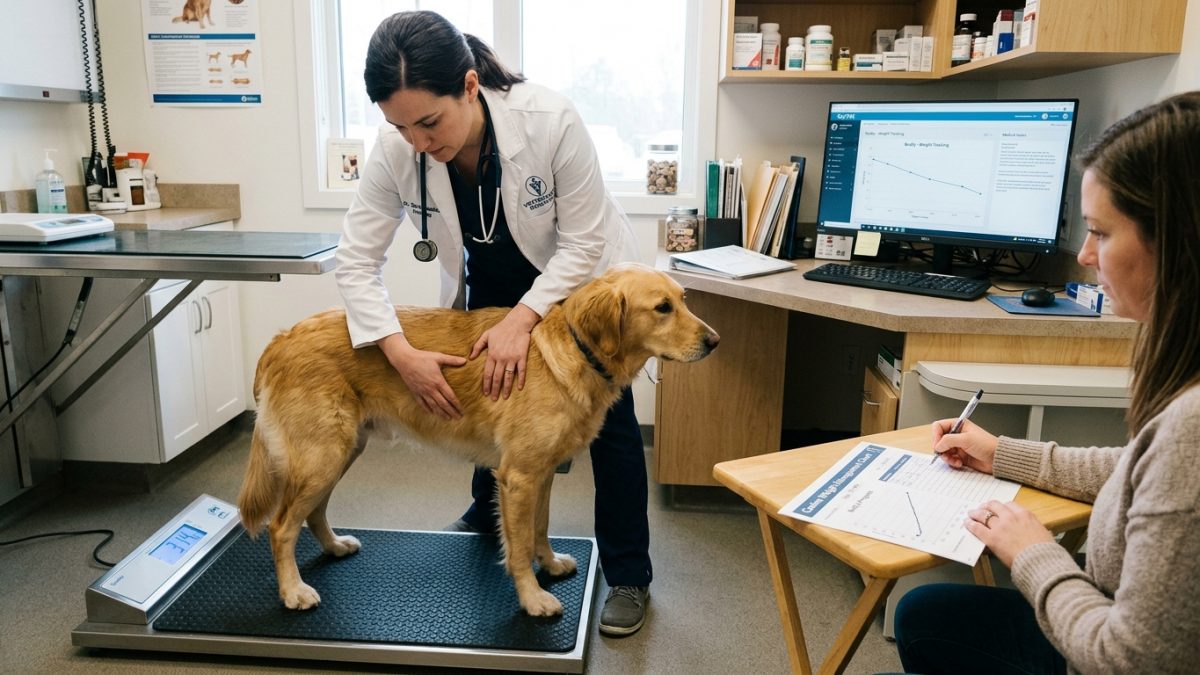
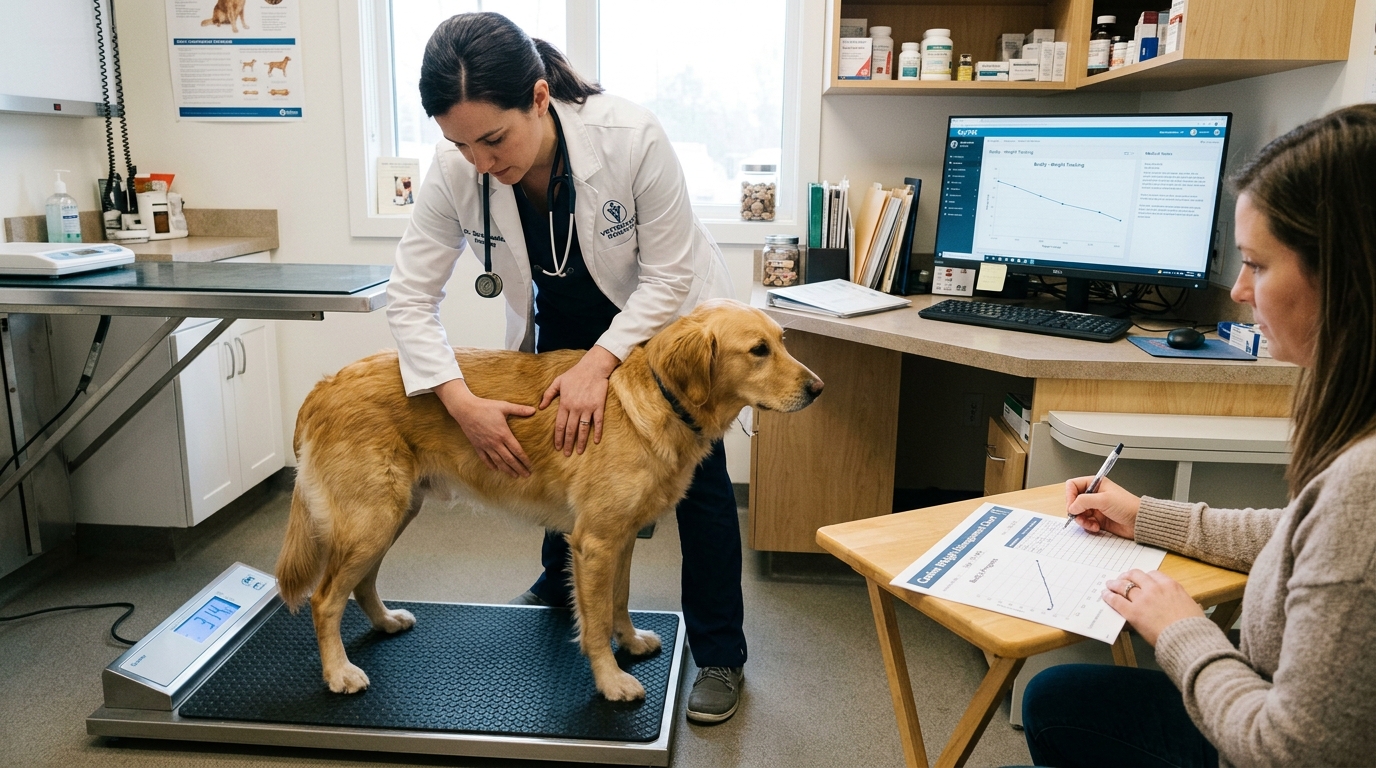
Starvation Diets Are Clinically Dangerous: Canine obesity affects over 55% of the pet population, dramatically increasing risks for cranial cruciate ligament tears, osteoarthritis, tracheal collapse, and shortened lifespan. However, crash starvation diets or simply cutting back grocery kibble by half induces severe micronutrient deficiencies, hepatic metabolic stress, and loss of critical lean muscle mass. Successful medical weight loss requires calculated energy restriction using a high-protein, high-fiber veterinary metabolic diet designed to preserve skeletal muscle while stimulating satiety.
Clinical Quick Answer & Immediate Actions
Therapeutic diets require strict adherence to achieve clinical endpoints. Avoid mixing unauthorized treats or supplements that disrupt the carefully formulated mineral and macronutrient balances. Transition slowly over 7-10 days to prevent gastrointestinal upset.
Success depends entirely on strict compliance. A therapeutic diet cannot overcome constant influxes of inappropriate treats, table scraps, or competing food sources. Caregivers must view the prescribed diet as a daily medical intervention rather than a basic sustenance choice.
Macronutrient and Micronutrient Modification
Therapeutic formulations manipulate macronutrients to alleviate organ stress. For example, renal diets drastically reduce phosphorus to slow nephron destruction, while gastrointestinal diets utilize highly bioavailable, low-residue proteins to facilitate enterocyte absorption.
Transitioning to a new clinical diet must occur gradually over 7 to 10 days to prevent acute gastrointestinal distress or food aversion. Mix the therapeutic diet with the previous food, incrementally increasing the new diet’s ratio by 10-15% daily.
| Pathology | Key Nutritional Modification | Clinical Objective |
|---|---|---|
| Renal Disease (CKD) | Restricted Phosphorus / Mod Protein | Reduce uremic toxins and slow progression |
| Pancreatitis | Ultra-Low Fat (Canine) | Prevent exocrine pancreatic stimulation |
| Urolithiasis (Crystals) | Targeted RSS / pH Modulation | Dissolve or prevent crystal formation |
Food aversion is a common complication in chronically ill patients. If the animal refuses the therapeutic diet, do not attempt to starve them into compliance, particularly in obese felines prone to hepatic lipidosis. Consult the attending veterinarian for pharmacological appetite stimulants or alternative flavor formulations.
Accurate portion control requires measuring food by weight (grams) rather than volume (cups). Volumetric measuring introduces up to a 20% margin of error, severely compromising weight loss or tightly regulated metabolic plans.
When to Seek Emergency Intervention
Immediate veterinary reassessment is necessary if the patient experiences acute anorexia lasting more than 24 hours, intractable vomiting after dietary transition, or profound lethargy. These signs may indicate disease progression rather than simple food refusal.
Patients on strict elimination diets for suspected food allergies that break protocol by consuming unauthorized proteins must restart the entire 8-week trial from day one. There are no safe “cheat days” in a diagnostic food trial.
Nutritional Compliance Tracker
Consistency is critical for therapeutic success. Access our Daily Nutritional Log to track caloric intake, treat allowances, and transition schedules.
Bioenergetics of Canine Weight Loss: Calculating RER and Target Caloric Intake
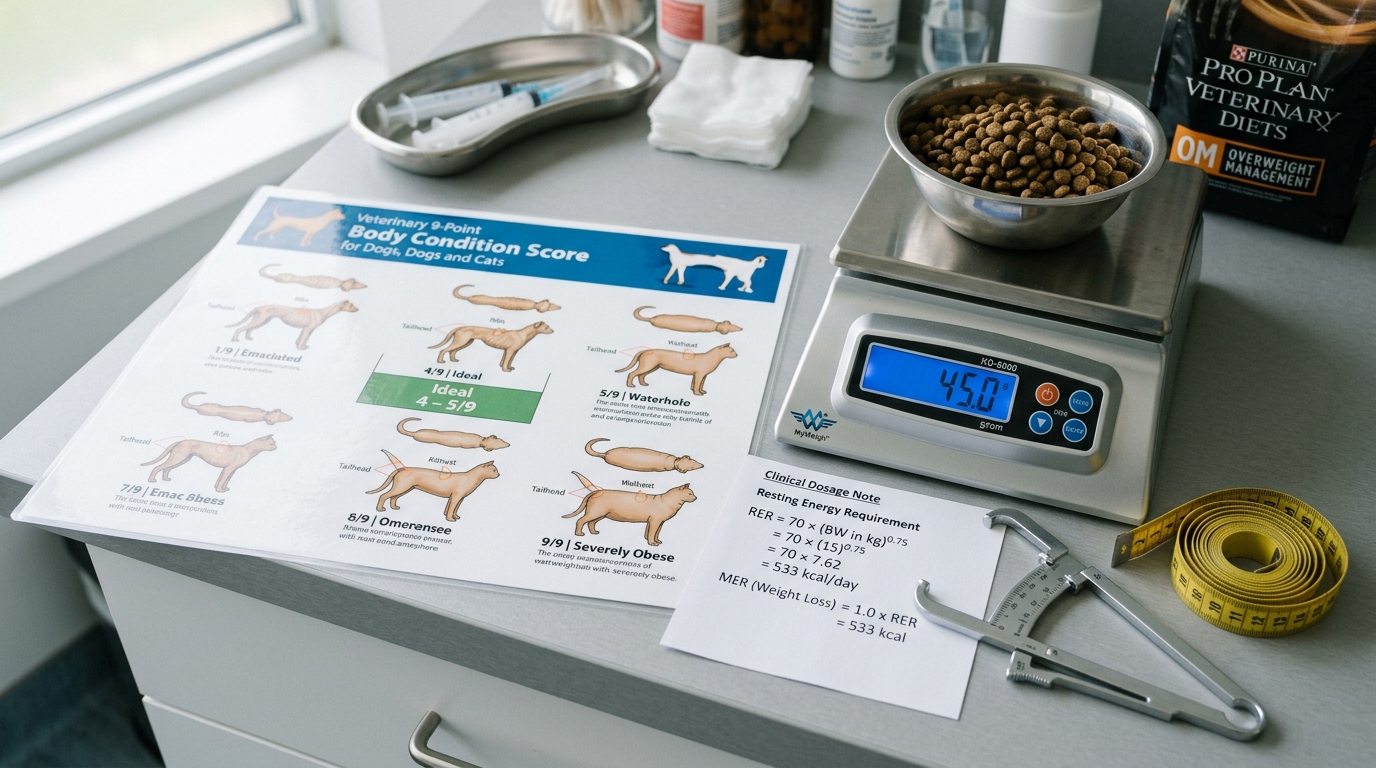
Effective weight management requires precise mathematical energy calculation based on ideal, target body weight rather than current obese weight:
- Resting Energy Requirement (RER) Formula: The metabolic baseline energy requirement for a canine at rest is calculated using the exponential formula:
RER = 70 × (BWtarget in kg)0.75
Alternatively, for dogs between 2 and 45 kg, the linear approximation can be utilized: RER = (30 × BWtarget in kg) + 70. - Caloric Restriction Multipliers: To achieve consistent fat loss without triggering metabolic slowdown, the daily caloric intake is set at:
Daily Weight Loss Calories = 1.0 × RERtarget
(or 0.8 × RERtarget for severely obese or refractory cases). Simply reducing a maintenance diet below this threshold deprives the dog of essential vitamins, trace minerals, and essential fatty acids, because standard pet foods are nutrient-calibrated for higher feeding volumes. - Safe Weekly Rate of Weight Loss: The scientifically validated safe rate of canine weight reduction is 1% to 2% of initial body weight per week. More rapid loss reflects lean skeletal muscle breakdown and water loss rather than adipose tissue mobilization. Weight should be recorded weekly on the same clinic or digital scale, with caloric intake adjusted every 3 to 4 weeks.
Satiety Science: Synergistic High-Protein & High-Fiber Diets
Modern veterinary therapeutic weight management diets (such as Hill’s Prescription Diet Metabolic, Royal Canin Satiety Support, or Purina Pro Plan OM) utilize specific macronutrient engineering:
- Preservation of Lean Muscle Mass via High Protein: Diets contain high biological value protein (> 30% to 35% on a dry matter basis). Adequate protein provides essential amino acids (branched-chain amino acids, leucine) that maintain skeletal muscle mass during negative energy balance. Muscle tissue is the primary metabolic driver of basal metabolic rate; preserving muscle prevents the post-diet “rebound weight gain” common in restricted canines.
- Dual-Fiber Blends for Prolonged Satiety: Diets incorporate a synergistic blend of soluble and insoluble dietary fibers (cellulose, psyllium, beet pulp). Insoluble fiber increases dietary bulk and gastric distension, stimulating mechanoreceptors that signal fullness to the hypothalamic satiety center. Soluble fermentable fiber slows gastric emptying and stabilizes postprandial glycemic response, eliminating the acute hunger spikes that drive begging behaviors.
- L-Carnitine & Mitochondrial Fatty Acid Oxidation: Therapeutic diets are fortified with L-carnitine (typically > 300 milligrams per kilogram). L-carnitine acts as an essential cofactor for carnitine palmitoyltransferase-1 (CPT-1), shuttling long-chain fatty acids across the inner mitochondrial membrane for beta-oxidation, actively accelerating adipose fat burning while sparing protein reserves.
Frequently Asked Questions
Can I mix over-the-counter food with the prescription diet?
No. Mixing a maintenance diet with a therapeutic diet dilutes the targeted nutritional profile, rendering the treatment ineffective (e.g., introducing excess phosphorus to a renal patient or allergens to an allergy patient).
How long does an elimination diet take to work?
A strict elimination diet trial for dermatological allergies requires an absolute minimum of 8 to 12 weeks of exclusive feeding before clinical improvement can be accurately assessed.
Are homemade diets safer than commercial prescription diets?
Unless formulated by a Board-Certified Veterinary Nutritionist (DACVN), homemade diets are frequently deficient in essential micronutrients and lack the precise mineral balancing required for chronic disease management.
Emergency Triage Matrix: Clinical Presentation & Required Response
| Triage Level | Clinical Signs & Presentation | Immediate Action Protocol |
|---|---|---|
| Tier 1: Immediate Emergency (0-2 Hours) | Diabetic patient experiencing severe weakness/seizures (hypoglycemia), or a blocked feline straining to urinate unproductively. | Administer Karo syrup to gums (if diabetic/crashing) and transport to emergency care immediately. |
| Tier 2: Urgent Veterinary Care (Same-Day) | Complete anorexia for >24 hours in a chronically ill patient, or intractable vomiting after beginning a new diet. | Contact the attending veterinarian for an anti-emetic prescription or alternative nutritional formulation. |
| Tier 3: Home Monitoring & Scheduled Care | Mild soft stool during the initial 3 days of dietary transition, with normal appetite and hydration. | Slow the transition pace, monitor stool quality, and ensure constant access to fresh water. |
Dietary Compliance Warning
Therapeutic diets function as prescription medication. Deviations from the protocol can trigger severe metabolic relapses:
- Zero Table Scraps: A single high-fat treat can trigger a catastrophic pancreatitis relapse in sensitive dogs.
- Strict Portioning: Weigh all meals using a digital kitchen scale to maintain precise caloric and mineral intake.
Transition & Feeding Checklist
- Transition over a strict 7-10 day period to prevent gastrointestinal shock.
- Remove all competing food sources (including sibling pet bowls).
- Monitor water intake, especially for patients on dry therapeutic diets.
Related Clinical Guides & Tools
Peer-Reviewed Clinical References & Evidence Grounding
- PMID-33653534: Canine and Feline Obesity Management (opens in new tab) (The Veterinary clinics of North America. Small animal practice (2021) — Peer-reviewed veterinary study indexed on NCBI PubMed (PMID: 33653534).)
- PMID-29348476: Animal models of obesity and diabetes mellitus (opens in new tab) (Nature reviews. Endocrinology (2018) — Peer-reviewed veterinary study indexed on NCBI PubMed (PMID: 29348476).)
- PMID-19167915: Lipid metabolism and hyperlipidemia in dogs (opens in new tab) (Veterinary journal (London, England : 1997) (2010) — Peer-reviewed veterinary study indexed on NCBI PubMed (PMID: 19167915).)
- SRC-AG-4: Canine obesity is the most common nutritional disorder in small animal practice (opens in new tab) (Verified clinical reference retrieved via Antigravity Ground-Truth Search (pubmed.ncbi.nlm.nih.gov).)
WSAVA 10% Treat Calorie Allowance Calculator
Calculate your pet's daily Resting Energy Requirement (RER) and maximum recommended 10% treat calorie budget based on WSAVA clinical nutrition consensus.
Printable tools
Download the matching worksheet
Source transparency
Reference mix for this guide
Source labels describe the type of organization behind each reference; they are not a claim that any outside organization reviewed this article.
- Emergency Triage Protocol Reference source · newspet.net
- Pharmacology Safety Standards Reference source · newspet.net
- Canine and Feline Obesity Management Government or public agency · pubmed.ncbi.nlm.nih.gov
- Animal models of obesity and diabetes mellitus Government or public agency · pubmed.ncbi.nlm.nih.gov
- Lipid metabolism and hyperlipidemia in dogs Government or public agency · pubmed.ncbi.nlm.nih.gov
- Canine obesity is the most common nutritional disorder in small animal practice Government or public agency · pubmed.ncbi.nlm.nih.gov