Editorial standard
How this guide was prepared
A cat budget is easiest to understand as a care cycle, not a smaller version of a dog budget. Litter is consumed continuously, food and preventive care follow the individual cat, scratching and climbing surfaces wear at different rates, and a carrier may sit unused for months but still has to work on the day it is needed.
- Baseline Monthly Expenses ($70–$160): Essential recurring costs include high-moisture canned/wet nutrition, low-dust clumping litter, routine parasite control, and environmental enrichment replacements.
- Preventative Healthcare & Dental Reserves: Annual wellness exams, core vaccinations, and routine periodontal cleanings represent the largest recurring clinical expenses across an indoor feline’s 15- to 20-year lifespan.
- Multi-Cat Economies & Resource Scaling: Multiple cats lower unit costs for bulk food and litter, but require strict resource duplication following the N+1 rule (litter boxes, scratchers, water stations) to prevent territorial stress.
Use local prices and the cat’s real routine. The goal is a monthly transfer that keeps frequent supplies moving, funds periodic care before it is due, and protects a separate contingency when appetite, urination, teeth, mobility, or transport needs change.
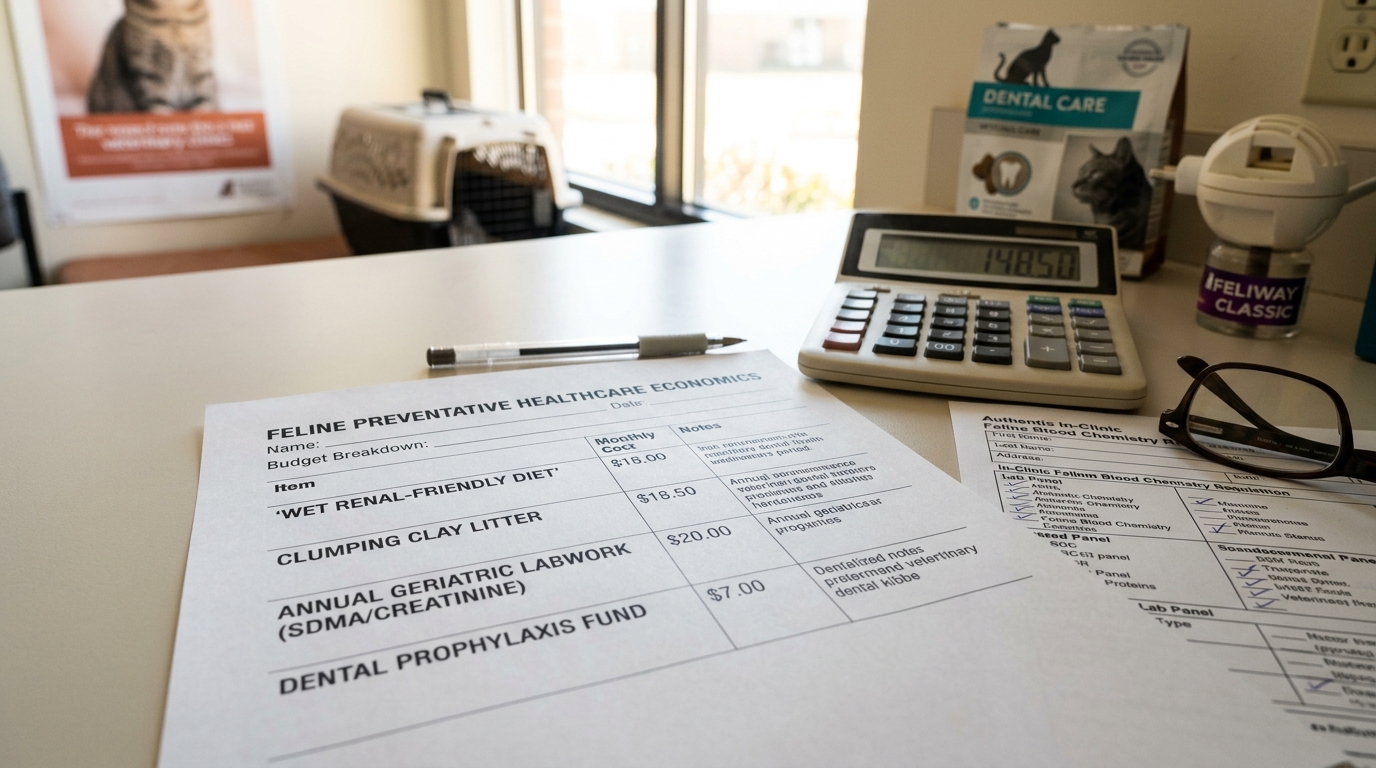
Complete your cat-care monthly worksheet
| Budget line | Reader-owned input | Monthly treatment |
|---|---|---|
| Weekly consumables | Measured food, litter, cleaning, filter, and medication use at current local prices. | Multiply the household’s weekly total by 52, then divide by 12. |
| Routine monthly items | Items or services actually paid every month for this cat. | Enter the current monthly total without averaging it again. |
| Annual or irregular care | Dated local estimates for examinations, preventive care, dental assessment, registration, or other planned bills. | Divide the expected yearly total by 12, or fund each bill across the months remaining before it is due. |
| Replacement equipment | Carrier, trays, scratch surfaces, bedding, bowls, water equipment, and climbing items that have a realistic inspection or replacement point. | Set aside the item estimate across the months before replacement; do not create a novelty-shopping allowance. |
| Contingency savings | The household’s chosen reserve target for urgent consultation, diagnostics, treatment, transport, medication, or diet change. | Choose a transfer the household can sustain and keep it separate from routine-care funds. |
| Household adjustment | Changes for cat number, diet, health, life stage, housing, shared resources, and transport access. | Add or remove only costs supported by the cat’s current routine and dated local information. |
Add the six monthly results to create the working transfer, then keep the inputs beside it. The worksheet belongs to this household: revise a line when actual use, a local quote, or the cat’s needs change rather than treating the total as a universal price.
Keep routine cash flow and irregular funding visible as two subtotals. The routine subtotal answers what must be paid or replaced during an ordinary month. The irregular subtotal shows transfers for dated care, equipment, and contingency. When money is tight, this separation prevents an annual dental assessment or carrier replacement from vanishing behind the food-and-litter total, and it shows which future bill is underfunded rather than implying the whole plan is covered.
Map the supplies that are consumed every week
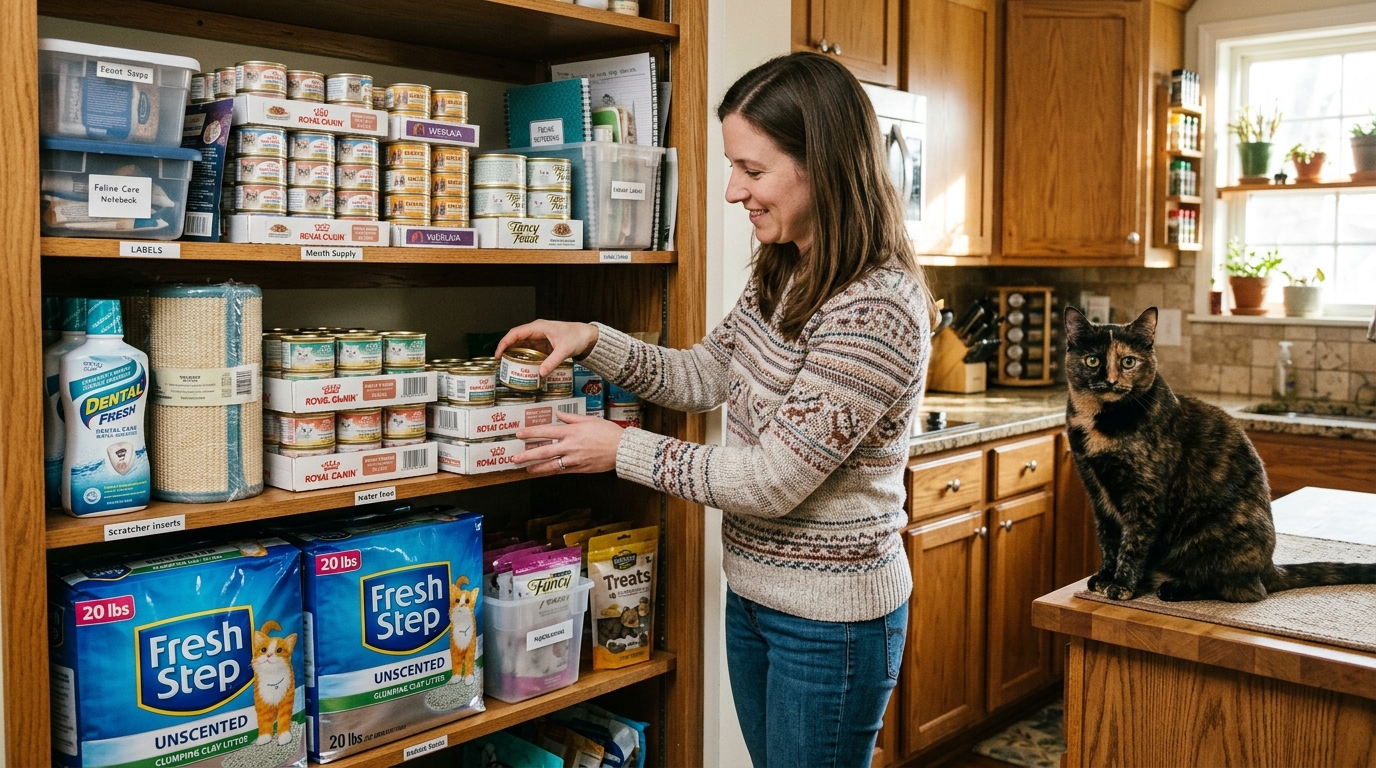
Start with food and litter because they reveal the household’s normal rate of use. Estimate food from the appropriate daily amount, not the package price alone. Record waste during transitions and note whether a prescribed diet or feeding method changes storage, delivery, or equipment costs.
For litter, measure how quickly the household uses a bag while keeping trays acceptably clean. The number and size of trays, litter depth, cat preference, multi-cat use, and disposal system all affect consumption. Saving by leaving trays dirty can undermine welfare and may also make it harder to notice changes in urine or stool.
Run a litter sensitivity check with the household’s own use. Record one stable week, then model a week with an extra tray, more frequent full changes, or a product transition. Multiply each measured rate by the current local unit price. The difference is not a recommendation to change litter; it is a buffer for the cat’s preferences, multi-cat pressure, or a hygiene need that increases consumption.
Add genuinely frequent items such as safe cleaning products, liners if used, waste bags, fountain filters, or medication. Keep decorative purchases out of this baseline. A stable weekly-use figure is more useful than an allowance that assumes every month includes new toys or accessories.
Fund teeth and routine veterinary care before the appointment
Routine care is not monthly merely because the bill is occasional. Ask a local clinic what a preventive examination includes and what follow-up may be advised for the cat’s age, health, lifestyle, and local disease risk. Vaccination, parasite control, identification updates, laboratory monitoring, and reproductive care vary by cat and location, so record the plan agreed with the veterinary team rather than copying a generic schedule.
Keep dental planning visible. A home-care product does not replace professional assessment, and the future cost of dental treatment cannot be predicted from a young cat’s current appearance. Include routine oral assessment in the care fund, ask what signs should prompt an earlier visit, and update the plan if the cat develops pain, difficulty eating, drooling, or a diet change.
Give dental care its own sensitivity row instead of hiding it in a generic veterinary average. Compare the current preventive-care transfer with a locally quoted assessment plus the first-payment amount for further investigation or treatment if advised. Keep that scenario separate from routine food spending and from emergency savings. It demonstrates liquidity for a plausible care change without predicting that a particular procedure will be needed.
Set aside the expected annual or periodic total across the months before it is due. If several cats share a household, keep records and care funds identifiable by cat; one quiet cat’s needs can otherwise disappear inside a combined average.
Treat the carrier as care equipment, not travel decor
A secure carrier belongs in the startup plan even for an indoor cat. It supports veterinary visits, evacuation, and necessary moves. Price a carrier that can be opened and cleaned, remains stable when lifted, has reliable fastenings, and fits the cat; a cheap carrier that twists, has a damaged latch, or cannot be reassembled securely is not a saving.
Budget for absorbent liners and eventual replacement after damage, heavy wear, contamination that cannot be cleaned, or a change in the cat’s size or mobility. Multi-cat households generally need a safe carrier for each cat rather than a plan to improvise during an emergency.
Transport mode can add local costs such as taxi rules, public-transport requirements, or veterinary home visits. Keep those as scenario costs rather than inflating every ordinary month.
Maintain scratching, climbing, hiding, and play by function
Enrichment spending should protect functions the cat uses: scratch surfaces, elevated or hidden rest, stalking and chasing play, and food-search opportunities. It does not require a constant stream of novelty. Rotate safe toys, repair or replace unstable climbing furniture, and renew scratch material when it no longer offers a usable surface.
Observe which resources are shared under pressure. In a multi-cat home, one large tree or one scratcher may not provide equal access if a cat controls the route. Budgeting for distributed resources can be more important than buying a premium version of one item.
Separate replacement from impulse buying. Add the carrier, scratchers, washable bedding, bowls, water equipment, litter trays, and climbing surfaces to an inspection calendar. Replace for stability, hygiene, fit, or actual use, not because a marketing cycle says the item is outdated.
Build a contingency around feline-specific warning signs
A contingency fund is for care that cannot be scheduled neatly: an urgent visit, diagnostics, treatment, transport, medication, or a new diet and monitoring plan. Cats may show illness subtly, so the financial plan should not depend on waiting until symptoms become dramatic. Know which clinic to call and how urgent care is paid for locally.
Test emergency liquidity, not only the eventual reserve balance. Note what can be accessed the same day, what requires a transfer or approval, and what must remain untouched for housing and routine care. Repeat the test after subtracting a scheduled litter, food, or veterinary payment. If the accessible amount is too small, revise the transfer or identify local payment conversations in advance; do not count a future paycheck or uncertain reimbursement as cash already available.
Stress-test the reserve with two cat-specific changes. First, imagine the cat develops a urinary or appetite problem that needs prompt examination, tests, and follow-up while normal litter and food spending continues. Second, imagine a dental or chronic condition adds repeated visits, medication, or a prescribed diet rather than one isolated bill. The scenarios do not predict disease; they reveal whether the household can maintain care over time.
Insurance may cover some eligible events under some policies, but it does not remove premiums, exclusions, owner payments, or the need for accessible cash. If insurance is part of the plan, compare the policy terms separately. This care budget does not establish coverage, exclusions, owner payment, or reimbursement rules.
Adjust the plan without hollowing out cat care
If the total is too high, revisit timing and purchasing before cutting hygiene or care. Compare complete foods by daily cost, buy litter in a size the household can store dry, rotate existing toys, use simple safe boxes and food puzzles, and replace equipment for function rather than appearance. Ask shelters what initial care is included and clinics whether preventive plans change payment timing; availability differs by location.
Do not respond to pressure by reducing litter-box cleanliness, delaying assessment of urinary or appetite changes, using an unsuitable diet, or keeping an unsafe carrier. Preserve clean litter and the ability to obtain prompt assessment for straining, reduced appetite, oral pain, or another concerning change; cut discretionary replacements and novelty purchases first. When contacting the clinic, state the financial limit while requesting the estimate and immediate next-step information.
Review the care cycle when the cat changes life stage, develops a condition, moves, joins a multi-cat home, or needs different litter, food, dental support, or transport. A good monthly figure is simply the current result of that living plan.
Sources
Sources checked: July 13, 2026.
- PMID: 31916872: 2020 AAFP Feline Retrovirus Testing and Management Guidelines (J Feline Med Surg, 2020) (opens in new tab)
- PMID: 27611724: ACVIM Small Animal Consensus Recommendations on the Treatment and Prevention of Uroliths in Dogs and Cats (J Vet Intern Med, 2016) (opens in new tab)
- PMID: 30149969: Radiation Emergencies: Dogs and Cats (Vet Clin North Am Small Anim Pract, 2018) (opens in new tab)
- PDSA: The cost of owning a cat (opens in new tab)
Printable tool
Download the matching worksheet
Source transparency
Reference mix for this guide
Source labels describe the type of organization behind each reference; they are not a claim that any outside organization reviewed this article.
- 2020 AAFP Feline Retrovirus Testing and Management Guidelines (J Feline Med Surg, 2020) Government or public agency · pubmed.ncbi.nlm.nih.gov
- ACVIM Small Animal Consensus Recommendations on the Treatment and Prevention of Uroliths in Dogs and Cats (J Vet Intern Med, 2016) Government or public agency · pubmed.ncbi.nlm.nih.gov
- Radiation Emergencies: Dogs and Cats (Vet Clin North Am Small Anim Pract, 2018) Government or public agency · pubmed.ncbi.nlm.nih.gov
- PDSA: The cost of owning a cat Reference source · pdsa.org.uk