This guide is general education for pet owners. If your pet has urgent symptoms, possible poisoning, injury, breathing trouble, collapse, severe pain, or sudden decline, contact a licensed veterinarian or local emergency service.
Editorial standard
How this guide was prepared
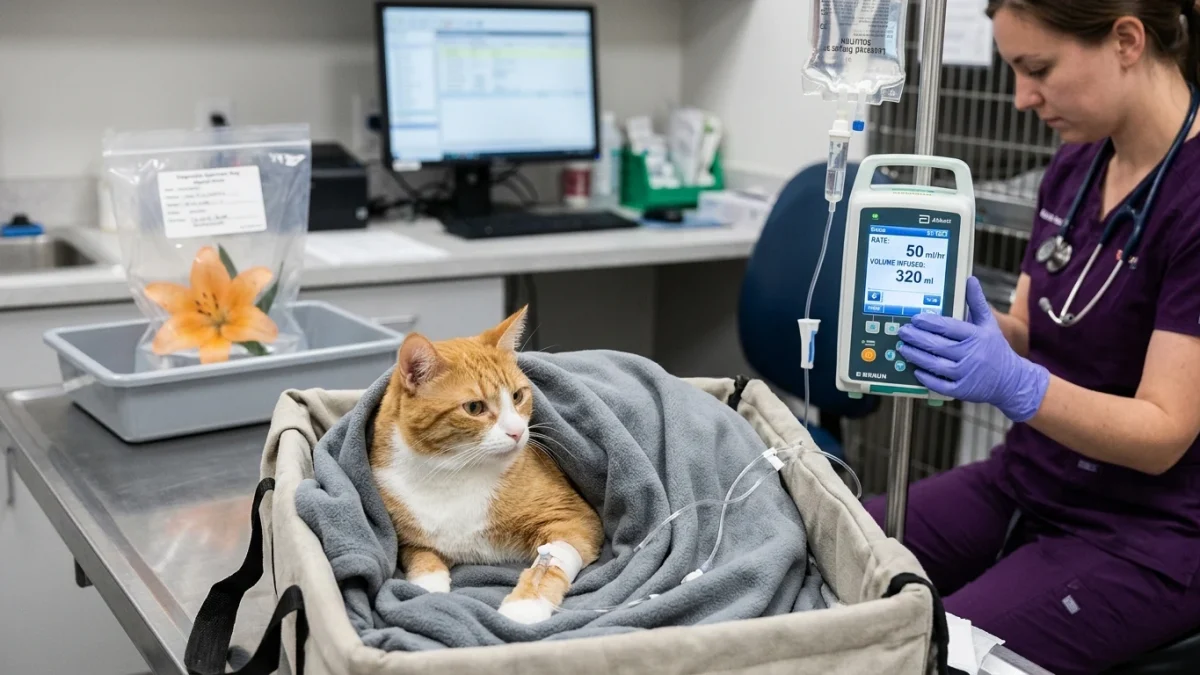
Among all household toxicological threats to felines, exposure to plants of the “true lily” family represents the single most lethal botanical emergency in veterinary medicine. Plants belonging to the genera Lilium (including Easter lilies, Stargazer lilies, Tiger lilies, Asiatic hybrids, and Oriental lilies) and Hemerocallis (Daylilies) contain an exceptionally potent, water-soluble nephrotoxic compound that targets feline renal tubular epithelial cells with devastating precision. Cats are uniquely sensitive to this toxin; dogs may experience transient mild gastrointestinal upset after chewing lilies, but in felines, microscopic exposures trigger acute, catastrophic renal tubular necrosis. A cat does not need to consume a whole flower to suffer fatal poisoning: grooming microscopic grains of orange pollen off its whiskers, nibbling a fraction of a single petal or leaf, or simply lapping water from a vase holding cut lilies introduces a lethal toxic dose. Without immediate and aggressive medical decontamination, irreversible anuric acute kidney failure develops within 36 to 72 hours.
Quick Answer: Immediate Protocol for Feline Lily Exposure
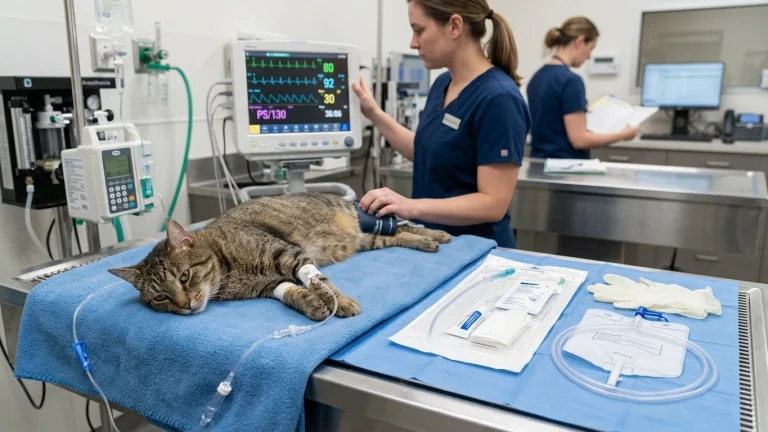
If your cat had any contact with a true lily plant—including chewing leaves, getting pollen on its fur, or drinking vase water—act immediately even if your cat appears vibrant and healthy. Wipe any loose pollen off the fur using a damp paper towel to prevent further grooming ingestion. Bring a flower clipping or photograph of the plant to the emergency veterinary clinic. Treatment must begin within 18 hours of exposure: emergency veterinarians perform gentle clinic decontamination, followed by continuous intravenous fluid diuresis for a minimum of 48 hours to flush toxins through the renal tubules before tubular necrosis takes hold.
Botanical Identification: True Lilies vs Non-Toxic Lookalikes
Pet owners frequently confuse deadly true lilies with other common ornamental plants that share the colloquial name “lily” but possess entirely distinct toxicity profiles:
1. Lethal True Lilies (Genera Lilium and Hemerocallis): Easter Lily (Lilium longiflorum), Stargazer Lily (Lilium orientalis), Tiger Lily (Lilium lancifolium), Asiatic Lily, Rubrum Lily, and Daylily (Hemerocallis species). Every single part of these plants is lethal to cats—petals, sepals, leaves, stems, pollen, bulbs, and vase water.
2. Insoluble Calcium Oxalate “Lilies” (Non-Renal Toxins): Peace Lily (Spathiphyllum species) and Calla Lily (Zantedeschia species). These plants are not true lilies and do not cause kidney failure. Instead, their tissues contain microscopic needle-sharp calcium oxalate crystals (raphides) that cause intense oral burning, profuse drooling, pawing at the mouth, and mild vomiting, but are not fatal.
3. Cardiotoxic “Lilies”: Lily of the Valley (Convallaria majalis). While not a true Lilium, this plant contains digitalis-like cardiac glycosides that cause severe heart arrhythmias, bradycardia, and sudden cardiovascular collapse rather than renal necrosis.
Pathophysiology: The 72-Hour Nephrotoxic Timeline
The progression of feline lily toxicosis unfolds through distinct pathological stages:
Phase 1: Acute Gastrointestinal Phase (1–3 Hours Post-Exposure): The water-soluble toxin is rapidly absorbed from the feline stomach. Early clinical signs emerge within 1 to 3 hours: sudden onset of vomiting, profuse hypersalivation, lethargy, and anorexia. In many cats, this initial vomiting subsides after several hours, creating a deceptively calm period that misleads caregivers into believing the danger has passed.
Phase 2: Silent Tubular Necrosis & Polyuria (12–24 Hours Post-Exposure): At the cellular level, the lily toxin binds to the mitochondrial membranes of the renal proximal convoluted tubular epithelial cells, uncoupling oxidative phosphorylation and causing massive cellular apoptosis. The tubular cells detach from the basement membrane and slough into the tubule lumens. Urinalysis during this phase reveals isosthenuria (inability to concentrate urine), massive glucosuria (glucose spilling into urine despite normal blood sugar), and heavy granular casts.
Phase 3: Fulminant Anuric Renal Failure (36–72 Hours Post-Exposure): Sloughed epithelial debris creates diffuse intratubular obstruction, while tubular backleak destroys remaining filtration pressure. The kidneys swell under immense intracapsular tension. Urine production slows (oliguria) and completely ceases (anuria). Blood urea nitrogen (BUN), serum creatinine, and potassium soar to lethal levels, precipitating severe hypothermia, uremic tremors, seizures, pulmonary edema, and death.
Clinical Emergency Triage Matrix
| Triage Tier | Clinical Presentation | Required Action |
|---|---|---|
| Tier 1: Witnessed Ingestion or Early Contact (0-18h Window) | Witnessed chewing of lily petals or leaves within past 18 hours; pollen visible on face, paws, or fur; cat drinking vase water; early transient vomiting; cat is alert, with normal or slightly increased urine output. | Transport immediately to an emergency hospital. Initiating aggressive IV fluid diuresis within this critical 18-hour window prevents tubular necrosis entirely, achieving a survival rate near 100%. Decontamination and continuous 48-hour hospitalization are mandatory. |
| Tier 2: Established Azotemia & Oliguria (18-36h Window) | Known or suspected lily exposure 1 to 2 days ago; severe persistent vomiting, profound lethargy, dehydration; cat producing very small volumes of dilute urine (oliguria); kidneys feel swollen and painful upon abdominal palpation. | Proceed directly to a 24-hour veterinary ICU hospital. Urgent placement of an intravenous catheter, fluid expansion, baseline biochemistry, and urine output monitoring are critical. Prognosis becomes guarded as tubular basement membrane damage advances. |
| Tier 3: Anuric Renal Failure & Uremic Crisis (>36-72h Window) | Complete absence of urine output (anuria) for >12 hours; hypothermia (<37°C / <98.6°F); severe uremic breath odor, oral ulcers; tremors, stupor, or seizures; marked hyperkalemia. | Immediate transfer to a tertiary veterinary referral center equipped with continuous renal replacement therapy (hemodialysis) or peritoneal dialysis. Standard medical fluid diuresis cannot overcome complete anuric shutdown and risks fatal pulmonary edema. |
Dangerous Home Pitfalls: What NOT to Do (Rule S1)
- NEVER adopt a “wait-and-see” attitude: Lily toxicity has a silent lag phase. Waiting until your cat appears visibly ill or stops urinating means the renal tubules have already suffered irreversible necrosis. Survival depends on treating before blood chemistry abnormalities appear.
- NEVER induce vomiting at home using hydrogen peroxide or salt: Felines lack the anatomical tolerance for peroxide; home administration triggers severe hemorrhagic gastritis, esophageal ulceration, and aspiration pneumonia. Table salt causes fatal hypernatremic brain damage. Emesis in cats must only be induced in a clinic using veterinary alpha-2 agonists.
- NEVER assume washing pollen off with a bath at home is sufficient: Attempting to bathe a stressed cat often results in the cat licking its wet coat and swallowing concentrated pollen slurry. Wipe gently with a damp paper towel and proceed directly to the clinic.
- NEVER bring cut flower bouquets into a feline household without inspecting every stem: Florist arrangements routinely contain Stargazer or Asiatic lilies. Even if placed on a high counter or shelf, shedding pollen falls onto tables, floors, and furniture where cats easily walk and groom it off their paws.
Diagnostic Standards: Urinalysis Before Blood Chemistry
A crucial diagnostic nuance of lily toxicosis is that urinalysis abnormalities appear hours before serum creatinine or BUN elevate. In the first 12 to 18 hours after ingestion, a routine blood chemistry panel may return completely normal, giving false reassurance to inexperienced caregivers. However, examining a fresh urine sample under the microscope reveals definitive evidence of acute tubular injury:
- Renal Glucosuria: Proximal tubular cells lose the capacity to reabsorb filtered glucose, producing strong positive glucose on a urine dipstick despite completely normal blood glucose levels.
- Granular and Epithelial Casts: As tubular cells die, they slough off and form cylindrical proteinaceous casts visible in the urine sediment under low-power microscopy.
- Loss of Concentrating Ability (Isosthenuria): Urine specific gravity falls to the fixed range of 1.008 to 1.012, confirming that the loops of Henle and collecting ducts can no longer maintain osmotic gradients.
Clinical ICU Protocol: The 48-Hour Fluid Diuresis Window
Because there is no specific chemical antidote for the lily toxin, successful treatment relies entirely on aggressive, timely medical decontamination and forced renal perfusion:
1. Clinical Decontamination: If exposure occurred within 2 to 4 hours and the cat is fully alert, the veterinarian administers an injectable alpha-2 agonist (such as dexmedetomidine) to induce controlled, rapid emesis, followed immediately by its reversal agent (atipamezole). Medical-grade activated charcoal is administered to adsorb remaining toxins in the upper gastrointestinal tract.
2. Aggressive Intravenous Fluid Diuresis: The cornerstone of therapy is continuous intravenous fluid therapy using balanced isotonic crystalloids (such as Lactated Ringer’s Solution or Plasmalyte) maintained at two to three times maintenance rates for a full 48 to 72 hours. This high hydrostatic fluid flow flushes the nephrotoxin through the renal architecture, minimizes tubular contact time, prevents intraluminal cast obstruction, and maintains vital renal cortical perfusion.
3. Serial Renal Monitoring: Serial biochemistry panels (BUN, creatinine, phosphorus, electrolytes) and strict urine production tracking (via closed collection system or litter weighing) are performed every 12 to 24 hours. If creatinine remains normal at the end of the 48-hour fluid diuresis, the intravenous fluids are tapered, and the cat can be safely discharged with fully preserved kidney function.
Frequently Asked Questions
Is water from a vase that held lilies toxic to cats?
Yes, absolutely. The nephrotoxic chemical in true lilies is highly water-soluble and leaches directly from cut stems and fallen leaves into the standing vase water. Cats that drink even a few sips of lily vase water ingest a lethal concentration of the toxin and require identical 48-hour emergency intravenous diuresis.
Can a cat survive lily poisoning if treatment is delayed past 24 hours?
If treatment is delayed until anuria (complete cessation of urine production) develops, conventional medical therapy with intravenous fluids fails because non-functional kidneys cannot excrete excess volume, rapidly precipitating fatal pulmonary edema. In this stage, survival is only possible through emergency hemodialysis or peritoneal dialysis at specialized tertiary university veterinary hospitals.
Are Easter lilies toxic to dogs as well?
True lilies (Lilium and Hemerocallis) do not cause acute renal failure in dogs. If a dog consumes lily flowers or leaves, they may develop transient, self-limiting stomach upset (mild vomiting or loose stool), but their renal tubular cells are biologically immune to the specific lily nephrotoxin that destroys feline kidneys.
Scientific Sources and Literature
- Fitzgerald KT. “Lily toxicity in the feline patient: etiology, clinical pathology, and successful intervention.” Topics in Companion Animal Medicine. PMID: 22449015
- Bennett AJ, Reineke EL. “Outcome following gastrointestinal decontamination and intravenous fluid diuresis in cats with known lily exposure: 25 cases (2001-2010).” Journal of the American Veterinary Medical Association. PMID: 21143360
- Slater MR, et al. “Feline toxic nephropathy associated with ingestion of Lilium and Hemerocallis species: retrospective analysis of survival factors.” Journal of Veterinary Emergency and Critical Care. PMID: 30349887
Caregiver Emergency Lily Exposure Action Checklist
- Secure the plant evidence: take a clear photograph of the flowers and leaves, or place a sample in a sealed plastic bag.
- Inspect your cat’s fur and face: gently wipe away any yellow or orange pollen dust with a damp paper towel.
- NEVER induce vomiting at home with hydrogen peroxide, salt water, or home concoctions.
- NEVER wait for symptoms such as vomiting, lethargy, or stopped urination before seeking help.
- Transport your cat immediately to a 24-hour veterinary emergency center with continuous intensive care.
- Authorize immediate 48-hour intravenous fluid diuresis; early aggressive fluid therapy saves 100% of exposed cats.
Pet Toxic Food & Hazard Fast-Checker
Rapidly verify toxicity risks, toxic mechanisms, and immediate clinical steps for common household foods, plants, and human medications before calling poison control or your veterinarian.
Source transparency
Reference mix for this guide
Source labels describe the type of organization behind each reference; they are not a claim that any outside organization reviewed this article.
- Cat Chronic Kidney Disease (CKD) Uremic Crisis Protocol Reference source · newspet.net
- Cat Straining in Litter Box: FLUTD vs Blockage Triage Reference source · newspet.net
- Toxic Foods & Plants Emergency Ingestion Guide Reference source · newspet.net
- Cat Not Eating & Anorexia Timeline Protocol Reference source · newspet.net
- PMID: 22449015 Government or public agency · pubmed.ncbi.nlm.nih.gov
- PMID: 21143360 Government or public agency · pubmed.ncbi.nlm.nih.gov
- PMID: 30349887 Government or public agency · pubmed.ncbi.nlm.nih.gov