This guide is general education for pet owners. If your pet has urgent symptoms, possible poisoning, injury, breathing trouble, collapse, severe pain, or sudden decline, contact a licensed veterinarian or local emergency service.
Dosages must be calculated by a licensed veterinarian based on species, weight, and bloodwork. Never administer human medications or self-adjust prescription doses for pets.
Quick Answer
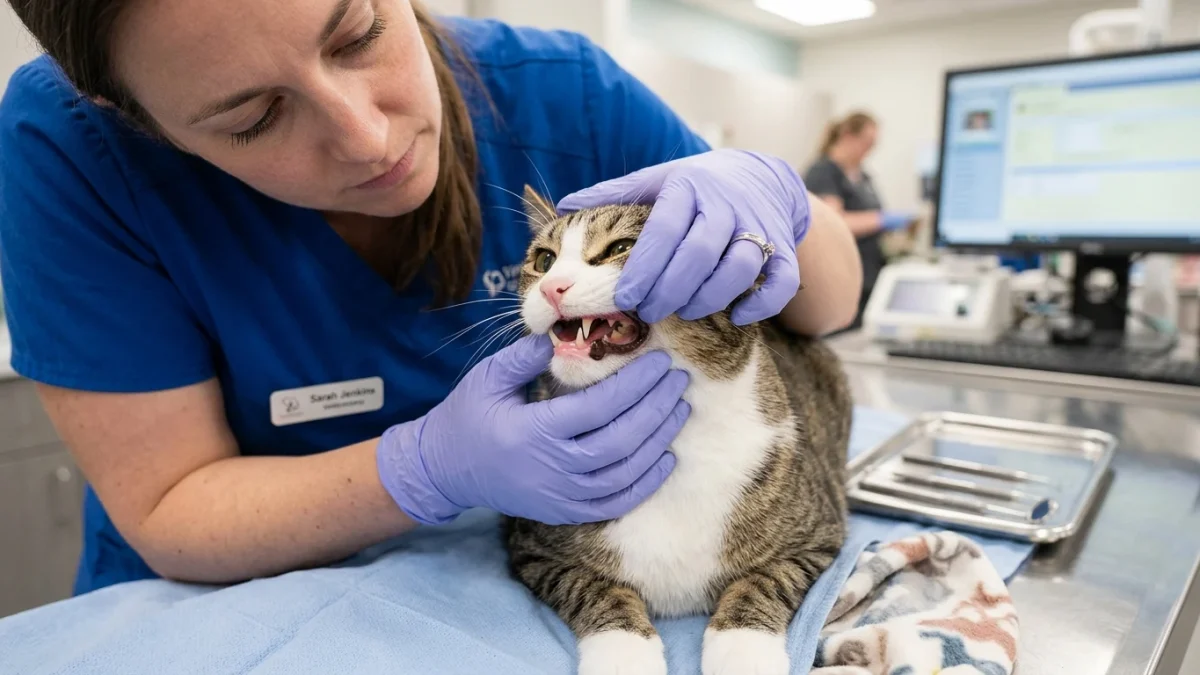
Excessive drooling, foul breath, and pawing at the mouth in cats signify excruciating oral pain, most often caused by Feline Chronic Gingivostomatitis (FCGS) or Tooth Resorption (FORL). While stomatitis inflames the entire caudal throat mucosa, tooth resorption erodes dental enamel at the gumline. Seek immediate veterinary dental evaluation and pain management.
Cats are notoriously stoic creatures that mask physical vulnerability until disease processes reach advanced stages. However, oral pathology produces pain so intense and relentless that even the most resilient feline cannot conceal it. When a cat begins salivating excessively, leaving wet stains on their bedding, shaking their head while chewing, pawing frantically at their muzzle, or hissing and fleeing from their food bowl, caregivers are witnessing severe oral distress. In feline veterinary dentistry, chronic drooling and putrid oral odor (halitosis) are almost never simple tartar; they are the cardinal indicators of excruciating oral conditions: Feline Chronic Gingivostomatitis (FCGS) or Feline Tooth Resorption (formerly known as FORL).
Editorial standard
How this guide was prepared
The Clinical Differentials: Stomatitis versus Tooth Resorption
Accurate clinical diagnosis requires distinguishing generalized immune-mediated mucosal ulceration from focal structural tooth destruction:
- Feline Chronic Gingivostomatitis (FCGS): FCGS is an agonizing, debilitating disease characterized by widespread, severe inflammation of the feline oral mucosa that extends far beyond the teeth. The pathognomonic hallmark of FCGS is caudal stomatitis—intense, bright red, proliferative ‘cobblestone’ inflammation affecting the palatoglossal folds and lateral pharyngeal walls at the very back of the throat. The underlying cause is an inappropriate, hyperreactive immune response to microscopic bacterial plaque on tooth surfaces, often exacerbated by underlying viral co-infections such as Feline Calicivirus (FCV). Even swallowing saliva causes excruciating pain, leading to complete anorexia, severe weight loss, unkempt greasy fur from cessation of grooming, and foul-smelling drool that often stains the front paws.
- Feline Tooth Resorption (TR / FORL): Affecting up to 60% of cats over five years of age, tooth resorption is a progressive, irreversible destruction of the tooth structure driven by odontoclasts (cells that normally resorb baby teeth roots). The process begins deep beneath the gumline along the root surface and erodes inward into the pulp cavity and outward through enamel. When the lesion breaches the gumline, raw, highly innervated dentin and dental pulp are exposed directly to oral bacteria and food. The body attempts to heal the defect by filling it with bright pink, inflamed granulation tissue, creating the appearance of ‘gums growing over the tooth.’ Even touching a resorptive lesion with a dental probe under light sedation triggers violent jaw chattering and tremors.
- Severe Periodontal Disease & Uremic Ulcerations: Heavy calculus and subgingival anaerobic bacterial infection destroy periodontal ligaments, causing loose, painful teeth. In cats with advanced chronic kidney disease, accumulated systemic toxins can also produce necrotic uremic ulcers along the tongue margins. Caregivers of aging felines should review our clinical guide on Cat Drinking Lots of Water: Diabetes vs. Kidney Disease Triage to rule out renal failure.
Clinical Oral Triage Matrix
Use this clinical matrix to determine the urgency of veterinary intervention based on observed oral indicators:
| Triage Tier | Clinical Signs & Physical Presentation | Mandatory Action |
|---|---|---|
| Tier 1: Immediate Emergency (0–2 Hours) | Cat is drooling bloody or purulent saliva; screaming in pain and running away when attempting to eat; tongue is hanging out with inability to close jaw; complete refusal of food and water for 24 to 48 hours; severe dehydration (sunken eyes, delayed skin turgor). | Transport immediately to an emergency veterinary hospital. Prolonged fasting in cats triggers acute feline hepatic lipidosis within 48 hours. The clinical team will administer injectable feline opioids (buprenorphine), start IV fluid resuscitation, and place a temporary feeding tube if necessary. |
| Tier 2: Same-Day Veterinary Evaluation (12–24 Hours) | Persistent drooling of clear, foul-smelling saliva; visible bright red gums with pink tissue overgrowing teeth; dropping pieces of canned food repeatedly; unkempt, matted coat due to inability to groom; jaw chattering during meals. | Schedule a comprehensive veterinary dental evaluation. The veterinarian will perform an awake oral inspection, establish multi-modal pain relief, and schedule an anesthetized procedure with intraoral dental radiographs. |
| Tier 3: Structured Home Care & Monitoring (24–48 Hours) | Mild halitosis with light tartar accumulation; cat eats canned food normally but chews only on one side; normal grooming habits; zero drooling or vocalization during meals; bright and interactive behavior. | Transition entirely to soft, room-temperature wet food to eliminate mechanical mastication discomfort. Book a routine dental cleaning and comprehensive oral health assessment within 1 to 2 weeks. |
Definitive Treatment: Why Extractions Are Often Curative
Caregivers are frequently shocked when their veterinarian recommends extracting most or all of their cat’s teeth (full-mouth or partial-mouth extractions). However, clinical evidence strongly supports this approach:
1. Resolving the Antigen Source in FCGS: In feline stomatitis, the cat’s immune system treats their own teeth—specifically the bacterial plaque biofilm that adheres to tooth enamel—as a foreign threat. Antibiotics and steroids provide only transient, temporary relief and cause severe long-term organ toxicity. Removing the teeth permanently eliminates the plaque surface. In clinical trials, full-mouth or caudal extractions result in complete clinical cure or substantial, medication-free improvement in over 70% to 80% of stomatitis patients.
2. Eradicating Resorption Pain: Unlike human dental cavities, feline tooth resorption cannot be repaired with dental fillings; the odontoclastic destruction continues relentlessly beneath the restoration until the tooth fractures. Extraction or crown amputation (for advanced Type 2 resorption with ankylosed roots) permanently cures the pain.
3. Life Without Teeth: Cats are remarkably adaptable. Within weeks of post-operative healing, cats without teeth experience dramatic revitalization: their coats become immaculate, their appetite returns voraciously, and they easily eat canned food (and even swallow dry kibble whole) entirely pain-free.
Dangerous Home Pitfalls: What NOT to Do (Rule S1)
Attempting home remedies for feline oral disease carries lethal physiological risks:
- Never apply human oral numbing products (benzocaine / Orajel): This is an absolute medical emergency. Feline red blood cells possess unique sulfhydryl groups that are extraordinarily vulnerable to oxidant damage. Applying human benzocaine gels to a cat’s mouth causes severe methemoglobinemia, where hemoglobin is converted into methemoglobin that cannot release oxygen to tissues. The cat’s mucous membranes turn chocolate-brown, followed by rapid asphyxiation and death.
- Never administer human pain medications (aspirin, acetaminophen, ibuprofen): Human pain medications are completely fatal to cats. Acetaminophen induces acute hepatic necrosis and fatal methemoglobinemia, while NSAIDs destroy feline renal nephrons within hours.
- Never attempt home tooth scraping or plaque removal: Using metal dental scalers on an awake cat is dangerous. Scraping chips fragile enamel, creating microscopic grooves that accelerate plaque attachment, while sudden head jerks can puncture the tongue, palate, or eye. Furthermore, supra-gingival scaling addresses only cosmetic surface tartar, ignoring the agonizing pathology beneath the gumline.
- Never force-feed hard kibble to a drooling cat: Crunchy kibble acts like jagged gravel against inflamed, ulcerated stomatitis tissue, inducing acute oral hemorrhage and severe food aversion. Offer warm, pureed pate mixed with warm water or bone broth.
Sources
- Feline Chronic Gingivostomatitis: Current Concepts in Etiology, Diagnosis, and Management. Compendium on Continuing Education for the Practicing Veterinarian / PubMed. Checked September 21, 2026.
- Feline Tooth Resorption: Etiopathogenesis, Diagnosis, and Treatment. Journal of Feline Medicine and Surgery / PubMed. Checked September 21, 2026.
- Benzocaine-Induced Methemoglobinemia in Cats and Dogs. Journal of the American Veterinary Medical Association / PubMed. Checked September 21, 2026.
Caregiver Safety Checklist
- Excessive drooling, jaw chattering, and hissing at food indicate agonizing feline dental pain, not behavioral stubbornness.
- Never use human oral numbing gels like Orajel; benzocaine oxidizes feline blood cells, causing fatal methemoglobinemia.
- Full-mouth extractions provide a definitive clinical cure for over 70% of stomatitis patients by removing the plaque biofilm.
- Switch immediately to smooth pureed wet food to protect raw oral tissues and prevent life-threatening hepatic lipidosis.
Source transparency
Reference mix for this guide
Source labels describe the type of organization behind each reference; they are not a claim that any outside organization reviewed this article.
- Feline Chronic Gingivostomatitis: Current Concepts in Etiology, Diagnosis, and Management Government or public agency · pubmed.ncbi.nlm.nih.gov
- Feline Tooth Resorption: Etiopathogenesis, Diagnosis, and Treatment Government or public agency · pubmed.ncbi.nlm.nih.gov
- Benzocaine-Induced Methemoglobinemia in Cats and Dogs Government or public agency · pubmed.ncbi.nlm.nih.gov