This guide is general education for pet owners. If your pet has urgent symptoms, possible poisoning, injury, breathing trouble, collapse, severe pain, or sudden decline, contact a licensed veterinarian or local emergency service.
Editorial standard
How this guide was prepared
Lower urinary tract disorders represent one of the most common and financially devastating medical emergencies in companion animal medicine. In male cats, acute urethral obstruction resulting from struvite crystals, mucus plugs, or sterile urethral spasms rapidly leads to severe metabolic acidosis, hyperkalemic cardiac arrest, and death if untreated. Emergency hospital stabilization, urethral de-obstruction catheterization, and multi-day hospitalization typically cost between $1,500 and $4,000. For households managing strict budgets, implementing simple, low-cost preventive hydration and litter management routines provides powerful physiological protection, preventing emergency blockages before they occur.
- Isolate Pets to Identify Urinary Pathologies: In multi-cat homes, temporarily separate animals in individual rooms with distinct litter trays to pinpoint which individual is producing small, frequent, or discolored urine volumes.
- Recognize Feline Urethral Blockage Instantly: Male cats repeatedly straining in litter boxes without producing urine are experiencing an immediate, life-threatening emergency that must reach veterinary care within hours.
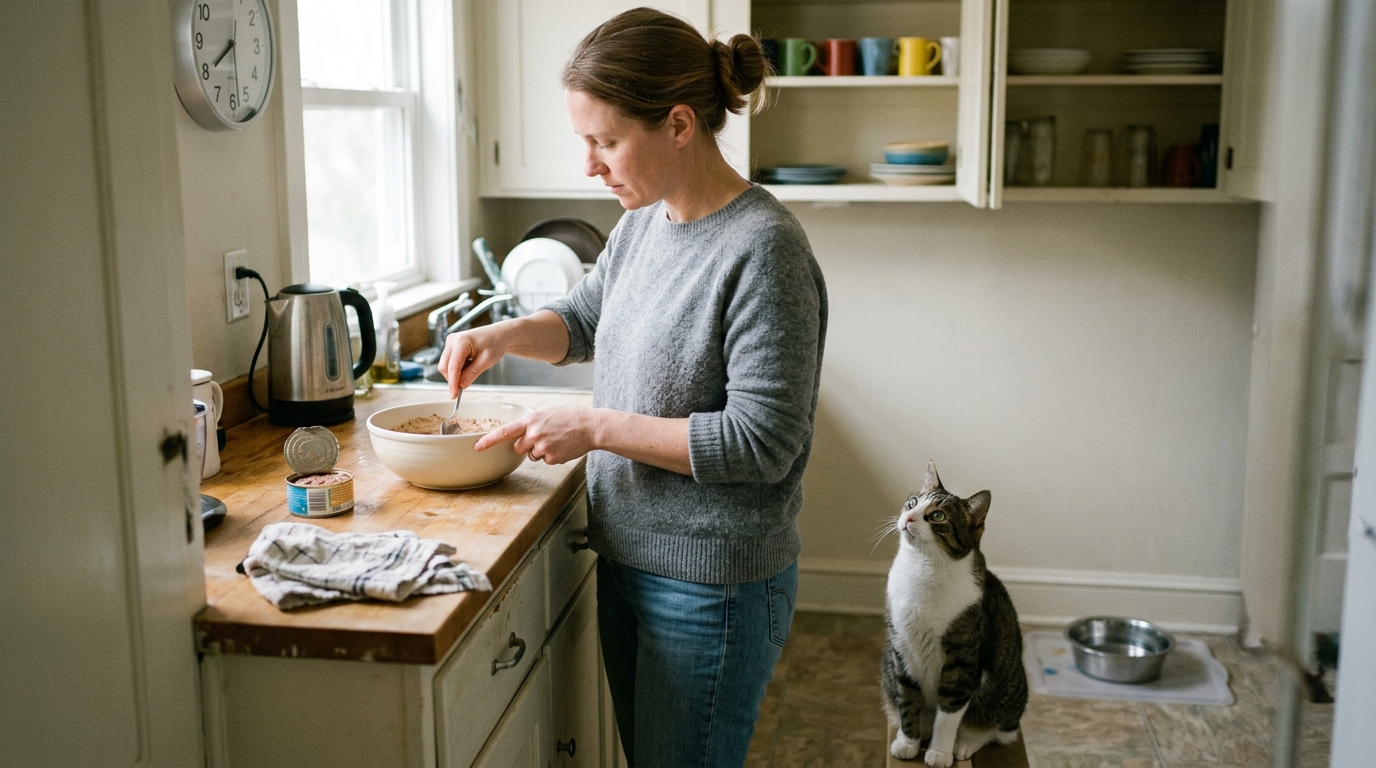
- Hydration Enhancement with Common Household Methods: Add warm water or sodium-free broth to canned wet foods and distribute multiple water bowls throughout your home to naturally lower urine specific gravity without expensive fountains.
This clinical urinary guide adheres to guidelines established by the American College of Veterinary Internal Medicine (ACVIM) and the American Association of Feline Practitioners (AAFP). A male cat or dog straining to urinate with zero urine output, crying out in distress, or vomiting represents an immediate life-threatening urethral obstruction. Transport the animal immediately to the nearest 24-hour emergency hospital.
The Pathophysiology of Urinary Blockage: Why Hydration Matters
Preventing urinary crises requires understanding the underlying biochemical mechanics of lower urinary tract disease:
- Feline Thirst Mechanics & Highly Concentrated Urine: Domestic felines evolved as desert-adapted obligate carnivores with a naturally low thirst drive. Feeding dry kibble without supplemental moisture causes cats to produce highly concentrated urine (urine specific gravity frequently >1.045). This hyper-concentrated urine supersaturates with minerals, precipitating struvite or calcium oxalate crystals.
- Feline Idiopathic Cystitis (FIC) & Stress Cascades: Up to two-thirds of young feline urinary episodes stem from FIC, a sterile neuroendocrine inflammatory disorder triggered by environmental stress rather than bacterial infection. Stress stimulates bladder wall edema, hemorrhaging, and painful muscle spasms.
- Canine Bacterial Cystitis & Uroliths: Dogs frequently suffer ascending bacterial infections (predominantly Escherichia coli) that alter urinary pH, promoting painful bladder stone formation that can lodge in the narrow male canine os penis urethra.
Low-Cost Hydration Hacks and Litter Station Management
You do not need expensive automated fountains or high-cost specialty gadgets to safeguard your pet’s urinary tract:
| Management Area | Low-Cost Practical Home Protocol | Physiological and Financial Benefit |
|---|---|---|
| Water-Kibble Slurry | Add warm water or low-sodium, onion-free homemade bone broth to standard dry kibble (1:1 ratio) at mealtime. | Significantly increases daily fluid intake, diluting urine specific gravity (target USG < 1.035) without buying costly canned food. |
| Multiple Water Stations | Distribute wide, shallow ceramic or stainless-steel bowls throughout the home away from food dishes. | Felines dislike water adjacent to food; wide dishes prevent whisker fatigue, encouraging spontaneous drinking. |
| Affordable Litter Allocation | Use the N + 1 formula (one box per cat plus one extra); use inexpensive, fragrance-free clumping clay litter. | Prevents voluntary urine retention caused by litter box competition or aversion to artificial perfumes. |
| Daily Clump Dimension Audits | Inspect scooped urine clump size daily. Normal feline urine clumps measure roughly 2 to 3 inches (tennis-ball size). | Detects micro-drops (pollakiuria) or complete cessation of urine output early, avoiding late-stage emergency bills. |
Diagnostic Urinalysis: High-Yield, Low-Cost Clinical Screening
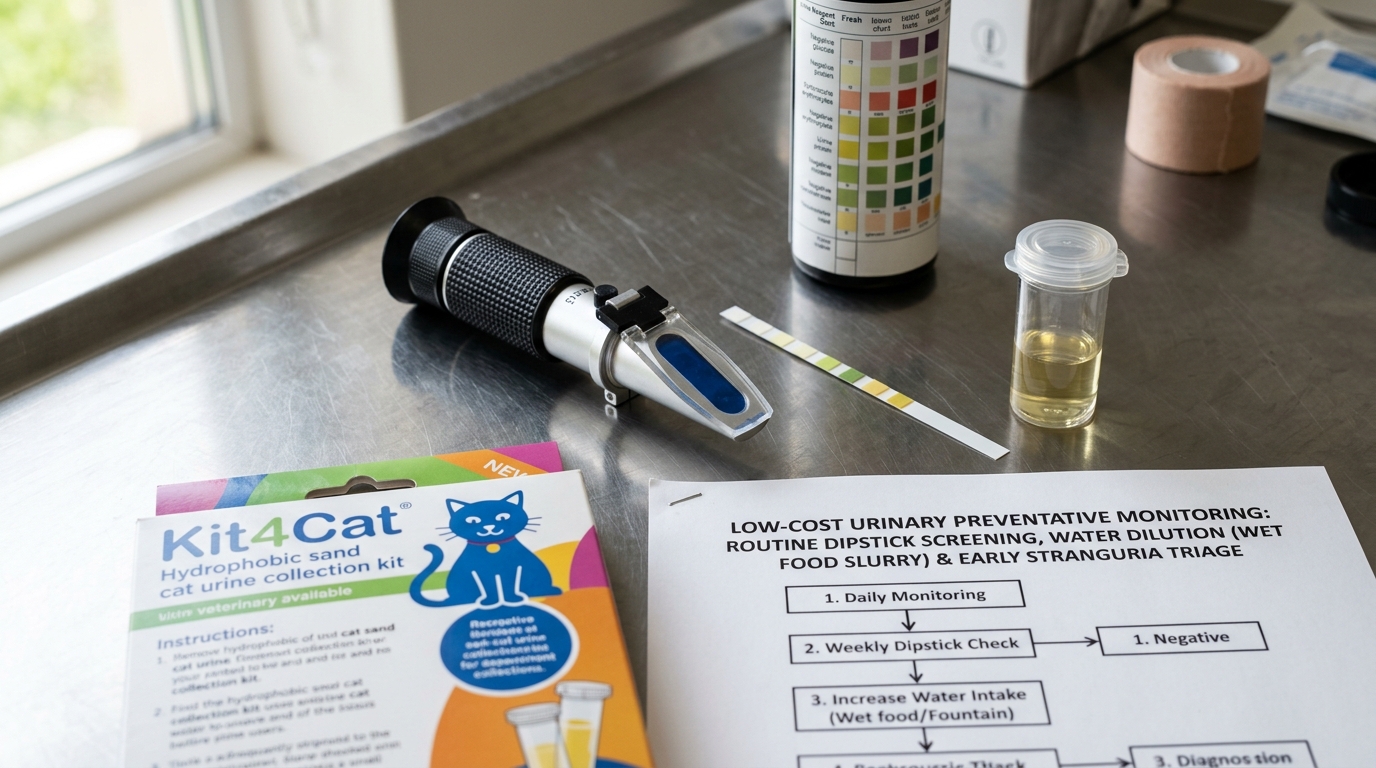
If your pet shows early signs of urinary discomfort, a routine daytime urinalysis represents the most affordable diagnostic investment. Collecting a fresh, clean-catch urine specimen in a clean plastic container immediately prior to visiting your daytime veterinarian eliminates collection fees and provides instant clinical data.
Veterinary staff evaluate urine specific gravity via refractometer, test chemical dipsticks for blood and protein, and centrifuge the sample to examine sediment under microscopy for red blood cells, white blood cells, and crystals. Catching sterile inflammation early allows management with low-cost oral analgesics and hydration adjustments, preventing emergency hospital admissions.
Red-Flag Triage Matrix: Urinary Tract Escalation Tiers
Use this objective triage matrix to determine when urinary symptoms permit daytime scheduling versus immediate emergency transport:
| Triage Tier | Clinical Presentation | Required Action Protocol |
|---|---|---|
| Immediate Emergency (0–2 Hours) | Male cat or dog straining to urinate with zero urine produced, painful vocalizing in posture, vomiting, extreme lethargy with hypothermia, hard distended bladder. | Transport immediately to the nearest 24-hour veterinary emergency facility. Urethral obstruction leads to fatal cardiac arrest from hyperkalemia without immediate surgical de-obstruction. |
| Urgent Assessment (12–24 Hours) | Frequent urination producing small blood-tinged drops, licking genitals obsessively, urinating outside designated boxes, mild lethargy with preserved appetite. | Schedule a same-day clinical veterinary examination. Avoid administering over-the-counter urinary supplements until diagnostic urinalysis is performed. |
| Routine Home Monitoring | Slight increase in urination frequency after switching to wet food diet, single isolated instance of inappropriate urination following household rearrangement. | Audit litter box cleanliness, increase water stations, and monitor daily clump size closely. Schedule routine wellness consultation if changes persist. |
Never administer human pain relievers, antibiotics, or urinary acidifiers to companion animals. Urinary tract symptoms must be diagnosed by a licensed veterinarian to differentiate life-threatening physical obstruction from sterile neurogenic inflammation or bacterial infection.
Frequently Asked Questions
How do caregivers differentiate feline constipation from a life-threatening urethral blockage?
Both issues involve straining in the litter box, but a male cat with a urethral obstruction passes little or no urine, cries out in pain, frequently licks the genital area, and may vomit. A completely blocked urethra is a fatal emergency within 24 to 48 hours requiring immediate hospital unblocking.
What environmental modifications help reduce feline idiopathic cystitis (FIC)?
Provide one litter box per cat plus one additional box, scoop daily, use unscented litter, place boxes in low-traffic areas, increase water intake through wet food and fountains, and minimize household stress with climbing shelves and synthetic pheromones.
What diagnostic tests are standard when evaluating blood in a pet’s urine (hematuria)?
A complete urinalysis with microscopic sediment examination (checking for red cells, bacteria, and crystals), urine specific gravity, a sterile bacterial culture, and abdominal X-rays or ultrasound to check for bladder stones or masses.
Sources
- ACVIM Consensus Statements on Urinary Diseases. American College of Veterinary Internal Medicine.
- AAFP Guidelines for the Management of FLUTD. American Association of Feline Practitioners.
- Merck Veterinary Urinary System Clinical Overview. Merck Veterinary Manual.
Caregiver Safety Checklist
- Monitor urine output: fewer than two urinations per day in a cat is an emergency — contact your veterinarian within two hours, not the next morning.
- Inspect litter boxes daily for straining, blood-tinged urine (pink or red tinge), or complete absence of clumping — photograph and timestamp any abnormality.
- Ensure fresh water is available in at least two separate locations; cats with a history of urinary events benefit from multiple water sources placed away from food bowls.
Source transparency
Reference mix for this guide
Source labels classify the institutional category of the references cited above.