This guide is general education for pet owners. If your pet has urgent symptoms, possible poisoning, injury, breathing trouble, collapse, severe pain, or sudden decline, contact a licensed veterinarian or local emergency service.
Dosages must be calculated by a licensed veterinarian based on species, weight, and bloodwork. Never administer human medications or self-adjust prescription doses for pets.
Editorial standard
How this guide was prepared
Feline Infectious Peritonitis (FIP) is an immune-mediated, multisystemic pyogranulomatous vasculitis triggered by an internal genetic mutation of benign Feline Enteric Coronavirus (FECV). While up to 80 to 90 percent of cats in multi-cat or cattery environments harmlessly harbor FECV within their intestinal enterocytes, de novo point mutations in the viral spike (S) and 3c accessory genes occur in approximately 5 to 10 percent of infected cats—predominantly kittens and young adults under 2 years of age. This biotype switch enables the mutated Feline Infectious Peritonitis Virus (FIPV) to replicate aggressively inside circulating monocytes and tissue macrophages, transforming an asymptomatic gut infection into systemic vascular inflammation. Historically uniformly fatal, FIP is now a highly treatable condition using veterinary-prescribed nucleoside analog antivirals (GS-441524 and remdesivir).
Clinical Quick Answer & Immediate Stabilization Protocol
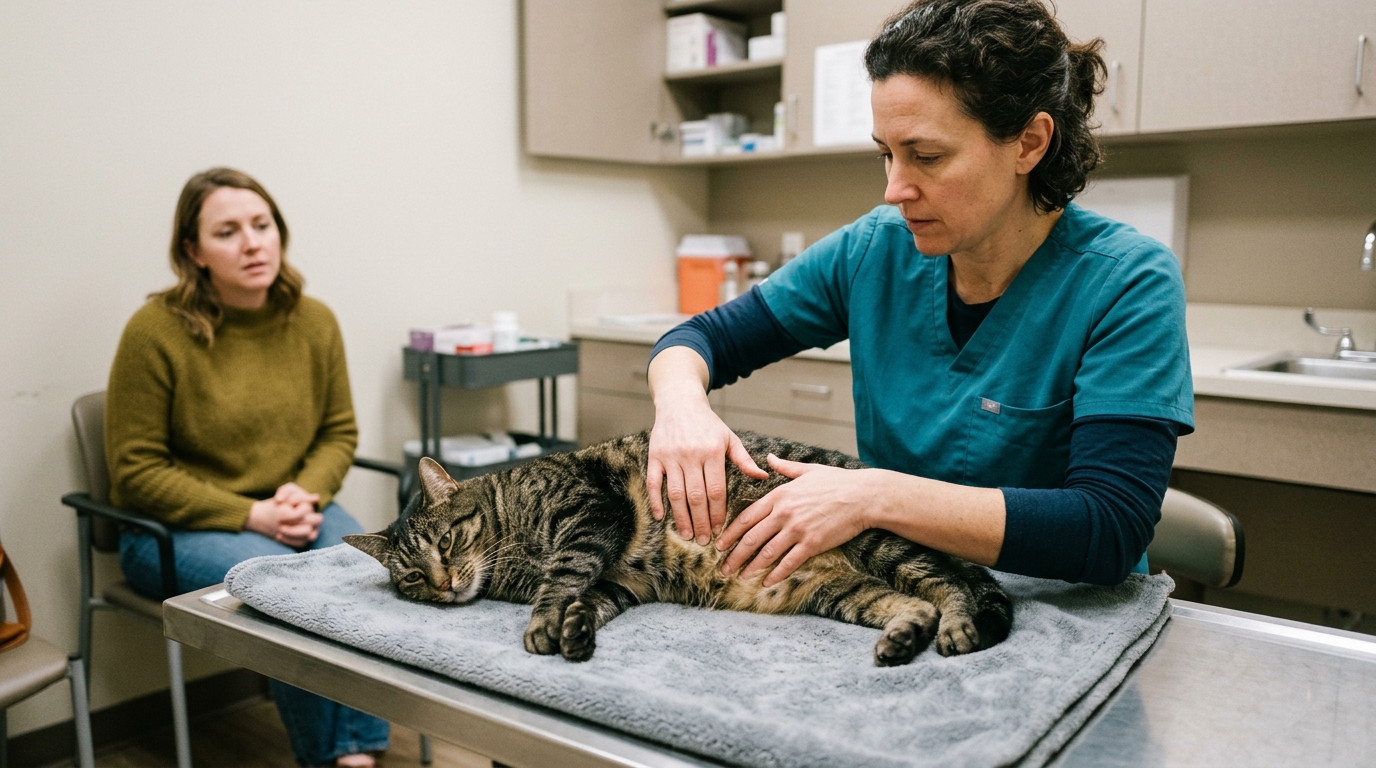
Primary Clinical Directive for Feline Infectious Peritonitis (Effusive/Wet & Non-Effusive/Dry Pyogranulomatous Vasculitis): Suspect FIP in any young cat (<2 years) or senior cat presenting with a fluctuating, antibiotic-unresponsive fever, progressive weight loss despite abdominal distension, hyperbilirubinemia without severe liver enzyme elevation, or unexplained anterior uveitis and hindlimb ataxia. FIP manifests along a clinical spectrum tied to cell-mediated immunity: Effusive ("Wet") FIP produces viscous, straw-yellow peritoneal or pleural fluid with high total protein (>3.5 g/dL) and a low albumin-to-globulin ratio (<0.4), whereas Non-Effusive ("Dry") FIP forms discrete pyogranulomatous masses in the mesenteric lymph nodes, kidneys, eyes (mutton-fat keratic precipitates), and central nervous system. Prompt initiation of regulated oral or parenteral GS-441524 nucleoside analog therapy achieves clinical remission rates exceeding 85 percent.
Macrophage TropismSwitch, Type III/IV Hypersensitivity Vasculitis & The Wet-to-Dry Spectrum
The transition from harmless Feline Enteric Coronavirus (FECV) to lethal FIPV occurs within the individual cat rather than via horizontal cat-to-cat transmission of mutated virus. Specific amino acid substitutions (such as M1058L or S1060A in the fusion domain of the spike protein) strip the virus of its enterocyte tropism while conferring the ability to infect and replicate inside CD14+ monocytes and macrophages. Instead of neutralizing the virus, non-neutralizing humoral anti-spike antibodies bind viral particles and facilitate uptake into macrophages via Fc-receptor-mediated endocytosis—a phenomenon known as Antibody-Dependent Enhancement (ADE).
Virus-laden monocytes adhere to the endothelial walls of small venules in the omentum, serosal surfaces, meninges, choroid plexus, and uveal tract. Release of matrix metalloproteinases (MMP-9), vascular endothelial growth factor (VEGF), and pro-inflammatory cytokines (TNF-α, IL-1β, IL-6) disrupts endothelial tight junctions. When a cat mounts a purely humoral (antibody-heavy) response with weak T-cell immunity, widespread vascular leakage produces the classic effusive (“wet”) form. When partial cell-mediated immunity restricts viral replication without clearing it, macrophages and neutrophils organize around blood vessels into discrete pyogranulomas characteristic of non-effusive (“dry”), ocular, or neurological FIP.
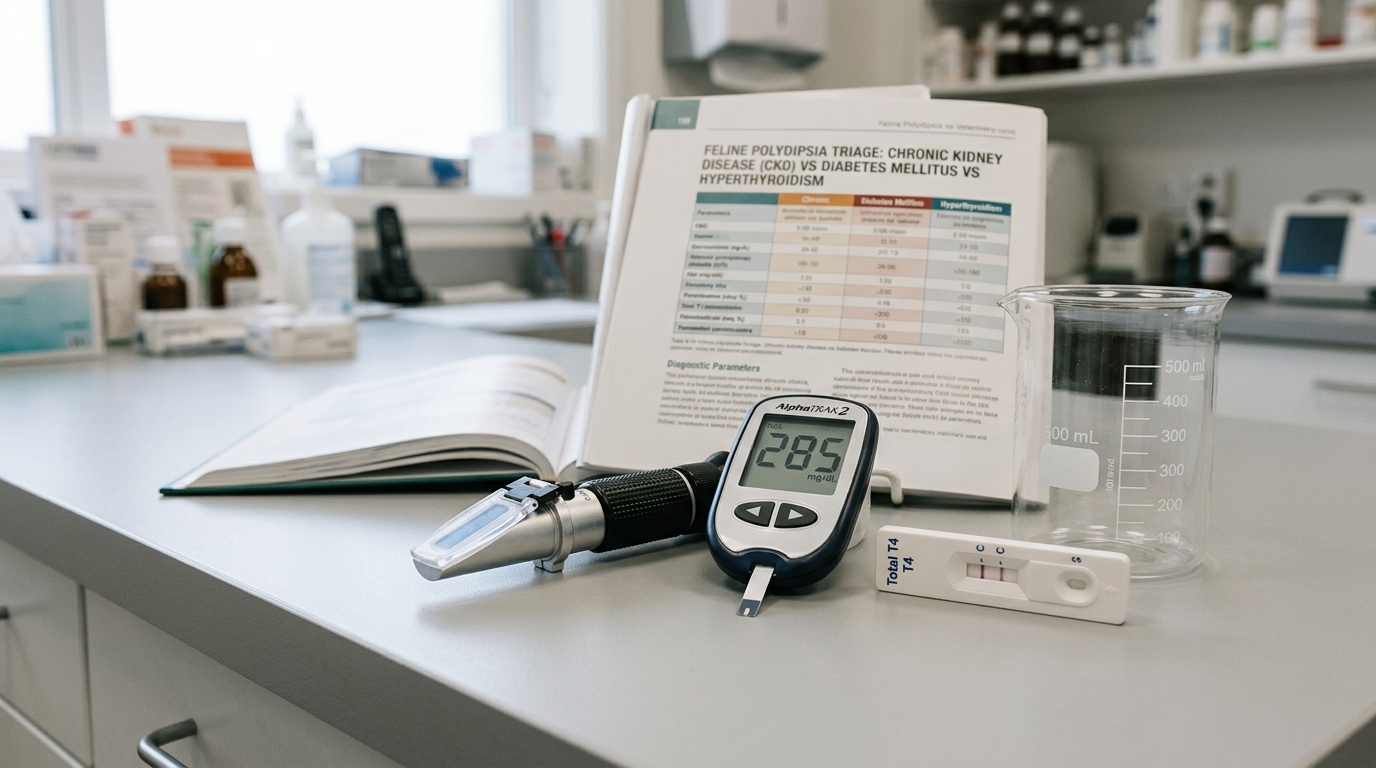
- Pathognomonic Effusion Profile: Effusive FIP fluid is characteristically clear-to-straw-colored, viscous/mucinous (clotting on exposure to air), with high protein (>3.5 g/dL) and relatively low cellularity (<5,000–10,000 nucleated cells/µL consisting of non-degenerate neutrophils and macrophages).
- Albumin-to-Globulin (A:G) Ratio Thresholds: Polyclonal hypergammaglobulinemia combined with negative acute-phase hypoalbuminemia drives serum and effusion A:G ratios below 0.4 (high positive predictive value for FIP), whereas an A:G ratio above 0.8 strongly rules out FIP.
- Ocular & Neurological Blood-Barrier Penetration: Dry FIP frequently crosses the blood-ocular barrier (causing fibrinous anterior uveitis, iris color change, and retinal perivascular cuffing) and the blood-brain barrier (causing ependymitis, obstructive hydrocephalus, cerebellar ataxia, and seizures).
- GS-441524 RNA Polymerase Chain Termination: Intracellularly phosphorylated GS-441524 triphosphate acts as an adenosine nucleoside analog that competes with natural ATP and terminates viral RNA-dependent RNA polymerase transcription.
Emergency Triage Matrix: Clinical Presentation & Required Response
| Triage Level | Clinical Signs & Presentation | Immediate Action Protocol |
|---|---|---|
| Tier 1: Immediate Emergency (0–1 Hour) | Tachypnea or open-mouth abdominal breathing from pleural effusion, muffled heart/lung sounds, generalized seizures, acute blindness, or severe icterus with hypothermia. | Transport immediately to a 24-hour veterinary hospital for emergency oxygen, therapeutic thoracocentesis to relieve lung compression, and parenteral remdesivir/GS-441524 stabilization. |
| Tier 2: Urgent Diagnostic & Antiviral Initiation (2–24 Hours) | Progressive painless abdominal distension (“pot-bellied” appearance with palpable spine muscle wasting), persistent fever (>103.0°F) unresponsive to antibiotics, cloudy iris/anterior chamber fibrin, or wobbly hindlimb gait. | Schedule a same-day veterinary workup for ultrasound-guided abdominocentesis, Rivalta test, effusion A:G ratio, FCoV RT-PCR, and immediate initiation of 84-day GS-441524 protocol. |
| Tier 3: 84-Day Antiviral Treatment & Post-Remission Surveillance | Cat actively undergoing regulated 12-week oral GS-441524 therapy with resolving effusion, normalizing appetite, and rising body weight. | Weigh the cat weekly on a digital baby scale so your veterinarian can adjust antiviral dosing upwards for weight gain, and repeat CBC/chemistry/A:G ratio panels at weeks 4, 8, and 12. |
Multimodal Diagnostic Algorithm, Rivalta Assay & Regulated 84-Day Antiviral Protocols
No single noninvasive blood test diagnoses FIP in isolation; notably, routine serum FCoV antibody titers cannot distinguish harmless enteric coronavirus exposure from mutated FIPV, and healthy FECV-exposed cats frequently carry high antibody titers. Conversely, cats in end-stage effusive FIP may display falsely negative serum titers because all circulating antibodies are bound within immune complexes in the effusion. Definitive or high-probability diagnosis relies on integrating signalment, serum biochemistry (hyperglobulinemia, A:G <0.4, hyperbilirubinemia, elevated alpha-1-acid glycoprotein), ultrasonography, and fluid analysis.
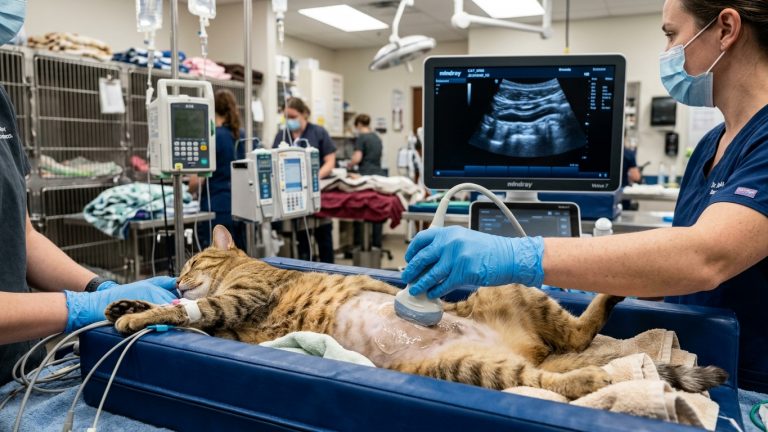
When effusion is present, ultrasound-guided abdominocentesis or thoracocentesis yields the fastest diagnostic confirmation. A positive cage-side Rivalta test (dropping a drop of effusion into diluted acetic acid to observe a cohesive jellyfish-like precipitant driven by high acute-phase proteins and inflammatory mediators), combined with quantitative FCoV RT-PCR or immunocytochemistry detecting coronavirus antigen inside effusion macrophages, confirms the diagnosis. With regulated veterinary access to oral GS-441524 and injectable remdesivir now established in multiple jurisdictions (and guided by ISFM and AAFP clinical protocols), prompt antiviral initiation halts viral replication within 48 to 72 hours.
- Dose Escalation for Ocular & Neurological Compartments: Because the blood-eye and blood-brain barriers restrict drug diffusion (achieving roughly 20–30% of plasma concentrations in cerebrospinal fluid and aqueous humor), ocular and neurological FIP cases require higher veterinary-prescribed mg/kg dosing tiers than uncomplicated effusive cases.
- Weekly Weight-Adjusted Dosing: As kittens and cachectic cats recover on GS-441524, rapid lean mass and growth gains can cause relative underdosing; weekly digital weight checks are mandatory to recalculate dose tiers and prevent neurological relapse.
- Drainage Rules (Thoracocentesis vs. Abdominocentesis): Pleural effusion causing dyspnea must be drained immediately via therapeutic thoracocentesis, whereas large-volume drainage of peritoneal ascites is avoided (collecting only 2–5 mL for diagnostics) to prevent acute oncotic and hypovolemic collapse.
- Biomarker Normalization Benchmark: Prior to stopping the standard 84-day (12-week) antiviral course, clinicians verify complete resolution of clinical signs alongside normalization of hematocrit, serum globulin, A:G ratio (>0.6), and alpha-1-acid glycoprotein (AGP).
Strict Rule S1 Clinical Red Flags: Feline Infectious Peritonitis (Effusive/Wet & Non-Effusive/Dry Pyogranulomatous Vasculitis)
Critical safety boundaries for Feline (Felis catus — Kittens, Purebreds & Young Adult Cats) caregivers:
- Zero Euthanasia Based on Serum Coronavirus Titers Alone: Never interpret a positive “FIP titer” (FCoV antibody test) in a healthy or mildly ill cat as a diagnosis of FIP; antibody tests only prove past exposure to common enteric coronavirus.
- Zero Unsupervised Lysine Supplementation During GS-441524 Therapy: Avoid high-dose L-lysine supplements in cats with FCoV/FIP, and never administer L-lysine concurrently with adenosine analog antivirals without explicit veterinary instruction.
Clinical Preparation & Biosecurity Action Checklist
- Request an ultrasound-guided fluid sample (if effusion is present) for total protein, albumin-to-globulin ratio, Rivalta testing, and FCoV RT-PCR rather than relying on blood titers alone.
- Purchase a calibrated digital pediatric scale to weigh your cat every 3 to 7 days during antiviral treatment and report weight gains promptly to your veterinarian.
- Track daily rectal or auricular temperature, resting respiratory rate (<30 breaths/min), and kilocalorie intake during the critical first 14 days of stabilization.
- Reduce fecal-oral FECV load in multi-cat homes by maintaining N+1 litter boxes, scooping twice daily, and using low-dust clumping substrates.
Related Clinical Guides & Triage Protocols
Peer-Reviewed Clinical References & Evidence Grounding
- Efficacy and safety of the nucleoside analog GS-441524 for treatment of cats with naturally occurring feline infectious peritonitis (opens in new tab) (Journal of Feline Medicine and Surgery (2019) — Landmark clinical trial by Pedersen et al. indexed on NCBI PubMed (PMID: 30755073).)
- 2022 AAFP/EveryCat Feline Infectious Peritonitis Diagnosis Guidelines (opens in new tab) (Journal of Feline Medicine and Surgery (2022) — AAFP & EveryCat Consensus Diagnostic Guidelines indexed on NCBI PubMed (PMID: 36006417).)
- Cornell Feline Health Center: Feline Infectious Peritonitis Pathogenesis, Diagnosis & Antiviral Therapy (opens in new tab) (Institutional veterinary clinical reference on FCoV biotype mutation and GS-441524 treatment protocols.)
- Merck Veterinary Manual: Feline Infectious Peritonitis (opens in new tab) (Verified veterinary clinical reference on effusive and pyogranulomatous FIP diagnosis and management.)
Source transparency
Reference mix for this guide
Source labels classify the institutional category of the references cited above.