This guide is general education for pet owners. If your pet has urgent symptoms, possible poisoning, injury, breathing trouble, collapse, severe pain, or sudden decline, contact a licensed veterinarian or local emergency service.
Dosages must be calculated by a licensed veterinarian based on species, weight, and bloodwork. Never administer human medications or self-adjust prescription doses for pets.
Editorial standard
How this guide was prepared
Hypertrophic Cardiomyopathy (HCM) is the most prevalent cardiac disease in domestic cats, affecting approximately 15 percent of the general feline population and up to 30 percent of senior cats. Driven by sarcomeric protein mutations (such as the MYBPC3 myosin-binding protein C mutations identified in Maine Coons and Ragdolls) or idiopathic myocardial remodeling in Domestic Shorthairs, HCM produces concentric thickening of the left ventricular free wall and interventricular septum (≥6.0 mm at end-diastole). Because most cats in preclinical Stage B1 or B2 HCM lack an audible heart murmur, the disease frequently remains silent until acute congestive heart failure (pleural effusion or pulmonary edema) or catastrophic Feline Aortic Thromboembolism (FATE, or “saddle thrombus”) occurs.
Clinical Quick Answer & Immediate Stabilization Protocol
Primary Clinical Directive for Feline Hypertrophic Cardiomyopathy (HCM) & Feline Aortic Thromboembolism (FATE / Saddle Thrombus): In feline HCM, a stiff, hypertrophied left ventricle cannot relax normally during diastole (diastolic dysfunction), forcing blood pressure backward to stretch and dilate the left atrium. When the left atrium-to-aorta ratio (LA:Ao) exceeds 1.6 to 1.8, sluggish blood flow in the left auricle forms a fibrin clot that can dislodge down the aorta and lodge at the trifurcation of the external iliac arteries (“saddle thrombus”). Recognize the 5 Ps of FATE immediately: Pain (acute vocalization), Paralysis/Paresis of one or both hindlimbs, Pulselessness (absent femoral pulses), Pallor (blue or white cold nailbeds), and Poikilothermy (rectal and limb hypothermia). per the FATCAT trial, daily oral clopidogrel is the superior antiplatelet standard for preventing thrombus formation in Stage B2/C HCM cats.
Diastolic Dysfunction, Left Auricular Virchow’s Triad & Ischemic Reperfusion Hyperkalemia
Unlike canine dilated cardiomyopathy (a failure of systolic contraction), feline HCM is fundamentally a disease of diastolic relaxation. Concentric hypertrophy of cardiomyocyte bundles, interstitial collagen fibrosis, and intramural coronary arteriosclerosis render the left ventricular chamber rigid and non-compliant. Even higher filling pressures are required to push oxygenated blood from the left atrium into the left ventricle, causing progressive left atrial enlargement. Dynamic systolic anterior motion (SAM) of the septal mitral valve leaflet into the left ventricular outflow tract can further obstruct aortic ejection and generate a dynamic murmur that fluctuates with heart rate and stress.
As the left atrium and left auricular appendage dilate, Virchow’s triad—blood flow stasis (visualized on echocardiography as swirling “spontaneous echo contrast” or smoke), endocardial endothelial injury, and hypercoagulable platelet activation—triggers thrombus assembly. When a thrombus embolizes into the distal abdominal aorta (the aortic trifurcation), it not only mechanically occludes the iliac arteries but releases vasoactive serotonin and thromboxane A2 from activated platelets, inducing intense vasoconstriction of the collateral circulation. Within hours, ischemic myonecrosis of the gastrocnemius and quadriceps muscles causes severe rhabdomyolysis and peripheral nerve demyelination.
- ACVIM Feline Cardiomyopathy Staging (A, B1, B2, C, D): Stage B1 denotes subclinical HCM with normal-to-mild left atrial size (low near-term CHF/ATE risk); Stage B2 denotes moderate-to-severe left atrial enlargement (LA:Ao ≥1.6), which mandates immediate prophylactic clopidogrel initiation.
- The 5 Ps & Quick Nail-Clip Bedside Test: In a true aortic saddle thrombus, the gastrocnemius (calf) muscles feel rock-hard and cramping, rectal temperature drops below 98.0°F, and clipping a hind toenail quick fails to bleed.
- FATCAT Study Superiority of Clopidogrel Over Aspirin: The landmark randomized FATCAT trial demonstrated that oral clopidogrel (18.75 mg/cat PO q24h) dramatically reduces recurrent cardiogenic thromboembolism and extends survival compared to aspirin.
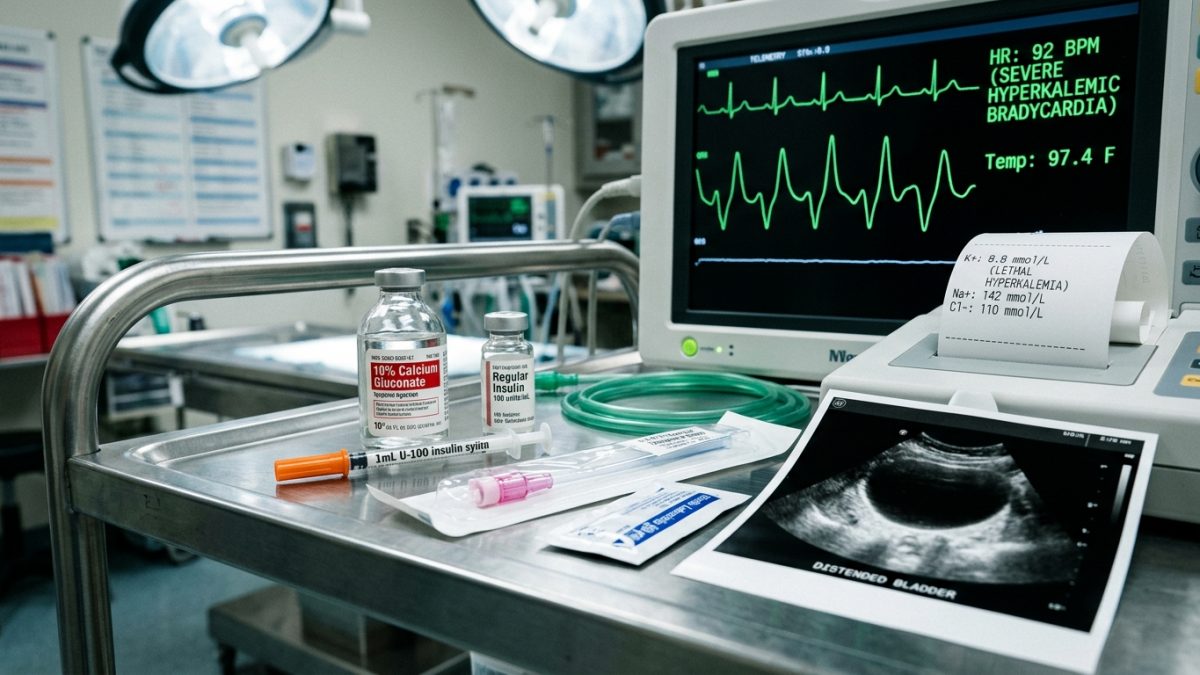
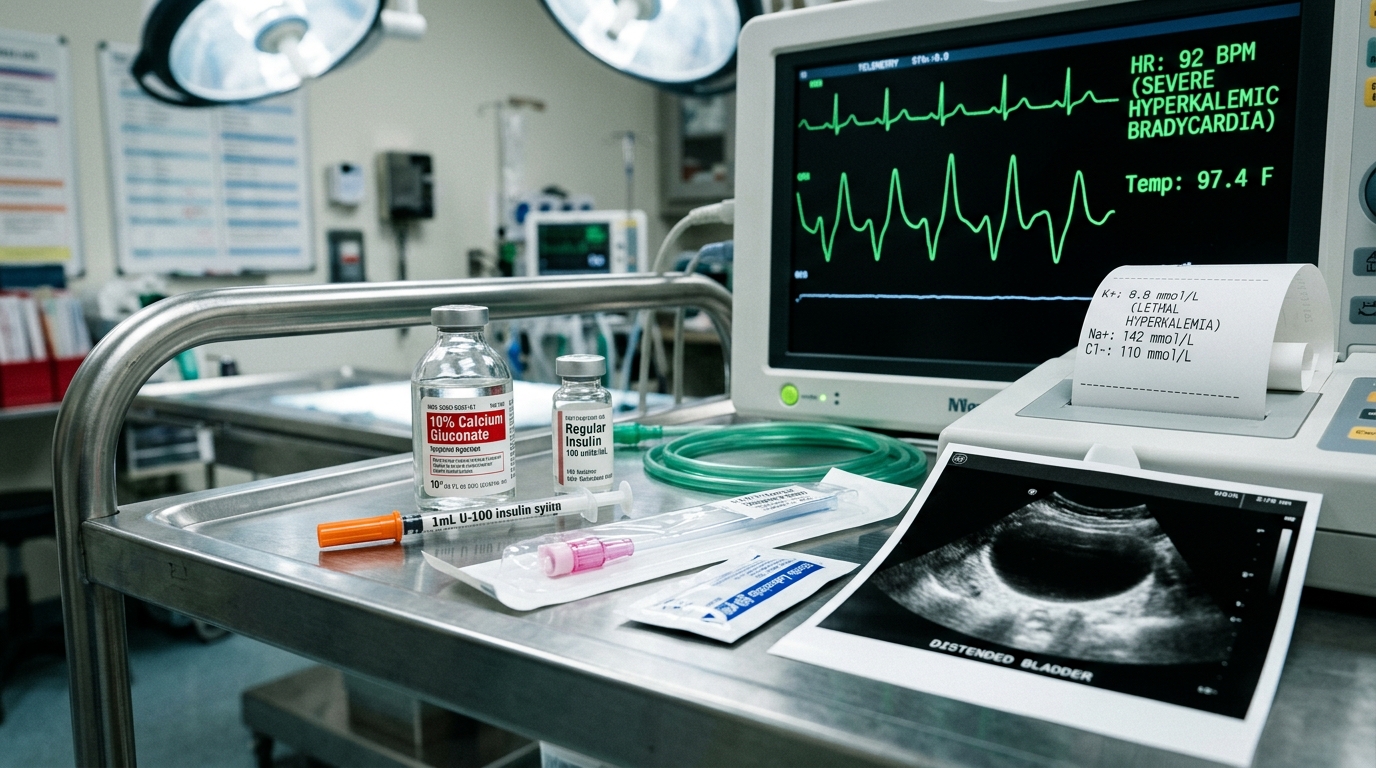
- Reperfusion Syndrome & Lethal Hyperkalemia: As collateral circulation slowly reperfuses necrotic hindlimb musculature during the first 24 to 72 hours of hospitalization, massive intracellular potassium, lactic acid, and myoglobin flood the systemic circulation, requiring continuous ECG and electrolyte rescue.
Emergency Triage Matrix: Clinical Presentation & Required Response
| Triage Level | Clinical Signs & Presentation | Immediate Action Protocol |
|---|---|---|
| Tier 1: Immediate Emergency (0–30 Minutes) | Sudden paralysis or dragging of one or both hind legs with severe vocalization/panting, cold bluish-pale hind paw pads, absent femoral pulse, or open-mouth breathing with resting respiratory rate >40 breaths/min. | Transport immediately in a quiet, level carrier to an emergency veterinary ICU; administer pure mu-opioid analgesia (fentanyl, methadone, or hydromorphone) within minutes of arrival alongside oxygen and antithrombotics. |
| Tier 2: Urgent Cardiology Evaluation (24–48 Hours) | Newly detected heart murmur, gallop sound, or arrhythmia during a wellness visit; transient 5-minute hindlimb weakness or lameness that resolved; or pre-anesthetic NT-proBNP elevation. | Withhold elective anesthesia or high-rate intravenous fluids and schedule an urgent echocardiogram to measure left ventricular wall thickness (>6 mm) and left atrial-to-aortic ratio (LA:Ao). |
| Tier 3: Stage B2 / Post-CHF Home Surveillance | Cat diagnosed with Stage B2 or Stage C HCM stabilized at home on daily clopidogrel (and furosemide/rivaroxaban as prescribed). | Count sleeping respiratory rate daily (must remain <30 breaths/min), administer bitter clopidogrel tablets inside size-3 or size-4 gelatin capsules chased with water, and avoid systemic depot steroids. |
ACVIM Consensus Staging, Point-of-Care Lactate/Glucose Gradient & Dual Antithrombotic Therapy
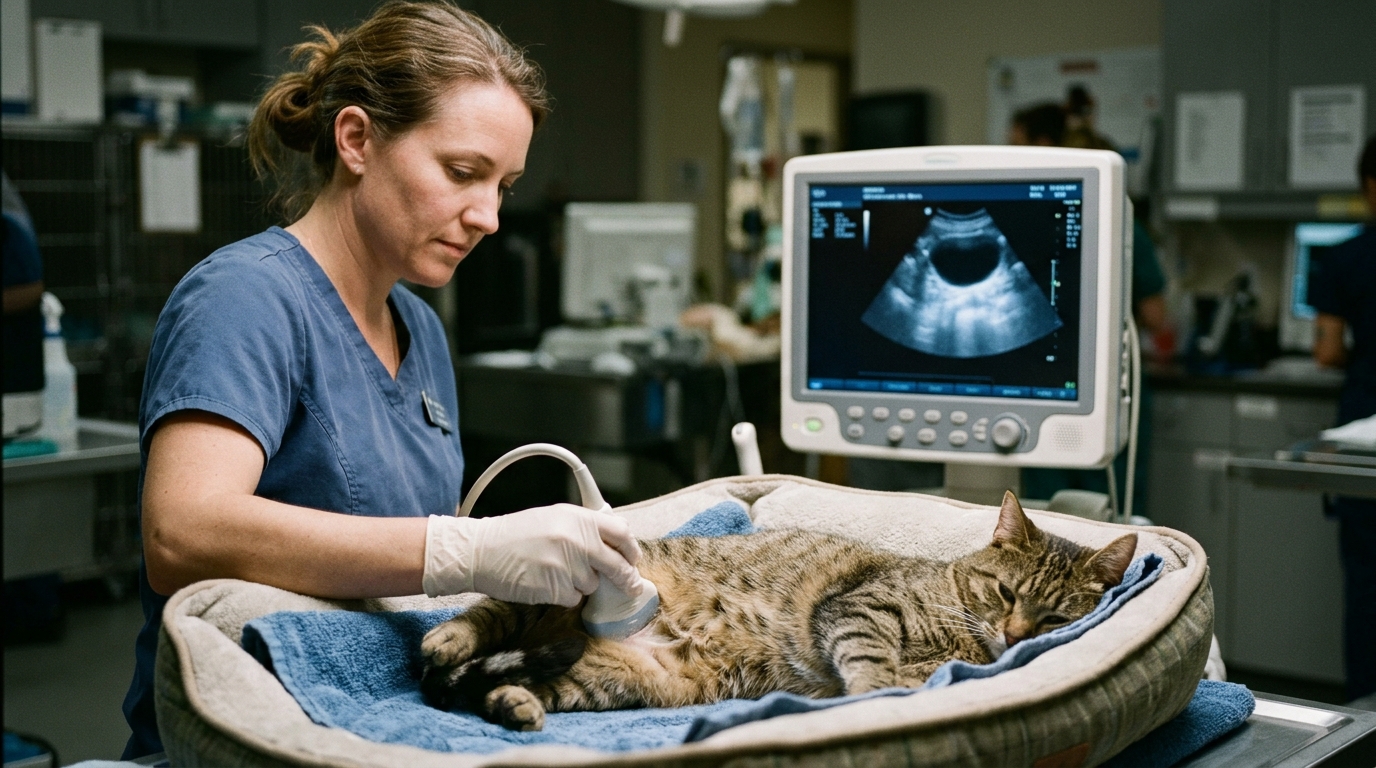
At the emergency hospital, Feline Aortic Thromboembolism is confirmed clinically and supported by a pathognomonic metabolic gradient between the forelimbs and hindlimbs: blood drawn from a caudal (saphenous) vein exhibits severely depressed glucose and markedly elevated lactate compared to blood drawn simultaneously from a cranial (jugular or cephalic) vein. Furthermore, point-of-care thoracic ultrasound (TFAST) distinguishes concurrent cardiogenic pulmonary edema (B-lines) or pleural effusion from pain-induced tachypnea before radiographic positioning is attempted.
In survival prognostication for FATE, bilateral pelvic limb paralysis with profound hypothermia (<97.0°F) and concurrent congestive heart failure carries a guarded prognosis (approximately 30–40% survival to discharge), whereas cats with unilateral single-limb embolism or preserved motor function and normothermia achieve survival rates of 70 to 80 percent. Long-term medical thromboprophylaxis for Stage B2 HCM or FATE survivors centers on daily clopidogrel, often paired with a direct Factor Xa inhibitor (rivaroxaban or apixaban) in high-risk patients exhibiting spontaneous echocardiographic smoke or prior thrombi.
- Pure Mu-Opioid Analgesia First: Ischemicneuromyopathy from a saddle thrombus produces agonizing pain during the first 24 to 36 hours; immediate parenteral methadone, fentanyl, or hydromorphone is the highest clinical priority upon hospital admission.
- Avoidance of Routine Surgical Embolectomy: Unlike human arterial embolism, surgical embolectomy or high-dose systemic thrombolysis (tPA) in cats carries high perioperative mortality from acute hyperkalemic reperfusion arrest and hemorrhage; conservative medical antithrombotic and analgesic care is standard.
- Gelatin Capsule Compounding for Clopidogrel: Clopidogrel bisulfate is intensely bitter and triggers profuse ptyalism (foaming salivation) and medication aversion in cats; placing the quarter-tablet (18.75 mg) inside an empty gelatin capsule coated with a drop of liquid cat treat ensures stress-free compliance.
- Steroid & Fluid Overload Precaution in Subclinical HCM: Systemic corticosteroids (especially methylprednisolone acetate injections) expand plasma volume via osmotic fluid shifts and frequently precipitate acute fulminant congestive heart failure in cats with occult HCM.
Strict Rule S1 Clinical Red Flags: Feline Hypertrophic Cardiomyopathy (HCM) & Feline Aortic Thromboembolism (FATE / Saddle Thrombus)
Critical safety boundaries for Feline (Felis catus — Maine Coons, Ragdolls, Sphynx & Domestic Shorthairs) caregivers:
- Zero Heating Pads on Cold Paralyzed Hindlimbs: Never wrap a heating pad, hot water bottle, or hair dryer around the cold hind legs of a cat with a suspected saddle thrombus; warming ischemic tissue spikes cellular oxygen demand and causes catastrophic tissue necrosis and potassium toxicity.
- Zero Aspirin Substitution Without Veterinary Guidance: Never give human aspirin tablets to a cat at home; cats lack hepatic glucuronyl transferase to metabolize salicylates rapidly, and a single human aspirin tablet causes fatal salicylate poisoning and gastric perforation.
Clinical Preparation & Biosecurity Action Checklist
- Request a point-of-care proBNP blood test or baseline echocardiogram prior to elective dental anesthesia or glucocorticoid therapy in middle-aged, senior, or predisposed purebred cats (Maine Coon, Ragdoll, Sphynx, British Shorthair).
- Encapsulate bitter clopidogrel quarter-tablets inside empty size-4 gelatin capsules and follow immediately with 3–5 mL of water or wet food.
- Log your cat’s sleeping respiratory rate (chest rises per 60 seconds while deeply asleep) on a weekly chart; report any sustained increase above 30 breaths/min.
- Provide low-entry litter boxes and floor-level bedding for cats recovering from FATE while peripheral sciatic nerve function regenerates over 2 to 6 weeks.
Related Clinical Guides & Triage Protocols
Peer-Reviewed Clinical References & Evidence Grounding
- ACVIM consensus statement guidelines for the classification, diagnosis, and management of cardiomyopathies in cats (opens in new tab) (Journal of Veterinary Internal Medicine (2020) — ACVIM Consensus Statement by Luis Fuentes et al. indexed on NCBI PubMed (PMID: 32242950).)
- Secondary prevention of cardiogenic arterial thromboembolism in the cat: The double-blind, randomized, positive-controlled FATCAT study (opens in new tab) (Journal of Veterinary Cardiology (2015) — Landmark clinical trial by Hogan et al. indexed on NCBI PubMed (PMID: 26179539).)
- Cornell Feline Health Center: Feline Hypertrophic Cardiomyopathy (HCM) & Saddle Thrombus (opens in new tab) (Institutional veterinary clinical reference on sarcomeric mutations, echocardiography, and thromboembolism.)
- Merck Veterinary Manual: Hypertrophic Cardiomyopathy in Dogs and Cats (opens in new tab) (Verified veterinary reference on diastolic dysfunction, left atrial dilation, and antithrombotic pharmacology.)
Source transparency
Reference mix for this guide
Source labels classify the institutional category of the references cited above.